Backinnovation

innovation

Policy Regula
2026-09-02 02:14:00

Sept. 1-2 crypto policy and market roundup: SEC moves on transfer-agent rules, G20 backs digital-asset innovation

A wide set of crypto, policy, payments and market developments surfaced between Sept. 1 and Sept. 2. In the U.S., the Securities and Exchange Commission proposed updating registered transfer-agent rules for the first time in decades to reflect blockchain-based securities records and tokenization. At the international level, a G20 chair statement released by U.S. Treasury Secretary Scott Bessent said finance ministers and central bank governors recognized the growth potential of digital assets and pledged to create a clear path for “responsible innovation.” Separately, 21 global financial institutions said they plan to form a new company to issue fully reserve-backed stablecoins, starting with a U.S. dollar product and targeting launch in the first half of 2027. Market activity also stayed busy: U.S. spot Bitcoin ETFs pulled in about $3.5 billion in August, Felix Pago raised $200 million in Series B financing, Ethena rolled out a test version of Ethena Pay on Avalanche, and Bitfinex Securities listed five tokenized products tied to listed Bitcoin treasury companies. On the enforcement and security side, TRM Labs’ $95 million U.S. Homeland Security contract drew a lawsuit from Chainalysis, while Full Sail said it would wind down after a Switchboard oracle incident hit Virtue Money.


240
Sept. 1-2 crypto policy and market roundup: SEC moves on transfer-agent rules, G20 backs digital-asset innovation
Apple
2026-09-02 03:13:27

Apple reshuffles top leadership as John Ternus takes CEO role and Tim Cook becomes executive chair

Apple is making a major leadership change, with Tim Cook stepping aside after 15 years as chief executive and moving into the role of executive chair of the board, while longtime hardware chief John Ternus takes over as CEO. According to ABMedia, citing CNBC analysis, the move points to a shift in Apple’s operating priorities: away from the Tim Cook era’s focus on China and global supply chains and back toward a model centered on product design, hardware development, and device-led innovation. Ternus has spent 25 years at Apple and has long overseen hardware engineering. He is described externally as a product-focused executive whose career has concentrated on hardware and chip integration. The report says he previously led development work tied to MacBook Neo, iMac Pro, and Mac Pro. Under his leadership, Apple is expected to put more weight on hardware R&D while pushing new device categories such as a foldable iPhone, next-generation wearables, and robotics. The management split leaves Cook focused on external affairs, administration, and international supply-chain matters, while Ternus takes charge of Apple’s product roadmap, AI integration, and hardware innovation. He also inherits unresolved issues around Apple Intelligence and Siri, especially regulatory friction in Europe and localization demands in China.

80
Apple reshuffles top leadership as John Ternus takes CEO role and Tim Cook becomes executive chair
DBS
2026-09-02 01:14:09

DBS and Stripe Forge Strategic Partnership to Boost Asia Agency Commerce and Cross-Border Payments

DBS and Stripe have formed a strategic partnership to accelerate growth in agency commerce and cross-border payments across Asia. The partnership leverages DBS's Asian network and Stripe's programmable financial services to help businesses move funds more efficiently. They will also explore agentic AI to improve transaction security and efficiency. DBS CEO Chen Sushan highlighted that Asia's digital economy is entering a new phase of innovation, with AI agents gaining traction. Stripe's CCO Fran Ryan noted that over half of users in the region already engage in cross-border sales. The collaboration supports Stripe's expansion in Asia and its transformation into a full-stack financial infrastructure provider. Forecasts suggest AI agents could orchestrate $5 trillion in global consumer commerce by 2030, and Asia's cross-border payment outflows may reach $24 trillion by 2033, accounting for 36% of the global total.

50
DBS and Stripe Forge Strategic Partnership to Boost Asia Agency Commerce and Cross-Border Payments
Zhongguancun
2026-09-02 00:13:33

Five Stops in Zhongguancun Trace Haidian’s Nearly 40-Year Tech Industry Handoff

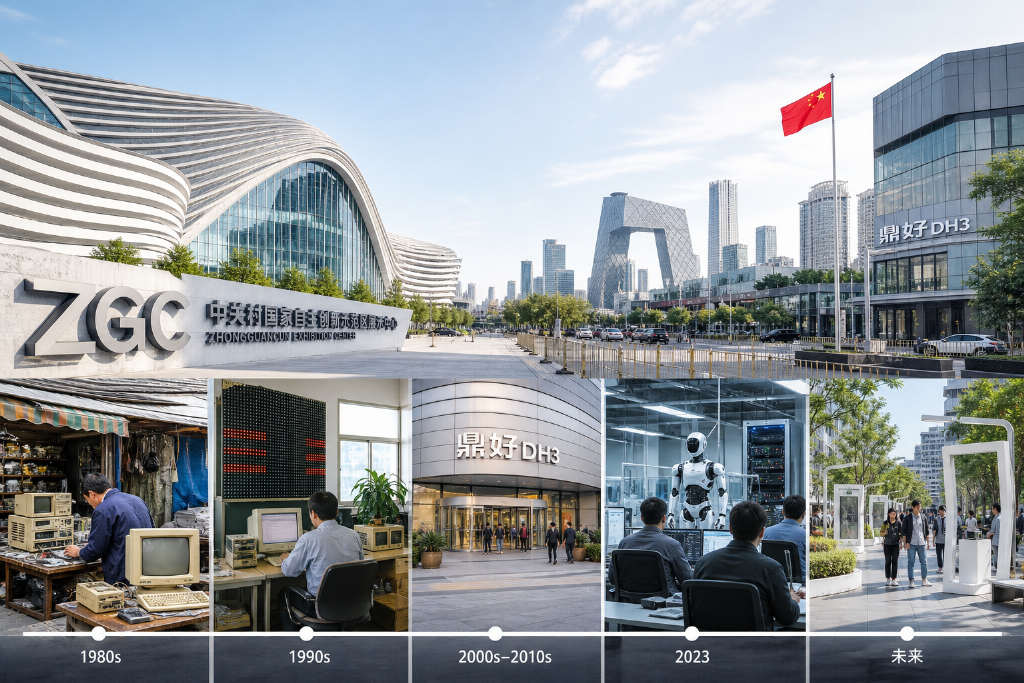
A MarsBit field visit to Haidian and Zhongguancun mapped Beijing’s tech evolution through five locations spanning nearly four decades: the Zhongguancun National Innovation Demonstration Zone Exhibition Center, Dinghao DH3, Leyard Group, Beijing Galaxy General Robot, and the AI Origin Community. Together, the sites connect a timeline that starts with Zhongguancun’s 1988 approval as China’s first state-level high-tech industrial development zone, runs through Leyard’s 1995 founding and Dinghao’s 2003 opening, and reaches newer AI and robotics ventures including Galaxy General, founded in May 2023, and the AI district selected in January as part of Beijing’s first batch of artificial intelligence innovation streets. The report highlights how Haidian’s strength lies in continuity rather than a single technology boom. At the exhibition center, more than 350 Beijing-based research institutions and companies displayed over 560 technologies and products across a 10,000-square-meter space, covering computing chips, quantum computing, commercial aerospace, medical robotics, energy storage and biomedicine. Dinghao’s shift from a once-famous electronics mall into offices for AI, computing power and robotics firms shows how physical space has been repurposed alongside industrial change. The contrast between Leyard, an established LED display company, and Galaxy General, a fast-rising embodied AI and robotics startup, illustrates how different generations of companies continue to grow from the same talent, capital and university ecosystem. At the AI Origin Community near Tsinghua University and Peking University, a housing and startup support program for young founders points to the next stage of Haidian’s effort: keeping talent in place long enough for the next wave of companies to take root.

290
Five Stops in Zhongguancun Trace Haidian’s Nearly 40-Year Tech Industry Handoff
G20
2026-09-01 23:43:59

G20 Statement Acknowledges Digital Assets' Growth Potential, Pledges 'Clear Path' for Responsible Innovation

Finance ministers and central bank governors from the world's 20 largest economies recognized the potential of digital assets to support economic growth in a G20 chair statement released by Scott Bessent. The statement commits to establishing a "clear path" for responsible innovation, calls for improvements in cross-border payments—including extending operating hours of payment systems, promoting wider adoption of the ISO 20022 messaging standard, and simplifying data transfer processes—and notes that G20 members await the Financial Stability Board's study on the cross-border impact of global stablecoins.

30
G20 Statement Acknowledges Digital Assets' Growth Potential, Pledges 'Clear Path' for Responsible Innovation
DeFi Developm
2026-09-01 13:45:08

DFDV files to sell 13% preferred stock tied to SOL as crypto treasury firms push deeper into yield products

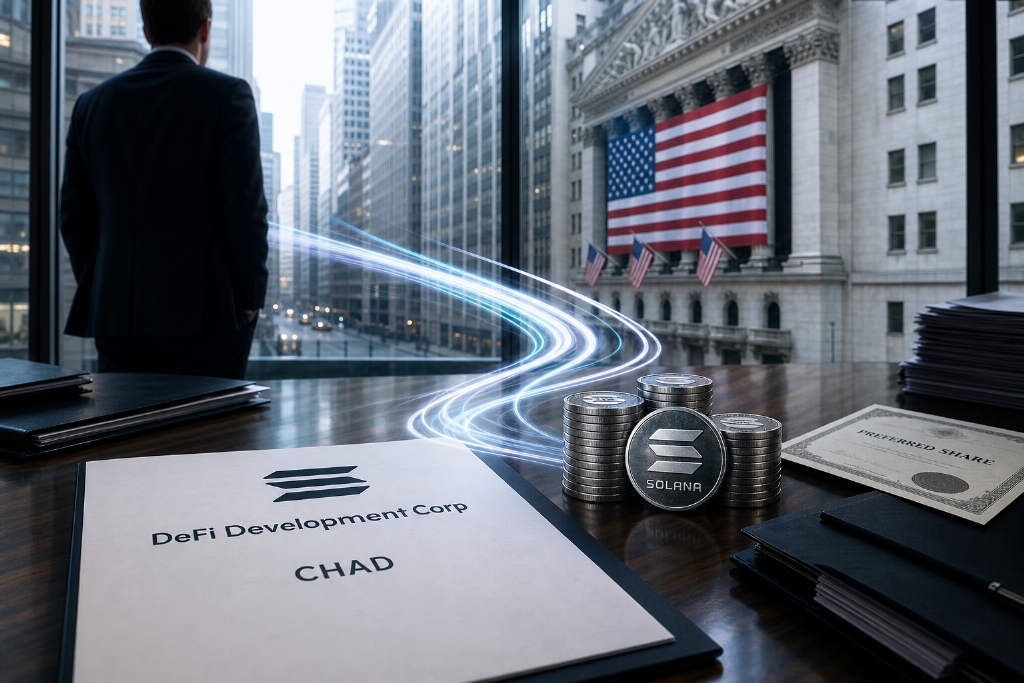
DeFi Development Corp. filed a preliminary prospectus with the U.S. Securities and Exchange Commission on Aug. 31 to sell 2.2 million shares of perpetual preferred stock under the ticker CHAD. The shares are set to be offered at $9 with a $10 liquidation preference and an initial 13% dividend rate. The company said the first dividend is planned for Oct. 1, followed by payments every business day, and that it intends to reserve funds equal to 12 months of dividends. Proceeds are earmarked for general corporate purposes, including SOL purchases. The filing places DFDV alongside Strategy’s STRC and Strive’s SATA, two high-yield preferred products backed by crypto treasury models. The article argues that the yield does not come from BTC or SOL themselves, but from a cycle built on common stock issuance, crypto asset appreciation, and dividend support. It also highlights several risks specific to CHAD, including SOL’s higher volatility, DFDV’s roughly $216 million in combined debt, accumulated losses of more than $200 million, and terms that allow the board to cut the dividend rate without holder approval.

50
DFDV files to sell 13% preferred stock tied to SOL as crypto treasury firms push deeper into yield products
Nvidia
2026-09-01 10:18:52

Nvidia to Invest $1.5 Billion in SB Energy for Ohio AI Campus

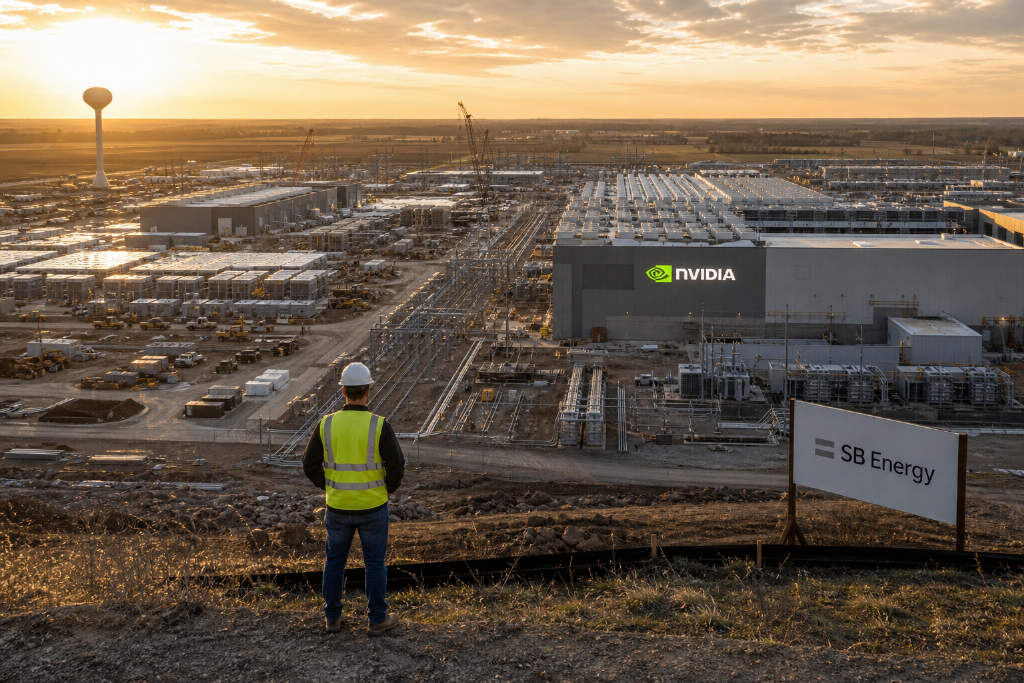
Nvidia will invest $1.5 billion in SB Energy as part of a deal to build a large AI campus in Ohio. The investment marks a significant shift in AI infrastructure and is expected to drive regional economic and technological growth, according to Crypto Briefing.

30
Nvidia to Invest $1.5 Billion in SB Energy for Ohio AI Campus
US stocks
2026-09-01 09:13:09

A Century of Tech Leadership in U.S. Stocks: The Longest Run Has Also Been the Weakest

Jim Paulsen argues that the current U.S. technology-led market cycle, which began in 2006 and is still running, is the longest such stretch in the past 100 years but also the weakest by several key measures. Looking back to 1926, he identifies six major periods when tech stocks led the broader market. The present run has reached 241 months, far longer than the previous average of 63.4 months and well ahead of the longest earlier cycle, which lasted 99 months and ended in 1960. Yet since 2006, the current cycle has produced only 6% in excess average annualized return versus the broader market, the lowest of any historical tech leadership phase in his dataset. Paulsen also rejects the idea that diversified tech investing is naturally a buy-and-hold winner. Across all months since 1926, U.S. tech stocks outperformed the broader market only 50.5% of the time. During long leadership periods, that figure rises to 58.1%, but outside them it drops to 44.5%. He says past leadership phases were typically followed by long and painful periods of underperformance. His broader warning is not a call for a full exit. Instead, he points to growing signs of excess tied to the AI boom, including more aggressive corporate spending, heavier debt use, stronger media fixation on innovation themes, and rising investor complacency. His recommendation is to cut exposure to tech and other “new era” sectors to an underweight position rather than sell everything.

40
A Century of Tech Leadership in U.S. Stocks: The Longest Run Has Also Been the Weakest