


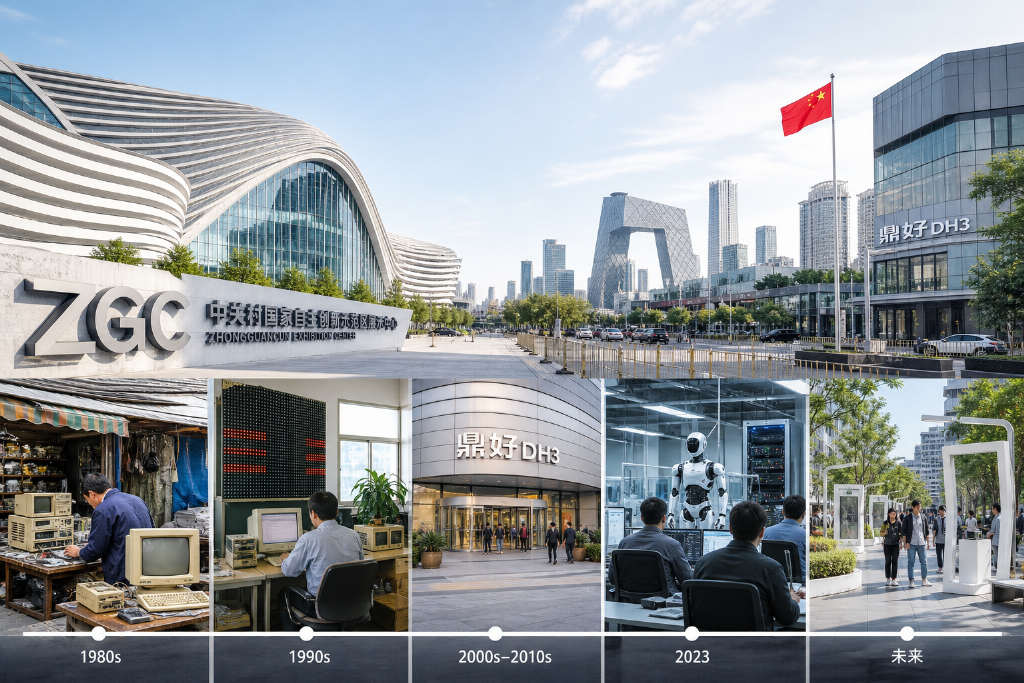
Zhongguancun remains one of the central reference points in any account of Chinese technology innovation. In the 1980s, the area was still known as "Electronics Street," where merchants built computers and sold parts, turning it into the country’s largest distribution hub for electronics products. In 1988, the State Council approved the establishment of China’s first state-level high-tech industrial development zone there, tying the Zhongguancun name directly to the country’s technology trajectory.
Over the following decades, the labels changed several times. It was called Electronics Street, China’s Silicon Valley, a national independent innovation demonstration zone, and the core area of Beijing’s international science and technology innovation center. The name kept shifting. So did its role. Haidian, though, stayed at the front of Beijing’s and China’s broader technology story.
Five locations, one timeline
The second stop in the "Myriad Weather in Beijing" reporting series landed in Haidian and Zhongguancun. The route covered five locations in one day: the Zhongguancun National Innovation Demonstration Zone Exhibition Center, Dinghao DH3, Leyard Group, Beijing Galaxy General Robot, and the AI Origin Community.
Placed side by side, the five stops form a timeline on their own: a state-level high-tech zone established in 1988, a display company founded in 1995, an electronics mall opened in 2003, a robotics company founded in 2023, and a community selected in January for Beijing’s first batch of AI innovation streets. The span runs close to 40 years. The arrangement says as much as the sites themselves: Haidian’s industries have not moved in a straight line, but they have kept passing the baton.
Inside the exhibition center: four decades of accumulated technology
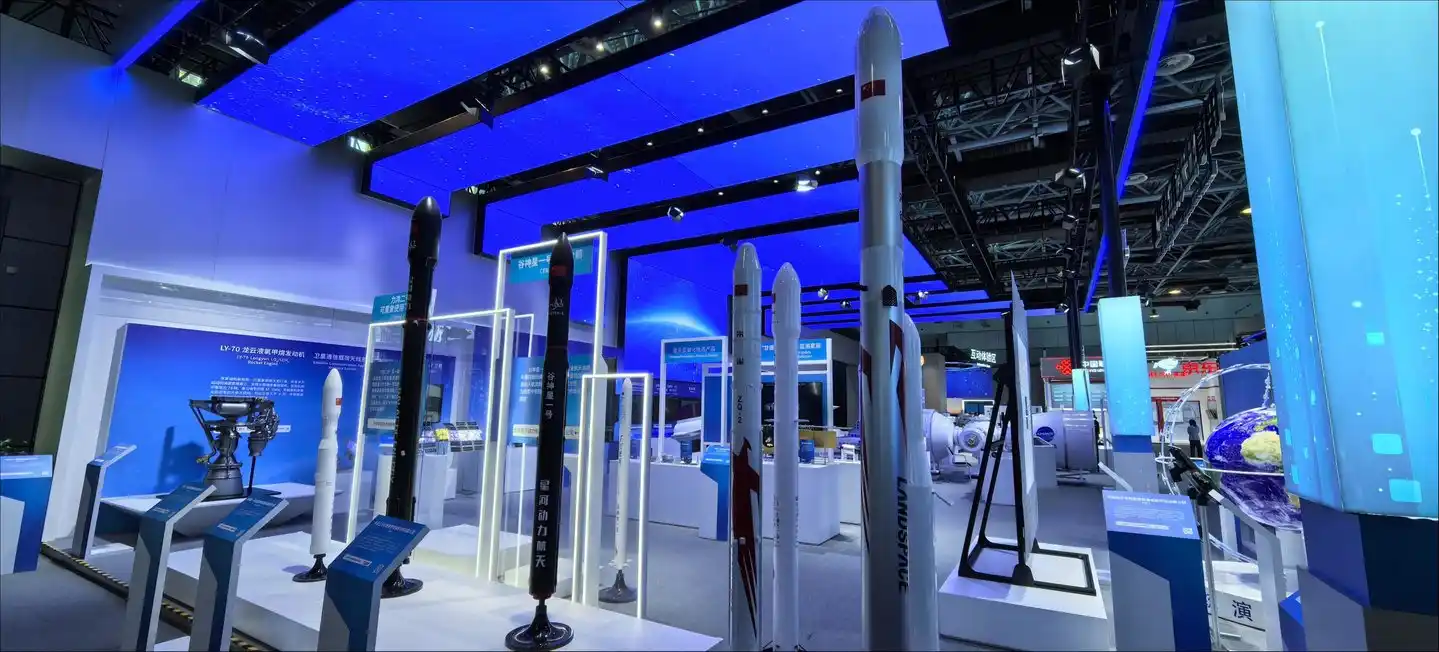
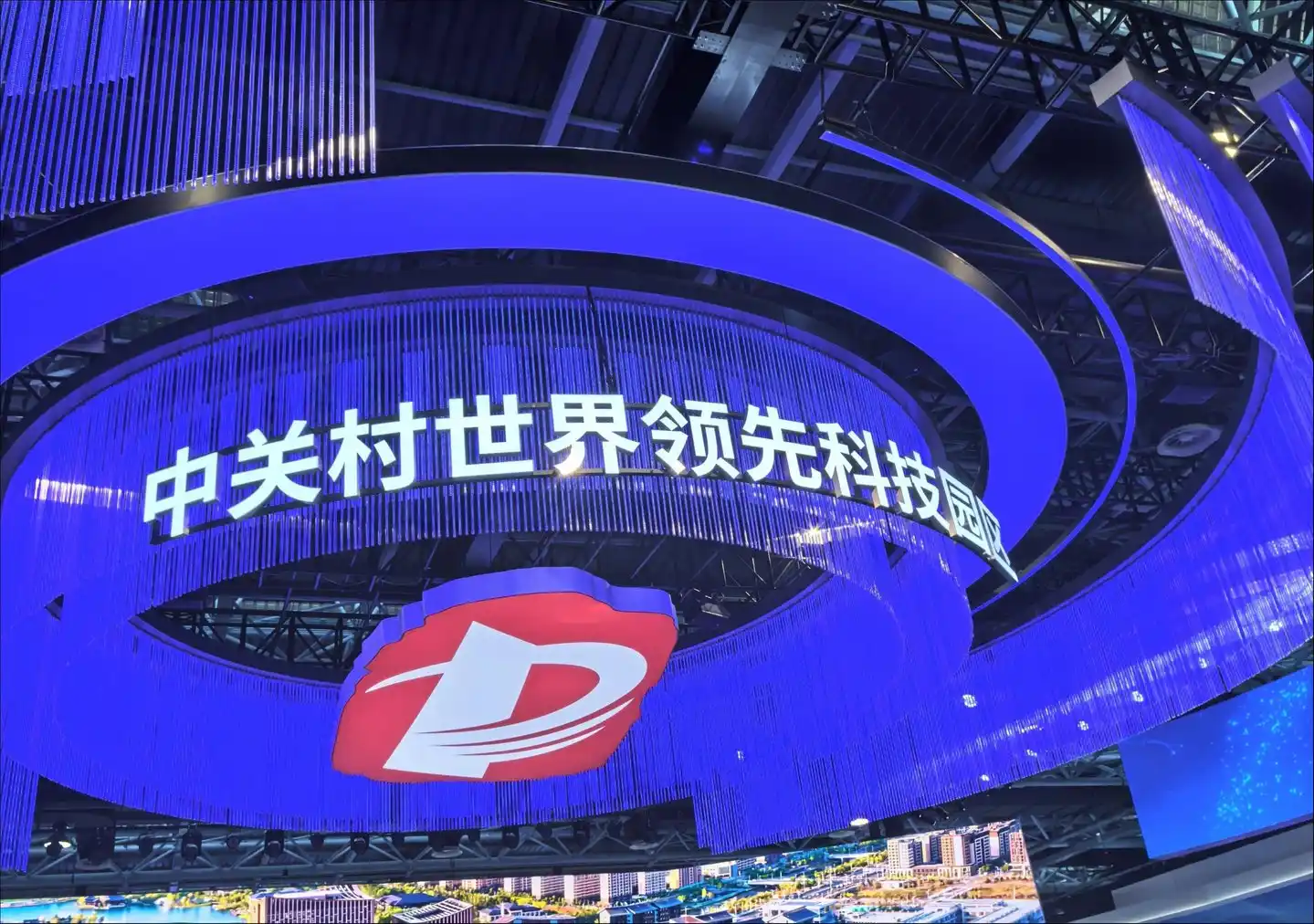
The long end of that timeline starts with the Zhongguancun National Innovation Demonstration Zone Exhibition Center. Much of what Zhongguancun has accumulated since 1988 is gathered there. The center opened in 2011 and was renovated again in March this year during the annual Zhongguancun Forum. Across 10,000 square meters, more than 350 Beijing-based research institutions and companies presented over 560 technologies and products, laid out across original innovation, emerging industries and future industries, from computing chips to quantum computing and commercial aerospace.
In the artificial intelligence section, Moore Threads displayed an integrated AI training-and-inference computing card. Staff at the site said it serves as a domestic computing foundation for large-model training. Nearby, a robot hand developed by Lingxin Qiaoshou demonstrated threading a needle. The dexterous hand weighs 370 grams, while a single finger can lift 30 to 50 kilograms.
In the medical section, the mechanical arm of the Luosen Wanxiang intelligent orthopedic surgical robot stood next to a pelvic model. The robot was incubated through cooperation between Beihang University and Jishuitan Hospital, then industrialized by Luosenbot. It can reduce the incision for pelvic fracture surgery from 20 centimeters to 1 to 2 centimeters.
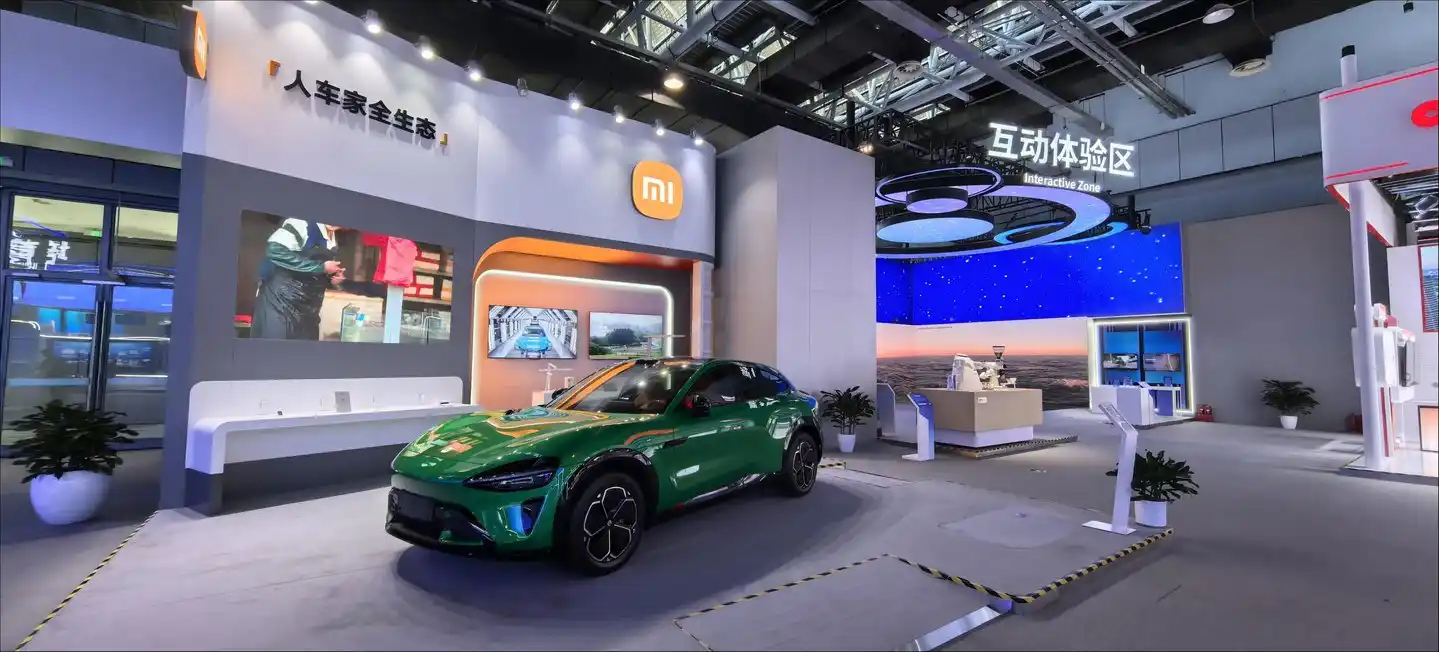
Further inside were a model of LandSpace’s reusable Zhuque-3 rocket, Liangyi Wanxiang’s atomic quantum computer, and Xiaomi’s new-generation SU7. Stands focused on advanced green energy and biomedicine were also part of the lineup, including hydrogen energy storage equipment and AcoMed’s hair-thin neurointerventional stent.
Seen together, the exhibits represent industries at very different stages. Some are already in mass production and shipping. Others are still at the prototype stage. Haidian’s strength, as presented here, does not come from a single breakout generation of technology. It comes from repeated accumulation, without a break between one cycle and the next.
Dinghao: a former electronics mall refitted for new industries
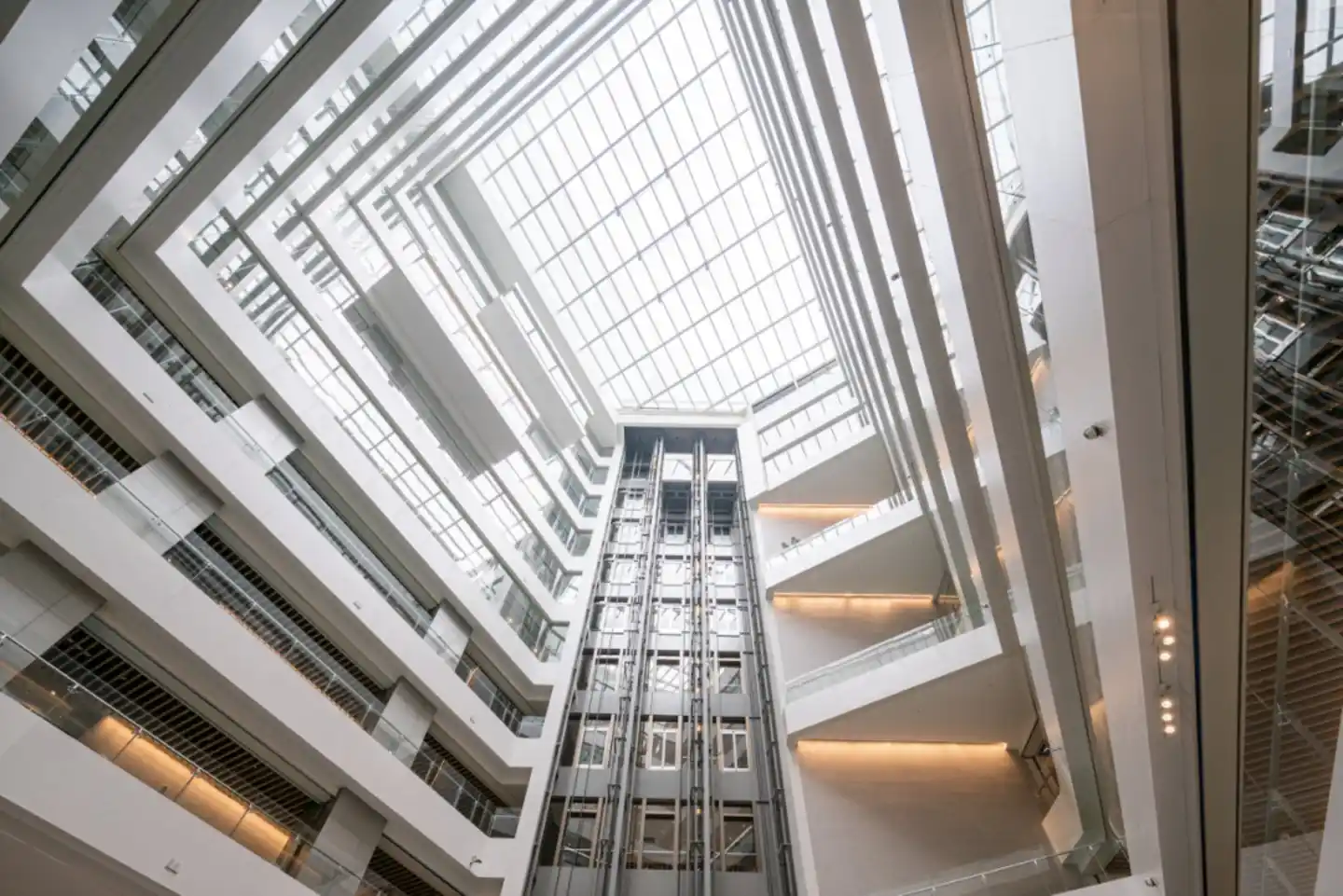
Back on Zhongguancun Street, Dinghao Tower offers a separate kind of evidence. The building opened in 2003 and, along with Hailong and e-World, formed what was once known as the golden triangle of electronics malls. At the time, it drew computer builders from around the country, with counters crowded from morning to night by people carrying cases and hard drives.
As e-commerce expanded, mall business weakened year after year, and the old triangle gradually faded. Renovation of Dinghao Tower A started in October 2020 and continued in phases until full completion in 2025. The counters were removed. In their place came an open office atrium. The tenants changed as well, with AI companies, computing power firms and robotics businesses moving in. The foot traffic changed with them, from computer buyers to engineers.
Renovating a building is not unusual. What stands out here is that the renovated space was actually filled by new industries. The foundations built during Zhongguancun’s mall era did not disappear with the counters. The area still sits close to Tsinghua University and Peking University, still attracts capital and talent, and still carries a business culture shaped by speed and efficiency. Once the old retail format was stripped away, those elements were simply placed into a different container. Dinghao’s story is not only about one building’s transition. It is about industrial replacement happening at the same set of coordinates.
Leyard and Galaxy General: two generations of companies on the same ground
The reporting route also offered a useful pairing of companies from opposite ends of that industrial cycle.
Leyard was founded in Zhongguancun in 1995. In 1998, it produced China’s first full-color LED display. It later held the top global market share in LED displays for many years, and its display systems were involved in service support for both the Beijing Winter Olympics and the Hangzhou Asian Games. In its 30th year, the company posted revenue of 7.15 billion yuan in 2024. Its 2025 annual report showed net profit attributable to shareholders of 307 million yuan, swinging back to profit after a loss in the previous year.
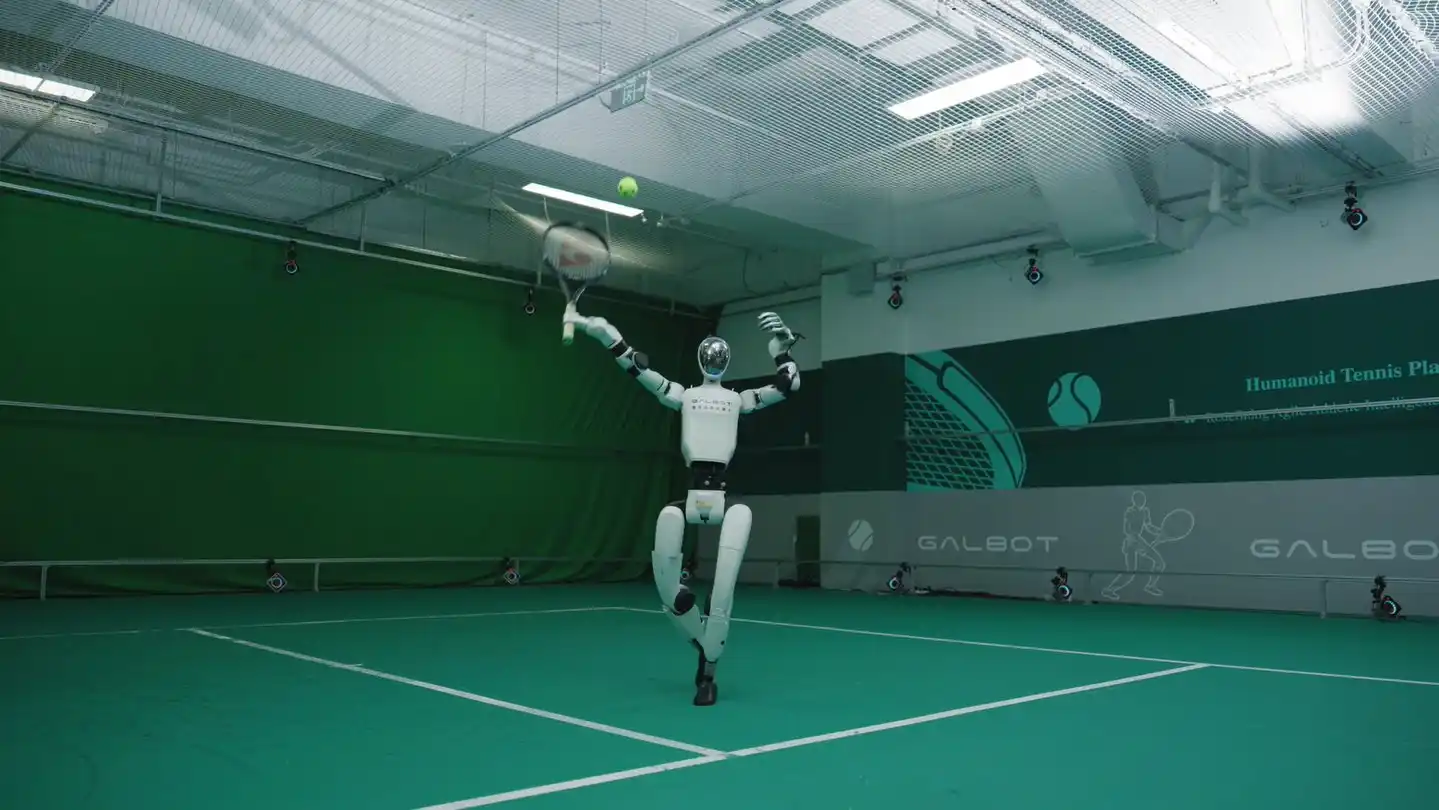
Galaxy General is almost 30 years younger. The company was founded in May 2023 by Wang He, a post-1990s professor at Peking University, and focuses on embodied large models and robotic bodies. Over three years, it has raised nearly 7 billion yuan in cumulative financing and reached a valuation above 20 billion yuan. The company says it is the highest-valued unlisted robotics company in China. In March this year, the third phase of the national large fund made its first investment in the embodied intelligence track, and Galaxy General was the recipient.
The company has also made public appearances beyond industrial settings. During this year’s CCTV Spring Festival Gala, Galaxy General’s robots appeared on stage with actors Shen Teng and Ma Li, autonomously performing tasks such as cracking walnuts and folding clothes. Its G1 wheeled humanoid robot, S1 industrial heavy-duty robot and space capsule retail system have already been deployed in multiple cities including Beijing and Chengdu.
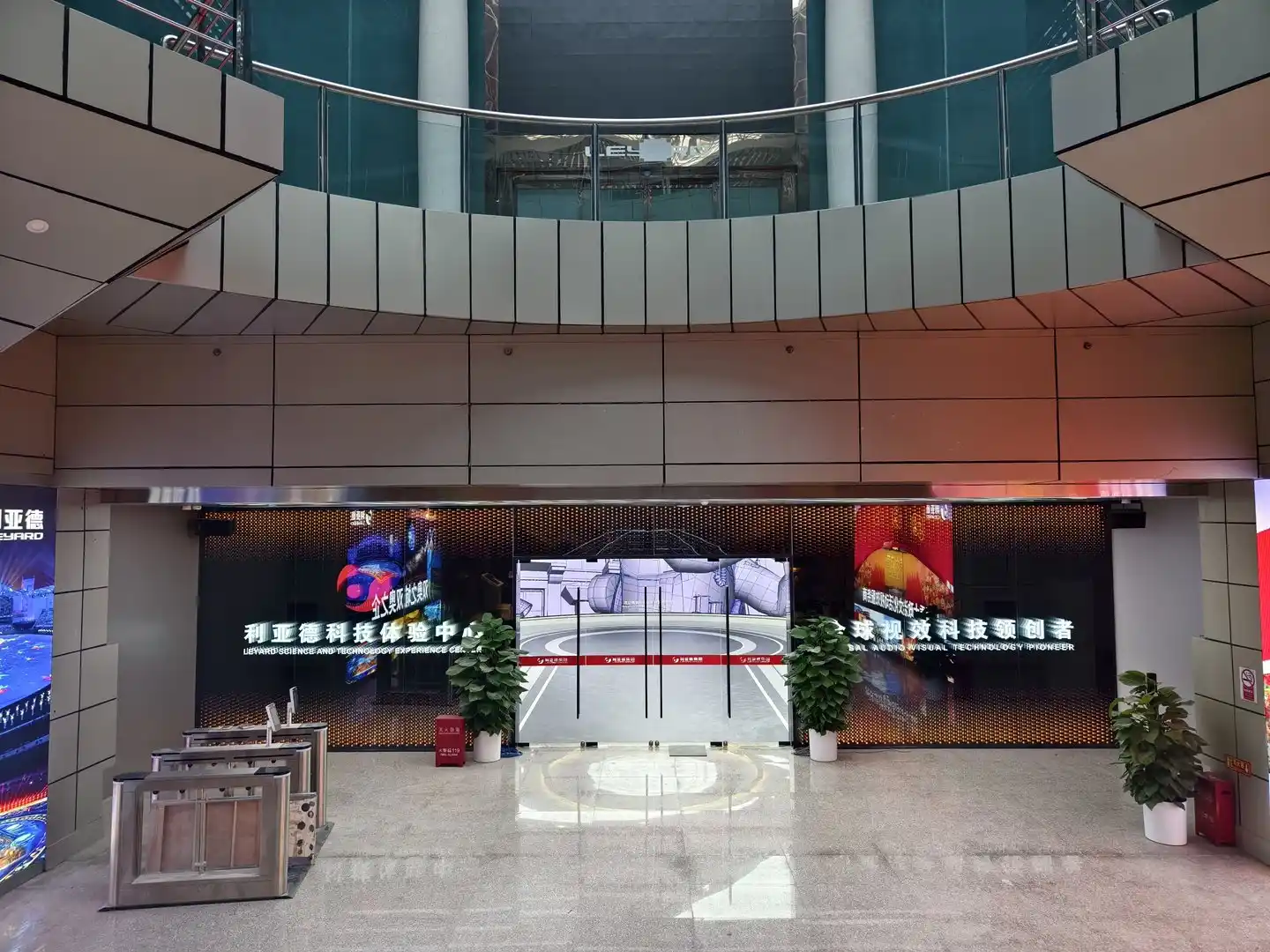
The two companies are separated by nearly three decades, but they share the same growth conditions in Haidian: talent supplied by universities, industrial support systems, and capital willing to place bets on technology. The track has changed, from display screens to robotics. The underlying soil has not.
AI Origin Community: keeping young founders close to the industry base
Companies can grow in Haidian, but growth alone is not the endpoint. Over time, industrial replacement depends on whether people choose to stay. The AI Origin Community, covering about 3 square kilometers in Wudaokou, was the youngest stop on the route. The district sits next to Tsinghua University and Peking University and is centered on Yuandian Tower. At the 2024 annual Zhongguancun Forum, Haidian released what it described as the world’s first AI innovation street plan. In January this year, Beijing launched construction of its first four artificial intelligence innovation streets, and the AI Origin Community was one of them.
According to media field reporting cited in the piece, the area has gathered more than 300 AI companies. AI firms account for over 70% of the total, and the district has accumulated more than 2,000 patents and trademarks.
One of the most distinctive programs there is called "Original Residents." It offers young entrepreneurs up to six months of free housing, along with job recommendations and connections to industry resources. The community also includes everyday scenes where robots make coffee and AI takes part in community governance and elderly care. Those are practical functions, but they also serve as reasons for young people to remain nearby.
By extending innovation from industrial parks into a neighborhood setting, Haidian is placing startups, living space and consumption in the same environment. If founders live there, build there and spend there, the next generation of companies is more likely to put down roots there as well.
The next baton
Looking back across the five stops, Haidian’s technology structure and startup environment appear as two sides of the same picture. On the technology side, multiple generations coexist at once: the 40-year arc represented by the exhibition center, the 30-year path of Leyard, the three-year-old Galaxy General, and the newly remade Dinghao. Display hardware, computing chips and embodied intelligence all remain present on the same patch of ground.
On the startup side, the baton keeps moving because several conditions exist at the same time: space can be repurposed, companies can be replaced by newer ones, tracks can shift, and people are still willing to stay. Where the next baton lands, and whether the young people living in the AI Origin Community’s free housing will open their own companies in Haidian a few years from now, is still a question for time to answer.