kids

Robinhood
2026-08-28 20:19:22

Robinhood CEO: Trump Accounts to Become Default Tool for US Charitable Donations, Direct to Children's Investment Accounts

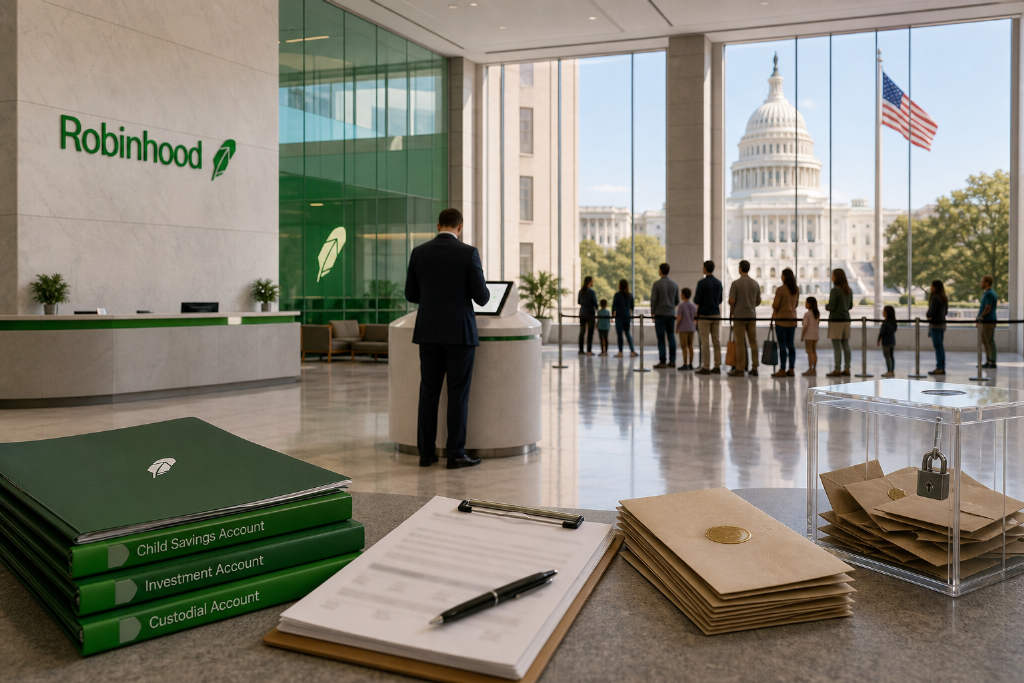
Robinhood CEO Vlad Tenev said on X that the company is building Trump Accounts to serve as the default tool for charitable giving in the United States. Tenev outlined a common problem: people who want to donate currently have to understand complicated rules and regulatory requirements, then evaluate various charities to confirm whether money flows to the target as advertised and whether funds are used efficiently. Trump Accounts, he said, are meant to change that by letting donors put money directly into investment accounts registered under the names of American children. That setup cuts out layers between donors and kids. Donors can see exactly where their money is headed, while the children hold ownership of the assets. The accounts carry no fees, and the investment portfolio can compound at market rates over many years. Tenev described the donation model as holding significant potential to positively reshape US philanthropy.
190
Robinhood CEO: Trump Accounts to Become Default Tool for US Charitable Donations, Direct to Children's Investment Accounts
Meta
2026-08-26 13:59:23

Meta agrees to settlement worth up to $17.1 billion in youth addiction case, with nighttime restrictions planned for Instagram and Facebook

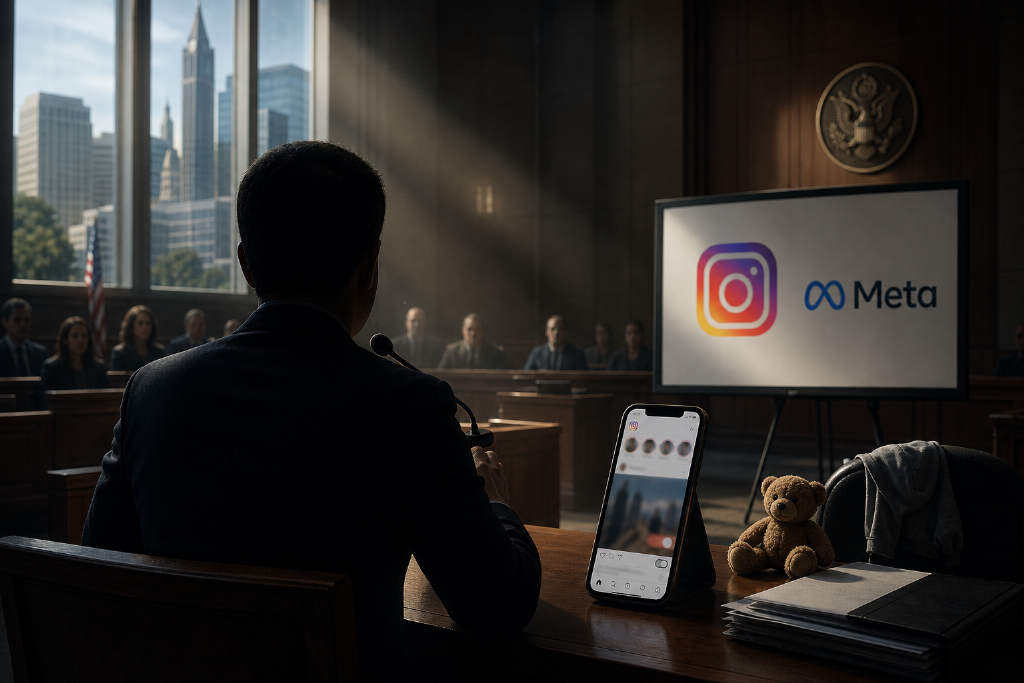
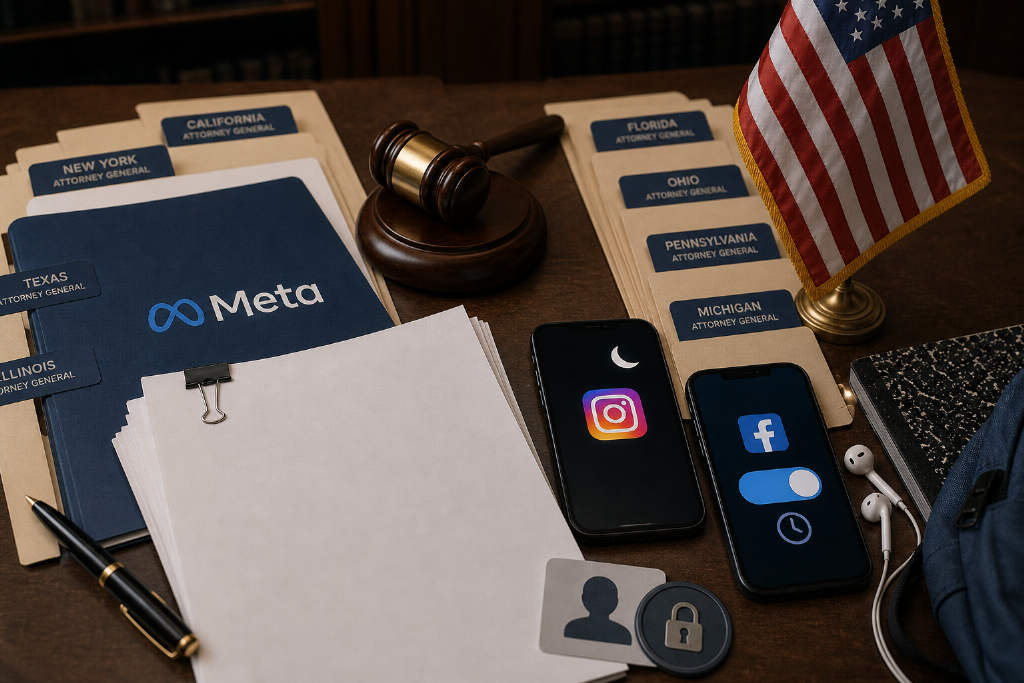
Meta has agreed to a multistate settlement valued at up to $17.1 billion to resolve claims that Facebook and Instagram were deliberately designed in ways that addicted teenagers, according to The New York Times. The deal would end a closely watched trial underway in federal court in Oakland, California, where attorneys general had accused the company of using addictive product features, misleading the public about platform safety, and unlawfully collecting minors’ data without parental consent in violation of the Children’s Online Privacy Protection Act, or COPPA. Under a statement from the Connecticut attorney general’s office, Meta would pay as much as $12.19 billion over the next 10 years, with the total potentially rising to $17.1 billion if rivals such as TikTok, YouTube, and Snapchat accept similar safety reforms and financial terms. The agreement also requires broad changes for users under 18, including a combined default daily limit of two hours across Instagram and Facebook, forced pauses after 15, 60, or 90 minutes of continuous use, overnight restrictions from 12:00 a.m. to 6:00 a.m., and muted notifications during school hours on weekdays. The settlement still requires a judge’s approval, and thousands of related lawsuits across the US remain active.

240
Meta agrees to settlement worth up to $17.1 billion in youth addiction case, with nighttime restrictions planned for Instagram and Facebook
Changpeng Zha
2026-08-25 13:00:00

CZ says most people should DCA into major crypto instead of going all-in

Binance founder Changpeng Zhao said he would not tell people to repeat his 2014 decision to sell an apartment and put everything into Bitcoin if that property represents most of their wealth. In a community Q&A at Binance Clubhouse Bali 2026, Zhao said most people are better served by dollar-cost averaging 1%, 5%, or 10% of monthly income into major crypto assets they trust. The discussion also covered his changed views on NFTs, meme coins, and real-world assets, his belief that the four-year cycle still looks intact, and his view that the next major catalyst cannot be called in advance. Zhao also spoke at length about AI, saying blockchain-based payment rails are a better fit for AI agents than credit cards because they are programmable, borderless, and less dependent on human verification steps. He added that Giggle Academy, which he said now serves more than 1 million children, found that fully AI-driven teaching does not work well for kids ages 2 to 6, leading the team to keep humans in charge while using AI to generate content components.

310
CZ says most people should DCA into major crypto instead of going all-in
Changpeng Zha
2026-08-25 05:33:52

CZ says most people should skip the all-in trade and DCA into major crypto assets

Binance founder Changpeng Zhao used a Bali Clubhouse 2026 Q&A to draw a clear line between his own early Bitcoin bet and what he thinks most people should do now. Zhao, widely known for selling his apartment in 2014 to buy Bitcoin, said he would not advise anyone to repeat that move if the property represents most of their wealth. Instead, he said most people are better off using dollar-cost averaging and putting 1%, 5%, or 10% of monthly income into large crypto assets they trust. He also said several of his views have changed over time. Zhao admitted he did not expect NFTs to become mainstream, still does not fully understand the logic behind meme coins despite their popularity, and has turned more positive on real-world assets after initially dismissing the sector about a year and a half ago. On market structure, he said the four-year cycle still looks strong, but he cannot identify the next catalyst and noted he did not see DeFi Summer coming six months in advance in 2020. The discussion also covered AI, payments, education, and Indonesia’s Web3 market. Zhao argued crypto-native payment rails are a better fit for AI agents than credit cards, said Giggle Academy found that fully AI-led teaching did not work well for children aged 2 to 6, and said Indonesia still lacks local stablecoins, tokenized domestic assets, and clearer regulation.

530
CZ says most people should skip the all-in trade and DCA into major crypto assets
Binance
2026-08-25 00:02:10

MarsBit commentary questions Binance’s standing in Washington as U.S. compliance becomes crypto’s key battleground

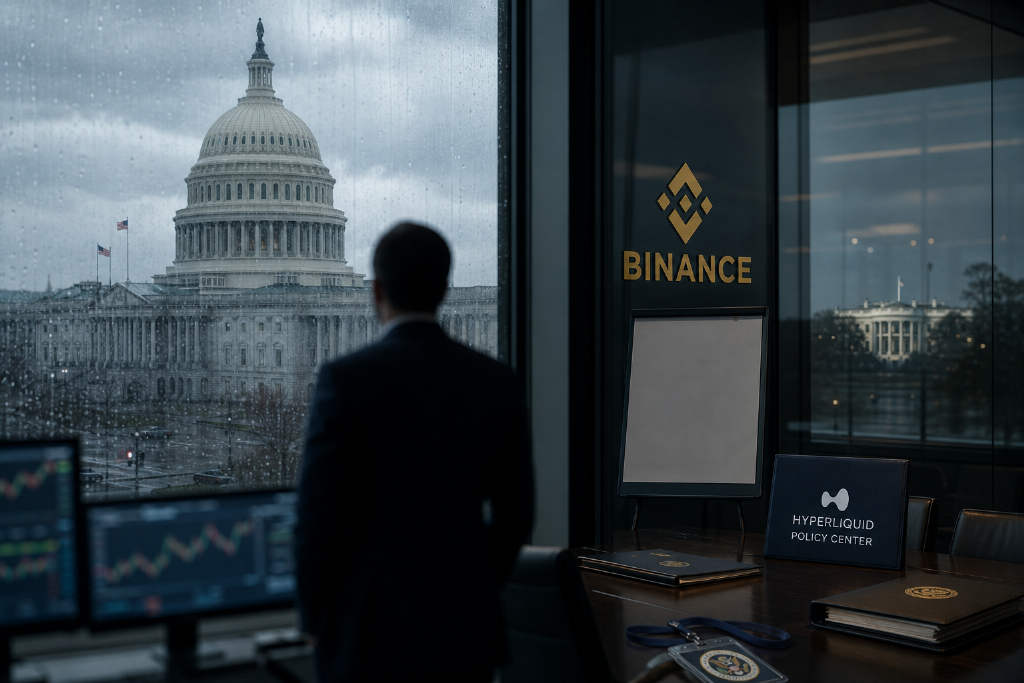
MarsBit published a lengthy opinion article arguing that Binance’s biggest threat is no longer a direct product challenge from Hyperliquid alone, but the passing of time in a market where liquidity, policy access and political alignment are increasingly linked. The piece says Binance’s absence from the U.S. Commodity Futures Trading Commission’s IAC meeting was a visible sign that the exchange is losing ground in Washington even as Hyperliquid builds policy infrastructure through the Hyperliquid Policy Center, or HPC. The article ties together several threads: Donald Trump’s inner circle, Witkoff’s reported involvement with WLFI, USD1’s relationship with Aster, Justin Sun’s defense of USDD, and Binance’s reported delays around restrictions connected to HTX. It argues that in the current cycle, crypto is being reshaped less by the old BTC-altcoin rotation and more by access to U.S. compliance channels, stablecoin liquidity and institutional influence. According to the author, Binance still has scale and trading depth, but that strength has become a source of pressure rather than insulation. The commentary says the exchange now faces a three-sided problem: preserving liquidity, securing regulatory access to the U.S. market, and avoiding being forced into explicit geopolitical alignment. Its final conclusion is blunt: Binance will not lose to Hyperliquid, but to time.

660
MarsBit commentary questions Binance’s standing in Washington as U.S. compliance becomes crypto’s key battleground
Meta
2026-08-20 03:04:54

Former Meta engineering director tells court Instagram ignored youth addiction concerns and focused on profit

Meta’s child safety case has opened in federal court in Oakland, California, with former engineering director Arturo Béjar delivering testimony that cut directly at Instagram’s internal priorities. Béjar told jurors that the company’s posture toward users under 13 was effectively 「don’t ask, don’t tell」 and said Mark Zuckerberg’s 2021 public rejection of claims that Meta put profit ahead of user safety was not true. He also argued that Meta’s internal culture measured success mainly by how long and how often people used its products, even when that came with harm to mental health. The case, brought by California, Colorado, Kentucky, and New Jersey, centers less on specific posts and more on product design. State lawyers said features such as infinite scroll, likes, and optional safety settings were built to keep young users engaged for longer, improving ad targeting and revenue. Prosecutors also said Meta failed to take basic steps after identifying underage users and collected personal data from children under 13 without parental consent. Meta, for its part, said youth mental health and social media use are serious issues, argued it has a responsibility to work with families, and has challenged whether 「social media addiction」 amounts to a recognized psychiatric diagnosis for fraud claims.

500
Former Meta engineering director tells court Instagram ignored youth addiction concerns and focused on profit
AI anti-scam
2026-08-19 13:30:00

Apate says its 200,000 AI scam-bait bots are tying up fraudsters and gathering crypto intelligence

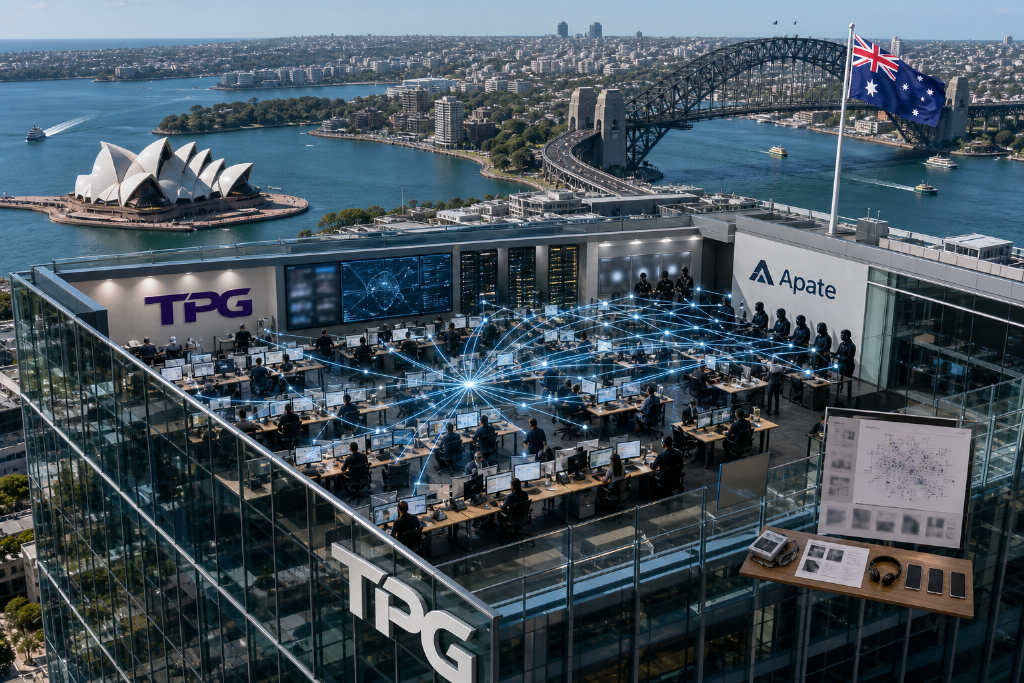
Australian tech firm Apate says it has built nearly 200,000 AI personas designed to pose as plausible scam victims across phone calls, social media and messaging apps, with the aim of tying up fraudsters and collecting useful intelligence. Founder Dali Kaafar told Cointelegraph Magazine that the company handles hundreds of thousands of calls and conversations a day, and even tracks how often angry scammers swear at the bots as a monthly KPI. In the six weeks leading up to the end of 2025, Apate said its bots handled 600,000 scam calls for Australian telco TPG, wasting more than 500 days of scammers’ time and equating to roughly $13 million in prevented losses. The company says its systems are also used to extract actionable data for banks, telcos and a blockchain analysis client, including newly used crypto wallet addresses and scam methods before funds move. Kaafar said the idea began after he spent 44 minutes stringing along a scam caller during a family picnic in Sydney in November 2021. The project later received funding from Australia’s Office of National Intelligence, spun out of Macquarie University in 2023, and now works with major Australian banks as well as banks in the UK, South Africa and Southeast Asia.

280
Apate says its 200,000 AI scam-bait bots are tying up fraudsters and gathering crypto intelligence
Scott Melker
2026-08-10 10:30:08

Scott Melker’s 2026 crypto playbook: buy Bitcoin, hold it, and ignore the noise

Scott Melker used a long-form interview to make a simple case for how ordinary investors should approach crypto in 2026 and beyond: buy Bitcoin and hold it. In the conversation, Melker argued that the biggest myth in the market is the belief that most people can outperform through trading. He said his own experience showed the opposite, especially after comparing active altcoin trading with simply measuring returns in Bitcoin terms. The interview also covered his path from entrepreneur and DJ to crypto media host, his shift away from constant trading, and the lessons he says were cemented by the 2022 bear market. Melker said many tokens remain structurally disconnected from the value created by the projects behind them, and that much of the sector is going through a reordering rather than dying. He described a current portfolio of roughly 80% Bitcoin, 10% Ether, and 10% Solana, tying that allocation to institutional adoption. He also discussed his experience as a major Voyager creditor, his caution toward yield products and DeFi risk, and his push to focus media coverage on the bridge between crypto and traditional finance. Across the full interview, his position stayed consistent: for people with jobs, families, and limited time, the most practical strategy is not to trade every move, but to stay in the market through Bitcoin and let time do the work.

1230
Scott Melker’s 2026 crypto playbook: buy Bitcoin, hold it, and ignore the noise