‹ Backliability

liability

Meta
2026-09-21 12:06:20

Meta teams up with NEC, Orange and Sumitomo Electric on Petal transatlantic cable

Meta said it will build a new transatlantic subsea cable system called Petal, with planned capacity of 1 petabit per second. The company said that would make it twice as powerful as the most advanced existing transoceanic cables. Petal is set to link the United States and France across roughly 7,000 kilometers, with service expected in 2029. Meta also said the system will be the first to deploy multicore fiber technology over transoceanic distances, allowing it to carry double the data without a significant increase in power use or physical infrastructure. The project is being developed with NEC, Sumitomo Electric and French telecom company Orange. According to Meta Newsroom, Meta has already invested in more than 20 subsea cable projects and ranks among the largest investors in global subsea cable infrastructure. The company said Petal will increase global data transmission capacity and reliability once completed.


50
Meta teams up with NEC, Orange and Sumitomo Electric on Petal transatlantic cable
TypeSafe AI
2026-09-21 11:23:00

TypeSafe AI’s Jev spread to about 13% of Vercel’s paid teams within 24 hours of launch

TypeSafe AI came out of stealth on Sept. 15, 2026 and introduced Jev, a model built for structured decisions rather than text generation. Within 24 hours, about 13% of Vercel’s paid teams had started using it, and Vercel described the rollout as one of the fastest-adopted launches in its history. Native support from Cloudflare, LangChain, and Langfuse followed within days. Jev is positioned as a “System One Model,” designed to return probabilities, scores, and confidence values instead of natural-language answers. TypeSafe says the model is 40x to 200x faster than comparable large language models on classification-style tasks, with end-to-end latency of 70 to 500 milliseconds and costs that are 40x to 400x lower. Its pricing is unusual as well: input tokens cost $0.042 per million, while output tokens are free. The company says Jev is not a replacement for large language models. It is aimed at narrow, high-frequency decision tasks such as spam detection, moderation, and routing. Third-party tests cited by developers and platform engineers point in the same direction on speed and cost, though long-term production reliability, retention, failure rates, and the durability of its business model remain unclear. TypeSafe has also not disclosed Jev’s underlying architecture.

50
TypeSafe AI’s Jev spread to about 13% of Vercel’s paid teams within 24 hours of launch
Kioxia
2026-09-21 08:16:10

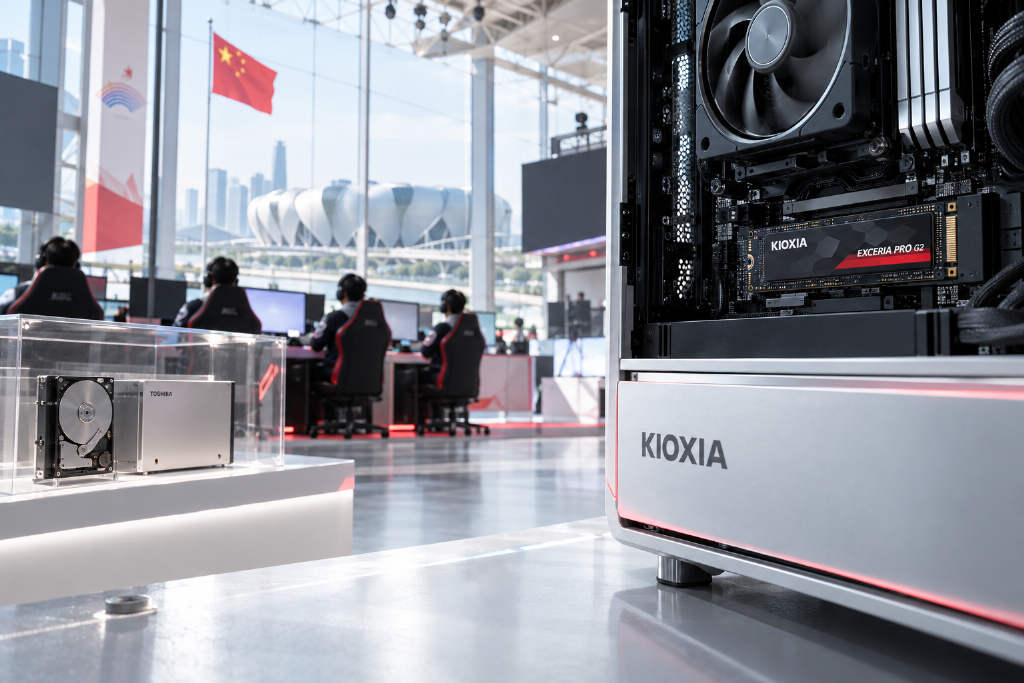
Kioxia uses Asian Games esports role to showcase SSDs as tournament infrastructure

Esports’ debut as a medal event at the Asian Games has drawn attention to a less visible layer of competition hardware: storage. Kioxia, formerly Toshiba Memory, signed on as the event’s official gaming SSD supplier and placed its EXCERIA PRO G2 drives inside the competition systems. The article argues that this kind of sponsorship is no longer about logo placement alone. By embedding core hardware into tournament operations, vendors are trying to turn exposure into technical validation and, eventually, influence over industry standards. The report also revisits the history behind Kioxia. Toshiba, which invented NAND flash in 1987, sold most of its memory business in 2018 for about $18 billion to a Bain Capital-led consortium that included SK Hynix, after losses tied to Westinghouse Electric and an accounting scandal pushed the company into crisis. As AI-driven demand for storage chips later surged, Kioxia’s business and valuation climbed sharply, while Toshiba was taken private and delisted in 2023. The piece says esports-grade SSDs are becoming a distinct market as professional titles demand low latency, high random read/write performance and fast map loading. It cites industry data putting the global esports SSD market at about 5 billion yuan in 2024, with projections of more than 20 billion yuan by 2028 and a compound annual growth rate above 40%.

70
Kioxia uses Asian Games esports role to showcase SSDs as tournament infrastructure
Zhipu
2026-09-21 03:52:46

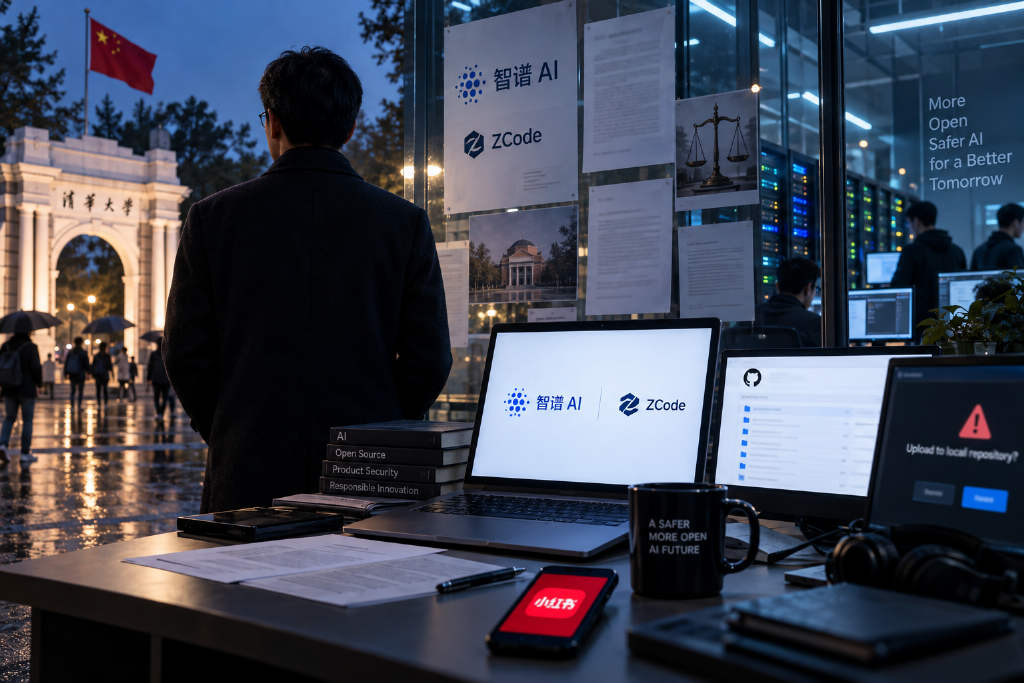
Zhipu says ZCode security fixes are complete as Tang Jie reportedly files complaint over defamatory post

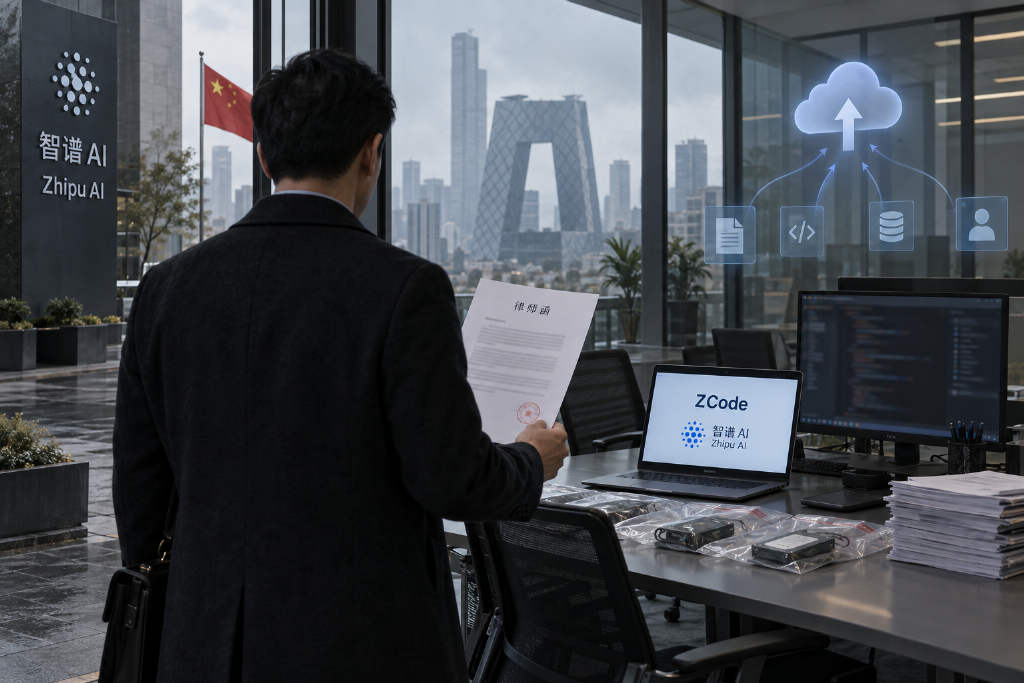
On Sept. 21, ChainCatcher reported that a social media user known as "Zhang Kangkang kk" said Tang Jie, founder of Zhipu and a professor at Tsinghua University, personally filed a complaint through Xiaohongshu over a user post. The complaint alleged that the post, without factual basis, used phrases linking ZCode to code theft and plagiarism rumors, tied Tang Jie to those claims through derogatory wording, and used AI-generated image compositing to place his portrait in a defamatory context. The complainant said the content amounted to malicious defamation and commercial disparagement, and asked the platform to remove the post and penalize the account involved. On the same day, Zhipu said it had completed remediation for security issues in its standalone desktop AI coding client ZCode, apologized to users, open-sourced the product, and said it would set up a standing product security vulnerability mechanism. The company had previously faced criticism after developers found that ZCode silently uploaded data from users’ local repositories without prior notice. Zhipu publicly apologized and issued an emergency fix on Sept. 18, saying the issue stemmed from a repository indexing feature that was enabled by default and had no option to turn it off. On Sept. 20, Taiyuan Chengming Technology Co., Ltd. sent a letter to Zhipu accusing ZCode of uploading the company’s data assets and trade secrets without authorization and said it reserved the right to pursue legal action.

30
Zhipu says ZCode security fixes are complete as Tang Jie reportedly files complaint over defamatory post
CPC Taiwan
2026-09-20 09:00:38

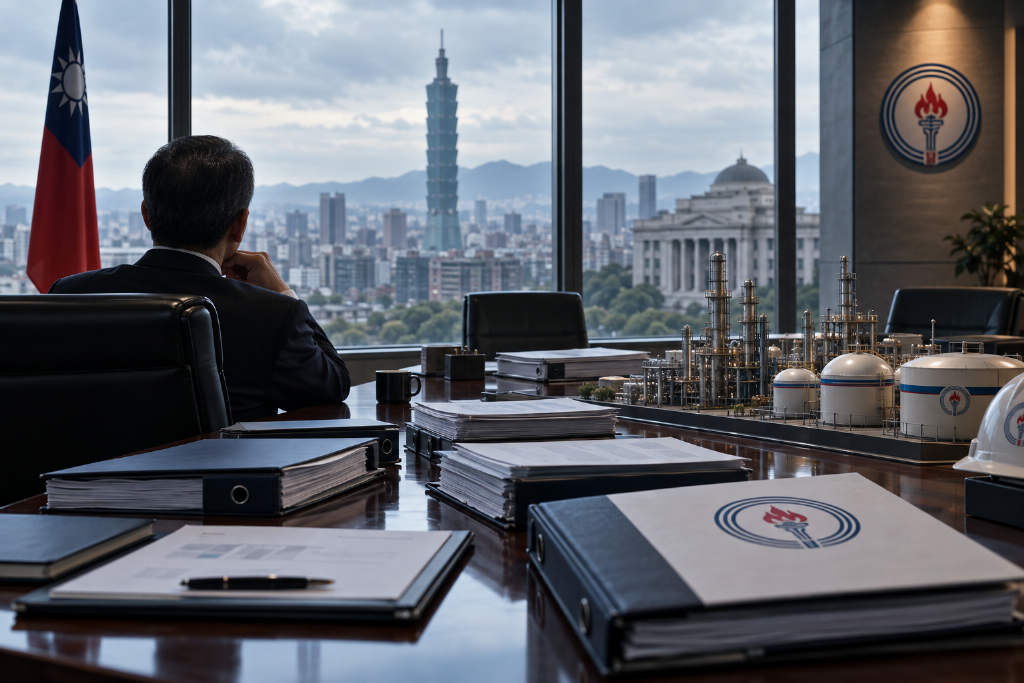
CPC Taiwan director warns debt burden could force court-led restructuring in 2027

CPC Taiwan is carrying TWD 850 billion in interest-bearing debt, and board director Wei Hui-shan said the state-owned oil company could face a point where assets no longer cover liabilities in 2027 if losses continue this year and global energy prices stay elevated. Under Taiwan’s Company Act, that would leave the board with a duty to petition a court for restructuring. Wei said annual interest costs alone are running into the tens of billions of Taiwan dollars, while the company’s debt ratio, which was a little above 60% before the pandemic and the Russia-Ukraine war, climbed past 90% after 2022 and has stayed around 92% to 93% for nearly three years. She linked the deterioration to the surge in natural gas prices after Russia’s invasion of Ukraine, saying CPC absorbed most of the added cost under government price-freeze policies. The Ministry of Economic Affairs has planned two separate items in its 2026 supplementary budget: TWD 238.8 billion for a capital injection into CPC and TWD 108.9 billion in subsidies for frozen prices on gasoline, diesel, natural gas and bottled LPG. Wei said the two are not overlapping, with subsidies covering policy-driven losses and the capital injection aimed at repaying old debt and lowering interest expenses.

160
CPC Taiwan director warns debt burden could force court-led restructuring in 2027
Tsinghua Univ
2026-09-20 07:16:10

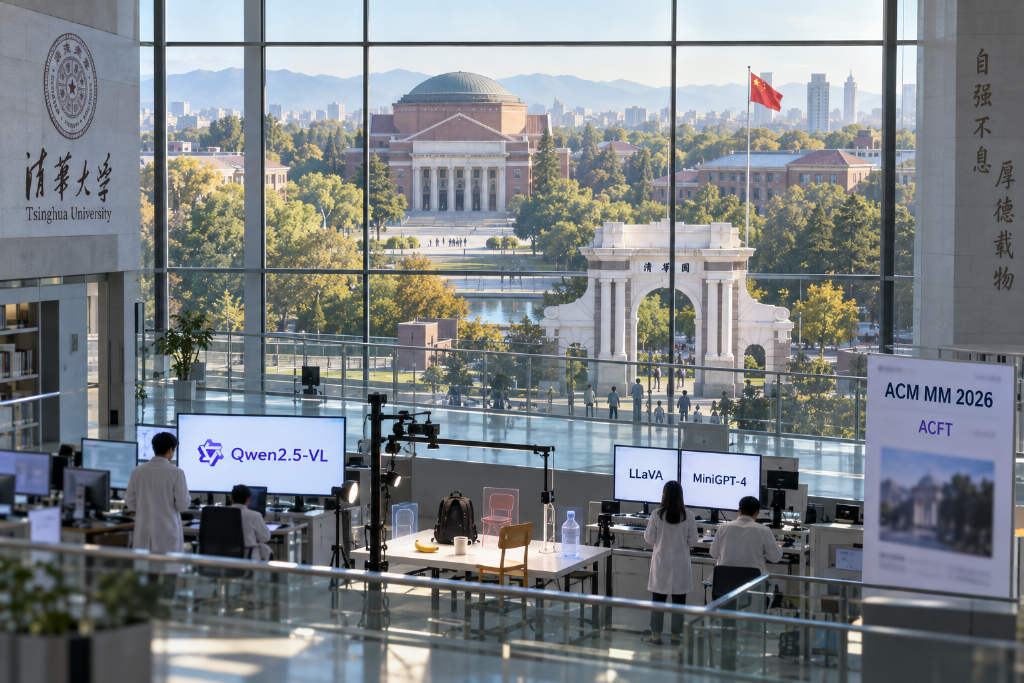
Tsinghua team identifies “visual-origin hallucination” in multimodal models, reports gains with 0.9% of COCO data

A research team from Tsinghua University has argued that object hallucinations in multimodal large language models are not explained by language priors alone. In a paper accepted to ACM MM 2026, the authors said that when model outputs are reduced to short Yes/No answers, inference relies more heavily on the visual modality, exposing a separate failure mode rooted in visual feature extraction and image-text embedding misalignment. The team calls this mechanism “visual-origin hallucination.” To address it, the paper introduces AHAF, short for Adversarial Hallucination Attribute Flipping, and ACFT, or Adversarial Contrastive Fine-Tuning. AHAF uses PGD-based perturbations within a small ℓ∞ ball to flip a non-hallucinating image into one that triggers hallucination, creating tightly aligned positive and negative pairs. ACFT then optimizes those pairs in embedding space by increasing similarity between a text anchor and the positive image while decreasing similarity to the negative image. According to the paper, ACFT uses just 0.9% of the COCO dataset and adds no inference overhead. The reported experiments cover LLaVA, MiniGPT-4, and Qwen2.5-VL, with evaluation on POPE, MME, and four description-level hallucination benchmarks. The authors also report quantitative evidence from embedding similarity, attention entropy, and encoder intervention tests, arguing that visual feature quality plays a causal role in short-answer hallucinations.

170
Tsinghua team identifies “visual-origin hallucination” in multimodal models, reports gains with 0.9% of COCO data
Chengming Tec
2026-09-20 01:06:00

Chengming Technology demands answers from Zhipu over ZCode data uploads, disputes “fixed” claim

Taiyuan Chengming Technology Co., Ltd. has sent a formal letter to Beijing Zhipu Huazhang Technology Co., Ltd., raising a series of demands over allegations that the ZCode client uploaded the company’s data assets and trade secrets without authorization. According to PANews, Chengming said Zhipu had previously issued a public apology over “silent uploads of users’ local repository data” and stated that the issue had been fixed. Chengming, however, said its own evidence collection showed the uploads were automatically triggered and occurred in batches, rather than being limited to isolated “code snippets.” The company said the materials involved included full project source code, system architecture, version control history, database passwords, cloud service credentials, and employees’ personal information, which it argued went far beyond the scope described in Zhipu’s privacy policy. Chengming also questioned the effectiveness of the claimed fix, saying upload activity was still detected in the early hours of the same day Zhipu made its public apology, even though the client had been updated to version 3.12.3 on Sept. 16. It has asked Zhipu to provide a written response by Oct. 10 on deletion, data flows, third-party sharing, model training use, and whether cross-border transfer or overseas storage took place. Zhipu had not issued a public response to the letter at the time of publication.

80
Chengming Technology demands answers from Zhipu over ZCode data uploads, disputes “fixed” claim
YMTC
2026-09-20 00:58:15

YMTC’s STAR Market IPO Is Accepted After a 333.79 Billion Yuan Quarterly Profit, but the Cycle Question Remains

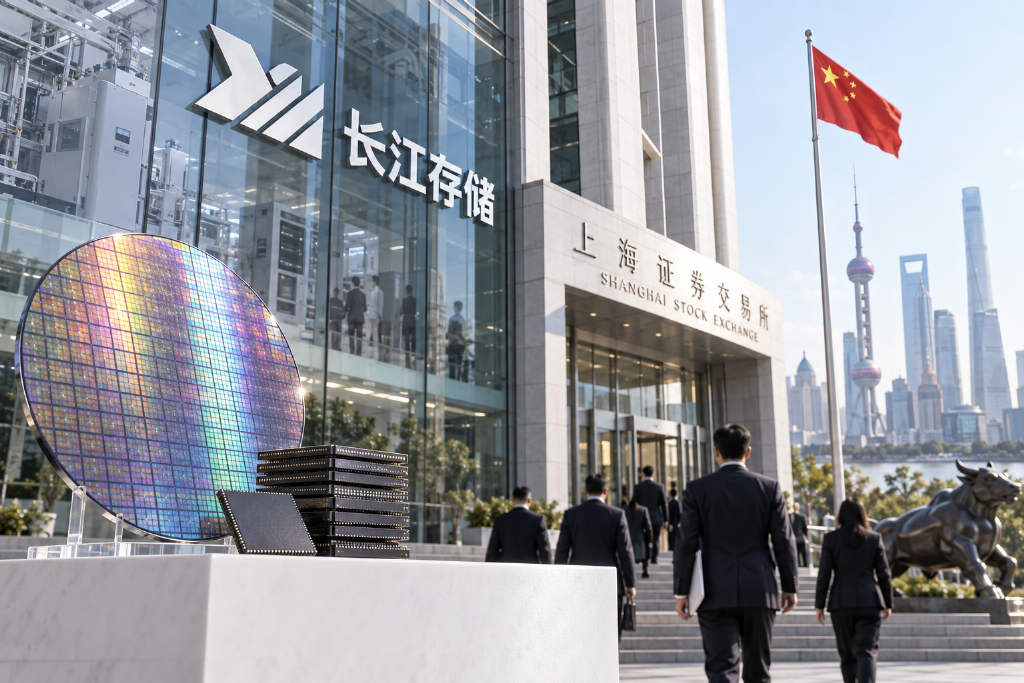
Yangtze Memory Technologies Co. (YMTC) has moved one step closer to a STAR Market listing after the Shanghai Stock Exchange updated its review status to "accepted." The company plans to issue 1.98 billion to 2.43 billion shares and raise 33 billion yuan, with 20.8 billion yuan earmarked for mass-production line upgrades and 12.2 billion yuan for research and development. By the proposed fundraising size, the deal is the largest IPO application ever filed on the STAR Market. The filing shows a dramatic financial turnaround. Revenue rose from 18.744 billion yuan in 2023 to 63.185 billion yuan in 2025, while attributable net profit swung from a 19.181 billion yuan loss in 2023 to a 6.771 billion yuan profit in 2024 and 14.211 billion yuan in 2025. In the first quarter of 2026 alone, YMTC posted 47.042 billion yuan in revenue and 33.379 billion yuan in net profit attributable to shareholders, more than twice its full-year 2025 profit. Still, the prospectus also lays out the tension behind those numbers: margins surged with NAND pricing, but the company remains exposed to a heavy depreciation burden, negative free cash flow in 2025, rising receivables, inventory write-down pressure, and supply-chain constraints. The filing presents YMTC as a company benefiting from an AI-driven memory upcycle while still carrying the structural risks of a capital-intensive, highly cyclical NAND business.

230
YMTC’s STAR Market IPO Is Accepted After a 333.79 Billion Yuan Quarterly Profit, but the Cycle Question Remains