‹ Backliability

liability

Zhipu
2026-09-20 00:44:08

Zhipu’s ZCode upload controversy exposes a blind spot in Agent oversight

A reverse-engineering analysis published on Sept. 18 by tech blogger ferstar has pushed Zhipu’s coding agent ZCode into a wider debate over how AI tool vendors handle user data. According to the analysis, once a user is logged in, ZCode packages an entire project together with its full modification history, encrypts the bundle, and uploads it to cloud servers in the background. Ferstar said the visible settings in the interface do not actually stop the packaging and upload process, and that the decryption key is held only on Zhipu’s side. Zhipu apologized soon after the findings spread through the community. The company said the issue stemmed from a repository indexing feature that was enabled by default in the early stage of rollout, added that uploaded data was destroyed immediately after use and not retained, and pledged to open-source the ZCode codebase, invite third-party reviewers, and grant all users an extra weekly quota reset. The incident has drawn comparisons with earlier disputes involving xAI’s Grok Build and Anthropic’s Claude Code. In all three cases, the trigger for public scrutiny did not come from regulators or formal audits, but from independent researchers and community members. The broader concern is that current Agent security frameworks are largely designed to stop outside attackers, while offering little direct restraint on what the vendors themselves can collect, transmit, or change behind the scenes.

150
Zhipu’s ZCode upload controversy exposes a blind spot in Agent oversight
Neutrl
2026-09-18 17:26:22

Neutrl Opens NUSD Redemptions at $0.51 as Strata’s Junior Tranche Heads for Zero

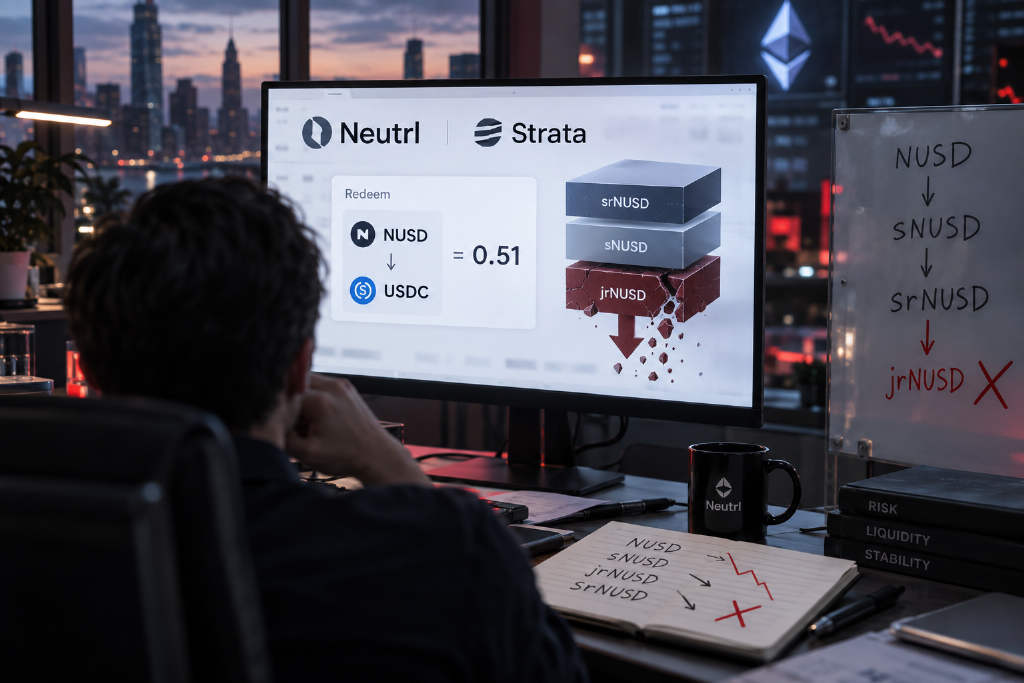
Neutrl has started a redemption program that values NUSD at $0.51 in USDC, giving holders a way out at a 49% discount to the token’s $1 reference value. The rate is visible on Ethereum through the protocol’s redemption contract, where the `redemptionRate()` function returns 510000000000000000, or 0.51 with 18 decimals. Neutrl said both NUSD and sNUSD holders can submit requests, receive USDC, and have the corresponding tokens burned, though its public notice did not spell out the conversion used for sNUSD. The same valuation is set to wipe out the first-loss layer in Strata’s Neutrl market. Strata has scheduled an update that would mark jrNUSD down to zero and set the srNUSD/NUSD accounting value at 1.23971, with withdrawals settling in sNUSD rather than USDC. OAK Research also flagged a legal issue, saying users who accept the redemption program may be waiving recourse against Neutrl across all of their tokens, even if they redeem only part of their holdings. During The Defiant’s reporting, the redemption portal was region-blocked, preventing an independent review of the exact clause.

260
Neutrl Opens NUSD Redemptions at $0.51 as Strata’s Junior Tranche Heads for Zero
Infleqtion
2026-09-18 12:49:10

Infleqtion’s quantum story is gaining traction, but its 53x sales multiple leaves little room for error

Infleqtion is building a broad commercial case around its neutral-atom quantum platform, pairing compact hardware and low power use with government deployments and partnerships involving Eaton and Nvidia. The company’s roadmap, which targets 30 logical qubits in 2026 after 2 in 2024 and 12 in 2025, is presented as a sign of steady technical progress across quantum computing and sensing. The financial picture is less forgiving. Revenue in FQ2'26 rose 157% year over year, helped by the timing of revenue recognition on two government contracts, and gross margin improved to 15.9%. At the same time, R&D expense jumped 138%, adjusted operating losses widened by more than 2x, and management signaled another prudent increase in annual cash burn for 2027. The company ended the period with $582 million in net cash, while stock-based compensation reached $20.35 million in H1'26, or 92.1% of revenue. The article argues that valuation is the main constraint. Infleqtion is trading at 53.01x forward EV/Sales, above its recent trough of 32.46x and far above a sector median of 3.43x. With customer concentration still high and the stock consolidating near $12 after holding support around $8 twice, the source article keeps a Hold stance and says a return toward the $8 area would offer a more attractive setup to revisit.

460
Infleqtion’s quantum story is gaining traction, but its 53x sales multiple leaves little room for error
SEC
2026-09-17 17:34:03

SEC Opens a Temporary Path for Onchain Tokenized Stocks as CFTC Broadens Relief for Passive Software Providers

U.S. regulators moved within hours of each other on Thursday, using existing authority rather than new legislation to carve out limited crypto-related relief after the Senate failed to advance H.R. 3633. The Securities and Exchange Commission created a temporary, conditional exemption for Tokenized Securities Venues, allowing certain tokenized National Market System stocks to trade onchain through permissioned liquidity pools, while the Commodity Futures Trading Commission expanded no-action relief for passive software providers that route users to registered futures intermediaries. The SEC order is narrow and time-limited. It lasts five years unless amended or withdrawn earlier, does not permit primary issuance, and leaves antifraud rules, OFAC sanctions compliance, and Securities Act registration for primary offerings untouched. It also imposes hard caps on symbols and trading volume, requires public-ledger smart contracts that can be audited, mandates trading halts when the underlying stock is halted on its primary exchange, and gives issuers the power to block third-party tokenized listings within 30 calendar days. The CFTC’s Staff Letter 26-25 extends a path that had previously been available only to Phantom Technologies. It says staff will not recommend enforcement against qualifying passive software providers for failing to register as introducing brokers, subject to 10 conditions. Industry groups welcomed the SEC move, while SIFMA repeated concerns that broad exemptions could create parallel but unequal trading systems.

390
SEC Opens a Temporary Path for Onchain Tokenized Stocks as CFTC Broadens Relief for Passive Software Providers
CFTC
2026-09-17 21:29:54

CFTC Staff Says Wallets Can Offer Regulated Perps Without Broker Registration

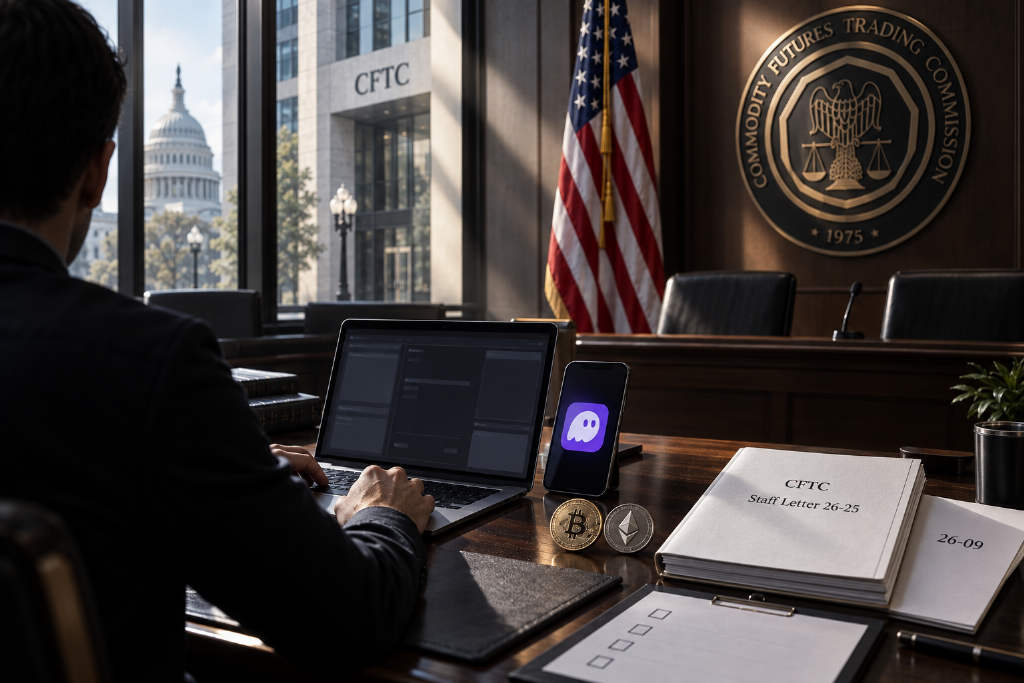
Staff at the U.S. Commodity Futures Trading Commission said Thursday that software developers may integrate regulated derivatives trading into self-custodial crypto wallets without registering as brokers, provided they meet a set of stated conditions. The guidance came in Staff Letter 26-25 from the CFTC’s Market Participants Division, which said it would not recommend enforcement against providers of passive software for failing to register as introducing brokers, or against related personnel for failing to register as associated persons. The position extends relief that had previously been available only to Phantom Technologies under Letter 26-09, issued in March. According to the division, other similarly situated passive software providers later sought the same treatment. Under the new letter, covered software can route user orders directly to registered exchanges, futures commission merchants, or introducing brokers for products including event contracts, perpetual contracts, and other CFTC-regulated derivatives. The relief comes with 10 conditions, including user disclosures, compliance with National Futures Association marketing rules, and joint-and-several liability undertakings between the software provider and each venue or broker it works with. The division also said its position is not binding on the full Commission and will remain in place only until the CFTC adopts a rule or guidance on when software developers must register. The relief is not limited to crypto software.

280
CFTC Staff Says Wallets Can Offer Regulated Perps Without Broker Registration
Stablecoins
2026-09-18 10:03:08

Banks Turn to Tokenized Deposits as SWIFT Pushes Weekend Cross-Border Transfers

Banks are using tokenized deposits and shared ledgers to keep cross-border payments moving outside normal banking hours, without replacing decades-old core systems. On Saturday, Sept. 5, DBS and Citi completed a U.S. dollar transfer from Singapore to New York in minutes using tokenized deposits and SWIFT’s new ledger. The article argues that the bottleneck in cross-border transfers has long sat with bank operating systems and settlement windows, not message delivery alone. Rather than rebuilding core banking infrastructure across dozens of jurisdictions, banks are creating parallel “side-core” systems that let balances move 24/7 while preserving legacy architecture underneath. The piece also frames this buildout as a direct response to stablecoin competition. Shared ledgers give banks a way to coordinate obligations, payment states, and net settlement across institutions, while keeping corporate clients inside the banking stack for credit, FX, treasury management, and support. At the same time, stablecoins still hold an edge in payments beyond the banking network, especially where banking access is weak or expensive. The emerging picture is not a winner-takes-all market, but a split model: bank deposits become programmable and always available, while stablecoins remain useful for open, cross-network transfers.

340
Banks Turn to Tokenized Deposits as SWIFT Pushes Weekend Cross-Border Transfers
CFTC
2026-09-18 03:56:03

CFTC broadens no-action relief for software providers connecting wallets to regulated derivatives markets

The U.S. Commodity Futures Trading Commission’s Market Participants Division issued Staff Letter 26-25 on Sept. 17, extending a no-action position that had previously applied only to Phantom Technologies to all qualifying passive software providers. The move lowers the barrier for crypto wallets, trading interfaces, and other software developers to connect users to CFTC-regulated derivatives markets without first registering as Introducing Brokers, provided they act as access points rather than brokers. Under the framework, eligible software can display market data, aggregate positions, present product information, and transmit user orders for futures, perpetual contracts, and event contracts to regulated entities. The letter also allows certain revenue-sharing arrangements and transaction-based fees. At the same time, the CFTC drew firm limits: software providers cannot hold or control customer assets, cannot generate explicit buy or sell signals, and cannot determine order routing or execution. The relief is not a blanket exemption. Letter 26-25 sets out 10 conditions, including disclosure of relationships and conflicts, risk disclosures, recordkeeping, and written commitments with each partnering CFTC-registered entity under joint and several liability. The agency also said the position reflects the view of the Market Participants Division only and may be changed, suspended, or terminated if facts change or formal rules are introduced later.

250
CFTC broadens no-action relief for software providers connecting wallets to regulated derivatives markets
Federal Reser
2026-09-18 04:02:58

Markets Fear a Shift in the Fed’s Reaction Function More Than a 25-Basis-Point Hike

A TechFlowPost commentary argues that the market’s real concern is not a single 25-basis-point rate increase, but a broader shift in how the Federal Reserve responds to inflation. The piece says investors may need to reprice an entire framework that had assumed the easing cycle was already underway, inflation would cool in an orderly way, and funding costs would keep falling. The article breaks the issue into several transmission channels. It says equities tend to take the first hit through valuation as higher risk-free rates reduce the present value of future earnings, while the second hit can arrive later through refinancing costs, weaker demand, tighter bank lending standards, and wider risk premiums. On Treasuries, it argues that a hike does not automatically mean all yields rise together, because the short end and long end reflect different forces. It also says rate hikes cannot fix an oil supply shock, but they can try to stop energy and food price increases from feeding into wages, services inflation, and inflation expectations. For global markets, the article notes that a relatively higher U.S. rate path can strengthen the appeal of dollar assets, though the size of any dollar move depends on relative policy paths elsewhere. For China, it says investors should watch the transmission chain through the China-U.S. rate gap, USD/CNY, offshore dollar funding, foreign risk appetite, and domestic policy room rather than simply guessing the next day’s A-share move.

330
Markets Fear a Shift in the Fed’s Reaction Function More Than a 25-Basis-Point Hike