Tiger Researc2026-10-23 05:54:18Tiger Research says prediction markets are evolving into data infrastructureTiger Research argues that the real value of prediction markets lies less in trading itself and more in the probability data they generate. In its latest report, the firm says major financial media outlets including Google Finance, CNBC, CNN and The Wall Street Journal have begun displaying prediction-market probabilities, while Intercontinental Exchange and Tradeweb now distribute such data to institutional clients. A Federal Reserve working paper also cited prediction-market data as a benchmark for macro expectations across rates, inflation, unemployment and GDP growth. The report breaks the case into three parts: why market prices can serve as useful data, where those data are already being used, and whether current platforms are producing information of sufficient quality. It points to election forecasting, macroeconomic releases, public health monitoring, internal corporate forecasting and geopolitical analysis as areas where prediction markets have shown practical value. Tiger Research also analyzes public API data from the on-chain platform Limitless as of October 2026, saying the platform’s markets show broad category coverage, generally strong calibration and fast reactions to new information, though liquidity remains uneven in some contracts. The report concludes that prediction markets still face regulatory skepticism in many Asian jurisdictions and elsewhere, where they are often treated as gambling. It says broader adoption will depend on better market design, stronger regulatory engagement and more transparent data access.150
term premium2026-10-09 10:29:46Term premium surge drives U.S. Treasury yields to a 24-year highTerm premium has jumped in recent weeks to levels not seen in more than a decade, triggering a fresh sell-off in U.S. Treasuries and pushing Treasury yields to their highest level in 24 years, according to a ChainCatcher report. Frank Rybinski, head of macro strategy at Aegon Asset Management, said the rise in term premium suggests the market move has staying power rather than being a short-lived fluctuation. Barclays said the recent increase has been driven by a combination of factors, including macroeconomic uncertainty and a growing supply of bonds. The report centers on how higher term premium has become a key force behind the latest move in the Treasury market.530
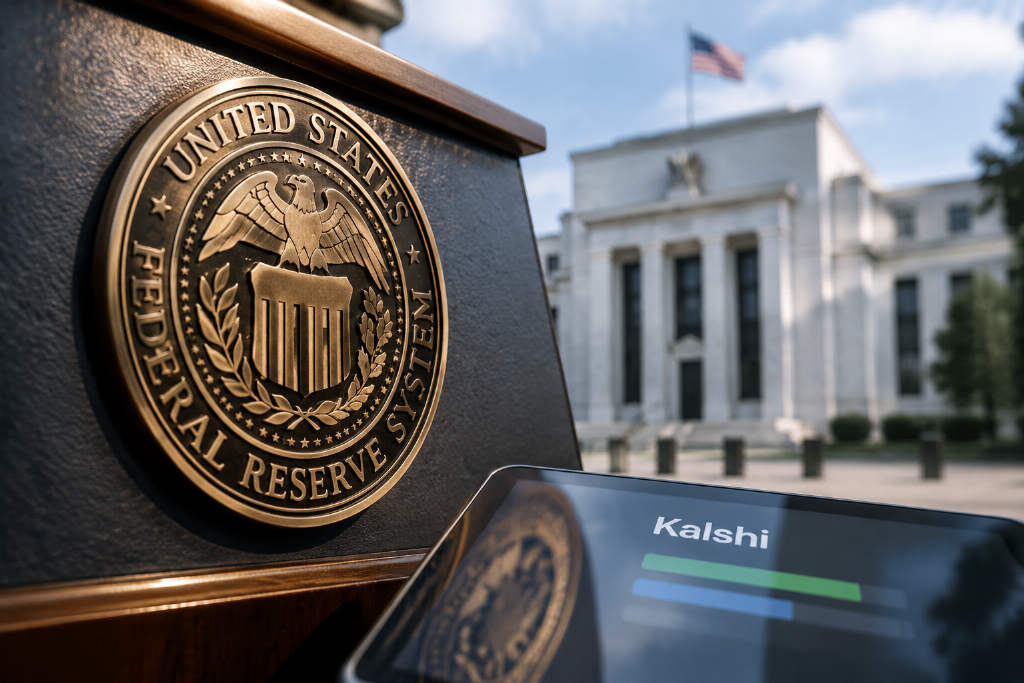
Federal Reser2026-09-29 19:05:56Kalshi data points to higher odds of the Fed holding rates steady next monthTechub News reported that data from prediction market platform Kalshi shows rising odds that the U.S. Federal Reserve will leave interest rates unchanged next month. The platform offers prediction market trading across a range of events, including contracts tied to macroeconomic policy. The update reflects market pricing on Kalshi rather than an official signal from the Fed itself. No additional rate level, percentage, or contract figures were disclosed in the source provided. The report focused on the direction of the shift: expectations for no change in next month’s decision have increased.420
US nonfarm pa2026-09-04 12:30:00U.S. August Nonfarm Payrolls Add 162,000; Unemployment Rate Holds at 4.1%The U.S. added 162,000 nonfarm payroll jobs in August, far exceeding the 56,000 expected. The prior month's figure was revised sharply upward from -23,000 to 21,000. The unemployment rate remained at 4.1%, in line with forecasts. Data from Jinshi Data, as reported by PANews on September 4.740
nonfarm payro2026-09-04 04:15:37US August Nonfarm Payrolls Due Tonight: Market Expects 56K New Jobs, Fed Focus Remains on InflationThe U.S. Bureau of Labor Statistics will release the August nonfarm payrolls report tonight. The market expects only 56,000 new jobs, with the unemployment rate holding at 4.1%. Analysts describe the labor market as "stable but weak," and a weak jobs number may not directly push the Fed to cut rates, as the policy focus remains on inflation. JPMorgan's trading desk predicts that if payrolls exceed 95,000, the S&P 500 could fall by 0.5% to 1.25%, while if payrolls come in between 5,000 and 35,000, the index could rise by 0.25% to 0.75%. Fed officials Barr and Waller have described the jobs situation as "stable" and "satisfactory," but this does not signal strength; rather, it suggests the Fed could consider raising rates if inflation does not ease further, while trying to minimize harm to employment.1090
Bank of Japan2026-09-02 06:41:08Japan's Tokyo Tanshi: BOJ September Rate Hike Probability Rises to 97%Tokyo Tanshi, a Japanese financial brokerage, said the probability of the Bank of Japan raising interest rates in September has risen to 97%.1190
CF402026-07-30 00:54:15CF40 report says top 10% of U.S. households captured 88% of AI-era equity gainsA quarterly macro policy report released by the China Finance 40 Forum, or CF40, argues that artificial intelligence is expanding the overall wealth pool while also worsening distributional imbalances. The report says U.S. household directly held equity wealth rose from about $29 trillion in 2019 to roughly $55 trillion in the first quarter of 2026, with the sharpest expansion coming after 2023 during the AI-driven rise in stock prices. From 2022 to the first quarter of 2026, directly held equity wealth increased by about $21 trillion, and the top 10% of households took around 88% of that gain, or $18.5 trillion, while the bottom 50% received about 1%, or $0.2 trillion. At the report briefing on July 27, Huang Yiping, a CF40 member and dean of the National School of Development at Peking University, said major technological breakthroughs have repeatedly reshaped income distribution in history. He said AI may affect distribution through four channels: capital bias, task substitution, skill polarization with a digital divide, and a wealth amplification effect. The report and its presenters also warned that if income shifts from labor to capital, aggregate demand may weaken. Huang proposed a three-part policy response built around defense, empowerment, and rebalancing, while Zhang Bin said stronger productivity does not necessarily translate into faster growth if demand becomes the weaker side of the economy.2270
Bitcoin2026-07-24 08:55:16Bitcoin Holds Above $81,000 as TON Watchers Wait for $2.15 EntryBitcoin stayed above $81,000 while traders tracked oil, PPI, and broader macro signals. Analysts said BTC has not clearly confirmed a bottom, while TON remains under pressure with attention shifting to a possible entry near $2.15.360