


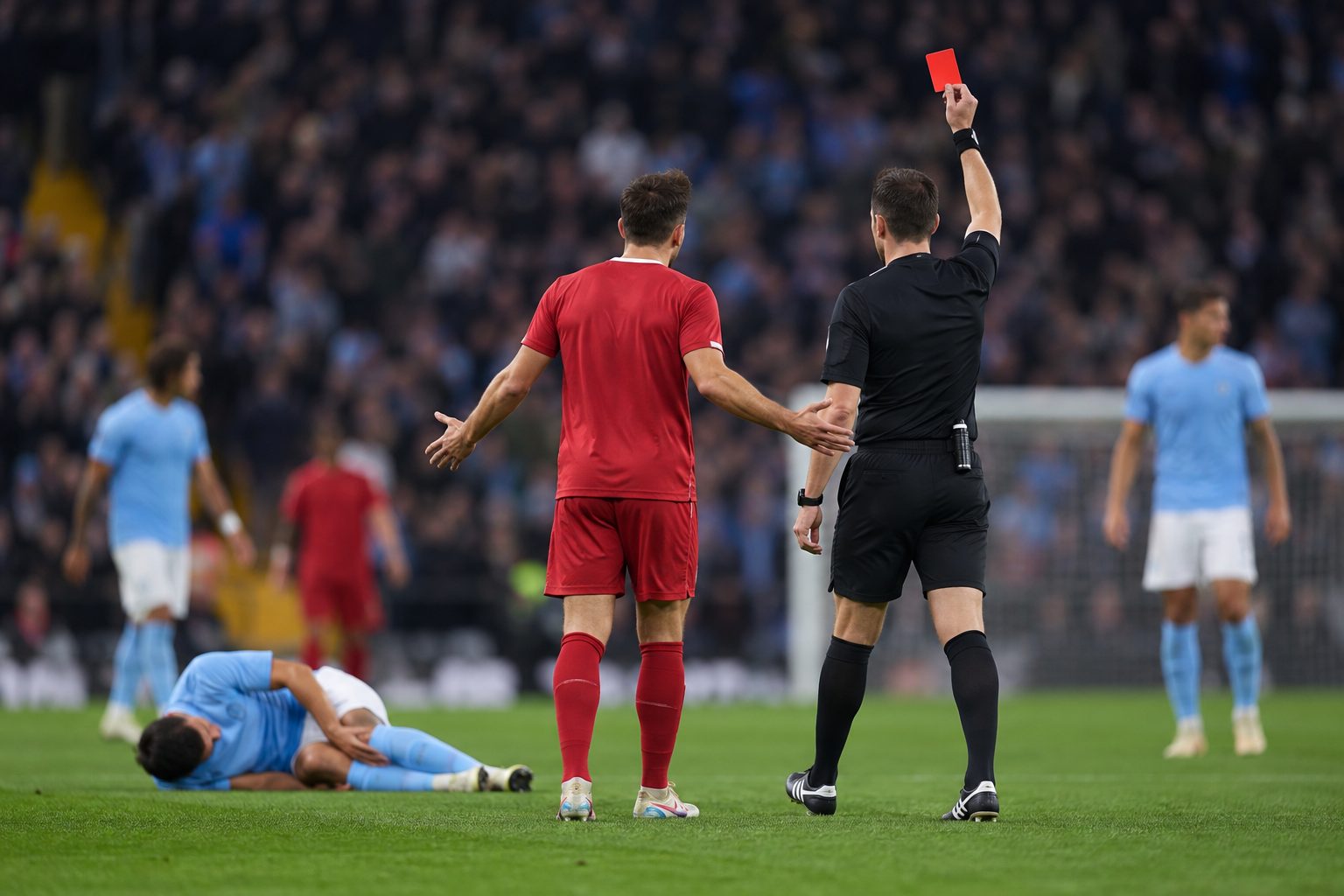
The Premier League’s Key Match Incidents Panel has backed the red card shown to Ryan Gravenberch against Manchester City earlier in October. Gravenberch was sent off by referee Chris Kavanagh in the 62nd minute for two yellow-card offenses, with the score at 0-0.
Panel vote on the dismissal
The panel voted 4:1 in favor of supporting the decision. The one who voted against believed the foul on Anderson should not have led to the first yellow card.
According to BBC Sport, the panel made a judgement on both yellow cards shown to Gravenberch when assessing the dismissal, as per protocol.
Second yellow and VAR
Once Gravenberch had received the first yellow card, the panel then unanimously supported the VAR’s decision not to intervene on the second yellow card that resulted in the red.
Ban already served
Gravenberch has already served the one-game suspension associated with the red card. He sat out Liverpool’s road trip to Brentford and is eligible to face Brighton & Hove Albion in Liverpool’s next Premier League match on Sunday.
League figures released
The Premier League has shared that following the sixth round of matches, 114 KMIs this season have been deemed correct 89% of the time, up from 86% at this stage of last season. The Premier League has also shared that for VAR interventions, 98% of decisions are considered correct.