

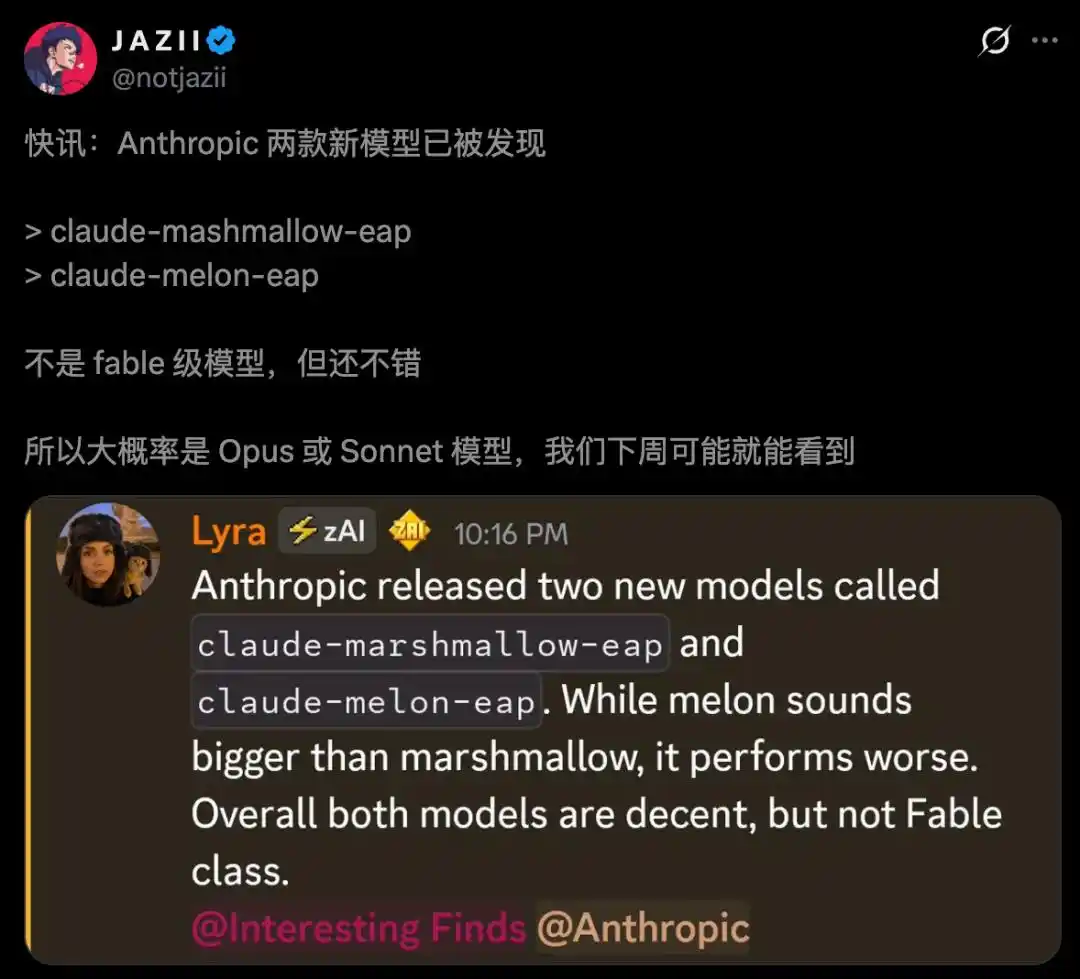
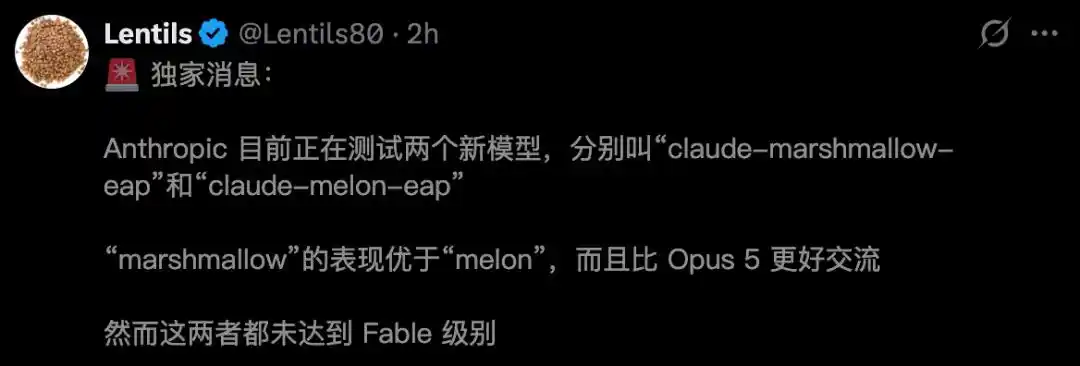
Two previously unseen Anthropic model IDs have appeared in third-party developer apps and Discord communities: claude-mashmallow-eap and claude-melon-eap.
Early tests that circulated online suggest Marshmallow is the stronger of the two, with some users saying it beats Opus 5 in conversational naturalness. Melon appears to rank lower. Even so, the leaked testing claims indicate that neither model sits at a "Fable-level" capability tier, and both could go live as soon as next week.
Anthropic has not formally responded to the surfaced model IDs. Still, discussion has picked up as more clues from test results and community posts have started to converge.
Why the timing matters
The leak is being treated as more than a routine product refresh. People in the AI community cited in the report speculate that Marshmallow is likely an Opus-class iterative upgrade, possibly Opus 5.1, while Melon looks closer to the Sonnet tier.
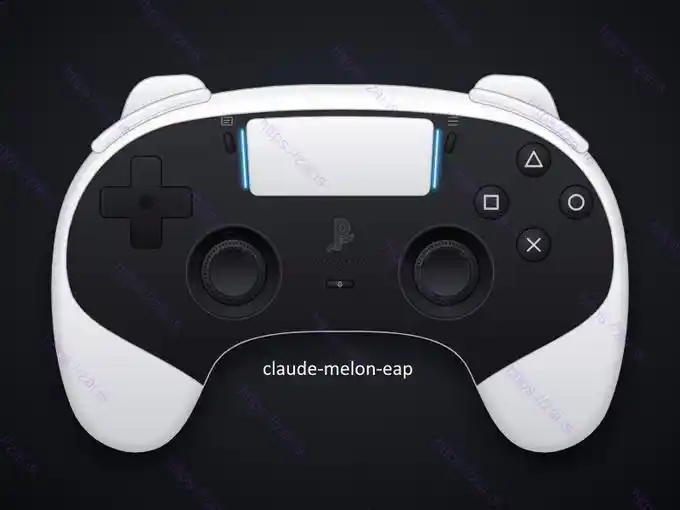
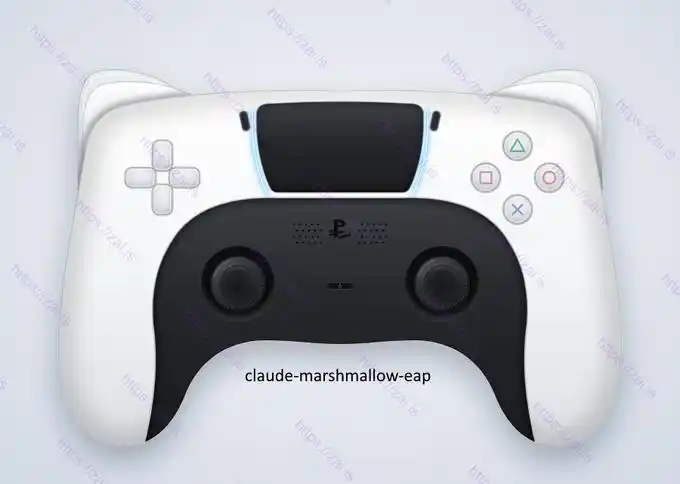
An SVG-based test result shared by a user added to that view by showing a wider gap between the two leaked models. Based on the information now circulating, the update does not appear aimed at replacing Fable 5 at the top end.
What makes the moment more notable is that Anthropic introduced Fable 5 only a little over two months ago. At launch, it was presented as the strongest flagship in the Claude lineup and the company’s highest-priced model.
Fable 5 has not become the enterprise default
In large-model markets, a new flagship often pulls enterprise budgets and developer workloads toward the newest top-tier product. According to the report, that pattern has not played out for Fable 5.
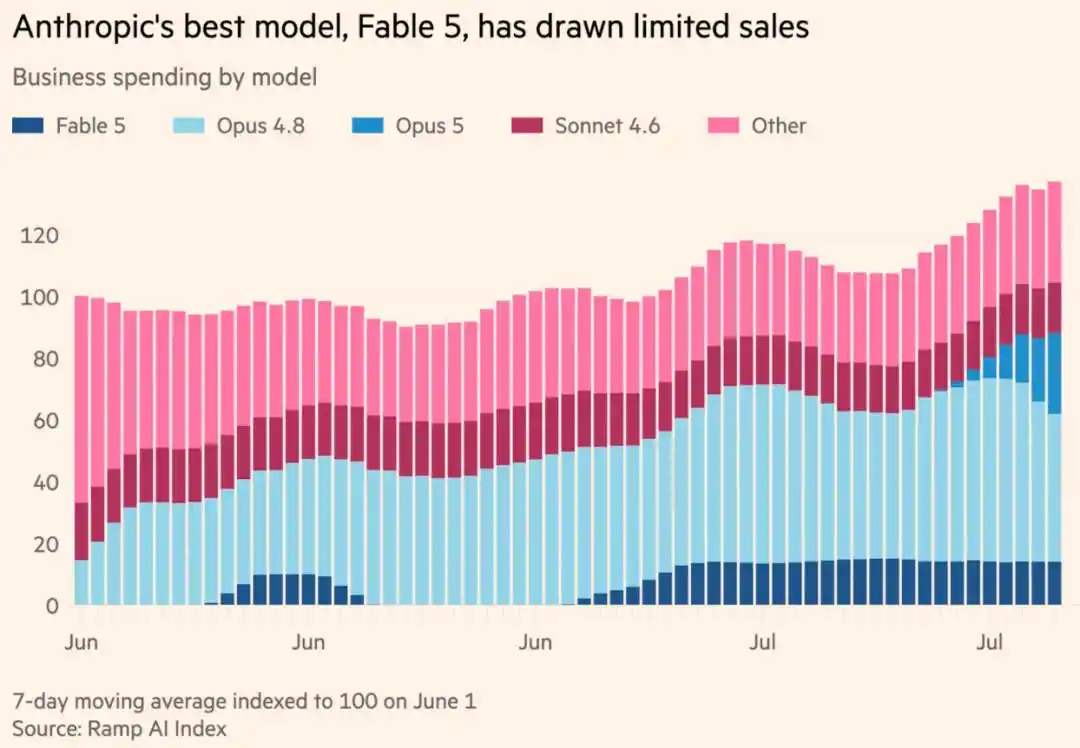
Ramp’s tracking found that one month after launch, Fable 5 accounted for just 6% of enterprise token usage on Anthropic and 11.4% of spend, based on token consumption data from more than 70000 million U.S. businesses cited in the article.
The Financial Times later obtained updated data showing that the spending share was still hovering around 11% more than two months after Fable 5 went live. By that measure, only a limited number of developers and large companies have actually shifted workloads to the model.
For comparison, OpenAI’s flagship GPT-5.6 Sol took 25% of token share and 23% of spending over the same period. In the same competitive bracket, Anthropic’s top-end model captured only about one quarter of the rival’s share.
The report adds that Fable 5’s total revenue contribution is about 75% of GPT-5.6 Sol’s even though Fable 5 costs twice as much per token.
Price is part of the problem
Cost appears to be a major constraint on adoption. The article says Fable 5 is priced at twice Anthropic’s own Opus 4.8 and 10 times Haiku 4.5.
That leaves it in a difficult spot for routine enterprise use cases, where the highest performance tier is not always necessary. In practice, being the strongest model in the lineup has not translated into the broadest usage.
Opus 5 is taking demand from inside Anthropic’s own lineup
Pressure is also coming from within Anthropic’s product stack.
Opus 5 launched at the end of July at half the price of Fable 5, yet the report says it posted better results in coding and knowledge-work evaluations. CursorBench 3.2 showed Opus 5 scoring 70% at maximum compute with a cost of $8.23 per task. Fable 5 scored 70.5%, only 0.5 percentage points higher, but at $17.32 per task.
That means buyers pay roughly twice as much for a 0.5-point gain. Ramp data cited in the article shows that after Opus 5 launched, its share of spending quickly moved ahead of Fable 5.
Under that setup, Fable 5 looks more like a showcase model than the one enterprises want to run at scale over time.
Open-source models are expanding fast
Anthropic is also facing pressure from open-source alternatives.
Vercel AI Gateway data cited in the report shows open-source models held 11% of token share in April, 29% in June, and 62% in the latest August reading. In just two months, that moved from under 30% to above 60%.
Those models accounted for less than 4% of enterprise spending. In other words, the models doing most of the token-heavy work were taking only a small slice of the budget.
That leaves Fable 5 squeezed from both directions. Inside Anthropic, Opus 5 gets close at half the price. Outside the company, open-source models keep pushing pricing lower.

What Marshmallow and Melon may be filling
Based on the information now available, Marshmallow and Melon are being read as possible attempts to fill a more commercially practical gap in Claude’s lineup.
If Fable 5 remains the model aimed at the capability ceiling, Anthropic may need products that enterprises are willing to use for longer periods and at higher volume. That is why the discussion around the two leaked IDs has centered on the balance between performance and price, not simply headline model strength.
The article cites material from X user kimmonismus and a Financial Times report. It also states that the original Chinese piece came from the WeChat account "新智元," written by ASI 启示录 and edited by 桃子.