
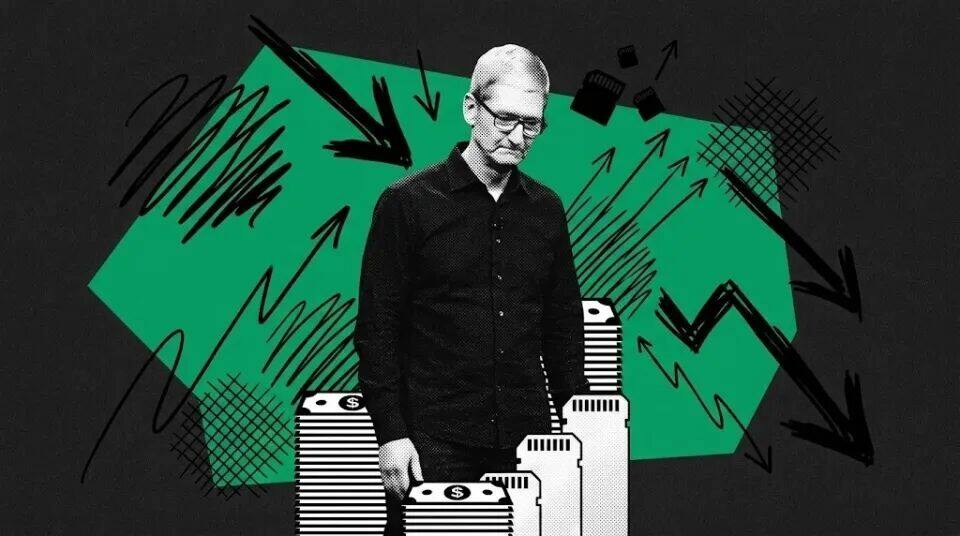
A Satirical Post Reveals the Hidden Profit Bill
Tech blogger @BluthCapital, writing in the voice of Micron's CEO, mocked Apple's long-standing procurement tactics: Apple bought chips from Micron for $5, put them in a metal case, and sold them for $99. When Micron tried to raise the price to $7, Apple laughed. Now that Micron charges $50, Apple simply raises its product price by $250. The post went viral, illustrating the drastic shift in pricing power between Apple and its memory suppliers.
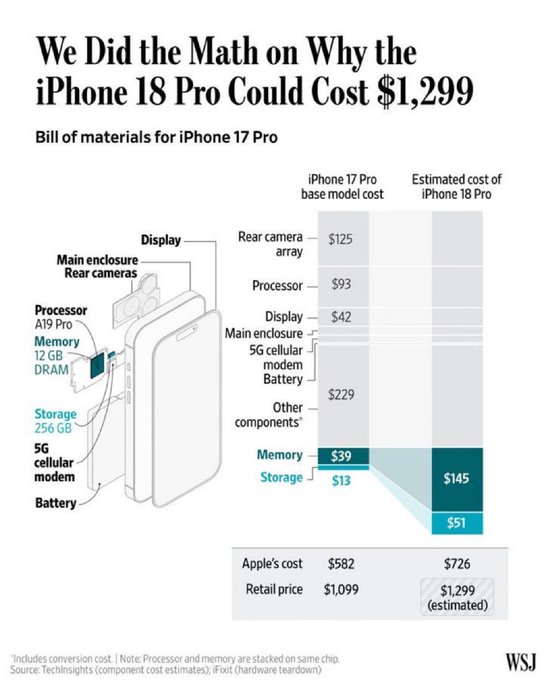
@BluthCapital later posted a detailed cost structure chart for the iPhone 18 to support his point. Micron's Chief Commercial Officer Sumit Sadana had previously told the Wall Street Journal that during the memory industry downturn, some customers aggressively squeezed prices, causing negative profits for memory makers. Now, thanks to surging demand from AI and tech sectors, memory companies have regained the upper hand.
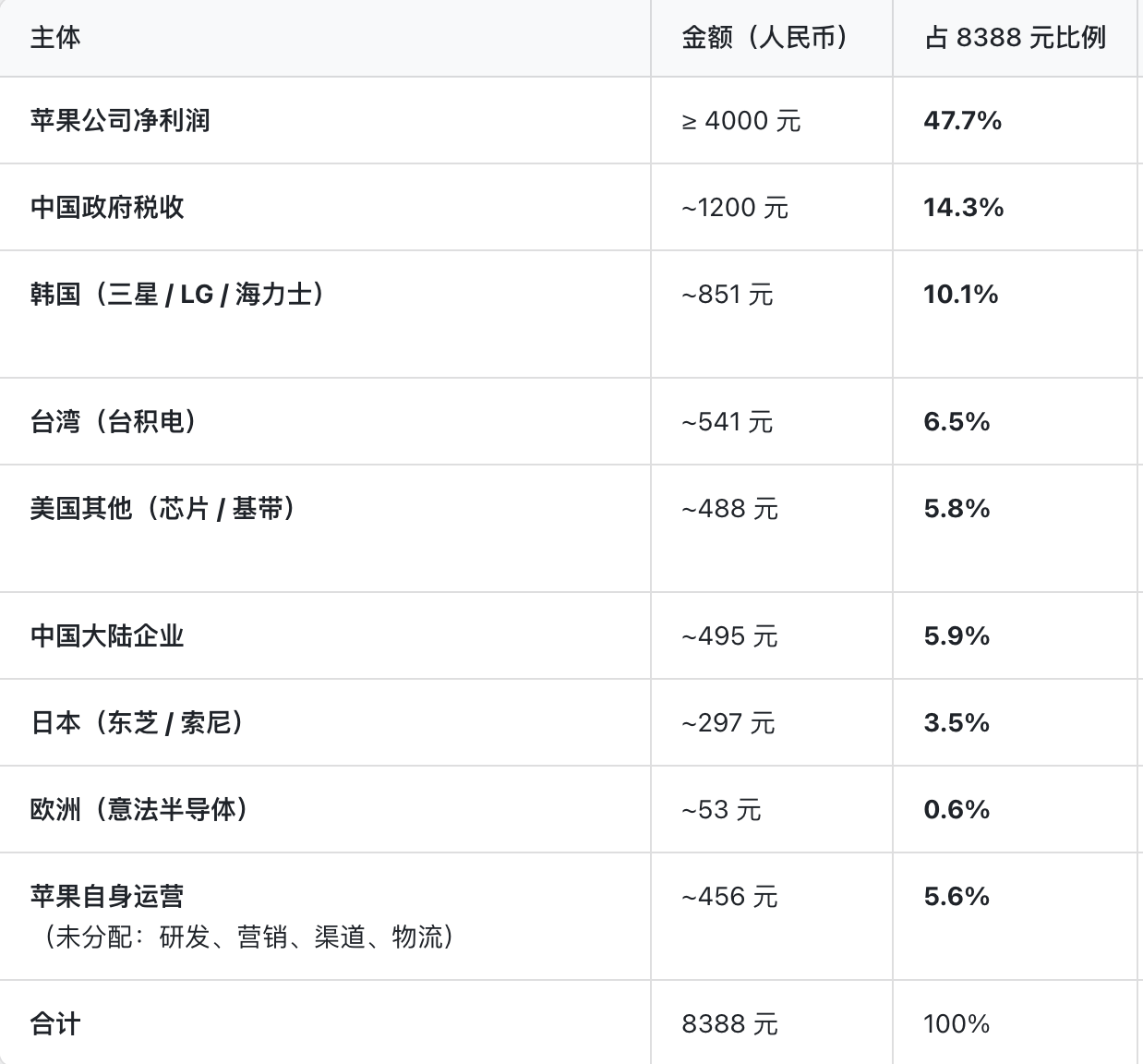
Apple's Profit Pie: Who Gets What?
Estimates show that Apple captures about a quarter of the profit from each iPhone sold, while memory giants take only about 1/30. TSMC, due to its monopoly position, pockets 4%-5%. According to Counterpoint, Apple has consistently earned nearly 50% of global smartphone operating profits. IDC data from 2025 further shows that with an 18% market share, Apple captures about 75% of total industry profits.
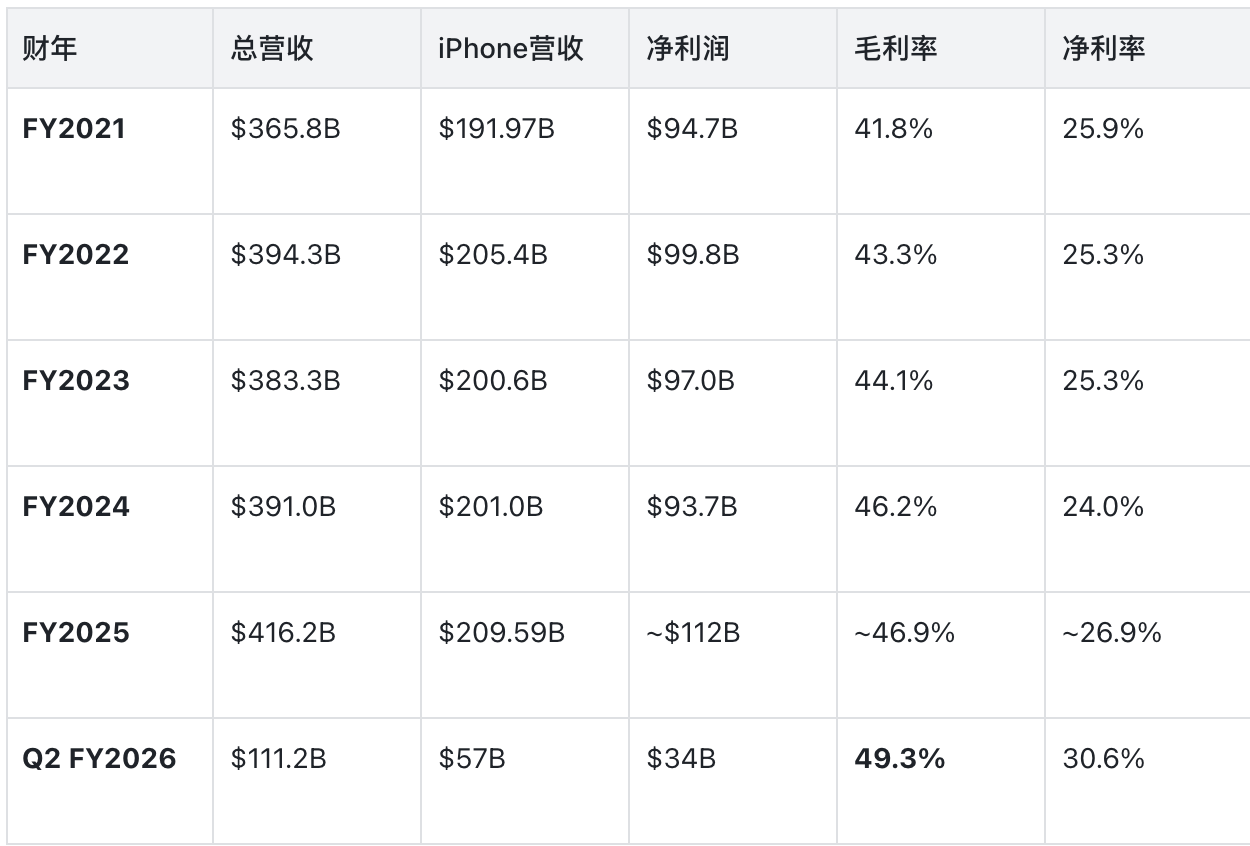
Based on Apple's fiscal Q2 2026 results, iPhone revenue reached $57 billion, net profit $34 billion, with an estimated 61 million units shipped. This translates to a net profit per iPhone of $320-$340 and a net margin of 33%-36%. Over the past five fiscal years, iPhone revenue has been stable, net profit grew from ~$94 billion (2021) to ~$112 billion (2025), and net margin remained around 25%.
Memory Cost Evolution: From Negligible to Critical
The role of memory costs in iPhone has gone through three phases: initially a negligible 'trivial component', then a 'significant module', and now a 'critical part'. During the iPhone X era, Apple's net margin approached 50%, while memory makers (Samsung, SK Hynix) accounted for only about 135-195 yuan per phone, or 1.6%-2.3% of the 8,388 yuan retail price. Memory was the last thing Apple worried about.
By 2023, the iPhone 14 Pro's BOM cost reached ~$464 (~3,170 yuan), about 40% of the selling price. Apple's net margin remained around 40%. The camera and processor upgrades drove cost increases, but memory still had limited impact. Notably, higher storage versions had only marginal cost increases but commanded significantly higher prices.
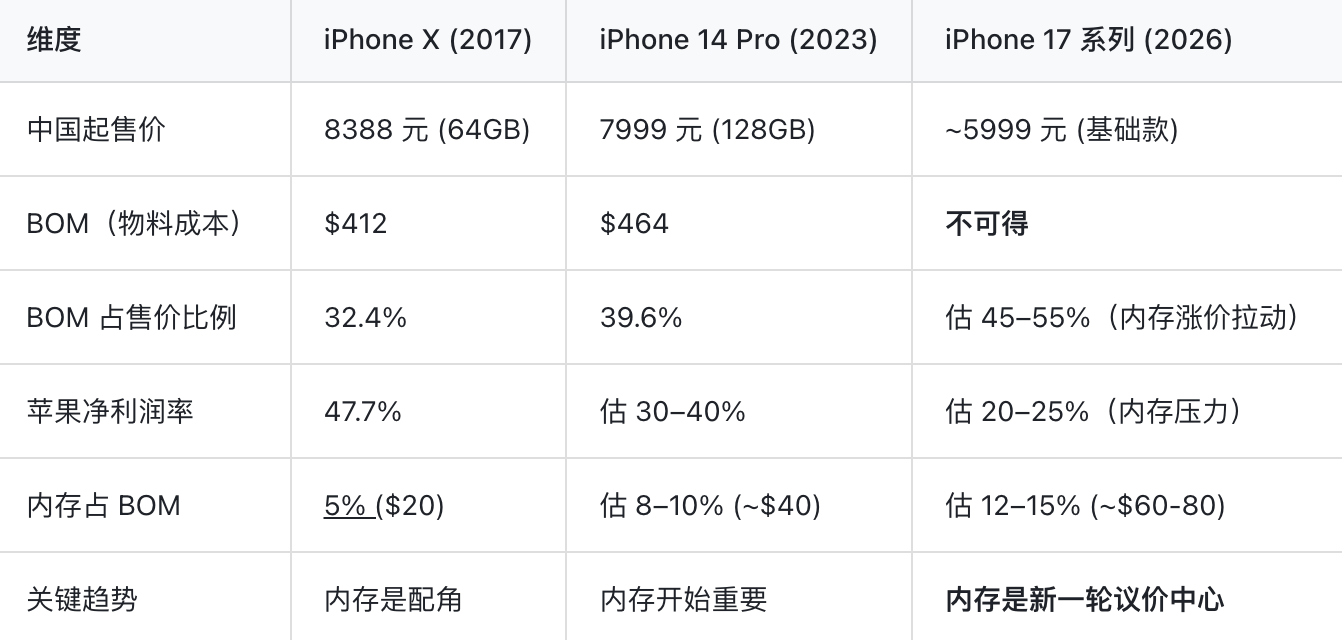
In 2025-2026, the iPhone 17 series became Apple's flagship. Memory costs doubled, now estimated at 12%-15% of BOM, or $60-$80 per phone. The table below summarizes the shift:
| iPhone Model | Approx. Price | Memory Cost Share | Apple Net Margin |
|---|---|---|---|
| iPhone X (2017) | ~$1,200 | 1.6%-2.3% | ~50% |
| iPhone 14 Pro (2023) | ~$1,100 | ~4%-5% | ~40% |
| iPhone 17 series (2026) | ~$1,400 | 12%-15% | 33%-36% |
AI Hunger Swallows Consumer Memory Supply
TrendForce reported that DRAM contract prices surged 93%-98% quarter-over-quarter in Q1 2026, and Citi estimates full-year 2026 DRAM average price increases of 88%. Each AI server consumes 8 times the DRAM and 3 times the NAND of a standard server. Nvidia's Vera Rubin AI server uses as much memory as ~14,500 MacBook Neo units — a 1:14,500 ratio that underscores the extreme supply-demand imbalance.
Samsung, SK Hynix, and Micron have prioritized high-margin HBM and high-end DDR5, cutting back on consumer-grade DDR4 production lines. Micron's Q3 FY2026 gross margin hit 84.6%, with revenue surging 346% year-over-year to $41.46 billion. SK Hynix announced plans for a U.S. IPO, aiming to raise ~$29 billion to further capitalize on memory demand.

Cook's Reversal and Apple's Strategic Response
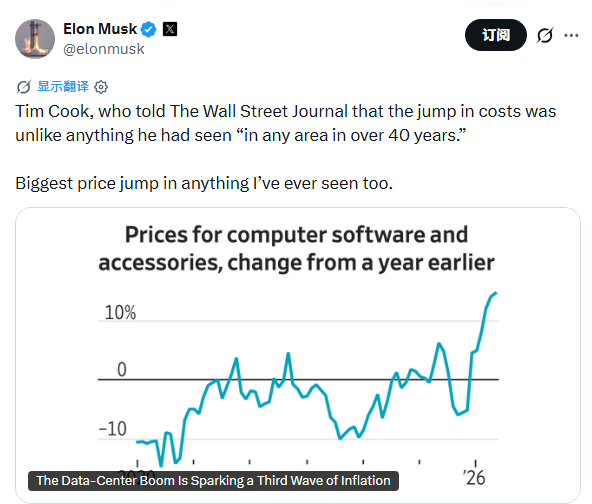
On June 17, Tim Cook told the Wall Street Journal that memory price hikes were transmitting cost pressures and that Apple needed pricing and supply to return to 'reasonable levels' for consumer products. Less than a week later, on June 25, Cook changed his tone, calling the cost shock a 'once-in-a-century flood' he had never seen in over 40 years. Apple subsequently announced price increases across Mac, iPad, HomePod, Apple TV, and Vision Pro. Apple's stock fell 6%, erasing $263 billion in market cap — the biggest single-day drop since April 2025.
Elon Musk quickly chimed in, agreeing that it was the steepest price jump he had ever witnessed.

CXMT's Opportunity and the China Factor
Facing a memory oligopoly, Apple is actively lobbying the Trump administration for permission to buy memory chips from China's ChangXin Memory Technologies (CXMT). CXMT is set to go public next month. Whether it can replicate the wealth-creation miracles of SK Hynix and Micron depends on its ability to secure a seat at the table. The memory market pie is still expanding, and the power rebalancing story is far from over.