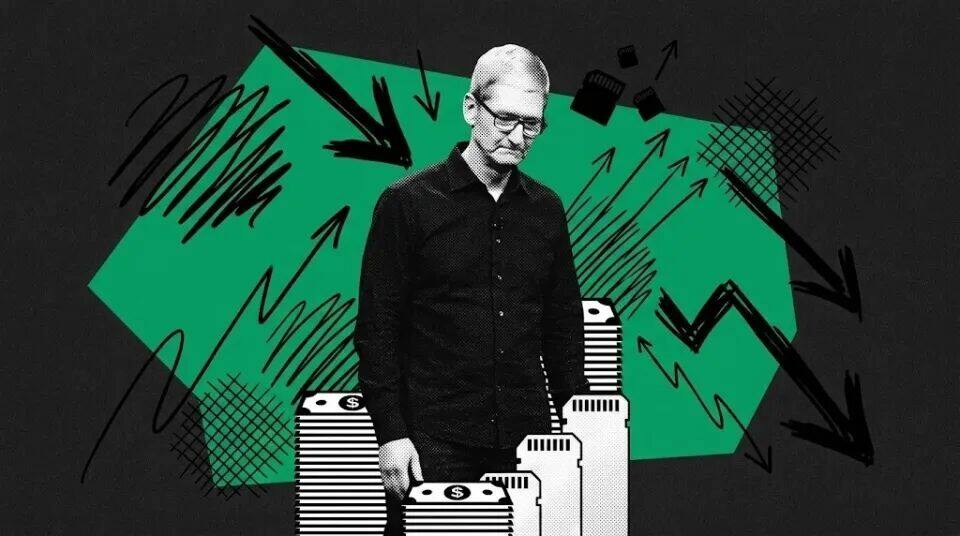
iPhone Profit Distribution: Apple Takes a Quarter, Memory Makers Get Only 1/30
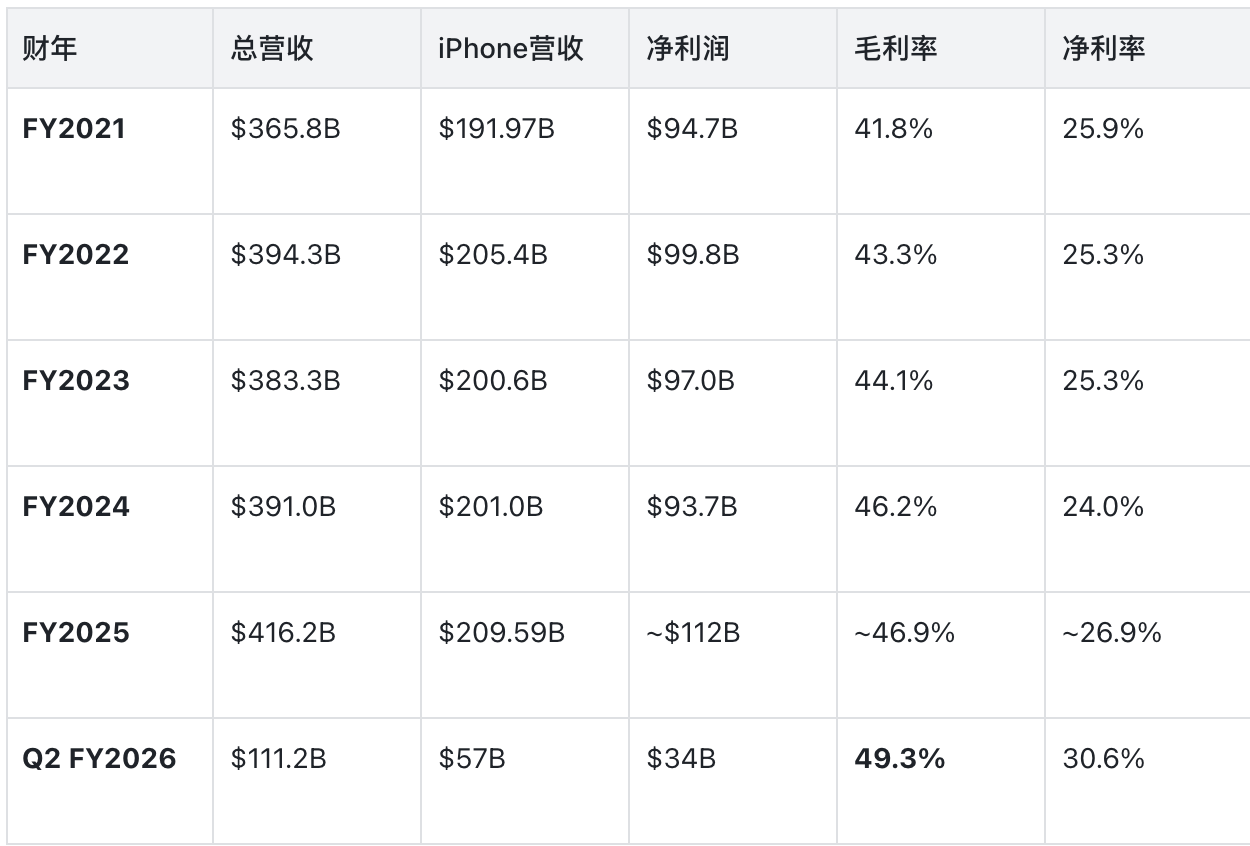
For every $99 iPhone sold, Apple buys memory chips from Micron for about $5, then packages them and sells at a massive markup, as satirized by tech blogger @BluthCapital. According to Counterpoint and IDC data, Apple has long captured nearly 50% of global smartphone operating profit, and in 2025 took 75% of the industry's total profit with just 18% market share. Apple's Q2 2026 earnings show iPhone revenue of $57 billion, net profit of $34 billion, with an estimated 61 million units shipped, translating to a net profit of $320-340 per unit and a net margin of 33-36%.
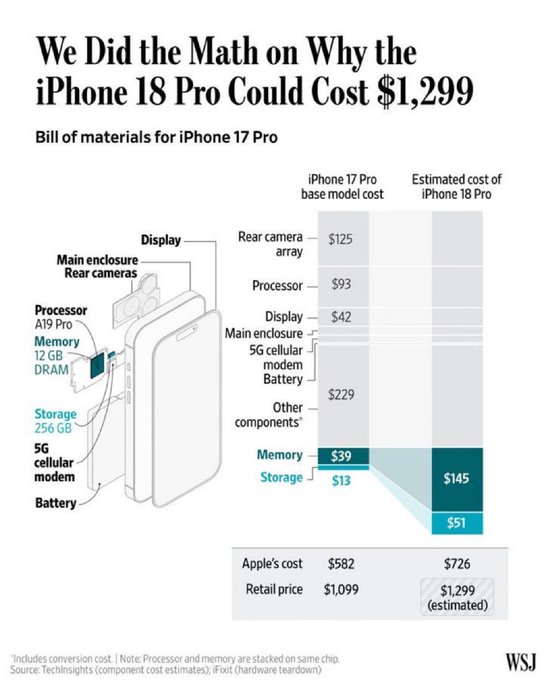
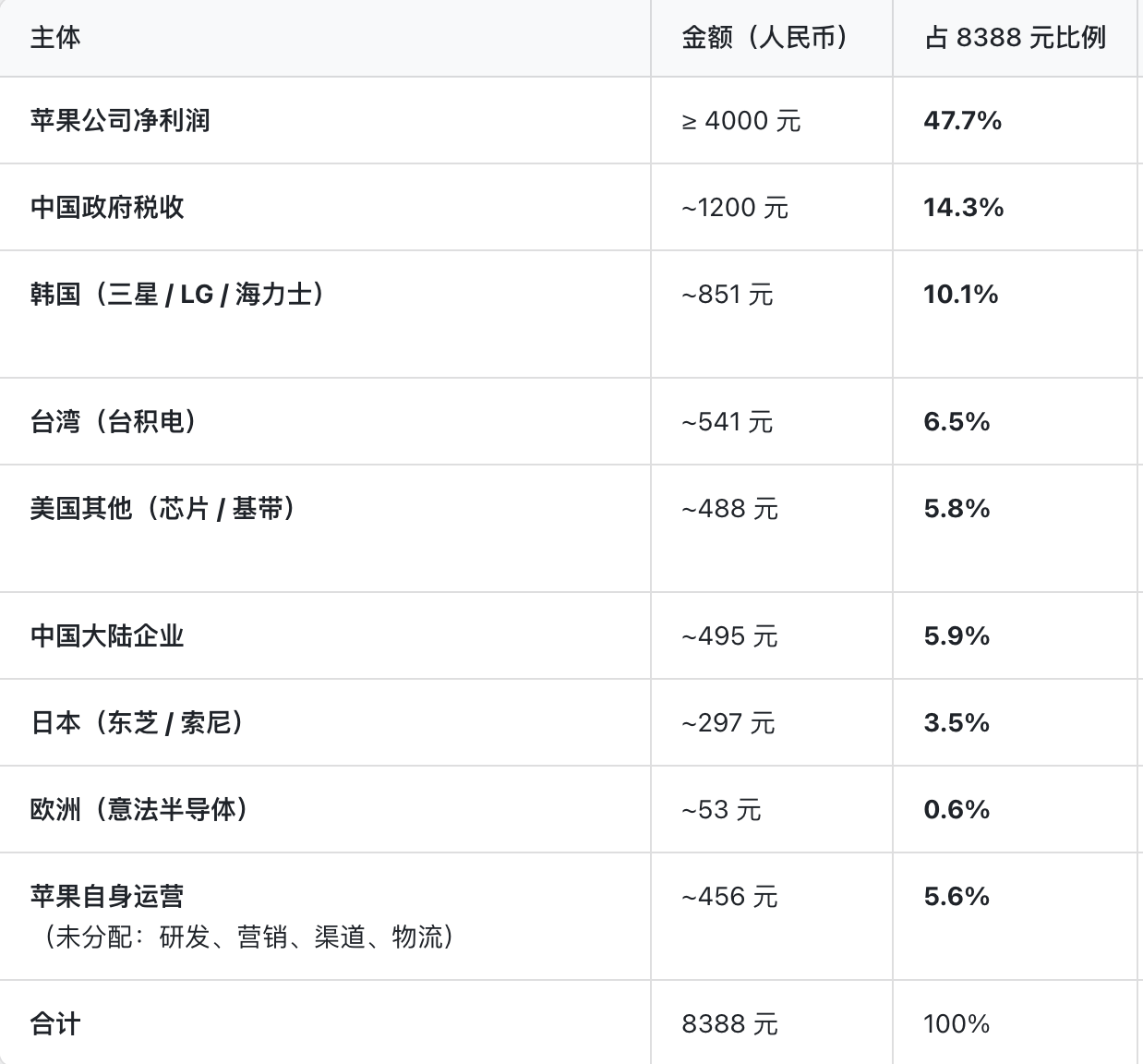
memory giants, on the other hand, receive roughly 1/30 of the profit from each iPhone. TSMC, due to its monopoly, takes 4-5%. The rest is absorbed by other hardware suppliers, channels, R&D, and taxes. Over the past five years, Apple's net profit grew from ~$94 billion (2021) to ~$112 billion (2025), with net margins stable around 25%.
Memory Cost Evolution: From 'Afterthought' to 'Critical Component'
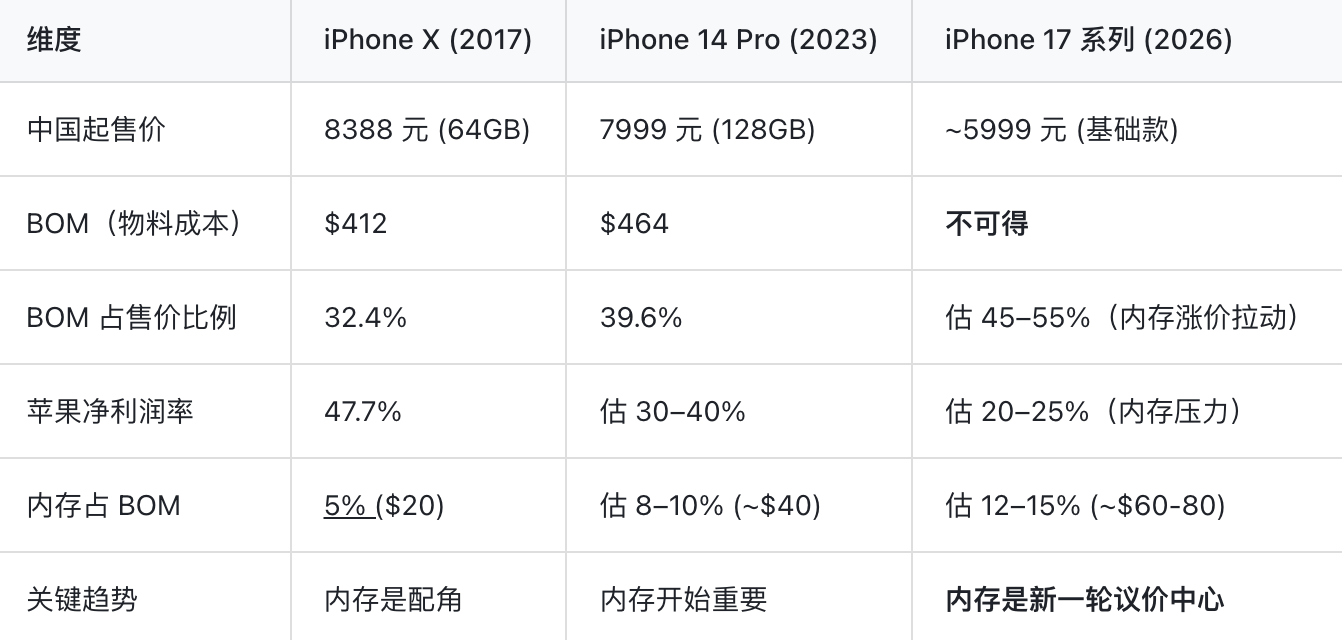
Using the iPhone X (2017), iPhone 14 Pro (2023), and iPhone 17 series (2026) as benchmarks, memory cost share escalated from ~2% to 4-8% to 12-15%. The iPhone X, with a retail price of ¥8,388, had memory costs of only ¥135-195 (1.6-2.3% of price), while Apple's net margin neared 50%. Memory was the least of Apple's concerns.
By iPhone 14 Pro, BOM cost reached $464 (¥3,170) – ~40% of the selling price – but memory cost increases were mild, and Apple's margin remained ~40%. In contrast, the iPhone 17 series (2025-2026) carries memory costs of $60-80, accounting for 12-15% of BOM. TrendForce data shows Q1 2026 DRAM contract prices jumped 93-98% quarter-on-quarter, with Citi forecasting 88% annual increase for 2026. Memory has transformed from a minor line item to a key determinant of Apple's pricing strategy.
Cook and Musk in Rare Agreement: 'Once-in-a-Century Flood'
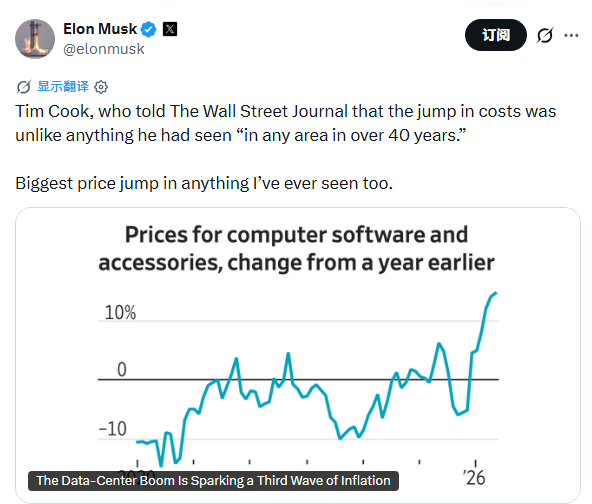
On June 17, Apple CEO Tim Cook told the Wall Street Journal that memory pricing needed to return to reasonable levels. But a week later, he changed his tune, calling the cost shock a 'once-in-a-century flood' as Apple announced price hikes across Mac, iPad, HomePod, Apple TV, and Vision Pro. Apple shares plunged 6%, wiping out $263 billion in market cap – the biggest drop since April 2025. Elon Musk echoed Cook's sentiment: 'This is the wildest price jump I've ever seen.' The rare alignment between two tech titans underscores the deep impact of memory inflation on consumer electronics.
AI Demand Gobbles Up Consumer Memory: Storage Giants Rise
The memory bull run is driven by AI. Industry estimates suggest each AI server requires 8x DRAM and 3x NAND compared to a standard server. Samsung, SK Hynix, and Micron are diverting advanced process capacity to high-margin HBM and premium DDR5, actively cutting back DDR4 and other consumer lines, leading to a shortage of general-purpose DRAM. Micron's Q3 gross margin hit 84.6%, with revenue surging 346% to $41.46 billion. SK Hynix announced plans for a U.S. IPO, seeking to raise ~$29 billion to capitalize on memory demand. One Nvidia Vera Rubin AI server uses as much memory as roughly 14,500 MacBook Neos – a 1:14,500 ratio, highlighting the extreme supply imbalance.

Apple Lobbies for CXMT: A New Play to Break the Monopoly
Facing the triumvirate of Samsung, SK Hynix, and Micron, Apple is actively lobbying the Trump administration for approval to source memory chips from Chinese manufacturer ChangXin Memory Technologies (CXMT). CXMT, set to IPO next month, stands at a historic juncture: success in entering Apple's supply chain could disrupt the long-standing oligopoly. However, the memory market continues to expand, and whether CXMT can replicate the wealth-creation miracles of SK Hynix or Micron remains to be seen. The power struggle between hardware giants and memory makers is far from over.