
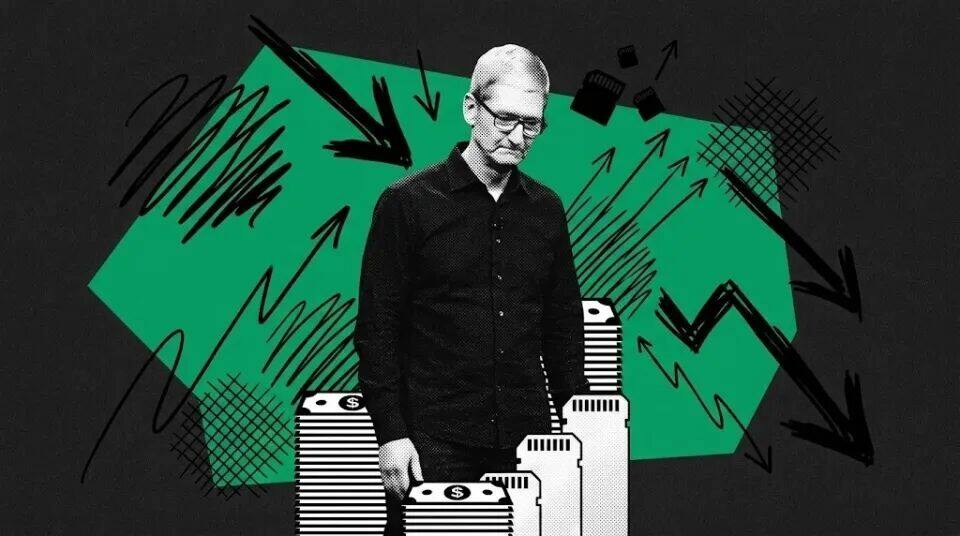
Have you ever wondered how the profit from selling an iPhone is split among Apple and its component suppliers? A recent satire by tech blogger @BluthCapital, written in the voice of Micron's CEO, went viral: 'For over a decade, Apple bought chips from us for $5, put them in a metal box, and sold them for $99. When we tried to raise the price to $7, they mocked us. Now we charge $50, and they raise the product price by $250.' This stark contrast illustrates the power shift between Apple and memory manufacturers.
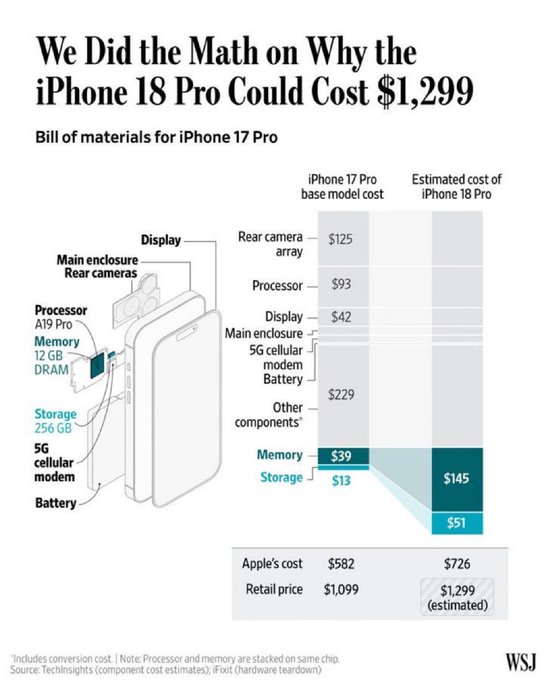
Three Eras of iPhone Profit Structure: From 'Afterthought' to 'Critical Component'
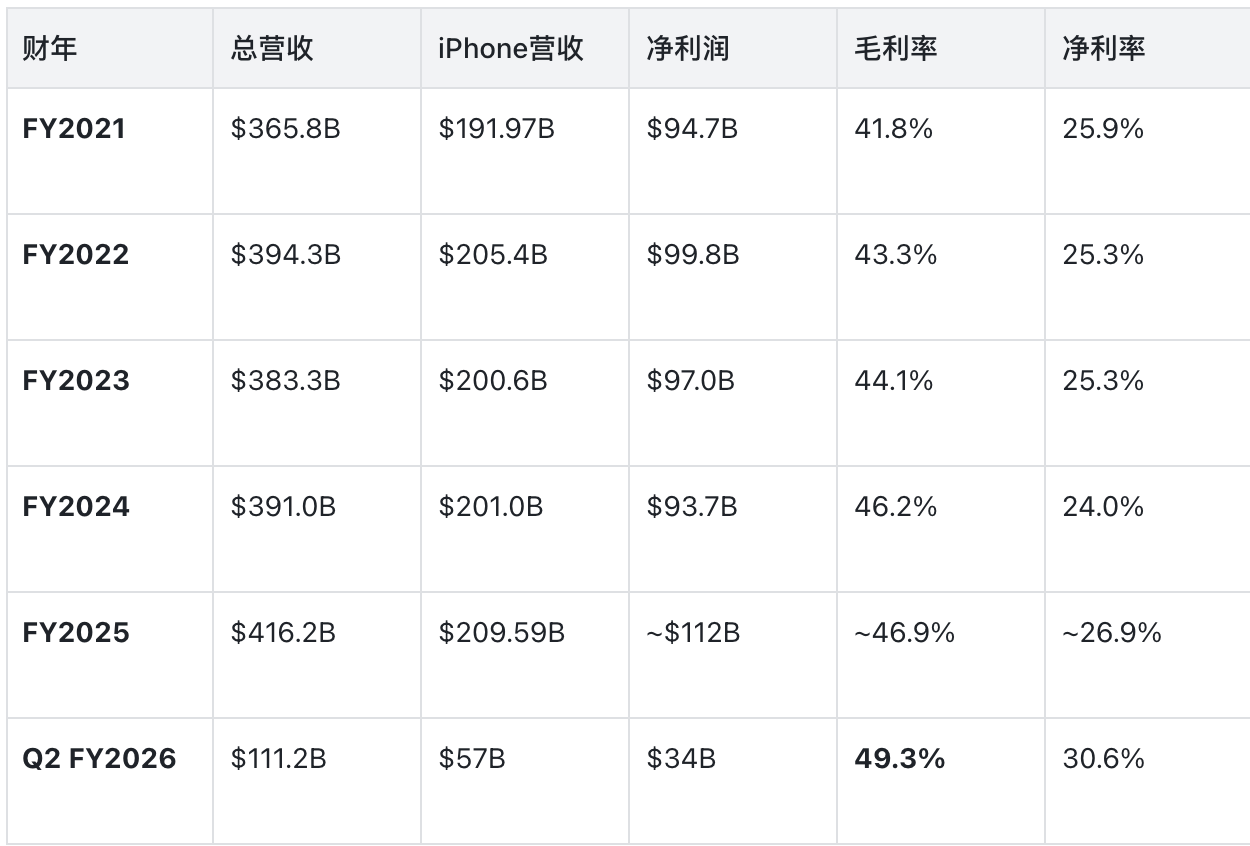
According to Counterpoint, Apple has long captured nearly 50% of global smartphone operating profit. IDC 2025 data shows Apple took 75% of industry profit with just 18% market share. Based on Apple's Q2 2026 figures, iPhone revenue was $57 billion, net profit $34 billion, estimated shipments 61 million units, yielding $320-340 net profit per iPhone and a net margin of 33-36%.
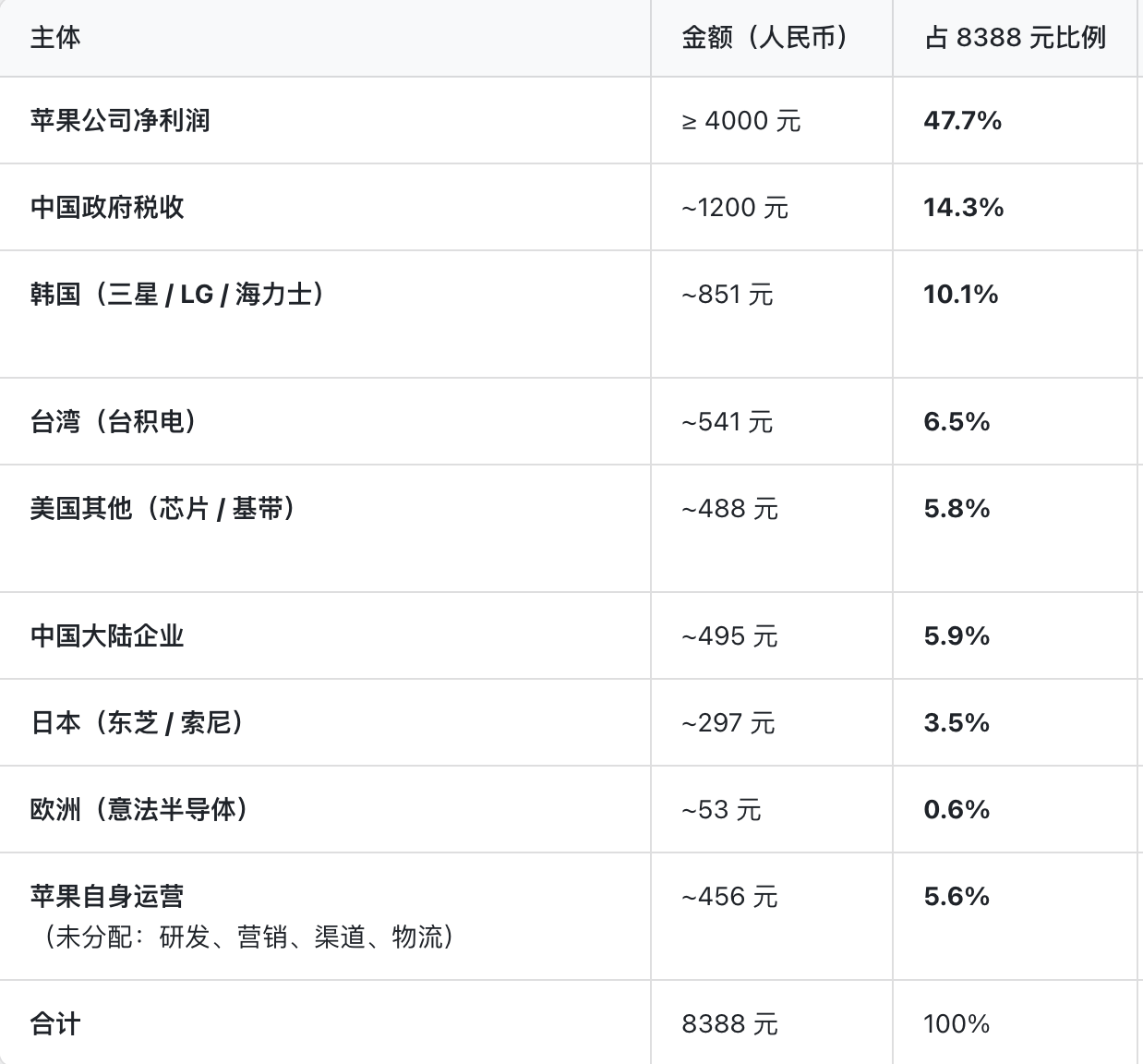
Memory costs have evolved through three distinct phases. In the iPhone X era (2017), memory accounted for only 1.6-2.3% of the selling price (≈135-195 RMB), and Apple's net margin approached 50%. Samsung, SK Hynix, and Micron earned a negligible slice. By 2023, the iPhone 14 Pro's BOM cost rose to ~$464 (nearly 40% of selling price), with memory's share growing modestly. Apple still maintained ~40% net margin. Fast forward to 2025-2026, the iPhone 17 series sees memory cost hit 12-15% of BOM, or $60-80 per unit, elevating memory from an afterthought to a critical component.
Memory Bull Market: AI Demand Devours Consumer Supply
TrendForce data reveals general DRAM contract prices surged 93-98% quarter-over-quarter in Q1 2026, with Citigroup forecasting 88% average price growth for the full year. The primary driver is AI demand: each AI server requires 8x more DRAM and 3x more NAND than a standard server. A single Nvidia Vera Rubin AI server consumes memory equivalent to about 14,500 MacBook Neos—a 1:14,500 ratio that starkly illustrates the supply-demand imbalance.
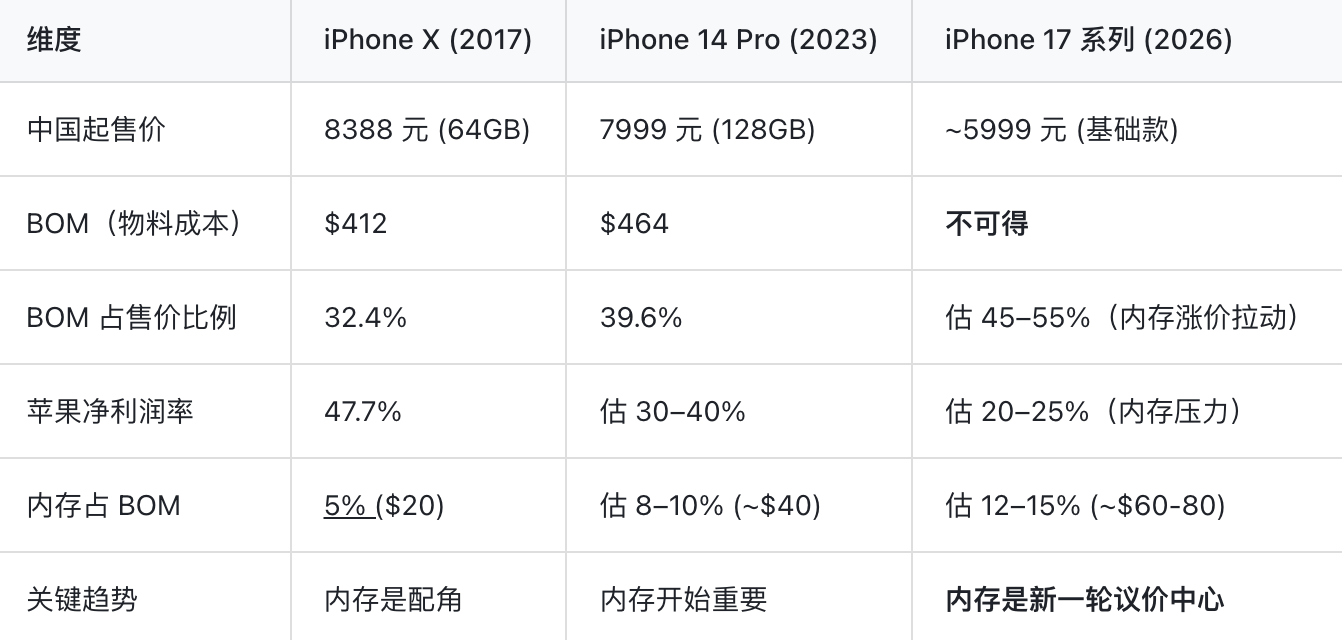
Consequently, Samsung, SK Hynix, and Micron are shifting advanced manufacturing capacity to high-margin HBM (High Bandwidth Memory) and premium DDR5, actively cutting consumer-grade DRAM lines, exacerbating shortages. Micron's Q3 earnings revealed a stunning 84.6% gross margin and 346% year-over-year revenue growth to $41.46 billion. SK Hynix announced plans for a ~$29 billion US IPO to capitalize further on memory demand. Memory suppliers have transformed from price-takers bullied by Apple into masters of the market.
Apple's Forced Price Hikes and Cook's Rare U-Turn
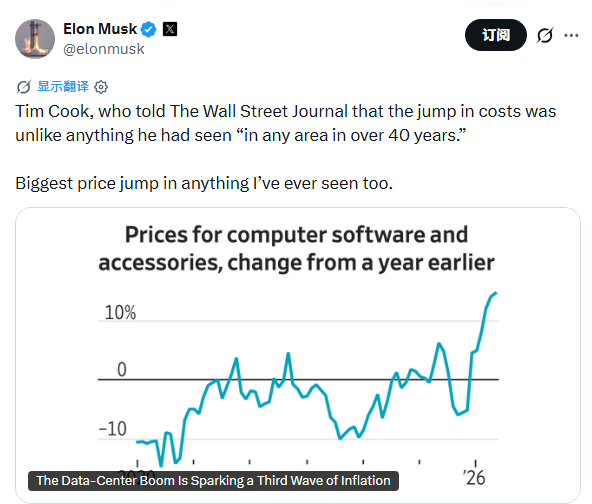
On June 17, Apple CEO Tim Cook told the Wall Street Journal: 'Memory makers are passing enormous price pressure. We absolutely need memory pricing and supply to return to reasonable consumer product levels.' But within a week, he reversed course, calling the cost shock a 'once-in-a-century flood' and announcing price increases across Mac, iPad, HomePod, Apple TV, and Vision Pro. Apple shares dropped 6% on the news, wiping out $263 billion in market cap—the largest single-day loss since April 2025.

Elon Musk weighed in, tweeting: 'Cook told WSJ this is the most ferocious price jump he's seen in any field in 40+ years. I agree.' The rare alignment between the two tech titans underscores the extremity of the memory price surge.

China's CXMT and the IPO Chessboard
In response to memory oligopoly pricing, Apple is reportedly lobbying the Trump administration to secure approval to purchase memory chips from China's CXMT (Changxin Memory Technologies), in an effort to break the Samsung-SK Hynix-Micron stranglehold. CXMT, which is set to go public next month, could become a wildcard in the memory landscape. The memory pie continues to grow, and the power balance tilting from Apple toward memory suppliers is reshaping the entire consumer electronics supply chain. Whether CXMT can replicate the 'wealth miracle' of SK Hynix or Micron in the capital markets—the answer will come soon.