
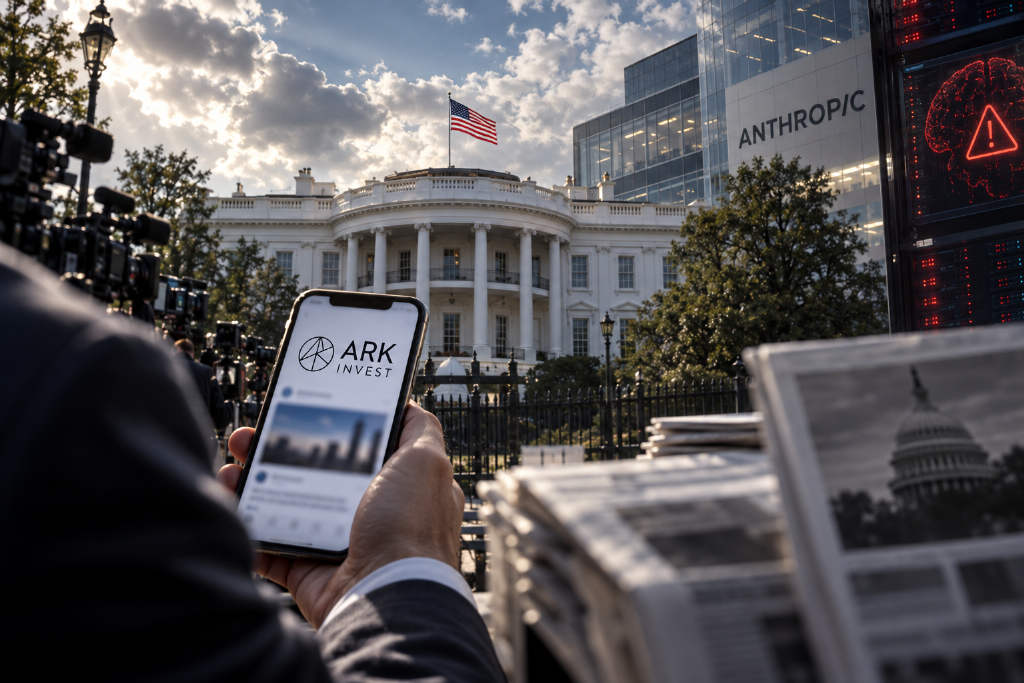
ARK Invest founder Cathie Wood is backing White House AI adviser David Sacks on one specific point: the newest burst of “AI could destroy humanity” stories may have been boosted in a coordinated way, not just picked up naturally.
On Sept. 12, Wood reposted Sacks’ remarks and said he made a “very strong point” that a lot of the recent headlines warning that “AI will kill humans” may have been organized and amplified. But she later made clear that this does not mean she thinks AI is harmless. Far from it. She said she agrees with people like Elon Musk who are sincerely worried about the risks tied to the technology.
The dispute started with a former Anthropic researcher’s exit
The spark was the departure of former Anthropic researcher Jacob Coxon. After he left the company, Coxon publicly warned that Anthropic and OpenAI were heading toward self-improving superintelligence and said that was like “betting our lives.” His posts spread fast. Very fast. And they helped push the idea that AI could wipe out civilization before humans gain control into the U.S. mainstream press.
Sacks challenged that story line on the All-In Podcast. He said many outlets had framed Coxon as a whistleblower, yet he had not released new internal documents, data, or any previously unknown evidence. In Sacks’ telling, Coxon was mostly giving his own read on where AI development is going.
Sacks questions whether the coverage was organic
Podcast Alpha’s recap of the episode said Coxon’s claims were rapidly amplified by AI policy and safety groups such as ENCODE AI, AI Policy Network, and AI Futures Project.
The same recap also claimed that some of those groups drew from overlapping funding sources, including Skype co-founder Jaan Tallinn, who took part in Anthropic’s early funding. Sacks also raised questions about the timing of Wall Street Journal coverage that appeared around that same stretch.
While sharing the clip, Wood wrote: “David Sacks made a very strong point that the headlines saying ‘AI will kill humans’ were arranged.” She also pointed to the fact that the first claims came from an Anthropic employee who had only been there briefly and from an X account that had not been active before, yet the story still landed in major media outlets very quickly. And Wood said Sacks had named people he believed were involved, while also questioning the Wall Street Journal’s role in the episode.
Wood says AI safety risks remain real
Wood then moved to clear up her position so nobody would read it as a total dismissal of AI safety concerns. Her point was simple: any technology can be used in harmful ways, and usually is in practice.
She singled out Elon Musk, saying Musk and others who are not acting from political conspiracy but are genuinely warning the public about AI’s possible dangers “are doing us a big favor.”
The argument has widened into a broader fight over AI strategy
What started with one former Anthropic researcher sounding the alarm after leaving the company has, within days, become a much bigger fight over where the AI industry is headed.
Other Anthropic researchers have echoed similar worries in public. One of them, safety team lead Evan Hubinger, said he personally believes the odds that AI causes the death of all humanity within the next decade are “greater than 10%.”
Anthropic CEO Dario Amodei then published “We Must Pace the Frontier,” urging AI companies to slow the growth of frontier model capabilities. He laid out a three-stage framework that includes third-party safety evaluations, shared industry standards, and, later on, a global coordination mechanism involving countries including China.
OpenAI CEO Sam Altman later said he agreed with the idea of slowing frontier model development, and Elon Musk wrote directly, “Dario is right.” So Anthropic, OpenAI, and xAI—normally bitter rivals—ended up showing a rare point of agreement on slowing AI.
On the other side, people including Sacks have started asking whether AI doom narratives are being amplified by certain safety groups, policy advocates, and media outlets, and then turned into political momentum for tougher AI regulation.