
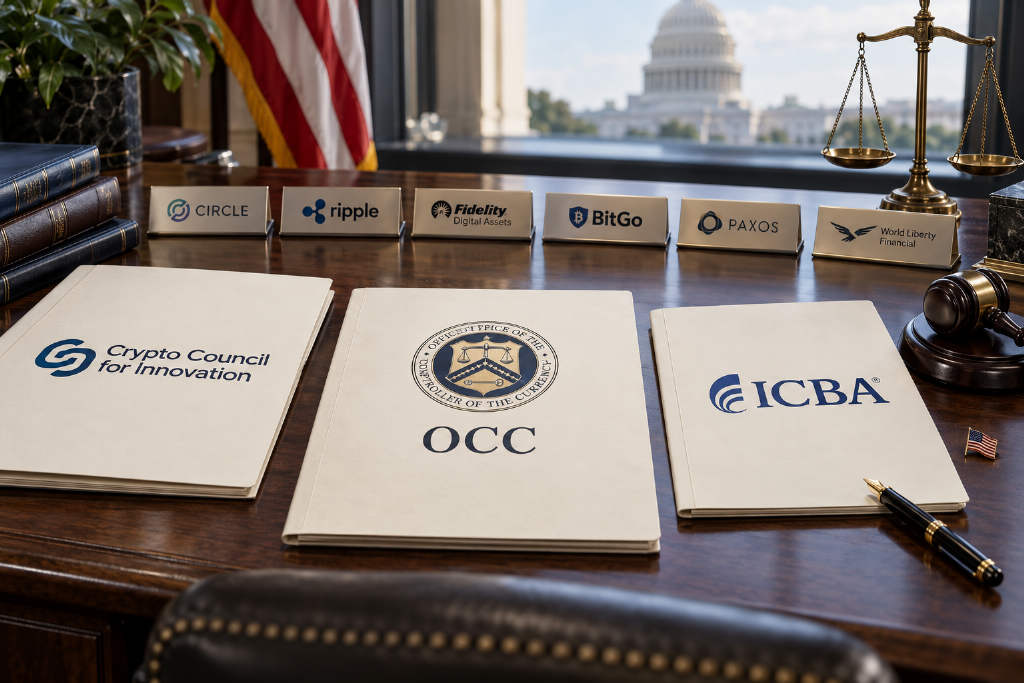
The Crypto Council for Innovation (CCI) has come out in support of the Office of the Comptroller of the Currency (OCC) after a banking trade group sued over the agency’s approval of national trust charters for crypto companies.
CCI CEO Ji Hun Kim said the organization "remains confident" in the OCC’s charter approvals despite the lawsuit and criticism from some lawmakers.
CCI says the lawsuit targets innovation and competition
In comments made Monday, Kim called the Independent Community Bankers of America’s (ICBA) case a "clear attempt to resist national trust charters, payments innovation, and competition in financial services." CCI said it supports the OCC’s approvals and conditional approvals for crypto firms seeking national trust charters.
The group’s position pushes back against lawmakers who have argued that exchanges "want to evade the fundamental safeguards and obligations that come with being a bank."
ICBA filed its case in federal court
The ICBA filed the lawsuit on Friday in the US District Court for the District of Columbia. The complaint alleges that the OCC approved US bank charters for entities, including crypto companies, without sufficient safeguards and without following requirements normally used for banks.
In a Friday statement, ICBA president and CEO Rebeca Romero Rainey said: "Congress did not create the national trust charter as a side door into the banking system for crypto firms seeking the credibility of a federal bank charter without the Community Reinvestment Act obligations, consolidated supervision, capital and liquidity standards, and FDIC insurance that apply to insured depository institutions."
Approved applicants include World Liberty Financial and Circle
Among the applications approved or conditionally approved by the OCC under US President Donald Trump were those from World Liberty Financial, Circle, Ripple, Fidelity Digital Assets, BitGo and Paxos.
World Liberty’s approval drew criticism from many lawmakers. The decision came under OCC head Jonathan Gould, a Trump appointee who has served since July 2025. Members of the Trump family co-founded the crypto company, which has also faced probes over alleged ties to the royal families of the United Arab Emirates.
The dispute centers on charter standards
The clash now turns on whether the OCC can grant national trust charters to crypto firms under its current approach, and whether those firms should face the same obligations that apply to insured depository institutions. CCI is backing the regulator’s position, while the ICBA is asking the court to challenge it.