
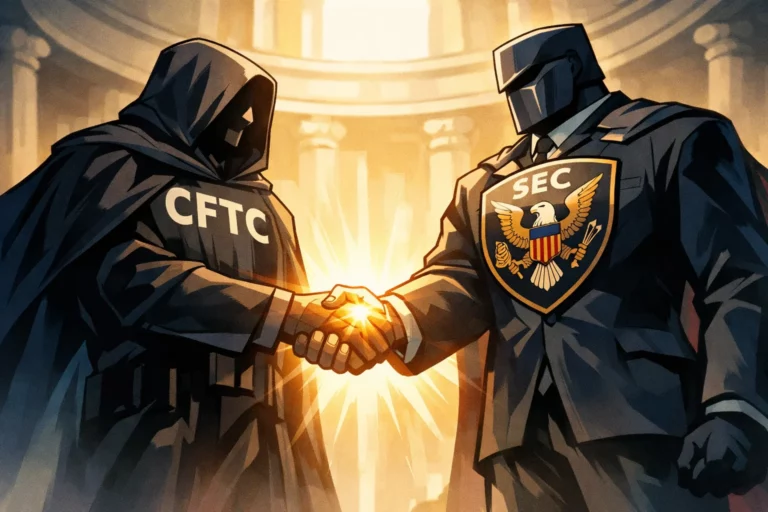
CFTC Chair Mike Selig said the agency is moving ahead with a regulatory framework for DeFi, crypto derivatives, and prediction markets, while also launching a joint initiative with the U.S. Securities and Exchange Commission called Project Crypto. He made the announcement on March 10 at the FIA Global Clearing Markets Conference in Florida, framing the effort as a push to give the crypto industry clearer legal boundaries in the United States.
Selig said closer coordination among regulators is helping the U.S. reclaim a leading position in digital assets. The main development was not just the list of sectors now under review. It was the public confirmation that the CFTC and SEC are working together after years of conflict over whether crypto assets should be treated as commodities or securities, a dispute that left firms facing uneven compliance expectations.
Project Crypto aims to settle long-running turf disputes
According to Selig, he and new SEC Chair Paul Atkins have started Project Crypto as a historic joint initiative. He described it as a step toward ending internal disputes between the two agencies. If that coordination holds, future crypto legislation and market rules in the U.S. could become more consistent, reducing part of the legal uncertainty companies have faced when operating in the market.
The message from the announcement was clear. Regulatory attention is shifting away from institutional rivalry and toward rule design for the areas where market activity and legal friction have been most intense.
Prediction markets set for formal guidance and rulemaking
Selig said prediction markets will be one of the first focus areas. The CFTC plans to issue more specific guidance on how these platforms, and products considered event contracts, should be listed and traded under U.S. law. The agency also plans to open a formal rulemaking process and collect public feedback as it builds out a framework for the fast-growing segment.
That would move oversight of prediction markets beyond broad statements and into more detailed standards covering product treatment and trading conditions.
DeFi developer boundaries and perpetuals under review
DeFi is another major target. Selig said the CFTC wants to address one of the field’s most disputed questions directly: whether software developers and service providers trigger CFTC registration requirements. A clearer answer on that point could affect how protocol teams, frontend operators, and infrastructure providers assess compliance risk in the U.S.
On derivatives, the agency is also studying classification standards and oversight methods for crypto perpetual contracts, one of the market’s highest-volume products. What comes out of that work will matter for product structure, platform operations, and trading rules. Taken together, the CFTC’s plan centers on prediction markets, DeFi, and crypto derivatives, with SEC coordination serving as the foundation for the broader policy shift.