



Codex’s rise inside OpenAI is now far less opaque. In a long report titled How Codex Happened, Every CEO Dan Shipper interviewed OpenAI co-founder Greg Brockman and six core Codex team members, laying out how a product that stumbled at launch ended up becoming the base layer for ChatGPT on desktop.
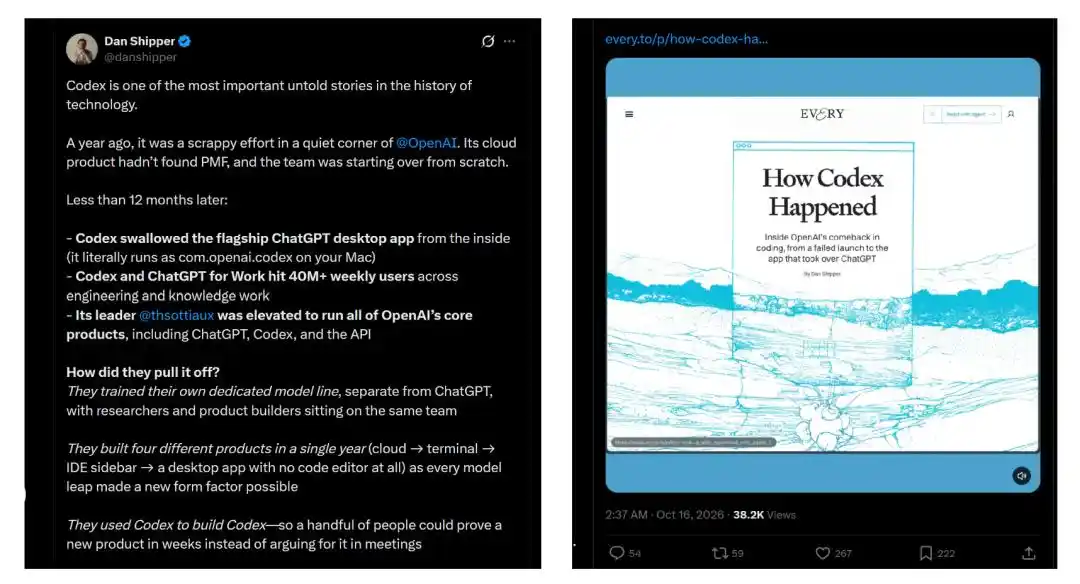
One detail captures the reversal. The new ChatGPT desktop app on macOS still carries the internal identifier 「com.openai.codex」. Less than a year earlier, Codex had been a small entry point inside ChatGPT. Later, ChatGPT was effectively placed inside Codex’s shell.
Codex Cloud launched first, but the timing was off
The roots of the new Codex go back to late 2024. At the time, Sottiaux, who now leads Codex, was training an internal coding agent built to help OpenAI researchers write infrastructure code, run experiments, and feed those results back into the next generation of models.
Several OpenAI teams were working on AI coding products at the same time, but they were not aligned on form factor. Some favored the terminal. Others leaned toward the IDE. Another camp believed agents belonged in the cloud.
The cloud vision was easy to understand: a user closes their laptop at the end of the day, while the agent keeps working on its own machine. By the next morning, code changes, tests, and even a pull request could already be waiting.
By spring 2025, those efforts had started to converge, and the team chose to push the cloud route first. They built Codex Cloud in about seven weeks and released it in May 2025. The response was weak.
The first problem was environment setup. Inside OpenAI, researchers worked with standardized development configurations. Outside the company, developers had to deal with different dependencies, permissions, and private tools. Getting an agent into a real production environment was already a hurdle. Embiricos later said the model itself also was not yet capable enough to handle complex tasks on its own.

That left the first version of Codex Cloud blocked on two fronts at once: difficult setup and insufficient model capability. The team had built toward an ideal workflow before the surrounding conditions were ready.
A sidelined local path became the comeback route
While OpenAI was struggling with that approach, Anthropic gained traction with Claude Code by taking a different path. Claude Code ran directly on the user’s own machine, where files, tools, and the development environment were already in place. Users could interrupt it at any time and continue from the same context.
The Codex team came to see that the cloud end state may not have been wrong, but the product had skipped too many intermediate steps. The answer was to return to a local approach it had already explored and then set aside.
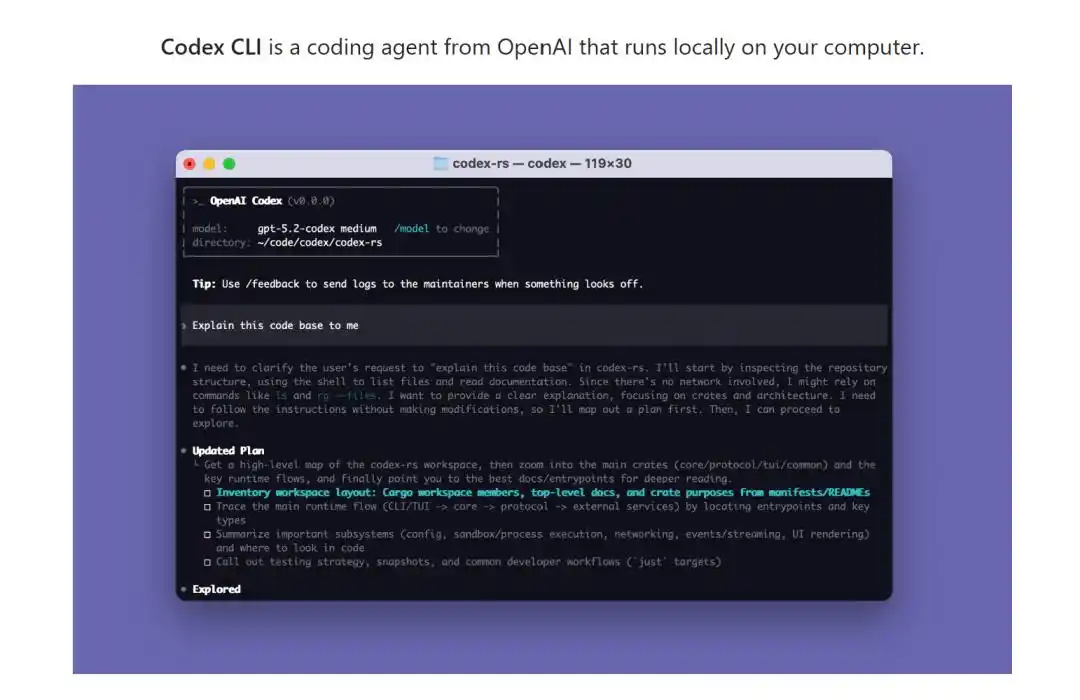
That path had never fully disappeared. One month before Codex Cloud launched, OpenAI open-sourced Codex CLI, which could read files, modify code, and execute commands directly in the terminal. Its shape was close to Claude Code. But according to Embiricos, CLI was not the main line of the Codex team at the time. He described it as a side project built in a heroic way by two people. The team had also built local agent prototypes internally, then dropped them a month later as attention shifted to the larger cloud vision.
In the end, that side path became the rescue line. In summer 2025, after Sottiaux took over the team, he announced a pivot to local. He did not start by piling features onto CLI. Instead, the team rewrote the underlying agent and rebuilt it in Rust.
That choice looked unusual from the outside. Users wanted features, Claude Code was already moving, and Codex was rebuilding the engine. But Sottiaux was trying to solve a deeper problem: Codex had kept changing product form. In his view, the CLI was only the visible shell. The real asset was the agent underneath, the system that could read files, run commands, call tools, and modify code. Once separated from the terminal, that core could be reused in the terminal, the IDE, a desktop app, mobile, the cloud, and ChatGPT.
This time, the team did not start by betting on the next interface. It built Codex itself first.
Model work changed the product’s trajectory
Even after the agent rewrite, Codex still needed a stronger model. Earlier OpenAI models could perform well in coding competitions, but real repositories exposed different weaknesses: messy project files, complex dependencies, and users interrupting the flow. That was very different from solving a clean algorithm problem.
Greg Brockman used a simple comparison. These models, he said, were like students who scored perfectly on the SAT but had never worked a day in their lives.
Michelle Pokrass’s team, which handled GPT-5 post-training, then worked on giving the model something closer to job experience. The model was exposed to large, messy codebases so it could learn project structure, bug tracing, and when to stop and ask the user before taking actions that required more authority.
By August 2025, the rebuilt Codex CLI was paired with GPT-5. It later moved into the sidebars of VS Code and Cursor. This time, users showed up. By October 2025, Codex usage had increased by more than 10x, and the IDE extension had overtaken the terminal as the most common entry point.
The CLI that had nearly remained a side project ended up pulling Codex out of its failed cloud debut. Embiricos recalled that he had one thought left at that point: 「finally, we can fight」.
Just as CLI and IDE were taking off, the team moved again
At that stage, the obvious move would have been to add people, add features, and press the advantage in the terminal and IDE. The Codex team chose another turn.
Sottiaux believed models would soon be able to work for hours at a time while handling code, images, voice, and outside information. Users, in that view, might eventually direct five or six agents at once. A terminal window was not built for that kind of workload.

So the team kept maintaining CLI while putting its biggest next investment into a native desktop app. To build it, Sottiaux brought in designer-programmer Andrew Ambrosino. The core team had only four people, but the goal was large: build a control center for multiple agents.
The interface looked more like chat software than a traditional coding tool. Different projects and tasks sat on the left. Each task had its own agent. Users could assign several streams of work at once, check progress, and add instructions as needed.
Then came a sharper decision. The app would not include a code editor.
That meant if Codex got even a single word wrong, the user could not simply jump in and fix it by hand. They had to tell the agent what to change and let it do the work. Ambrosino’s reasoning was straightforward: once manual editing is allowed, the rest of the IDE follows with it, search, undo, shortcuts, debugging, and everything else. A four-person team trying to recreate VS Code would most likely end up with a weaker copy.
The team chose to remove the fallback. Codex had to become good enough that users would stop reaching for an editor, or the app would not justify itself.
Early versions were hard even for the team itself. Embiricos asked teammates every day whether they had used it as their primary tool. At first, everyone said no. Some complained that even replacing a sentence required prompting Codex again. Ambrosino himself questioned internally whether leaving out file editing had been a major mistake.
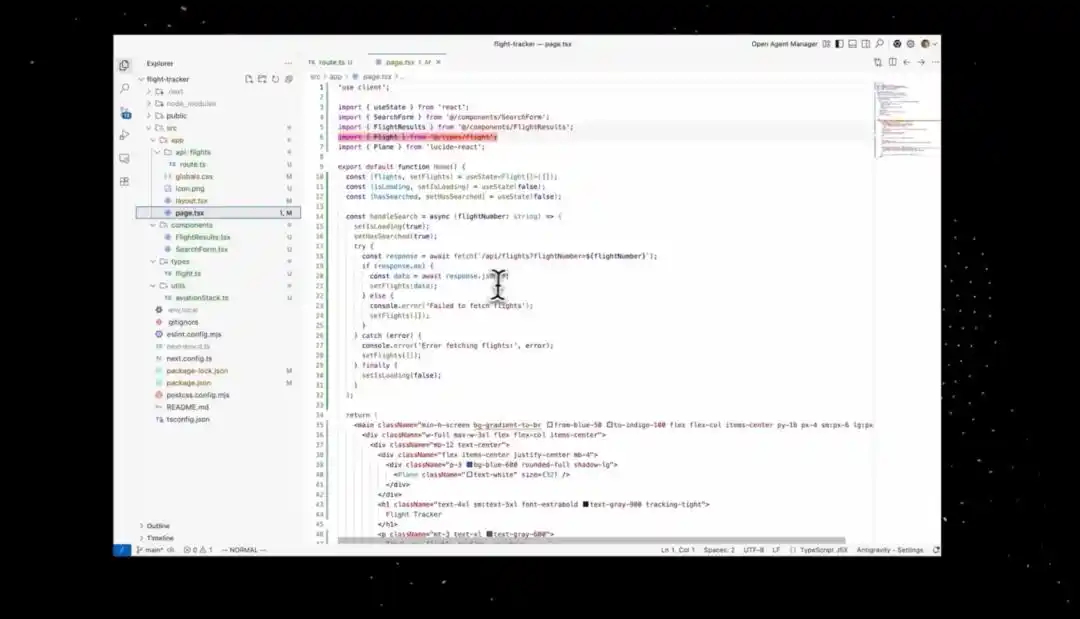
At the same time, Google released Antigravity with a full editor. That only intensified the doubt inside the Codex team. They began asking whether they should have wrapped the product around something closer to VS Code after all.
The bigger issue was that the model still was not good enough to support the design. Ambrosino later said that even if the app’s feature work had been completed, model quality would still have made it 「unshippable」. The team had to keep moving the product forward while waiting for the model to catch up.
The desktop app worked only after the model improved
The shift came in November 2025, when GPT-5.1-Codex-Max was released and the model became capable of coding continuously for hours. One month later, GPT-5.2-Codex improved its ability to modify large codebases.
By December 2025, internal sentiment had started to change. People who had insisted on needing an editor were no longer editing code themselves. They left comments in the output and asked Codex to handle the revisions. By early 2026, the entire Codex team had adopted the app as its main tool. OpenAI engineers and researchers followed. Greg Brockman, long associated with terminal workflows and Emacs, switched as well. Going back to the old workflow, he said, felt like going back in time.
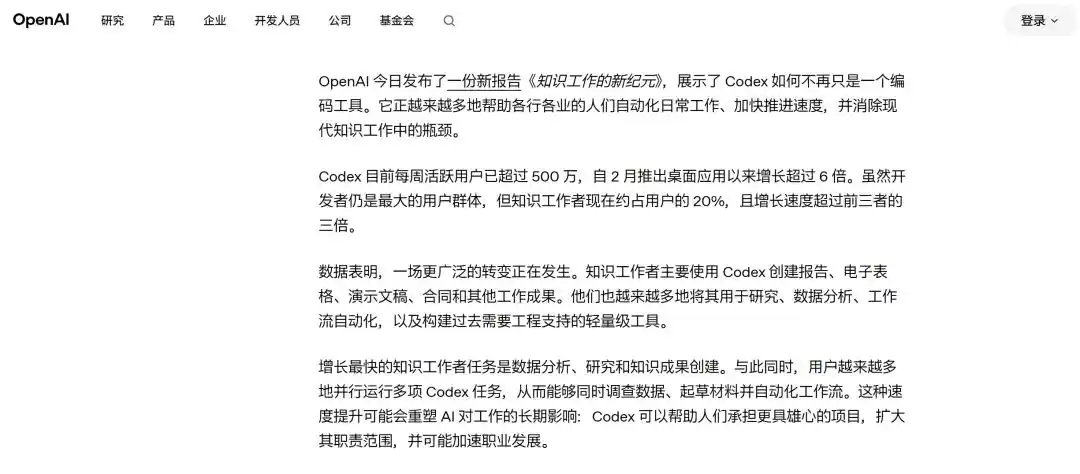
On Feb. 2, 2026, the Codex desktop app officially launched. This time, outside users responded. Weekly active users passed 2 million in March and exceeded 5 million in June. About one-fifth of them were already knowledge workers. In July, the Codex desktop app was merged further with the ChatGPT desktop experience.
That is why the internal Codex identifier still remains inside the newer ChatGPT desktop app. The relationship flipped. Codex had once lived inside ChatGPT. Later, ChatGPT lived inside Codex.
Brockman says the next turn may lead back to the cloud
In an appearance on the podcast No Priors, Greg Brockman suggested that the Codex product path may only be an early version of a broader OpenAI plan.
He discussed an internal proactive agent called Dots. The agent has its own cloud computer and can continuously read user-authorized calendars, email, and Slack. Brockman said his own Dots appears as a small owl. Each morning, it has already organized his to-do list, including messages he forgot to answer, commitments he has not completed, schedule conflicts, and even reminders that he needs to leave one meeting early to make the next one.
Some of those reminders, he said, covered things he had never explicitly asked it to track.
Brockman argued that the key shift is product form. When a model can only complete a few lines of code, it fits inside an IDE. When it can work independently for hours, it needs a desktop workspace that can manage multiple agents. Once users are comfortable handing off entire tasks, the agent moves back to the cloud and keeps working after the person steps away.
That would bring Codex back toward the cloud route it originally favored, but under very different conditions. This time, model capability, the underlying agent, and user habits would all be in place.
At the end of How Codex Happened, Embiricos made the same point directly: 「This means we have to go back to the cloud.」 Dan Shipper noted that Embiricos said this while the laptop in front of him was already firmly shut.
Brockman’s view of AI interfaces goes even further. In his words, 「the best UI is no UI」. Today, users still open an app, find an input box, and describe what they want. He expects those steps to fade. Users could call an agent through voice, Slack, iMessage, or other entry points. The agent would stay in the background, keep working with context, and surface only when a decision is needed.
Static buttons and menus may also matter less. For tasks such as booking flights, analyzing data, or assembling a bicycle, AI could generate a temporary interface that is just sufficient for that job. Once the task is done, the interface disappears with it.

Brockman also said OpenAI is pushing toward a convergence between personal assistants and work agents. ChatGPT has a large consumer user base, while Codex and OpenAI’s enterprise business cover professional workflows. The company’s direction is to bring those lines together so that one agent can understand both a user’s work and their daily life.
The article itself was built as an agent-native reading experience
The report includes one more layer. Every fed both the article and interview materials from six core members into AI, turning the piece into what it described as an agent-native article.
Readers can ask an agent to summarize sections, explain the original text, compare what different interviewees said, or dig into details the author did not fully expand. The workflow is simple: open the article, click 「Read with agent」 at the top, choose Codex, Claude, or Gemini, and then open or copy the provided reading prompt.
Those prompts are prewritten. Readers can paste them into the AI tool they use and ask questions such as why the first cloud launch failed, or how Sottiaux and Embiricos differed in their explanations of Codex’s turnaround.
That turns an 8,000-word report into something closer to a searchable interview archive. The story is about how AI changes software, and the reading experience itself has been changed by AI as well.
Four turning points highlighted in the account
- The first Codex Cloud struggled with outside users, and the team pivoted quickly to a local agent.
- OpenAI gave Codex its own model line, allowing research, product, and engineering to work in direct coordination.
- The team cycled through four product forms in a year and ultimately landed on a desktop app without a code editor.
- They used Codex to build Codex, which let a small group produce new products in a matter of weeks.
The full article is available at https://every.to/p/how-codex-happened