

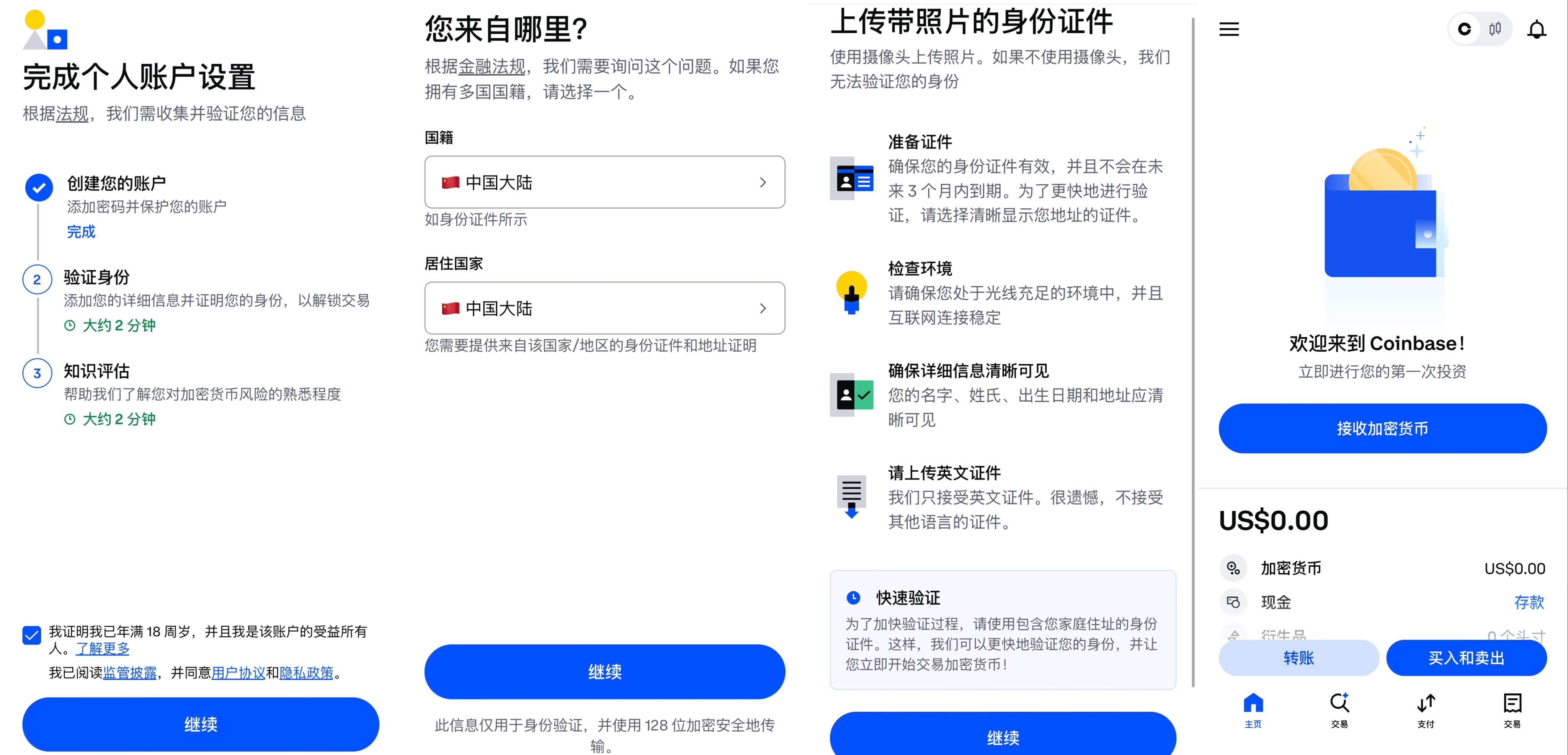
Coinbase has started allowing users in mainland China to register accounts using a Chinese national ID card and a mainland residential address, according to a Foresight News report published July 15. The change was first spotted by multiple social media users on July 14. Wu Blockchain said it verified the matter with a Coinbase employee, who confirmed that the new process had replaced the previous requirement for a Chinese passport and a Hong Kong address. Users said the verification could be completed in as little as one minute.
Shares of COIN rose more than 2.6% that day and closed above $160.
Mainland retail users had largely been shut out before
Before this change, mainland users seeking to complete KYC on Coinbase had to submit a Chinese passport and provide a Hong Kong address. Most ordinary users in mainland China did not have either, making the process functionally exclusionary.
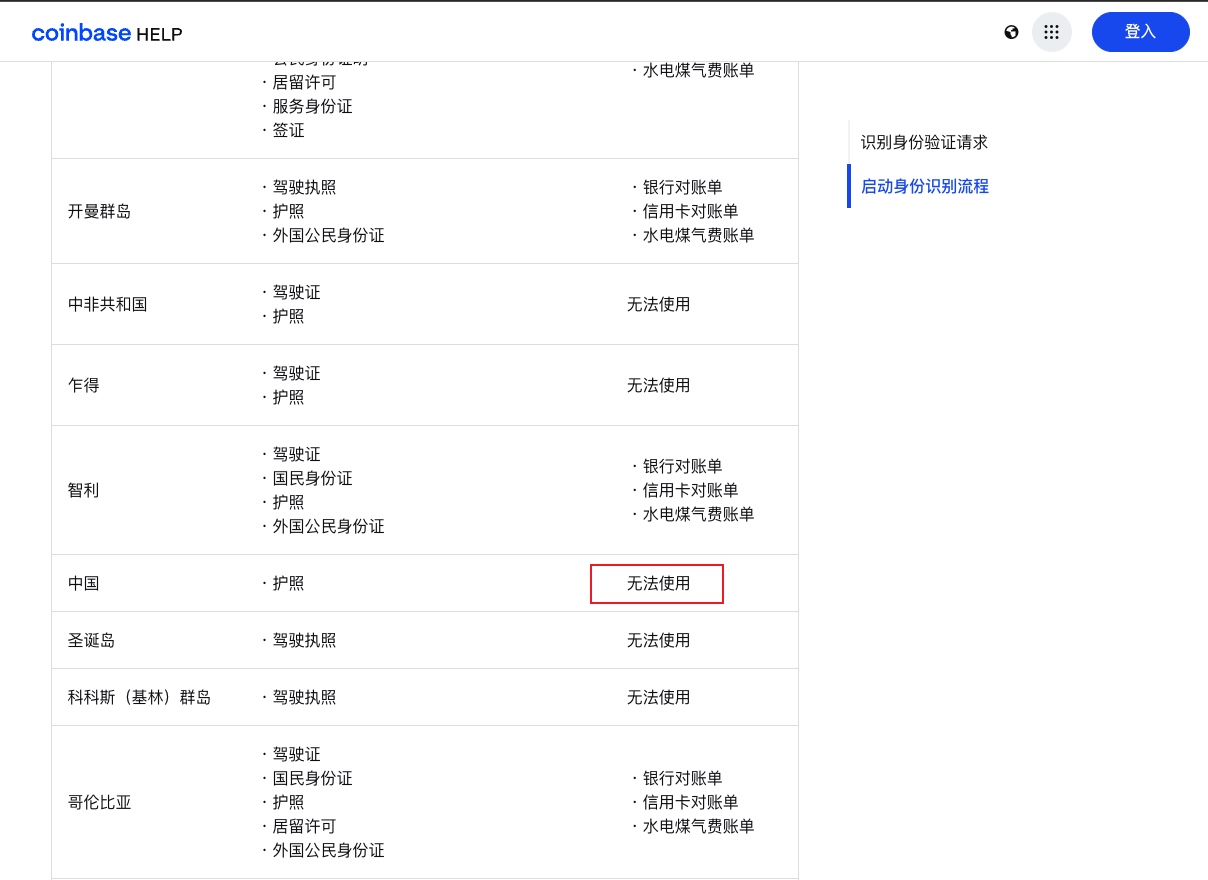
Coinbase has not released any official statement on the change. At the time of publication, its help-page documentation had not been revised either. The company’s identity verification documents still showed passports as the only accepted identity document for China, while proof of address was marked as “Not available.” There was no mention of national ID cards.
BeInCrypto asked Coinbase International communications director Mary-Kate Collins about the change. Her response was: “Coinbase International Exchange allows customers in over 100 countries to sign up and trade a range of products, including crypto, equities, and commodities.” The reply referred to Coinbase’s offshore trading platform and did not directly address whether verification rules for mainland Chinese IDs had been altered.
Market share climbed to 8.6%, but Binance still leads globally
According to Coinbase disclosures cited in the report, the platform’s share of crypto trading volume rose from about 3.2% a year earlier to 6.4% in 2025, then reached a record 8.6% in the first quarter of 2026. Over the same period, Coinbase derivatives trading volume increased 169% year over year, and the exchange held roughly 12% of global crypto assets in custody.
Its financial picture moved in the opposite direction. Coinbase reported $1.41 billion in total revenue in Q1 2026, down 31% from a year earlier, alongside a net loss of $394 million. The report says that the combination of record market share and a net loss suggests the company needs more trading activity to offset the revenue gap.
CoinDesk Data showed that in 2026, Binance accounted for 37% of global centralized exchange derivatives trading volume, compared with 16.8% for OKX and 6.74% for Coinbase. Binance also released self-reported figures on July 14 showing that its registered account base had reached 323 million and cumulative trading volume had hit $156 trillion.
Coinbase had previously been close to absent in the mainland China market. Based on its current product setup, the report says the users most likely to be captured by the lower onboarding threshold are those who already hold crypto assets. They can transfer USDT, USDC, BTC, or other assets directly into Coinbase. Accepting mainland ID cards lowers the account-opening barrier and may give Coinbase a chance to draw assets away from Binance, OKX, and self-custodied wallets.
China’s ban on offshore crypto services has not eased
In September 2021, the People’s Bank of China and nine other government departments jointly classified all cryptocurrency-related business activity as illegal financial activity and explicitly barred offshore exchanges from serving mainland Chinese residents.
On Feb. 6, 2026, seven Chinese industry associations issued a new notice expanding the scope of that ban to stablecoins and tokenized real-world assets, or RWAs. The notice reiterated that cross-border crypto trading remained illegal and instructed internet companies to block and report crypto-related content. It also stressed the principle of “same business, same risk, same rules,” and said offshore structures involving Chinese assets would also need to be filed or approved in advance.
Recent securities enforcement offers a direct parallel
Two months earlier, China’s securities sector provided a fresh enforcement example. On May 22, the China Securities Regulatory Commission and eight other departments announced investigations into Futu, Tiger Brokers, and Longbridge, accusing them of offering cross-border securities trading services to mainland residents without authorization.
Futu was fined RMB 1.85 billion. Tiger Brokers was fined about RMB 410 million, including confiscated illegal gains.
The same eight departments also rolled out a two-year rectification campaign. Starting June 12, existing mainland users were barred from opening new positions or making new deposits and were limited to one-way selling and fund withdrawals. After the rectification period ends, the affected offshore institutions must fully shut down websites and trading software serving users in mainland China. Futu now requires proof of permanent overseas residency for registration, while Tiger Brokers no longer accepts account openings from mainland residents. Analysts estimated that mainland legacy accounts on the two platforms held between $27 billion and $29 billion in assets.
The report argues that the enforcement logic applied to cross-border securities brokerage and crypto trading is the same: offshore institutions serving mainland users without authorization are treated as engaging in “illegal cross-border business.” On that basis, it says Chinese regulators could, to a certain extent, also penalize Coinbase.
Timing draws added scrutiny
Coinbase is a Nasdaq-listed company regulated by the U.S. Securities and Exchange Commission. The report says that if Chinese regulators choose to respond, Coinbase could face compliance costs and reputational risks that are higher than those confronting offshore rivals such as OKX.
The timing overlaps with a legal leadership change. On July 9, chief legal officer Paul Grewal announced his departure after six years at Coinbase. During his tenure, he led the company’s years-long litigation with the SEC. Five days later, users discovered that mainland registration access had opened. His successor is current vice president Molly Abraham, who will take over the legal team as general counsel.
The report describes the timing of the lower onboarding threshold as especially delicate. No public announcement was issued, the help pages were not updated, and the executive response avoided the core question. In the article’s telling, those choices leave room for the change to be reversed if needed.