
Crypto’s commercial center of gravity is shifting from control over base-layer pricing and protocol rails to control over user entry points and trading flow, according to a Foresight article written by Changan of the Biteye content team. The report looks at 20 representative crypto trading front ends that connect to third-party trading infrastructure and generate at least $100,000 in revenue over the past 30 days, asking a simple question: who is quietly making money, and why is this business getting hotter?
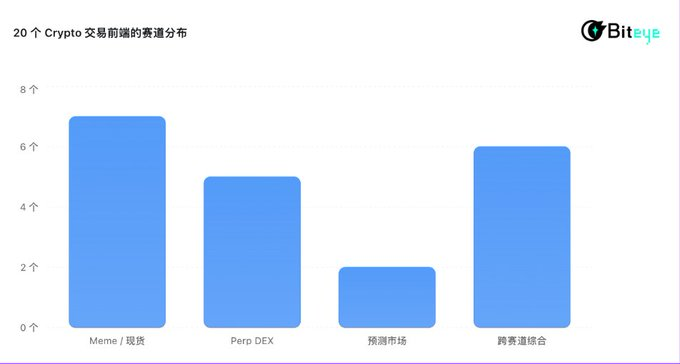
Meme front ends lead the list, followed by perpetuals products
The article says crypto founders spent the past several years racing to launch public blockchains and build protocols in hopes of controlling the technical stack and the fee stream. As infrastructure matured, another model started to gain traction. Instead of building a full trading system from scratch, teams began plugging into existing protocols and focusing on product experience and user acquisition.
Among the 20 front ends in the report, meme-focused products make up the largest group, with seven names including GMGN and Axiom. The article argues that meme trading remains one of crypto’s hottest segments even as narratives rotate, and that trading terminals selling the “shovels” can keep earning from transaction flow.
Perp DEX front ends are the second-largest category, with five products. The report notes that perpetuals trading is already a large market and that traders tend to open and close positions frequently, creating recurring fee income. As platforms such as Hyperliquid opened up trading capabilities, third-party front ends were able to tap into that market as well.
Prediction-market front ends are the smallest group, with only two. The article says many products in that segment are still fighting for users through zero add-on fees or low-fee pricing. Trading volume may be meaningful, but the revenue that actually sticks is limited, which is why the category ranks last under the report’s revenue screen.
The remaining six are broader entry points. The article points to wallets such as Phantom, MetaMask and Trust Wallet, saying they already control large user bases and asset pools. Once they add swap and perpetuals functions, they can turn existing traffic into new fee income. Fomo is presented as a representative of the social-trading route, using content and social relationships to drive transactions.
The category breakdown is based on data through Oct. 21, 2026, using 30-day revenue.
Six front ends cleared $1 million in 30-day revenue
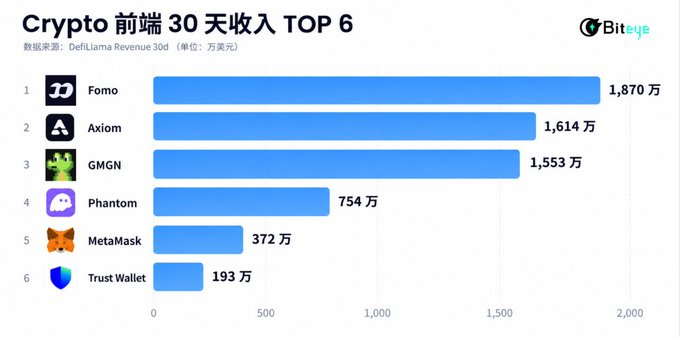
The article then narrows the field to six leading front ends with more than $1 million in revenue over the past 30 days: Fomo, Axiom, GMGN, Phantom, MetaMask and Trust Wallet. All of them rely on external protocols to execute trades, but they attract users and monetize in different ways.
- Fomo centers on social trading, using social content and creators to bring in users and then taking a share of trading activity.
- Axiom and GMGN are established meme trading terminals that built up large bases of active traders and earn fees from high-frequency activity.
- Phantom, MetaMask and Trust Wallet start from large wallet user bases and convert those users into new revenue streams by adding more trading services.
Fomo: social trading built around creators and simpler onboarding
Fomo ranks No. 729 on XHunt. The article describes it as a social trading app aimed at mainstream users, with its main selling point being lower friction for on-chain trading. Users do not need to understand different chains, wallets or gas fees. They can deposit USDC and directly buy and sell assets across chains.
Fomo also folds social features into the product. Users can follow other people’s trading activity and copy trades directly. The article says this changes how crypto creators make money. Instead of relying mainly on advertising and project promotions, KOLs can issue calls on Fomo and receive a share of the fees generated by followers’ trades.
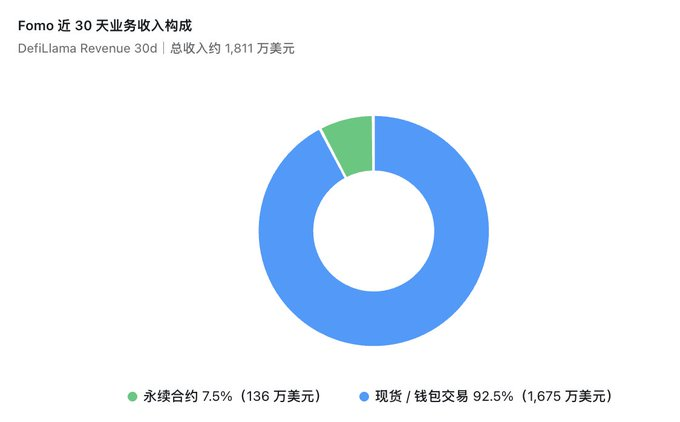
In the report’s framing, Fomo makes trading easier for newcomers while giving creators a new way to turn influence into transaction revenue. The revenue figures cited for the product come from DefiLlama and are based on data through Oct. 22, 2026, using 30-day revenue.
Axiom: expanding beyond Solana meme trading
Axiom ranks No. 3173 on XHunt. The article calls it a leading meme trading terminal in the Solana ecosystem, built around fast order entry and hot-token discovery tools that helped it accumulate a large base of active traders.
As competition in meme trading intensified, especially with the rise of newer social trading platforms such as Fomo, Axiom started looking for new growth. The article says its expansion has accelerated over the past two to three months. In August, it launched a new asset-management page. In September, it upgraded BNB Chain trading support. It has also expanded into ecosystems including Base and Ink, moving beyond a Solana-only business.
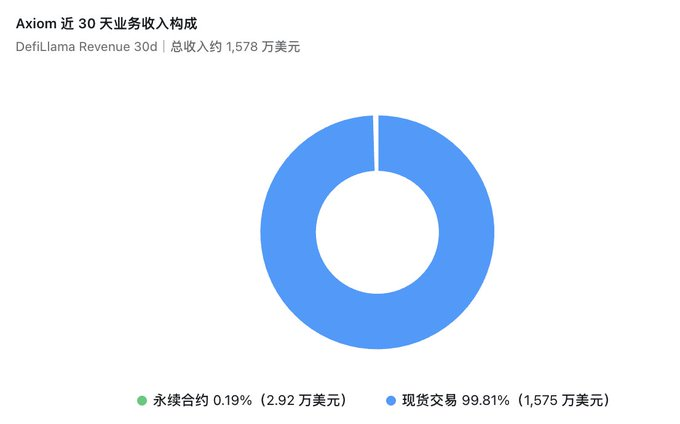
The article’s conclusion is that Axiom no longer wants to remain just a meme trading tool. It is trying to combine market data, social features and trading in one place and move closer to a super app model. The revenue reference is again DefiLlama, with data through Oct. 22, 2026.
GMGN: adding perpetuals and social features
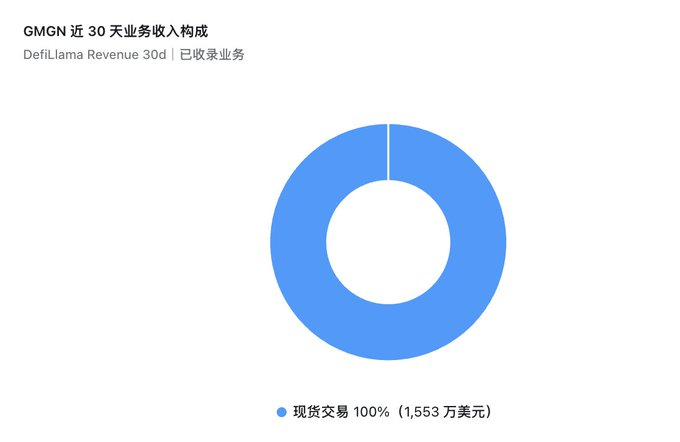
GMGN ranks No. 2030 on XHunt. The article says it is one of the meme trading platforms most familiar to the Chinese-speaking crypto community, helped by a Chinese-friendly interface and features such as smart-money tracking.
With social trading platforms gaining ground, GMGN has also started to change. The article says it recently launched perpetual futures and rolled out social features including Callout and trading leaderboards. It has even integrated Fomo users’ call records into candlestick charts.
The report also notes that founder Haze has been posting recruitment notices frequently to expand the product and community teams. In the article’s view, GMGN does not want to defend only its legacy meme-trading business and is moving toward a broader trading platform. The revenue data cited are from DefiLlama through Oct. 22, 2026.
Phantom: wallet traffic still drives most revenue
Phantom ranks No. 174 on XHunt. The article describes it as a breakout wallet from the Solana ecosystem that once reached close to 17 million monthly active users and raised funding in 2025 at a $3 billion valuation.
Over the past year, Phantom added Hyperliquid perpetuals, prediction markets, social feeds and even a payment card, aiming to let users handle trading, social activity and everyday spending inside one app.
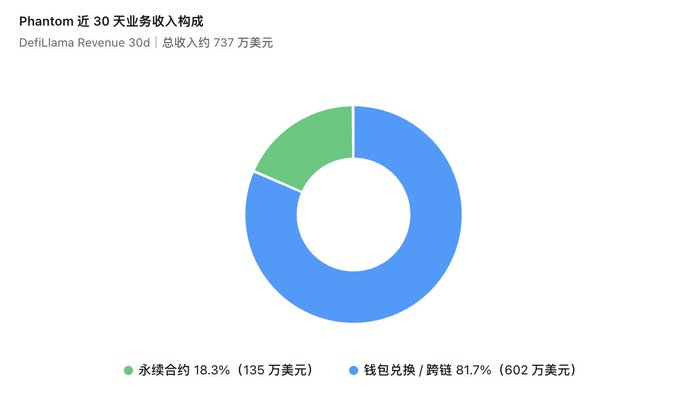
According to DefiLlama data cited in the article, Phantom generated more than $7 million in revenue over the past 30 days. Most of that still came from in-wallet token swaps and cross-chain services, while perpetuals trading contributed about $1.2 million. The figures are based on data through Oct. 22, 2026.
MetaMask: legacy wallet revenue remains the largest piece
MetaMask ranks No. 117 on XHunt. The article says MetaMask is one of the oldest wallets in the Ethereum ecosystem and was once close to a default tool for getting on-chain. But product experience improved only slowly over the years, and some users migrated to other wallets.
Facing that pressure, MetaMask has accelerated its transition. The article says it integrated Hyperliquid perpetuals and the Polymarket prediction market in an effort to evolve from a wallet utility into a broader trading platform.
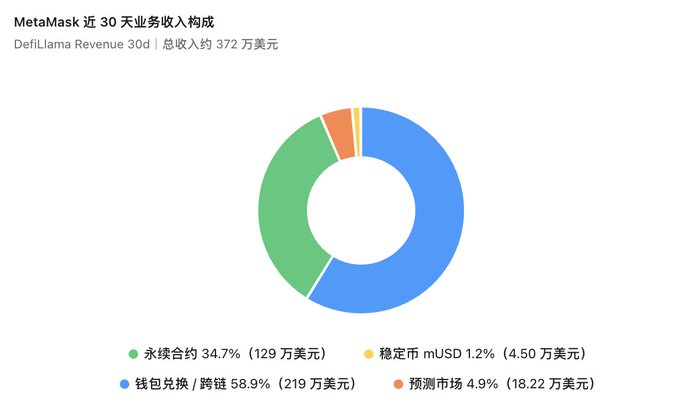
DefiLlama data cited in the report show MetaMask generated about $3.72 million in revenue over the past 30 days. Traditional wallet trading accounted for about $2.23 million, while Hyperliquid perpetuals contributed about $1.29 million. The article notes that MetaMask once monetized mainly through its wallet’s first-mover advantage, but now has to compete again for users’ trading demand. The figures are based on data through Oct. 22, 2026.
Trust Wallet: perpetuals now account for more than 80% of revenue
Trust Wallet ranks No. 1338 on XHunt. The article describes it as a multi-asset crypto wallet that supports token purchases and sales, cross-chain transfers and derivatives trading in addition to asset storage.
It also says Trust Wallet recently required 21 business leads to open X accounts and communicate directly with users, a sign that the team is putting more weight on user growth and community operations.
Its revenue mix has changed as well. According to DefiLlama data cited in the article, Trust Wallet generated about $1.93 million in revenue over the past 30 days. Of that, $1.56 million came from Hyperliquid perpetuals trading, more than 80% of the total. Traditional wallet businesses such as swaps and cross-chain services contributed only about $370,000. The article says perpetuals trading has become the main pillar of Trust Wallet’s income. The figures are based on data through Oct. 22, 2026.
Why front ends have become a strategic battleground
The article argues that what front ends are fighting over is not just the fee from one trade, but a user’s future trading demand as a whole. A single trading entry point can support many businesses. A product may attract users through meme trading today, then add perpetuals, prediction markets, payments or wealth products later. Each added service creates another chance to monetize the same user base.
One example in the article is that Phantom earns more trading revenue through Hyperliquid than TradeXYZ. Fomo is described as the clearest expression of this cycle’s front-end innovation because it combines cross-chain trading, social feeds and creator revenue sharing, allowing KOLs to earn fees through trade calls. That trend has drawn in newer players such as SmartX, while established terminals including GMGN and Axiom have also added social features.
The article cites a Re7 Capital research report saying third-party front ends’ share of perpetuals trading rose from less than 1% at the start of 2025 to about 20% in August this year. That helps explain why wallets, trading terminals and social platforms all want control of the same entry point. Wallets hold user assets, trading terminals own trading habits, and social platforms bring creators and followers. Their starting points differ, but each wants users to complete more trades inside its own product.
Making crypto trading feel more like a normal app
In its closing section, the article says crypto spent years building infrastructure to make trading faster and cheaper. Even so, wallets, cross-chain steps and gas fees still act as barriers for many mainstream users.
Trading front ends are now trying to push that complexity into the background so users can trade the way they use a normal app. The article points to Fomo’s rapid growth as evidence of demand for that simpler experience.
A report from Binance Research this year, as cited in the article, says wallets, trading platforms and fintech apps are gradually converging toward the same type of product: one account and one balance that can handle a growing range of financial actions.
That could mean front ends will eventually compete for more than crypto-native traders. As U.S. stocks, prediction markets and payments move on-chain, these products may become a unified entry point for ordinary users to manage assets, invest and spend. Crypto has spent years trying to bring more assets and financial services on-chain. The next question, the article suggests, may be who can make those services easy enough for more people to use. The trading front ends that look ordinary today may be where that shift begins.
The original article also carries a disclaimer saying markets involve risk and the piece does not constitute investment advice. Users should consider whether any opinion, view or conclusion in the article fits their own circumstances and bear responsibility for any investment decisions made on that basis.