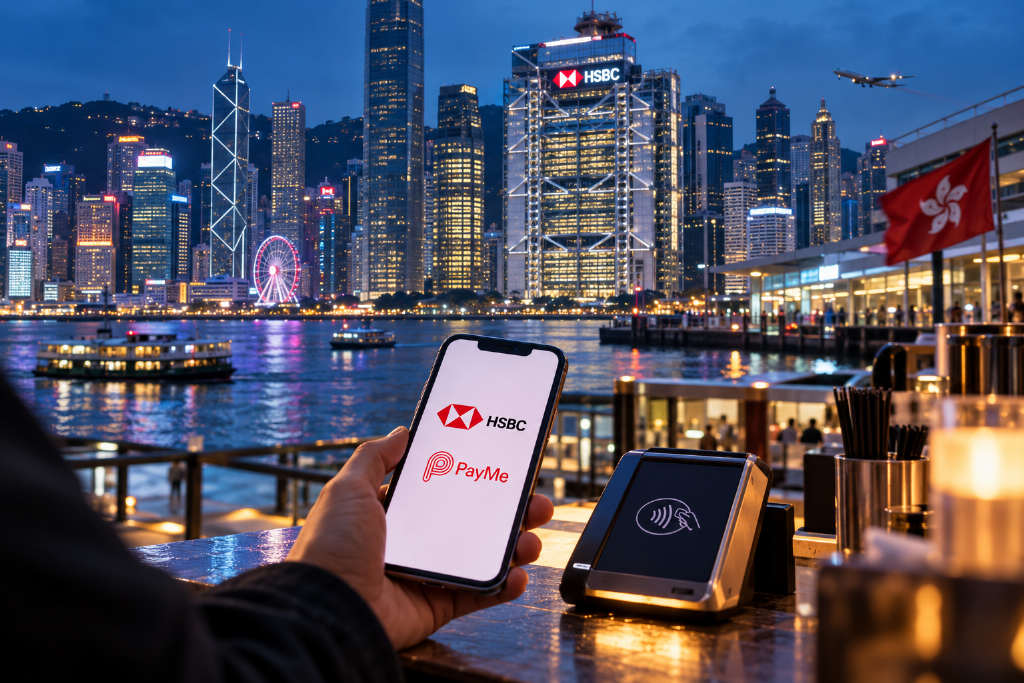
HSBC2026-10-23 13:46:22HSBC to roll out RedCoin on PayMe as regulators and firms push stablecoin and cross-border crypto movesA cluster of policy and compliance developments emerged on Oct. 23 across Asia, the Middle East, and the U.S. HSBC said it will begin a phased rollout of its Hong Kong dollar stablecoin, HSBC RedCoin, to more than 3.3 million users of its PayMe app, starting with instant peer-to-peer transfers and merchant payments. The bank said users can activate a RedCoin wallet after updating the app, without opening a separate account or maintaining a minimum balance, and expects the rollout to be completed before the weekend. By year-end, HSBC plans to integrate RedCoin into its Hong Kong mobile banking app and allow subscriptions starting at HK$100 for tokenized money market funds, with tokenized gold and third-party fund products planned later. Elsewhere, the Monetary Authority of Singapore said Bank Negara Malaysia and the Bank of Thailand have joined the BLOOM cross-border digital currency initiative, alongside new participants including Ripple, Visa, Mastercard, Airwallex, and the World Bank Group. South Korea’s central bank will require monthly reporting on end-of-month balances for users who have transferred crypto assets abroad since July 19, 2024. Robinhood said it has received authorization from Dubai’s DFSA and plans to launch products for local retail investors in 2027. Phantom disclosed a commercial partnership with KalshiEX to offer eligible U.S. users access to prediction markets. In Washington, Circle shareholder Benjamin Greenberg sued President Donald Trump and World Liberty Financial over two UAE-linked transactions.120
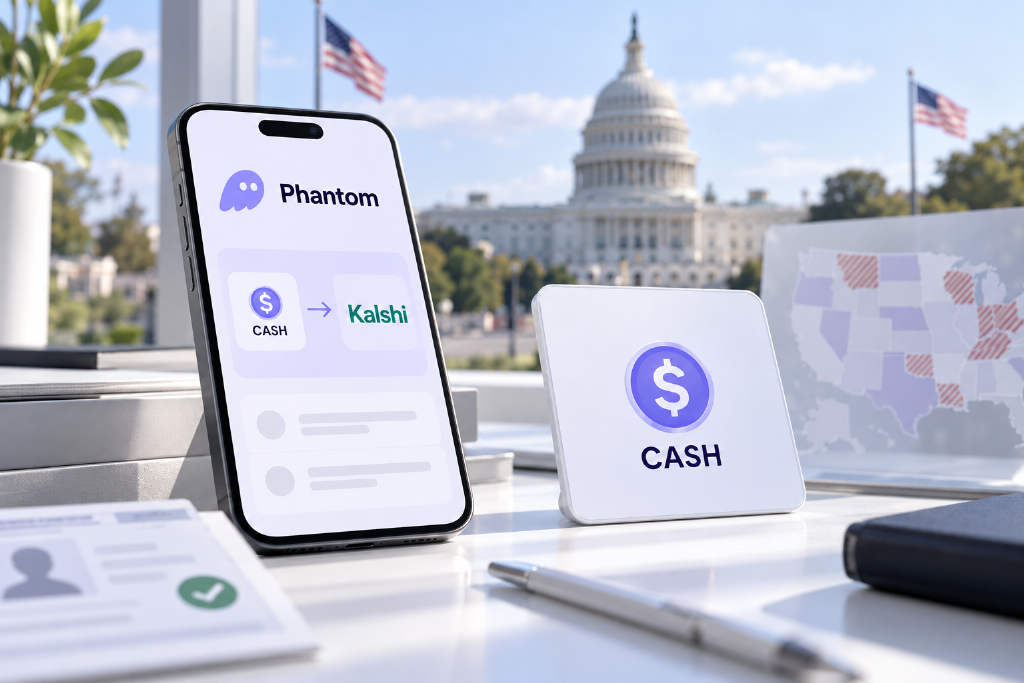
Phantom2026-10-23 13:10:27Phantom opens Kalshi prediction markets to U.S. users inside its wallet appCrypto wallet Phantom is rolling out access to Kalshi’s prediction markets for users in the United States, allowing event contracts to be traded directly inside the Phantom app. The feature began launching on Oct. 23 and will expand over the coming weeks. Users must first complete Kalshi’s KYC process before they can participate. Trades will be funded with the CASH stablecoin held in Phantom Cash accounts. Once funds are transferred to Kalshi, they are converted into fiat for settlement. Withdrawals and profits are then returned to Phantom Cash. Phantom currently shows a fee of $0.02 per contract, with an additional small network fee for moving funds. Access will vary by state because of local regulatory disputes. Sports markets are temporarily blocked in Michigan. In Nevada, sports, election, political, and entertainment markets are restricted. Washington state has broader limits that also cover categories such as culture, technology, and geopolitics. Phantom general counsel Kevin Jacobs said the company believes the Commodity Futures Trading Commission, or CFTC, has clear jurisdiction over the products and that Phantom will continue complying with existing state-level restrictions.70
crypto tradin2026-10-22 07:48:50Crypto trading front ends are pulling in millions a month as wallets, meme terminals and social apps fight for user flowA Foresight article by Biteye’s content team maps out a shift in crypto business models: instead of building the full trading stack, more products are plugging into existing protocols and competing at the user interface layer. Using a screen of third-party trading infrastructure integrations and at least $100,000 in revenue over the past 30 days, the report identifies 20 representative crypto trading front ends. Meme-focused products account for seven of them, Perp DEX front ends for five, prediction-market products for two, and six more are broad entry points such as wallets and social trading apps. The piece then highlights six front ends with more than $1 million in 30-day revenue: Fomo, Axiom, GMGN, Phantom, MetaMask and Trust Wallet. It describes how each one monetizes differently, from creator-led social trading and high-frequency meme speculation to wallet-based swap, cross-chain and perpetuals revenue. DefiLlama figures cited in the article show Phantom topping $7 million in 30-day revenue, MetaMask at roughly $3.72 million and Trust Wallet at about $1.93 million. The broader argument is that front ends are no longer just thin wrappers around protocols. They are becoming the place where products try to capture a user’s full trading lifecycle. The article also cites Re7 Capital research saying third-party front ends’ share of perpetuals trading rose from under 1% at the start of 2025 to about 20% in August this year.160
Crypto Tradin2026-10-22 08:01:09Crypto trading front ends gain ground as six projects top $1 million in 30-day revenueA TechFlowPost report argues that one of crypto’s most profitable businesses is no longer building the base layer, but owning the user-facing entry point. The article reviewed 20 representative trading front ends that plug into third-party trading infrastructure and generated at least $100,000 in revenue over the past 30 days. Meme-focused products made up the largest group with seven projects, followed by five Perp DEX front ends, six broad gateway products, and two prediction-market front ends. Among them, six projects posted more than $1 million in 30-day revenue: Fomo, Axiom, GMGN, Phantom, MetaMask, and Trust Wallet. The report says each is monetizing in a different way. Fomo leans on social trading and creator revenue sharing. Axiom and GMGN built their businesses around meme-token traders. Phantom, MetaMask, and Trust Wallet are using large wallet user bases to convert existing traffic into swap, cross-chain, and derivatives revenue. The piece also points to a broader shift in market structure. As trading infrastructure matures, competition is moving away from control over pricing and protocol rails and toward control over users, order flow, and recurring trading demand. Citing Re7 Capital, the report says third-party front ends’ share of perpetual futures volume rose from under 1% at the start of 2025 to about 20% in August 2026.170
Hyperliquid2026-10-10 02:59:52Castle Labs says Hyperliquid has generated more than $1.4 billion in protocol revenue, with 56% of on-chain perpetuals marketA market study from Castle Labs said Hyperliquid has generated more than $1.4 billion in cumulative protocol revenue and has spent more than $1.26 billion on open-market buybacks of HYPE. Measured by open interest, the platform now accounts for more than 56% of the on-chain perpetual futures market. The report also said Hyperliquid has opened its trading infrastructure to third-party wallets and applications through its Builder Codes mechanism. That setup allows external products to plug into Hyperliquid’s perpetual trading system without building their own stack, while also sharing in the revenue generated through that access. Castle Labs cited Phantom and MetaMask as examples. According to the report, Phantom has earned more than $25 million in cumulative revenue through the arrangement, while MetaMask has brought in more than $10.5 million. The item was cited by Techub News and attributed to Wu Blockchain.480
Policy and Re2026-09-20 06:46:12Crypto Week Ahead: BitMEX shutdown date nears as Moscow Exchange prepares BTC, ETH and SOL perpetual futuresA packed calendar is lined up for Sept. 21-27, with several crypto market deadlines and product changes already scheduled. Moscow Exchange is set to launch crypto index perpetual futures tied to BTC, ETH, SOL, XRP and TRX on Sept. 22, offering cash-settled contracts priced in U.S. dollars and settled in rubles for qualified investors only. The same day also marks the deadline for The Sandbox’s SAND compensation claims tied to the Aug. 22 Base and BNB Chain bridge attack, while Zilliqa is expected to trigger its second exchange migration hard fork. On Sept. 23, BitMEX is due to shut down at 12:00 Beijing time after halting new user registrations, with remaining positions to be forcibly closed after the deadline. Sept. 24 brings another set of changes: Phantom will stop supporting Sui, Binance will delist all USDP spot pairs, and Coinbase will suspend trading in IoTeX (IOTX) across several services. On Sept. 25, oracle project Switchboard plans to end operations and terminate remaining support, while Binance Futures is scheduled to list next-quarter 0326 delivery contracts. The week also includes a series of public appearances by Federal Reserve officials, including John Williams, Philip Jefferson, Austan Goolsbee and Thomas Barkin.1040
SEC2026-09-17 17:34:03SEC Opens a Temporary Path for Onchain Tokenized Stocks as CFTC Broadens Relief for Passive Software ProvidersU.S. regulators moved within hours of each other on Thursday, using existing authority rather than new legislation to carve out limited crypto-related relief after the Senate failed to advance H.R. 3633. The Securities and Exchange Commission created a temporary, conditional exemption for Tokenized Securities Venues, allowing certain tokenized National Market System stocks to trade onchain through permissioned liquidity pools, while the Commodity Futures Trading Commission expanded no-action relief for passive software providers that route users to registered futures intermediaries. The SEC order is narrow and time-limited. It lasts five years unless amended or withdrawn earlier, does not permit primary issuance, and leaves antifraud rules, OFAC sanctions compliance, and Securities Act registration for primary offerings untouched. It also imposes hard caps on symbols and trading volume, requires public-ledger smart contracts that can be audited, mandates trading halts when the underlying stock is halted on its primary exchange, and gives issuers the power to block third-party tokenized listings within 30 calendar days. The CFTC’s Staff Letter 26-25 extends a path that had previously been available only to Phantom Technologies. It says staff will not recommend enforcement against qualifying passive software providers for failing to register as introducing brokers, subject to 10 conditions. Industry groups welcomed the SEC move, while SIFMA repeated concerns that broad exemptions could create parallel but unequal trading systems.870
CFTC2026-09-17 21:29:54CFTC Staff Says Wallets Can Offer Regulated Perps Without Broker RegistrationStaff at the U.S. Commodity Futures Trading Commission said Thursday that software developers may integrate regulated derivatives trading into self-custodial crypto wallets without registering as brokers, provided they meet a set of stated conditions. The guidance came in Staff Letter 26-25 from the CFTC’s Market Participants Division, which said it would not recommend enforcement against providers of passive software for failing to register as introducing brokers, or against related personnel for failing to register as associated persons. The position extends relief that had previously been available only to Phantom Technologies under Letter 26-09, issued in March. According to the division, other similarly situated passive software providers later sought the same treatment. Under the new letter, covered software can route user orders directly to registered exchanges, futures commission merchants, or introducing brokers for products including event contracts, perpetual contracts, and other CFTC-regulated derivatives. The relief comes with 10 conditions, including user disclosures, compliance with National Futures Association marketing rules, and joint-and-several liability undertakings between the software provider and each venue or broker it works with. The division also said its position is not binding on the full Commission and will remain in place only until the CFTC adopts a rule or guidance on when software developers must register. The relief is not limited to crypto software.570