


Several policy, payments, and compliance developments in crypto were disclosed on Oct. 23, spanning HSBC, the Monetary Authority of Singapore, the Bank of Korea, Robinhood, Phantom, and Circle.
HSBC to phase in RedCoin for PayMe users
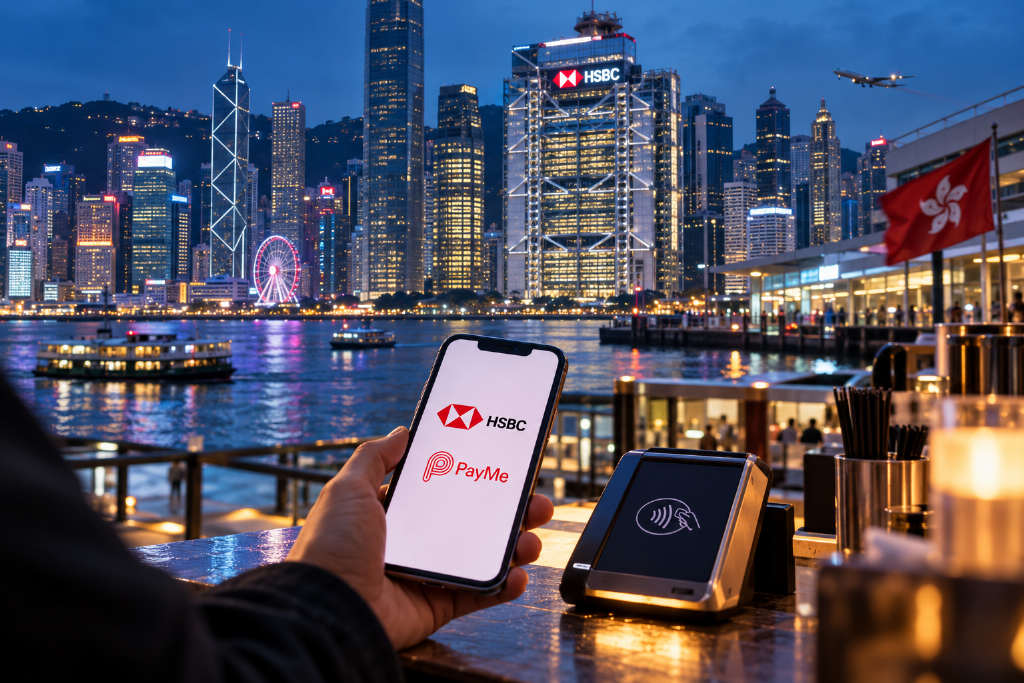
HSBC will begin a phased rollout of its Hong Kong dollar stablecoin, HSBC RedCoin, to more than 3.3 million users of its PayMe app starting Oct. 23. In the first stage, the token will support instant transfers between PayMe users and payments to merchants.
Users can activate a RedCoin wallet after updating the app. No separate account opening is required, and there is no minimum balance requirement. HSBC expects the full rollout to be completed before the end of this weekend.
The bank also plans to fully integrate RedCoin into its Hong Kong mobile banking app before year-end. That integration is set to support instant subscriptions starting at HK$100 for tokenized money market funds and similar assets. HSBC said the offering will later expand to tokenized gold and third-party fund products.
Malaysia and Thailand join Singapore’s BLOOM initiative
The Monetary Authority of Singapore, or MAS, said on Oct. 23 that Bank Negara Malaysia and the Bank of Thailand have formally joined the BLOOM cross-border digital currency initiative. The project is focused on cross-border payments and settlement using regulated stablecoins, tokenized deposits, and other forms of digital money.
New participants also include Ripple, Visa, Mastercard, Airwallex, and the World Bank Group. The initiative is studying cross-border settlement, interoperability across different payment networks, and programmable compliance controls, with the stated aim of lowering cross-border transaction costs for financial institutions.
Bank of Korea to require monthly reporting on cross-border crypto holders
Starting Dec. 2, the Bank of Korea will require virtual asset transfer service providers to submit monthly reports to the foreign exchange information system covering users who have transferred crypto assets across borders since July 19, 2024, including transfers to overseas exchanges and personal wallets.
Reporting will still be required even if a user has no cross-border transaction in a given month. Required data includes token balances, end-of-month holdings converted into Korean won, and total monthly cross-border inflows and outflows.
Dormant accounts, delisted assets, and staked assets are also included in the reporting scope. Filings must be submitted by 17:30 on the 10th day of the following month. It has not yet been determined whether records of cross-border transfers made before the system takes effect will need to be submitted retroactively.
Robinhood gets DFSA authorization in Dubai
Robinhood said it has received authorization from the Dubai Financial Services Authority, or DFSA, and has designated the Dubai International Financial Centre, or DIFC, as its Middle East regional headquarters. The company plans to launch investment products for local retail investors in 2027.
The authorization covers all 10 categories of asset trading and custody services approved by the DFSA, including stocks, cryptocurrencies, exchange-traded funds, and investment tokens.
Robinhood’s Middle East and North Africa business will be led by senior executive and regional president Salah Kaddoura. Chief executive Vlad Tenev said the expansion is an important step in building a global investment platform. Johann Kerbrat, head of Robinhood Crypto and international, said the company will keep working to meet the financial services needs of retail investors across the Middle East and North Africa. The products have not launched yet and are expected in 2027.
Phantom opens prediction market access through Kalshi
Crypto wallet Phantom said on its website that it has entered a commercial partnership with KalshiEX, a designated contract market registered with the U.S. Commodity Futures Trading Commission, or CFTC, to provide eligible U.S. users with access to prediction market trading.
Users can access Kalshi event contracts through the Phantom interface, but they must complete Kalshi’s identity verification and compliance review and become direct members of Kalshi.
Phantom will receive a share of exchange fees from trades completed through its interface and may also charge additional transaction fees. The company said it only provides wallet infrastructure and a trading interface and does not operate the exchange or clearing functions. The service is provided under CFTC Staff Letter No. 26-09. The prediction market is available only to users in eligible U.S. jurisdictions.
Circle shareholder sues Trump and World Liberty Financial
Circle shareholder Benjamin Greenberg has filed suit in federal court in Washington against U.S. President Donald Trump and World Liberty Financial, the crypto project in which Trump’s family participated in the founding.
The complaint alleges that Trump unlawfully profited from two transactions involving the United Arab Emirates, in violation of the U.S. Constitution’s Foreign Emoluments Clause, and harmed Circle shareholders through unfair competition. The transactions cited in the suit include a $500 million acquisition of a 49% stake in World Liberty by an investment entity backed by members of the UAE royal family, and a $2 billion investment in Binance by Abu Dhabi fund MGX using its stablecoin USD1.
The plaintiff is asking the court to block the alleged unconstitutional conduct, recover the alleged unlawful gains, and award damages. Circle said the lawsuit was brought by an individual shareholder and that the company was not involved. World Liberty denied the allegations and said its business complies with U.S. laws and regulations.