
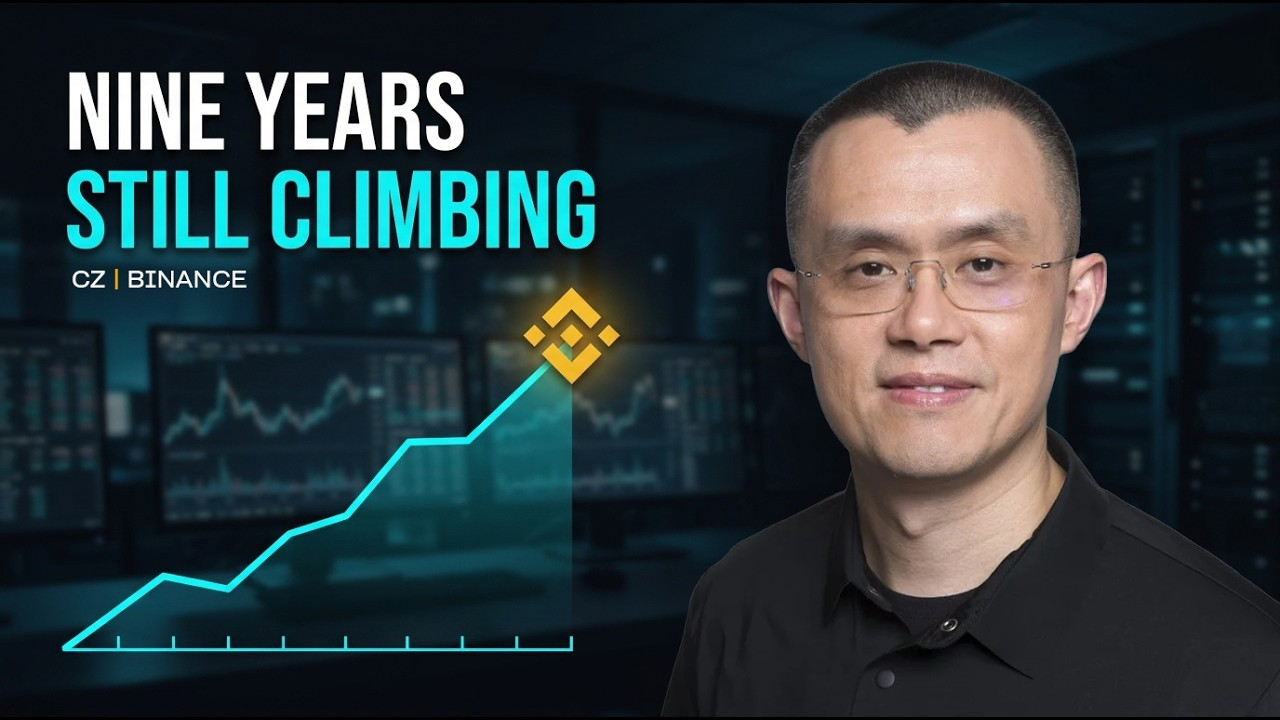
Changpeng Zhao, the founder and former CEO of Binance, said he would still choose to build an exchange if he were starting over today, even without Binance or its brand behind him.
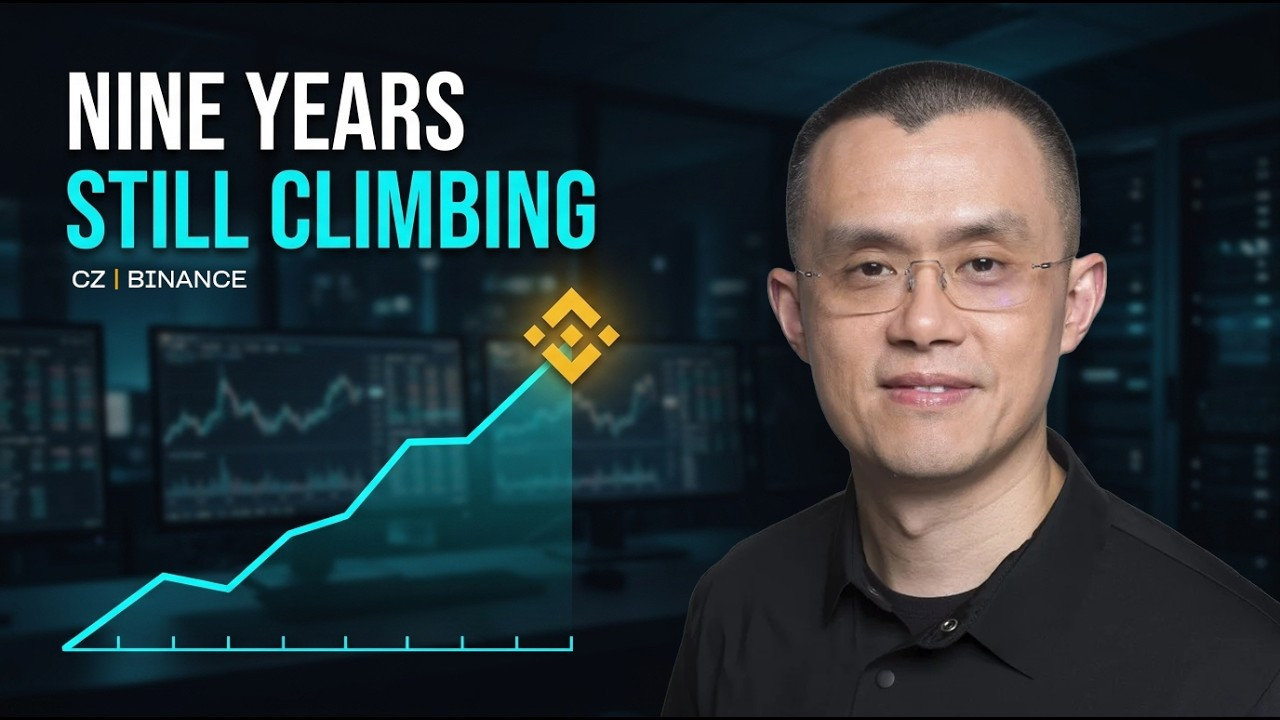
Zhao, widely known as CZ, made the remarks in a July 16, 2026 interview with Talking Tokens Podcast host Jacquelyn Melinek during Binance’s ninth anniversary events. The conversation covered Binance’s early rise, mistakes he believes he made around compliance and geopolitics, the role of community in the exchange’s growth, and his current views on AI, crypto payments, stablecoins, RWA tokenization and the eventual convergence of traditional finance and on-chain finance.
Why Zhao felt a new exchange was needed in 2017
Asked what was broken in the exchange market in 2017, Zhao said the sector still had obvious room for improvement. Before founding Binance, he said his career had centered on order execution and exchange systems, so he looked at the market through a product and infrastructure lens.
In his view, exchanges at the time could have offered better products, stronger technology, faster matching engines, tighter security and better customer support. He also said many platforms did not truly put users first. Binance, he added, also benefited from timing, because it launched into the ICO boom.
When Melinek asked whether the 2017 version of CZ and the 2026 version were the same person, Zhao said no. He said he is much older now, “but not necessarily smarter,” and described the past nine years as a period filled with challenges that changed both his mindset and his physical state.
The advice he would give his younger self: study compliance and move faster
Zhao said the first thing he would tell his 2017 self is to spend more time learning legal compliance and politics.
He said that before 2017 he was basically a technologist focused on building products and protecting users, but he underestimated the importance of legal issues. He also said he did not understand international law deeply enough and did not realize that some U.S. laws have global reach and long lookback periods.
The second piece of advice would be to move faster. Zhao said founders should push products to market early and learn from user feedback rather than hesitating too long. He pointed to Binance futures as an example, saying the product was launched two years after the exchange went live and would have been introduced much earlier if he had the chance to do it again.
How Binance got to No. 1 in five months
Asked whether Binance took the top spot in its first or second year, Zhao said it happened in year one. “In the first five months we became number one globally, and after that we stayed in that position every day,” he said.
He attributed that outcome to several factors. Product quality mattered. Customer support mattered. So did mission. Zhao said Binance’s mission was to increase the freedom of money, and one of its core values was protecting users. In his telling, that focus on user protection helped Binance keep its lead after it reached the top.
He also said 2017 brought a major tailwind. It was the first year of the ICO surge, and Binance, as a new exchange, was natively built to support fast token listings tied to that market cycle. By contrast, many larger exchanges were still mostly Bitcoin exchanges at the time, and some of the biggest U.S. platforms had not even listed Ethereum yet. Even so, Zhao said competition was intense, with Bittrex and Poloniex still major players then.
His conclusion was straightforward: product, service, user protection and timing all mattered, and none of them could be missing.
Why he sees community as more resilient than a company
Binance’s ninth anniversary theme was “Built by You,” and Zhao used that phrase to describe what he sees as a community-led ecosystem.
He said crypto was still highly niche nine years ago. When Binance began, Bitcoin was around $2,000 to $3,000, according to Zhao, and the user base was small but loyal. Those early adopters understood products deeply and knew when a platform was protecting them.
As the community grew, Binance continued trying to protect users through its actions, he said. Zhao pointed to volunteers who contributed to the Binance ecosystem, including people known as Binance Angels as well as others without formal titles. In his view, the platform was genuinely driven by its community.
Melinek asked about a comment Zhao had made before, that communities can sometimes be more resilient than companies. Zhao said a centralized company can be targeted by regulators, legal systems and geopolitics, while a distributed community is far harder to attack in the same way. In Binance’s case, he said, that community is spread around the world. He added that the community can also push back, often generating more volume on social media than mainstream media can.
Crypto penetration is still below 1% by wealth, Zhao says
On what kinds of products can still bring users back repeatedly, Zhao said every industry still leaves room for improvement.
He pointed first to fiat on-ramps and off-ramps, which he said still carry too much friction. In his view, the businesses that can deliver lower fees, less friction and broader geographic coverage will have an edge.
He also singled out stablecoins. The most widely used stablecoins do not pay interest to users, he said, while the ones that do are often not easy to trade. A stablecoin that combines attractive yield with free tradability would represent a meaningful product improvement, he argued.
Zhao also spent time on real-world asset tokenization. He said tokenized equities remain limited to only a small number of stocks and are centered largely on the U.S. market. Other countries, he said, should also want their stock markets opened to global participation, and tokenization is likely part of that path.
He repeated a broader view of the market as well: by wealth, crypto penetration is still below 1%, which in his view means the industry is still at a very early stage.
When asked what the industry gets wrong about mainstream adoption, Zhao said too many people still treat crypto as a speculative asset instead of as foundational technology. He said people buy Bitcoin and immediately think about when to exit, but nobody talks about “exiting” the internet or AI. Crypto should be understood the same way, he argued, because it is a technology. Zhao added that blockchain belongs, in his personal view, among the three foundational technologies of his lifetime, alongside the internet and AI.
Zhao expects AI agents to handle payments soon
The most immediate crossover between AI and crypto, according to Zhao, is payments.
He said AI will eventually handle payments on behalf of humans. Right now, AI can search for the best hotels and flights, but it still cannot complete the purchase itself. Zhao said that capability is coming within months, not years.
Once AI starts transacting for people, he said, it will need a native currency. Credit cards are too clumsy for that role, in his view, while crypto is a more natural fit.
Zhao said domestic fiat payments may work well enough within one country, but global payments remain weak. As more people live and transact in a global context, paying someone on the other side of the world or booking across jurisdictions becomes more common. In that environment, he said, crypto payments are much more convenient. “Crypto payments are the biggest unlock for AI,” he said.
He was less immediate on other intersections, such as blockchain-based verification of training data, saying those areas are still far away. AI companies, he said, are large, profitable and highly valued, so decentralization is not their priority for now.
Pressed on timing, Zhao said he sees the shift as a one- to two-year story. Once people start using AI with crypto payments, he said, the speed advantage will be obvious. He also noted that early adopters in crypto and AI overlap heavily.
AI will reshape security, but not without short-term attacks
On how AI affects Binance’s internal operations and crypto infrastructure more broadly, Zhao compared AI to the internet in terms of importance. He said every company and every person should use AI as much as possible, though not abuse it.
He said AI is especially strong at writing code, finding bugs and analyzing software, and is also useful for design and video work. At the same time, he said, not everything should be handed over to machines because people still want a human touch. Zhao said AI is good at creativity, but humans remain stronger at original creativity.
When the discussion turned to crypto specifically, he said AI will “completely change” the security environment. Developers can use it to identify vulnerabilities quickly because AI is very good at finding weak points in systems. Zhao mentioned Anthropic’s Methuselah model by name, describing it as extremely powerful and saying he hopes a version becomes available for developers to use in strengthening systems.
He also said the transition will not be painless. In the near term, he expects some hacking incidents, but over a longer horizon he believes systems will become much safer.
Zhao added that blockchain throughput is still not high enough. The industry, he said, needs faster chains with larger capacity so usage costs can come down, and AI will play an important role in speeding up that development.
At a broader level, he said AI will push society into a world that is far more digital than the one created by the internet, perhaps by a factor of 10 or even 100. The more digital that world becomes, the more it will need digital money. In that context, Zhao said, paper cash is already an outdated concept, and AI will help push the world past that threshold.
Stepping back from the CEO role changed what he sees
Zhao said leaving the CEO role gave him a different perspective on the industry.
When he was running Binance day to day, he said, everything revolved around the company itself. He described that period as one with 25 meetings a day and a constant flow of operational issues, which narrowed his field of vision. Being forced to step back, he said, has made it easier to look across the industry as a whole and spend time learning new things, including AI, biotechnology and new directions within crypto.
He also said plainly that he missed the rise of stablecoins while serving as CEO. At the time, he viewed them as a transitional technology used mainly to bridge assets between exchanges. The market proved much larger than that.
Now, Zhao said, he spends a great deal of time looking at RWA and tokenization and also advising governments in those areas. In his words, stepping back has actually made him faster at learning new things.
If he had to start from zero, he would still build an exchange
Near the end of the interview, Melinek asked what Zhao would do if he had no Binance, no reputation and only his accumulated experience.
His answer was immediate: build an exchange.
Zhao said anyone building something new should choose an area they truly understand, and his experience points in one direction only. He said he often tells people to find the overlap between what they are good at, what interests them and what is valuable to others. For him, that overlap is trading systems. Leading an AI team, he added with a laugh, would probably be a disaster.
He expects traditional and on-chain finance to merge
Asked whether traditional finance, on-chain finance and trading ecosystems will ultimately merge, Zhao said yes.
He argued that there should not be a lasting divide between crypto finance and traditional finance, just as there is no reason to think of postal mail and email as two permanent parallel systems. Crypto and blockchain, in his view, are simply new technologies inside the financial system. Because they are still new, they initially formed a separate vertical, but integration is already underway.
He pointed to tokenized stocks and to banks and financial institutions already using blockchain. Over time, he said, there will not be two parallel financial systems. There will be one.
The interview was published by Talking Tokens Podcast under the title “Binance Founder CZ on what it took to build the world’s largest crypto exchange and stay #1.” The compiled article also included a disclosure that Zhao is Binance’s founder and a major shareholder, and that his views on industry trends and Binance’s development inevitably reflect that position.