


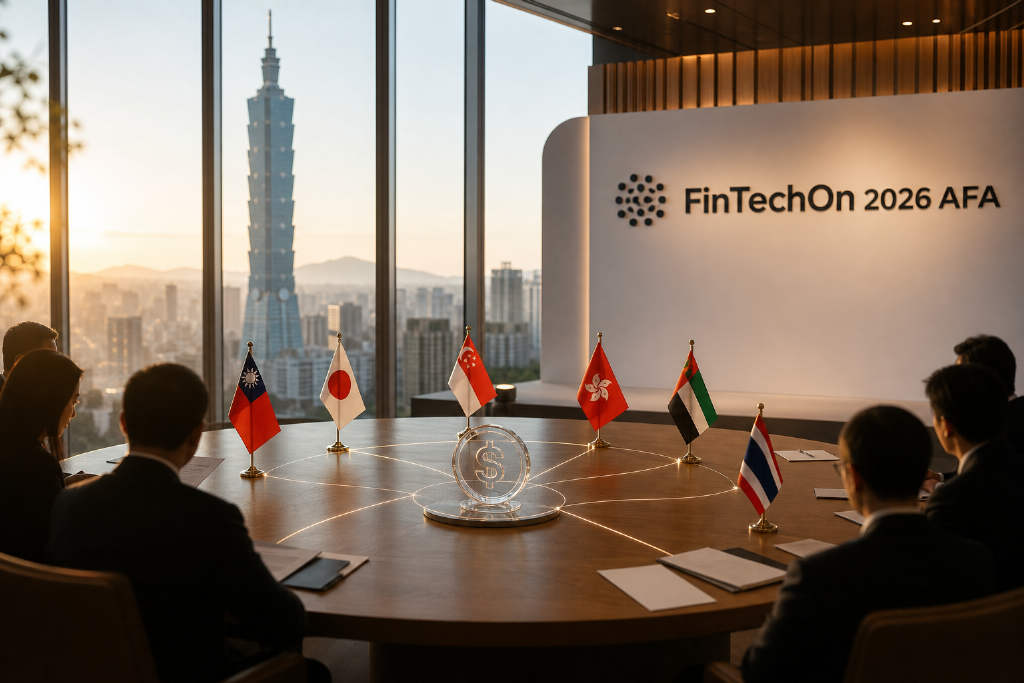
Speakers at the FinTechOn 2026 AFA Summit said cross-border coordination will be necessary if stablecoins are to deliver on their main use case in payments and trade. The discussion took place during a panel titled "National Strategic Policy in 2026: Stablecoins and Cross-Border Governance," which featured regulatory and industry representatives from Taiwan, Japan, Singapore, Hong Kong, Abu Dhabi and Thailand.

The panel was moderated by Yueh-Ping Alex Yang, an associate professor at National Taiwan University College of Law. The report also noted that Taiwan Financial Supervisory Commission Chair Peng Chin-lung, speaking elsewhere at the same summit, previewed the timeline for Taiwan’s virtual asset legislation.
Shared view: closed domestic systems are not practical
Panelists broadly agreed that a "domestic-only" stablecoin would give up blockchain’s biggest advantage in global trade and payments. Samson Leo, co-founder and chief legal officer at StraitsX, said regulators need to approach the issue from a global perspective. Otherwise, activity could be pushed into unregulated areas. He said each jurisdiction needs clear rules on how to treat stablecoins issued abroad.
Panelists also warned that technology is moving faster than regulation. In their view, regulators need to act with more speed and initiative and work toward coordinated standards before conflicting rules become entrenched.
Angelina Kwan, chief executive of Stratford Finance and former head of enforcement and market regulation at Hong Kong’s Securities and Futures Commission, said the entry of non-financial companies such as Sony into digital assets is blurring industry boundaries. That means regulatory dialogue cannot be limited to financial regulators in different markets; it also needs to extend across securities, banking and system regulators.
Taiwan says dedicated law may arrive in Q1 next year
Chou Cheng-shan, secretary-general of the Banking Bureau at Taiwan’s Financial Supervisory Commission, said Taiwan’s dedicated law for virtual asset service providers is expected in the first quarter of next year. She said the subordinate rules will need to address potential financial stability risks, including the possibility that a large amount of money could move out of traditional bank deposits and into stablecoin reserves.

Chou said Taiwan should adopt a "learning strategy" and build a "shared trust benchmark" through international cooperation. That position echoed Peng’s comments at the same event that nine sets of subordinate rules for virtual assets, including stablecoins, could take effect as early as next year’s first quarter.
Japan, Thailand and Abu Dhabi outline different paths
Takafumi Ochiai, who serves as treasurer of the Asia FinTech Alliance and vice chairman of the Fintech Association of Japan, said Japan was an early adopter of stablecoin legislation, but cross-border implementation is still in a trial-and-error stage. He added that Japanese companies engaged in international trade have strong demand for cross-border stablecoin solutions.
Nares Laopannarai, chairman of the Thai Digital Asset Association, said Thailand is linking its stablecoin, THT, with tokenized securities, tourism and other use cases. He said the work spans multiple blockchains, including Ethereum and Solana, to support smoother transactions with regional partners.
Brian Byagaba, head of fintech at the Financial Services Regulatory Authority of Abu Dhabi Global Market, said jurisdictions have already been working through bilateral discussions and multilateral bodies such as IOSCO. Because stablecoin business use cases span everything from B2C payments to asset management, he said regulators need to understand the full technology stack in order to manage operational and concentration risks.
The panel’s core message was consistent across markets: if stablecoins are meant for cross-border trade and payments, regulation will also have to work across borders.