



FlipFlop Tuoyuan, a startup focused on neutral-atom quantum computing, has completed two funding rounds within a little more than a month of its establishment, according to a report by QbitAI republished by MarsBit. Qichacha records cited in the report show the company was founded on July 2 this year, and its cumulative financing has reached several hundred million yuan.

Seed and angel rounds were completed within two months
People close to FlipFlop Tuoyuan told QbitAI that the company completed a seed round and an angel round within two months of its founding. Investors named in the report included Source Code Capital, Oasis and CICC.
The company is targeting the neutral-atom quantum computing track. One investor involved in backing FlipFlop Tuoyuan said the startup is designing its full-machine architecture around the needs of fault-tolerant computing and has set a 100-logical-qubit system as an important research and development goal.
Founder Qiao Mu comes from front-line quantum research
The report described the founding team as having a strong research background. Chief executive Qiao Mu holds a PhD from Tsinghua University and completed postdoctoral research under the French National Centre for Scientific Research, or CNRS. He previously worked in what the report called one of the world’s top neutral-atom laboratories. A co-founder had also served as the head of neutral-atom quantum computing at a major industry player.
Qiao Mu was born in 1996 and studied environmental science as an undergraduate at Shandong University. In 2017, he entered the Institute for Interdisciplinary Information Sciences at Tsinghua University for doctoral study under Professor Kihwan Kim.
QbitAI said Kim is an internationally known trapped-ion quantum computing experimentalist who completed postdoctoral work in the Rainer Blatt group at the University of Innsbruck and the Chris Monroe group at the University of Maryland. In 2011, Kim joined Tsinghua’s Institute for Interdisciplinary Information Sciences, later became a full professor and independent principal investigator, and built what the report described as a top ytterbium ion-trap experimental platform in China.
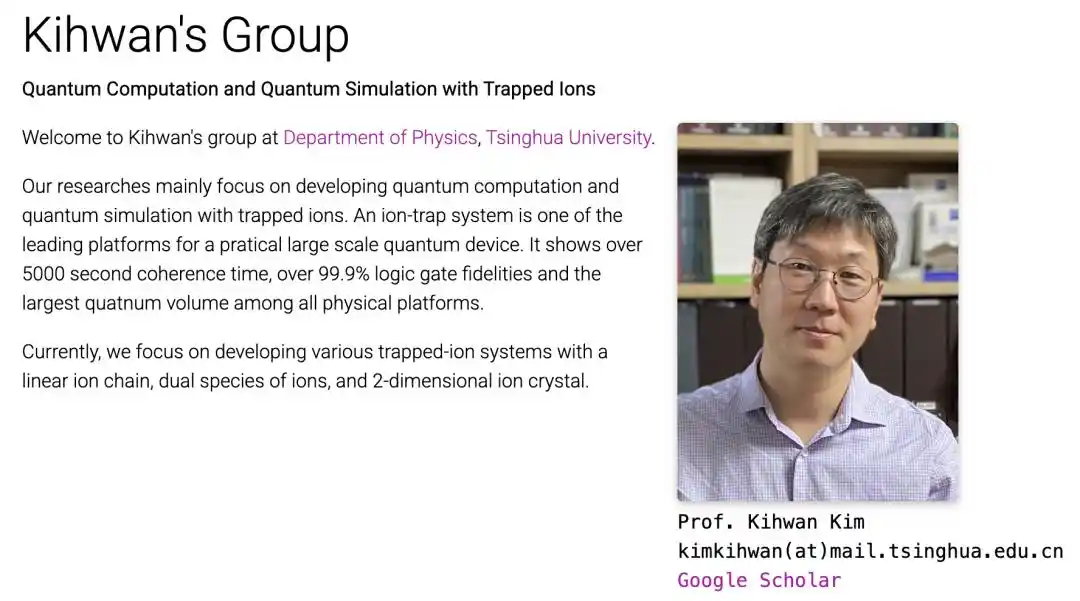
As Kim moved to Tsinghua University’s Department of Physics, Qiao’s research direction gradually shifted around 2022 from ion-trap quantum computing to the neutral-atom route. During his PhD, he took part in research related to two-dimensional ion crystals. He later joined the Institut d'Optique in France for postdoctoral work in Antoine Browaeys’ group, where he studied Rydberg atom tweezer arrays and strongly correlated quantum systems.
Publication record spans Nature, Nature Physics and Science Advances
Last year, Qiao published a paper in Nature as first author and corresponding author on using Rydberg atom arrays to study doped quantum antiferromagnets, according to the report.
He also published work in Nature Physics as first author and co-corresponding author, which the report described as a core representative achievement from his doctoral period. In 2022, he was also listed as a co-author on work published in Science Advances.
The report further said that in 2024, Qiao published a Nature Physics paper as first author and co-corresponding author, using two-dimensional ion crystals to realize simulations of tunable quantum spin models and providing experimental validation for two-dimensional ion crystals as a quantum simulation platform.
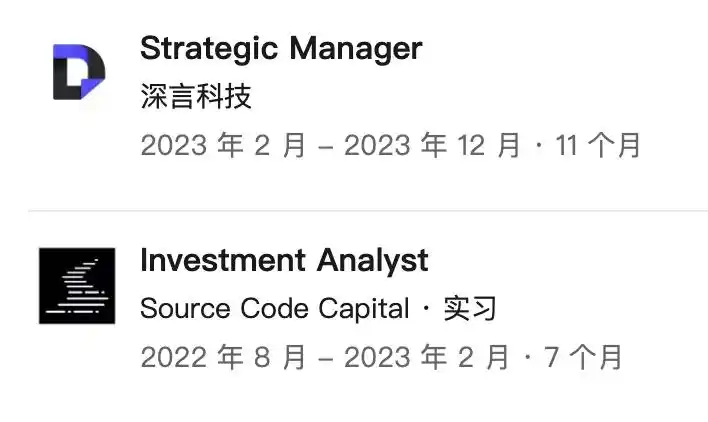
Beyond academic research, Qiao also had experience in investment and industry. In 2020, he worked as an investment intern at Source Code Capital. In 2023, he joined DeepLang Technology as co-founder and CSO, where he was involved in market and technology assessment, computing power procurement, communication with IDC operators and cloud vendors, and work related to thousand-GPU cluster construction.
He explored faculty roles before choosing to start a company
QbitAI said Qiao began looking for faculty positions in China last year and received offers that included an AP position in Tsinghua University’s Department of Physics. He ultimately chose entrepreneurship instead.
AI is described as another thread in the startup story
The report said neutral-atom quantum computing remains one of the closely watched technical routes in the broader quantum computing field. The basic approach is to use lasers and optical tweezers to trap and arrange atoms, then carry out quantum manipulation through precise control. Atom arrays have the potential to scale, but several problems still need to be solved before experimental platforms can become usable quantum computers.
QbitAI also said AI was another thread in Qiao’s path to founding the company. During his research period in France, he reportedly tried to develop an autonomous research agent, hoping AI could handle literature review, computational experiment design and data analysis around scientific questions.
As model capabilities improved quickly, he began paying closer attention to the possibility of AI taking part in complex scientific tasks and then considered how AI could be introduced into real physical experiments. FlipFlop Tuoyuan hopes to adopt an AI-native R&D model and gradually bring AI into experiment design, data processing and equipment control, the report said.
Source
The original report was published by the WeChat account QbitAI (ID: QbitAI) and written by Heng Yu. MarsBit republished the article.