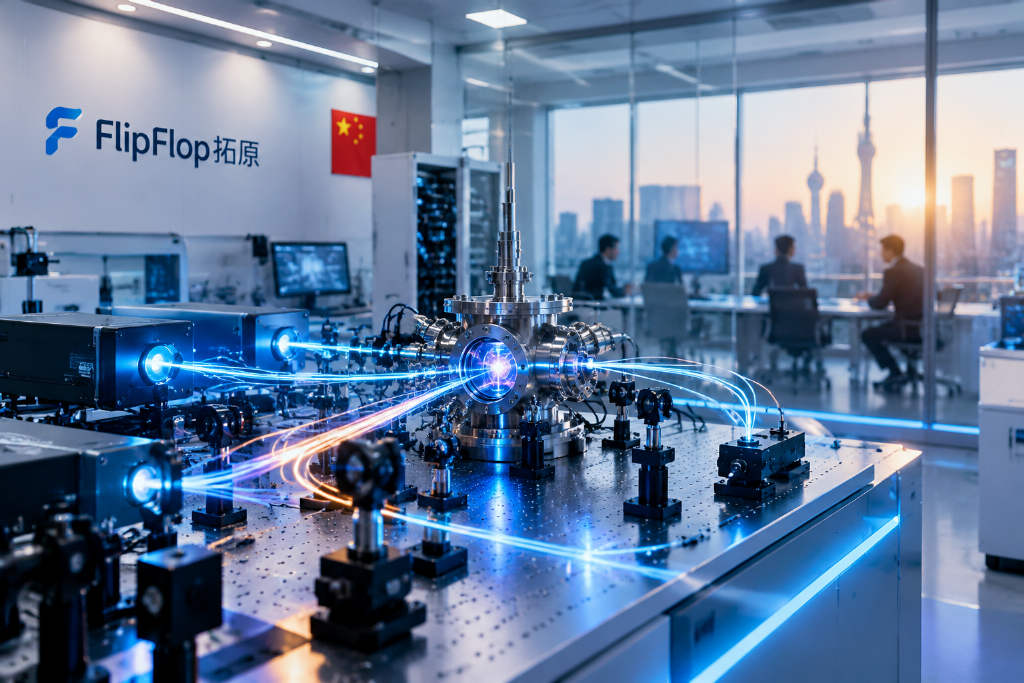
Quantum Compu2026-10-19 01:01:12FlipFlop Tuoyuan, a neutral-atom quantum startup, reportedly raised two rounds within weeks of launchQuantum computing startup FlipFlop Tuoyuan has emerged as a new entrant in China’s neutral-atom quantum computing field, according to a report by QbitAI republished by MarsBit. Corporate records cited in the report show the company was established on July 2 this year. Within a little more than a month of incorporation, it had already completed two financing rounds, with total funding reaching several hundred million yuan. People close to the company told the outlet the rounds were a seed round and an angel round, and that investors included Source Code Capital, Oasis and CICC. The report said the company is led by Qiao Mu, born in 1996, who studied environmental science at Shandong University before earning a PhD at Tsinghua University and later conducting postdoctoral research under the French National Centre for Scientific Research. It also outlined his publication record, including work in Nature, Nature Physics and Science Advances, and said he had previously explored academic positions in China before choosing to start a company instead. FlipFlop Tuoyuan is said to be building around neutral-atom quantum computing, with one investor saying the company is designing its full-stack architecture around fault-tolerant computing needs and treating a 100-logical-qubit system as a key R&D target. The report also said the startup wants to adopt an AI-native research model, bringing AI into experiment design, data processing and equipment control.1010
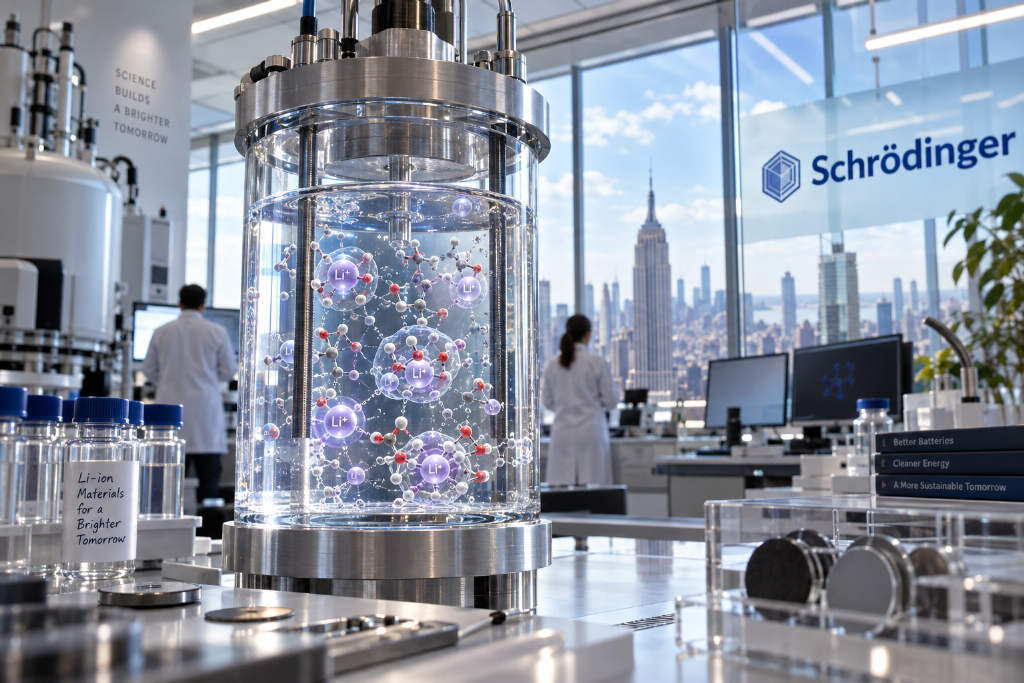
Schrödinger2026-10-16 16:01:41Schrödinger says machine learning simulations uncover atomic-level behavior in lithium-ion battery electrolytesSchrödinger has published a new lithium-ion battery study in Nature, saying its team worked with researchers from Columbia University and the New York Structural Biology Center to identify how battery electrolytes behave at the atomic level. The company said the work used its physics-based AI computing platform and machine learning force field technology to move battery research beyond trial-and-error methods toward predictive design. According to the report, the study focused on electrolyte chemistry, which affects conductivity, viscosity, salt dissociation, electrochemical stability, and the formation of the solid electrolyte interphase on the anode surface. Schrödinger said earlier efforts to model complex battery chemistry often forced researchers to choose between quantum-level accuracy and large-scale simulations. Vice President Mat Halls said the company’s machine learning force field removed that trade-off. The team reported that lithium ions in electrolyte frequently form clusters coordinated by ethylene carbonate solvent molecules, and that these clusters can exist without anions. The study said as much as 40% of lithium ions cluster in standard electrolyte conditions, with clustering becoming more common in high-salt systems. Schrödinger added that its simulation results were consistent with experimental measurements including NMR spectra, electrolyte density, viscosity, ionic conductivity, and diffusion coefficients. The company said the findings could offer data support for designing faster-charging, higher-capacity, and longer-lasting lithium-ion batteries.610
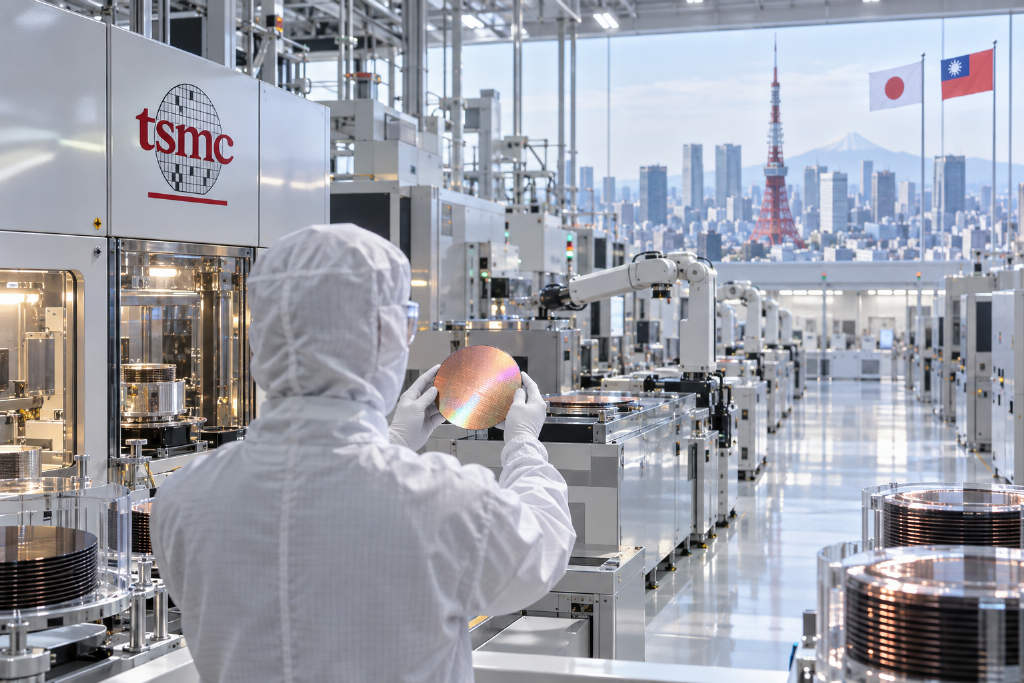
University of2026-10-02 04:16:39University of Tokyo builds 0.6 nm 2D semiconductor as TSMC is reportedly backing 12-inch wafer goalA research team at the University of Tokyo has developed a new two-dimensional semiconductor material called BCN, made of boron, carbon and nitrogen, and used it to build working transistors, according to the source article. The findings were published in Nature and, as reported by Nikkei, Taiwan Semiconductor Manufacturing Co. (TSMC) has begun supporting the project with a target of achieving 12-inch wafers around 2031. The team said it formed a uniform film about 0.6 nanometers thick on a 2-inch copper wafer. The report also said transistor performance can rival silicon semiconductors. Researchers from National Taiwan University, National Yang Ming Chiao Tung University and Academia Sinica were listed as participants in the Nature paper. The work addresses a long-standing issue in 2D semiconductor manufacturing, where carbon tends to clump during reactions and degrade material quality. The team said it overcame that by supplying carbon slowly on insulating boron nitride crystals and coordinating the timing of boron, carbon and nitrogen atom supply. BCN is also described as a high-performance p-type 2D material, a category the industry has lacked for building full logic circuits with both n-type and p-type semiconductors.760
AI2026-09-20 00:45:10Nature examines whether AI can recreate Einstein-style breakthroughs, and why the answer is still noNature has spotlighted a line of research sometimes framed as an "Einstein test": place an AI model inside a tightly limited historical knowledge boundary and see whether it can produce genuinely new scientific explanations rather than repeat what later generations already know. The idea, discussed by Nobel laureate and Google DeepMind co-founder Demis Hassabis, asks whether a system restricted to the knowledge available in the early 20th century could reason its way toward discoveries comparable to relativity. One of the most visible attempts came from independent researcher Michael Hla, who trained GPT-1900, a 3.3 billion-parameter Transformer model built on pre-1900 books, newspapers, and historical physics texts. In one experiment, the model produced wording that resembled Einstein's 1905 light-quantum argument, suggesting that light might consist of separate parts rather than a continuous wave. Even so, Hla said the model failed on most physics tasks and remained far from truly rediscovering the theory. Nature's review points to a larger problem. Even if a model can generate a plausible explanation, that does not show it can identify the right question, judge which theory matters, or validate its own ideas. The GPT-1900 setup also relied in part on modern models such as Claude Sonnet 4 and Claude 3 Haiku for instruction generation and reinforcement-learning evaluation, making a fully sealed historical test difficult to prove.740
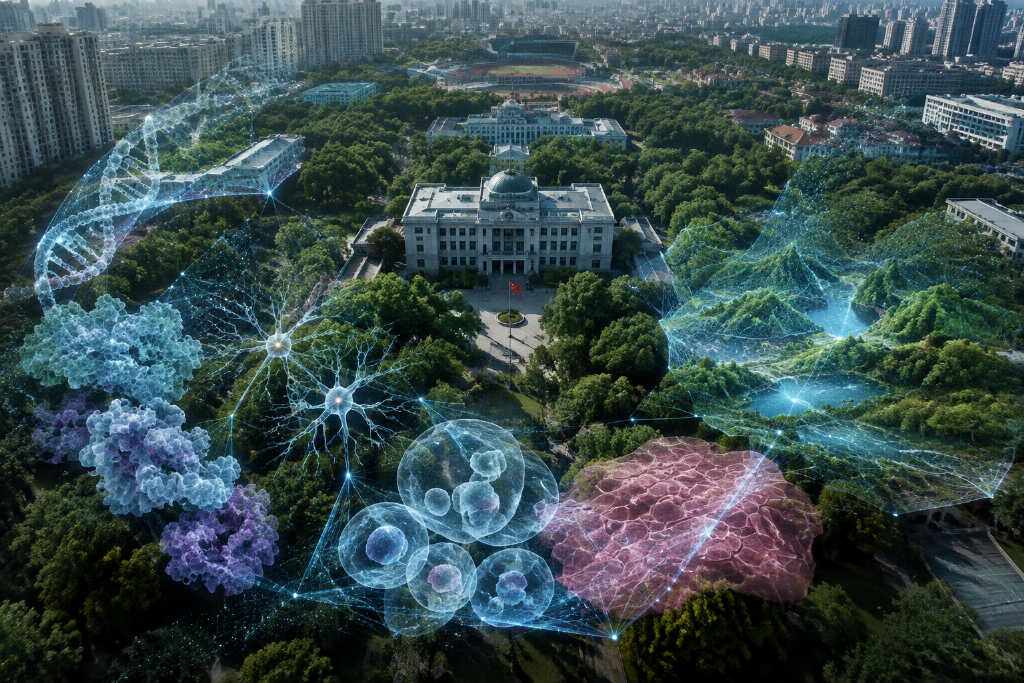
Life Operator2026-09-01 05:59:33Fudan's Neolab Introduces 'Life Operator' for Unified Modeling of Life PhenomenaFudan University's Neolab team has proposed the 'Life Operator', a modeling framework intended to unify life phenomena from molecules to ecosystems. The team has published six consecutive papers in Nature-family journals. Positioned as a significant advance in computational life science following AIVC, the Life Operator aims to connect life science data and knowledge across levels through mathematical and computational models, enabling more systematic inference and understanding of life. Reported by Techub News, citing Chinese tech outlet QbitAI.790
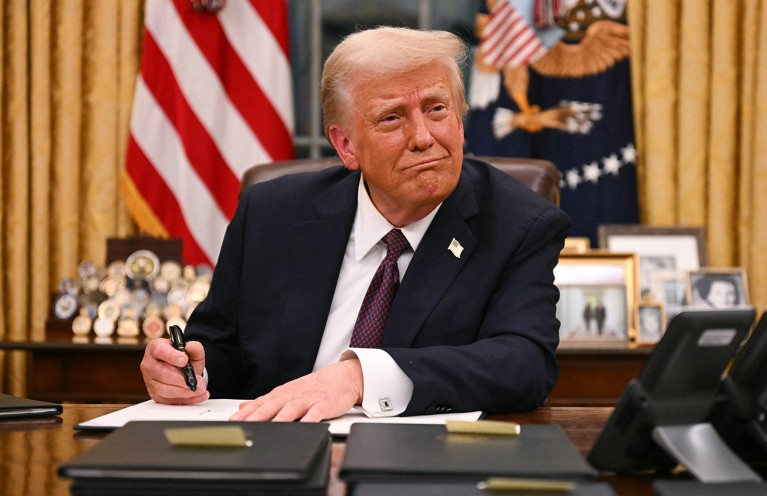
US science2026-07-24 07:15:15Nature Warns Trump’s Funding Freeze Is Shaking the Foundations of US ScienceNature says more than 7,800 research grants have been canceled or frozen since Trump returned to office, while about 25,000 federal science workers have left and major budget cuts are under review.690
AI2026-07-24 05:15:17Nature Review Cites Studies Showing AI May Weaken Core Skills in Doctors and EngineersA Nature roundup highlighted two 2026 peer-reviewed studies: doctors saw adenoma detection fall from 28.4% to 22.4% when AI was unavailable, while junior engineers using AI scored 17 points lower than manual coders.520