
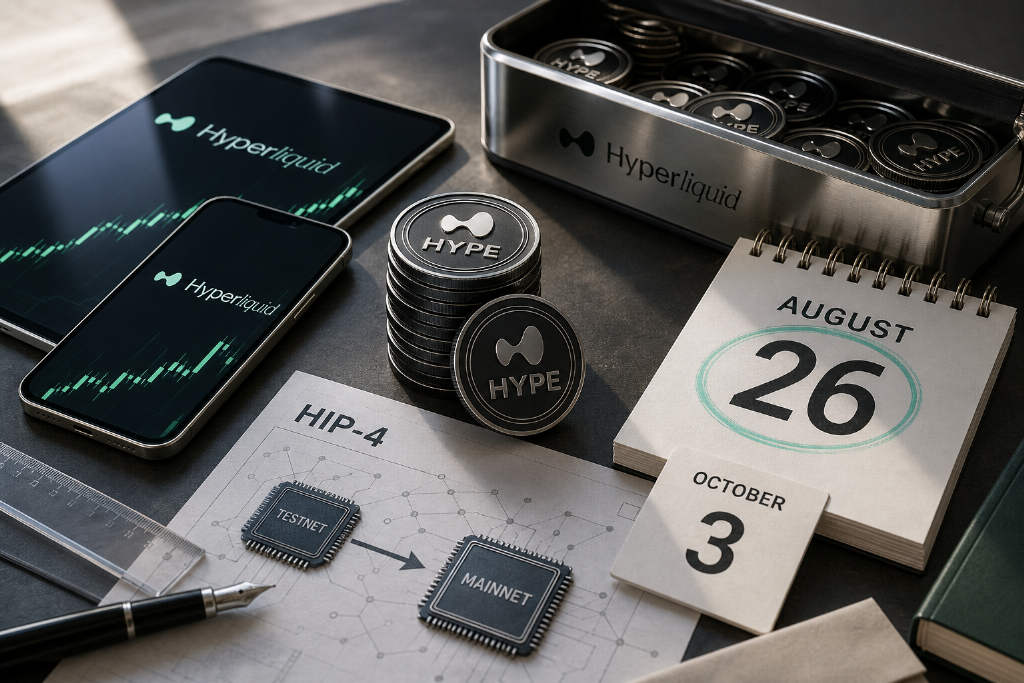
After setting an all-time high in mid-June, HYPE went through a pullback that lasted about two months. In Odaily’s telling, the token is now approaching a key stretch from both a market-structure and fundamentals standpoint, with AQAv2 revenue accrual due to start on Aug. 26 and permissionless deployment for HIP-4 moving from testnet toward mainnet.
On the technical side, Cody, an analyst cited by Odaily, said this week that HYPE is currently trading in a rebound leg around $76-$77. If price can break above and hold the $58-$58.5 resistance area before extending higher, that would form what the report describes as a departure leg from the range center. At that point, traders can watch the strength of the rebound between the entry leg at $72-$73 and the departure leg at $76-$77.
Odaily also said that traditional financial institutions and asset managers have recently disclosed HYPE exposure through PURR, a treasury-linked vehicle tied to HYPE. The article frames that as a sign that Hyperliquid is drawing more attention and positioning from traditional finance, adding one source of structural over-the-counter demand beneath the token.
AQAv2 revenue sharing is about to begin
AQAv2, short for Aligned Quote Asset v2, was introduced by Hyperliquid in May. The framework allows stablecoins that are not issued exclusively by Hyperliquid, including USDC, to qualify as “Aligned.” Under the setup described in the article, AQAv2 designates a technical deployer and a treasury deployer, and each side must stake 500,000 HYPE, valued in the report at about $30 million.
Hyperliquid has already partnered with Coinbase and Circle. Coinbase has been designated as the treasury deployer, while Circle is handling technical deployment.
The feature that has drawn the most attention is the revenue-sharing mechanism. Under the official rules cited by Odaily, stablecoin deployers must allocate 90% of reserve income to the Hyperliquid protocol, and 100% of that revenue is used to buy back and burn HYPE. Reserve income accrues over 30-day periods and is automatically transferred to the Assistance Fund on the eighth day after each cycle ends.
Formal revenue accrual is scheduled to begin on Aug. 26, with the first payout set for Oct. 3. Odaily said that even though it will still take about one and a half months before AQAv2 revenue actually reaches the Assistance Fund for HYPE buybacks and burns, the market may start pricing in that support before the flow itself arrives.
Report estimates roughly $200 million a year in buyback capacity
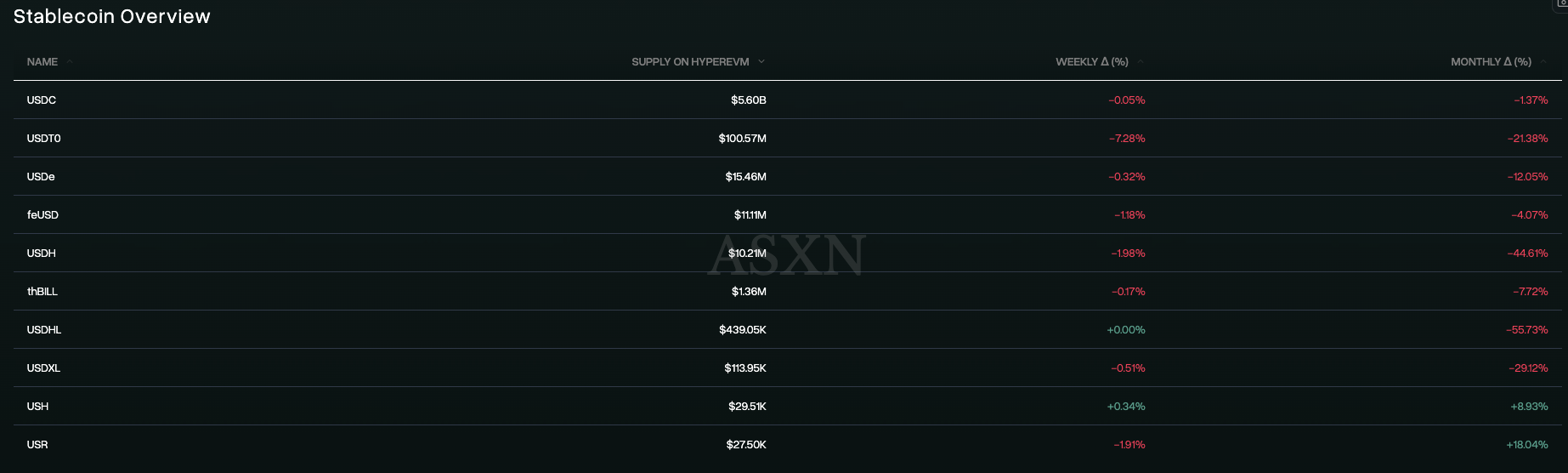
According to Hyperliquid data cited in the article, total stablecoin supply on the platform stood at $5.74 billion at the time of writing, with USDC accounting for 98% of the total, or $5.6 billion. Using a 1-year U.S. Treasury yield of 3.82%, the report calculates that annual reserve income from stablecoins on Hyperliquid would come to about $210 million. Based on the AQAv2 allocation formula, 90% of that amount would go toward HYPE buybacks.
That is the basis for the article’s estimate that AQAv2 could create roughly $200 million in annual buyback funds for HYPE.
Odaily also cited a simulation by a Blockworks analyst covering Hyperliquid’s accrued revenue since the AQAv2 announcement on May 14. The figures showed Hyperliquid revenue rose 41.4% in July. Even on July 25, the weakest day for revenue in that sample, stablecoin reserve income still exceeded total fee revenue, at $589,000 versus $537,000.
Separately, Hyperliquid data cited in the report showed that the Assistance Fund had bought back about $1.03 billion worth of HYPE by press time. The repurchased tokens accounted for 4.65% of total supply and 15.54% of circulating supply.
Odaily argued that the larger significance of AQAv2 lies in revenue mix. Trading-fee income can weaken when market activity cools, while stablecoin reserve income is more predictable, which would make Hyperliquid’s revenue base steadier. Because that reserve income is directed entirely to HYPE buybacks, the mechanism also strengthens the token’s value capture within the Hyperliquid ecosystem.
HIP-4 is lining up for mainnet
The other major fundamental theme in the article is HIP-4.
In mid-July, Hyperliquid announced that its outcome market HIP-4 would support permissionless deployment. Odaily had previously argued that opening HIP-4 in this way could become a turning point for Hyperliquid’s prediction-market business and could help cultivate ecosystem partners capable of competing with Polymarket and Kalshi.
On July 31, permissionless deployment for HIP-4 went live on testnet. Odaily said that, unlike the relatively weak showing of HIP-4 markets on mainnet so far, more than 180 outcome contracts had been deployed on Hyperliquid testnet by press time. More than 95 of those were sports-related contracts, representing 50% of the total.
Hyperliquid has also built a new UI for the outcome market. Instead of keeping it only within the Trade page, the protocol has created a separate, more visible Outcomes page and displays contracts in a card-based layout that the report says better fits prediction-market user behavior.
The article adds that sports-event forecasting is already the highest-volume category across most prediction markets, and the testnet deployment mix suggests third-party builders prefer those contracts as well. Whether permissionless deployment can actually change the trajectory of Hyperliquid’s outcome market, the report said, will need to be judged after the feature reaches mainnet and competes directly with projects such as Polymarket and Kalshi.