



Safe Superintelligence (SSI), the lab founded by Ilya Sutskever, is the focus of growing speculation that it may release its first model this week.
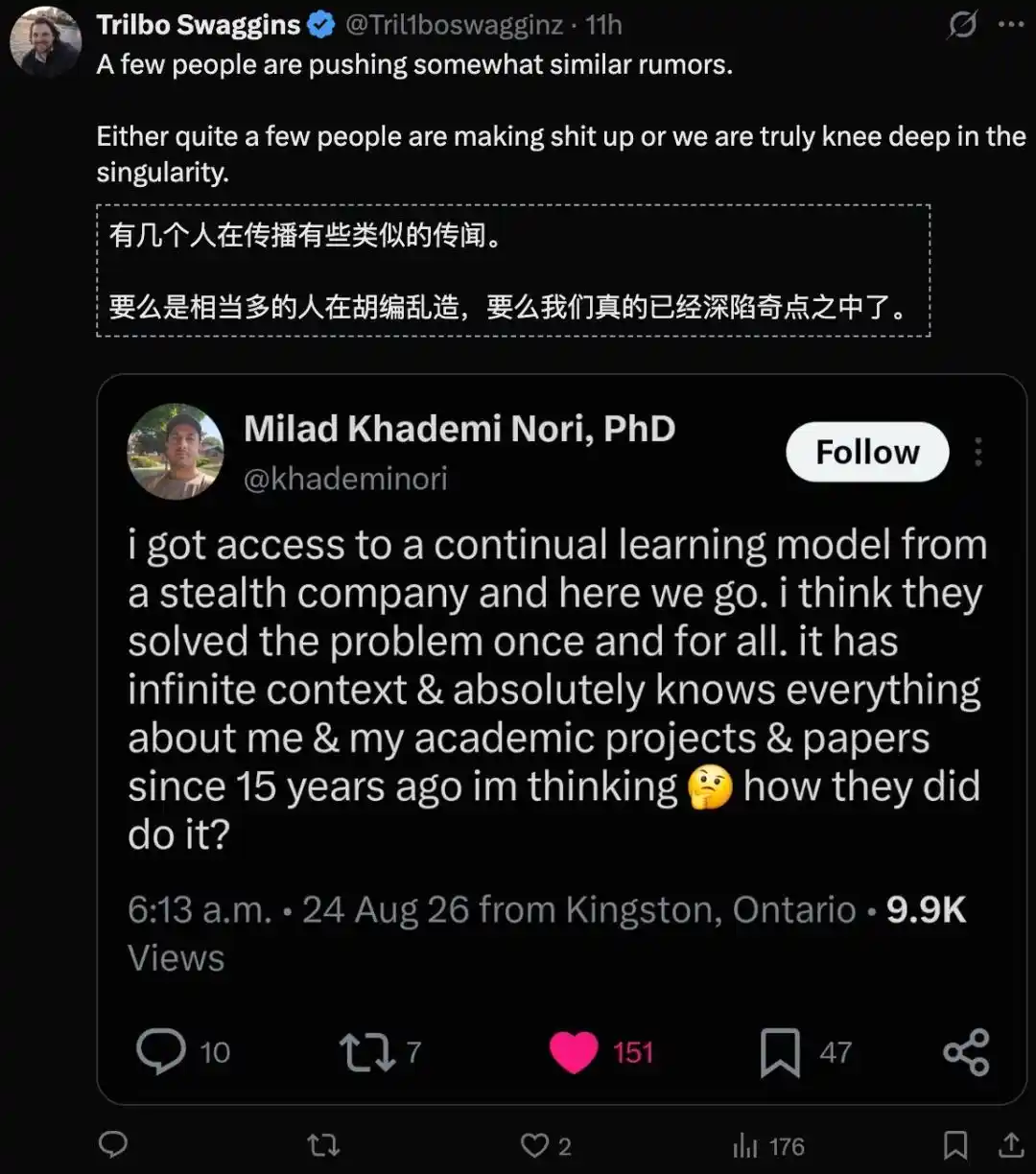
The report cites a wave of recent hints from investors and tech commentators, with much of the attention landing on SSI.
Hints from investors and researchers pushed SSI into focus
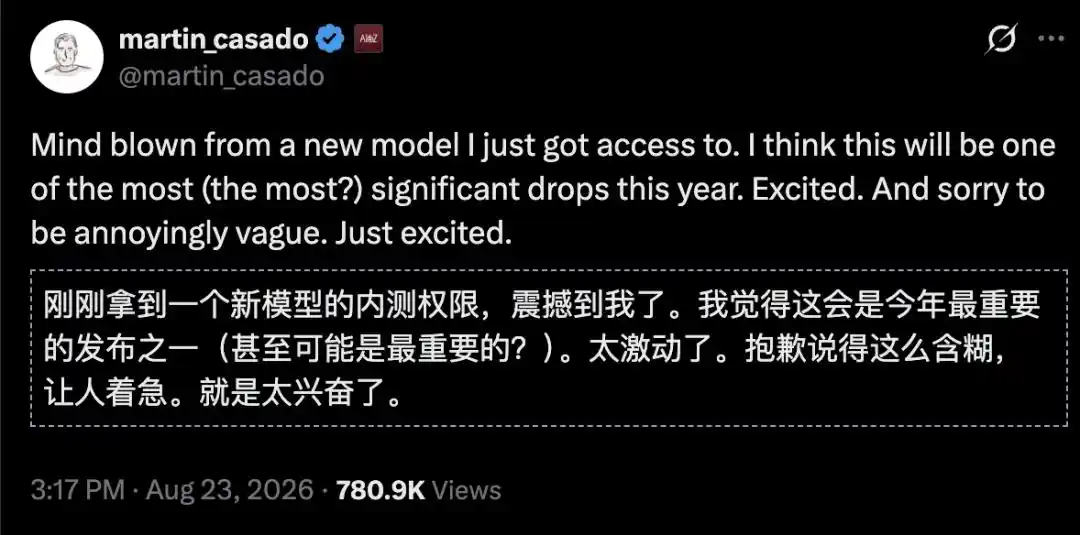
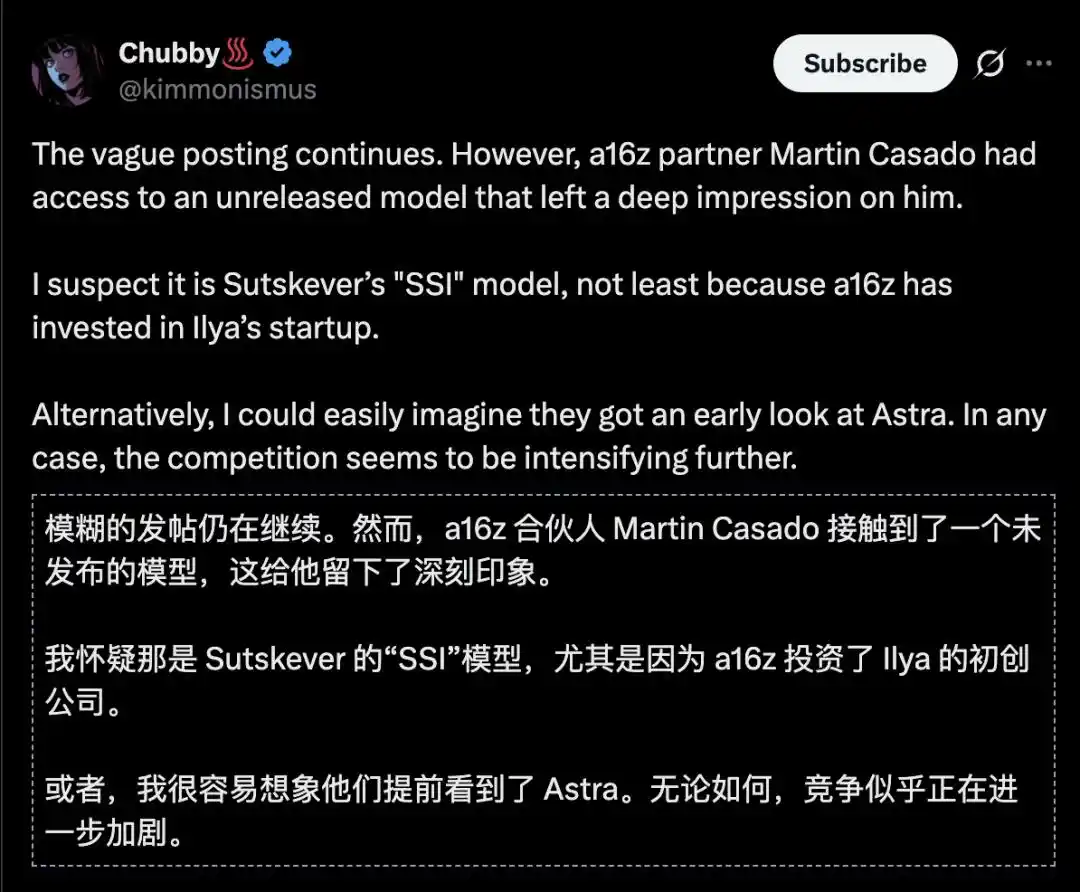
Andreessen Horowitz partner Martin Casado suggested on social media that he had recently seen what he called the most important new model of the year. Because a16z is identified in the article as one of SSI’s core investors, the comment quickly fueled speculation around Sutskever’s company.
The article notes that some people also think Casado may have been referring to OpenAI’s next Astra model. Even so, talk of a breakthrough from a smaller, independent lab continued to build.
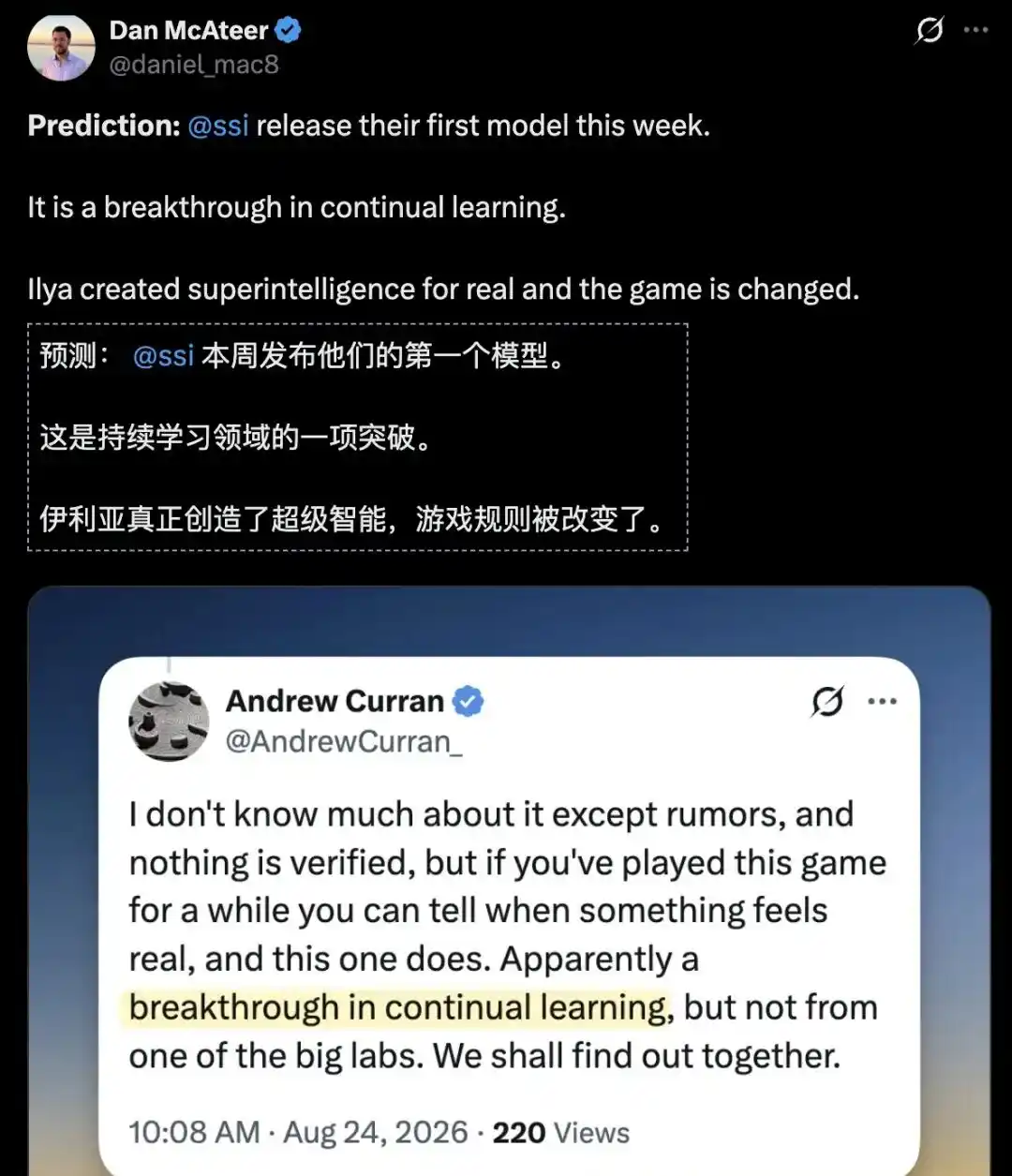
Tech observer Andrew Curran said the reported advance was not coming from a mainstream giant such as OpenAI or Google, but from an independent lab, which he said made it feel very real. AI commentator Dan McAteer went further, writing: 「Ilya truly created superintelligence. The rules of the game have changed.」
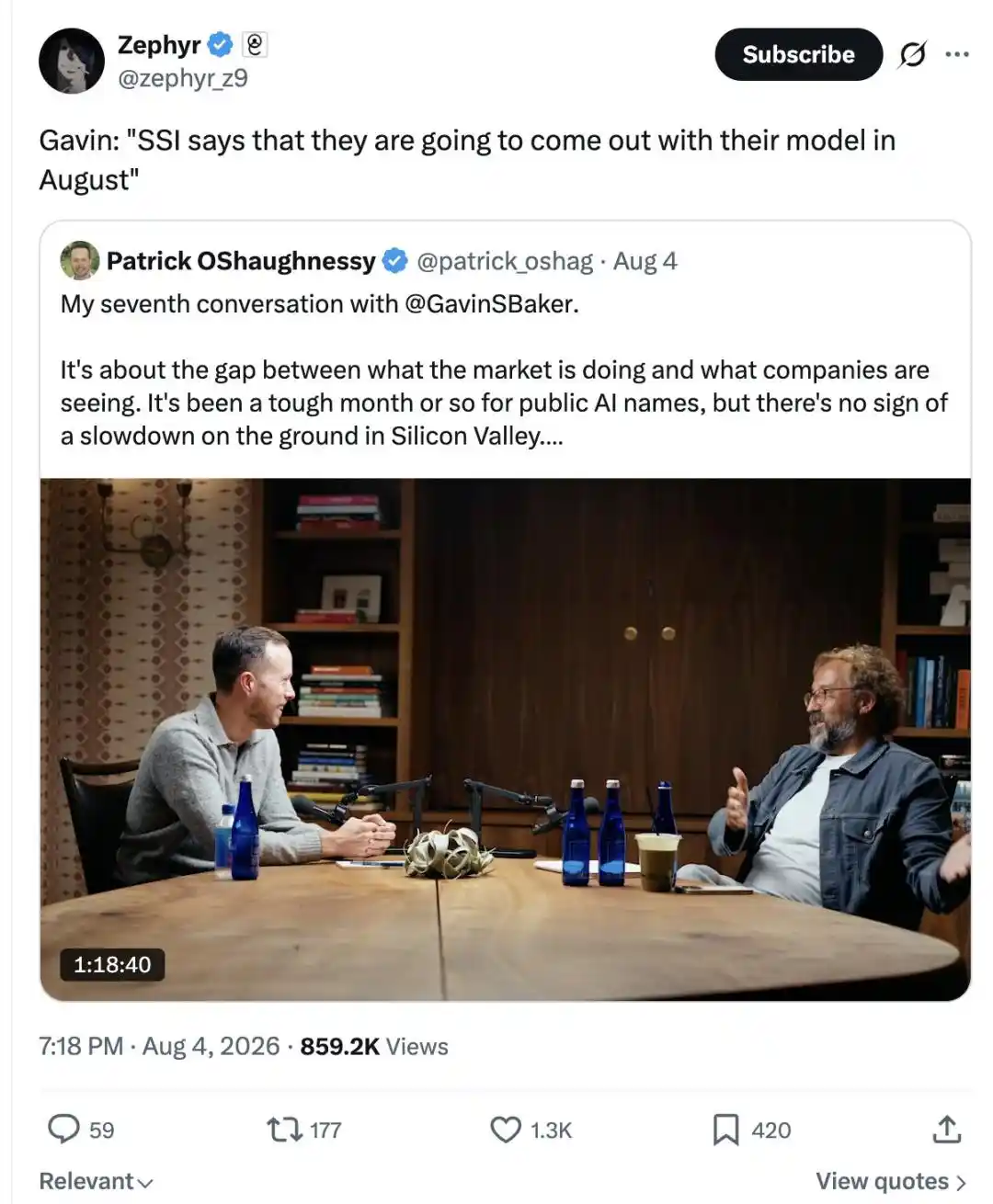
Earlier this month, investor Gavin Baker said on a podcast that SSI had told people it planned to release its model in August.
Nvidia partnership gave the rumors more weight
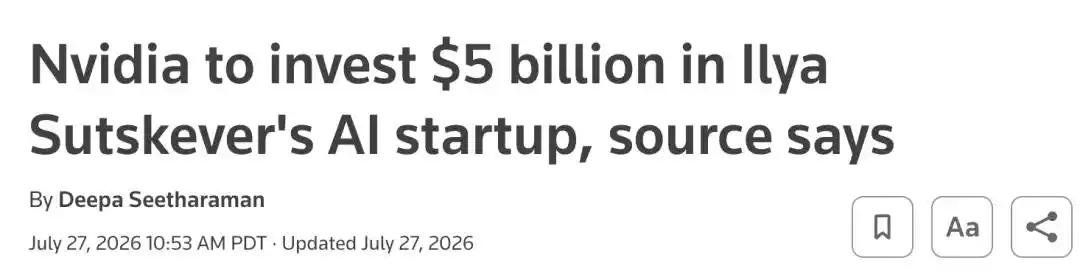
The report links that speculation to Nvidia’s relationship with SSI. It says that on July 27, Nvidia announced a long-term strategic partnership with the company, which the article describes as having no revenue and no product so far.
Under that arrangement, Nvidia said it would expand SSI’s compute capacity by 10x over the next 12 months.
The article also says the investment could be worth as much as $5 billion, and that Nvidia granted SSI exclusive access to its next-generation Vera Rubin systems.
In the release referenced by the report, Nvidia said it decided to make the commitment after receiving rare access to SSI’s tightly protected research results.
The central claim revolves around test-time training
The article argues that SSI’s reported breakthrough may rest on a test-time training, or TTT, architecture.
It describes today’s mainstream AI models, including systems such as ChatGPT and Claude, as relying on pretraining to store knowledge in model weights. Once training is finished, those weights are generally fixed during inference. To deal with fresh information, developers have been expanding context windows, from 100k to million-token scale.
The piece compares that setup to an open-book exam. In that framing, the model itself does not become smarter; it simply gets to carry a larger set of notes into the task.
It makes a similar distinction with reasoning models such as OpenAI’s o1. In the article’s telling, test-time compute gives the model more room to think by consuming more tokens, but it still does not rewrite its neural connections while doing so.
TTT is presented as something different. When the model reads a long document, it does not just keep that material inside a context window. It learns from it by generating gradient updates and altering its own structure. After reading, the model is described as having become a slightly changed, newly adapted version of itself.
That would mean less dependence on very large context windows because the information has been absorbed as internal knowledge rather than carried as temporary context.
Why the report connects the idea to Sutskever’s public views
The article argues that SSI’s long stretch with no product launch and no published papers now looks different when placed next to Sutskever’s public comments from the past two years.
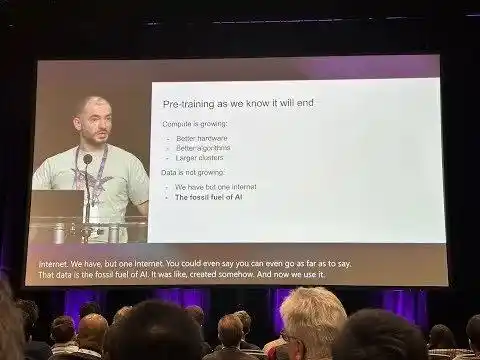
It says Sutskever repeatedly signaled that the pretraining era was nearing its end. The timeline in the report points to a statement at NeurIPS in 2024, then to an appearance on Dwarkesh Patel’s podcast in November 2025, where he said: 「We are moving from the era of scaling to the era of research.」
According to the article, Sutskever believes the industry has been overly shaped by the concepts of AGI and pretraining. Humans are not born knowing everything. They learn continuously and adapt to specific settings over time.
The piece says his idea of true superintelligence is not a giant machine that arrives loaded with the entire internet, but something closer to an exceptionally smart and curious 15-year-old genius. That system may not know everything at the start, but can quickly learn programming, medicine, law, or new skills through trial, feedback, and ongoing learning once placed in a role.
From that viewpoint, deployment is not the end of training. Deployment is part of the learning process itself.
The article says that logic defines SSI’s strategy: no rush toward short-term products, no release of intermediate models, and a straight shot to safe superintelligence, with research focused on efficient continual learning and alignment.
Research breadcrumbs cited in the report
The piece points to a few earlier signals that it says line up with the TTT thesis.
One was the original TTT paper published in July 2024 by Yu Sun and others.
Another was a paper co-authored by Stellar co-founder and SSI investor Jed McCaleb. The article says that paper argued long-context language modeling is not fundamentally an architecture problem, but a continual learning problem.
By connecting those research threads, investor ties, and the current rumors, the report concludes that SSI may have moved TTT from an academic idea toward a commercial system.
Attention is now fixed on August
The timeline in the article centers on August. It says that whether SSI starts with a limited test release for a small group of users or a wider public unveiling, the impact would be significant if the model truly supports test-time training and real-time weight updates.
In that case, the report argues, current competition built around pretraining, giant context windows, and inference-time compute would need to be reconsidered.
For now, the material presented in the source is drawn from social media posts, podcast remarks, and public references cited in the article. SSI has not provided a formal product announcement within the input material.
The piece closes by placing Sutskever at another pivotal moment in AI development: if models can keep learning while they are being used, the debate over what large models can become may be entering a new phase.