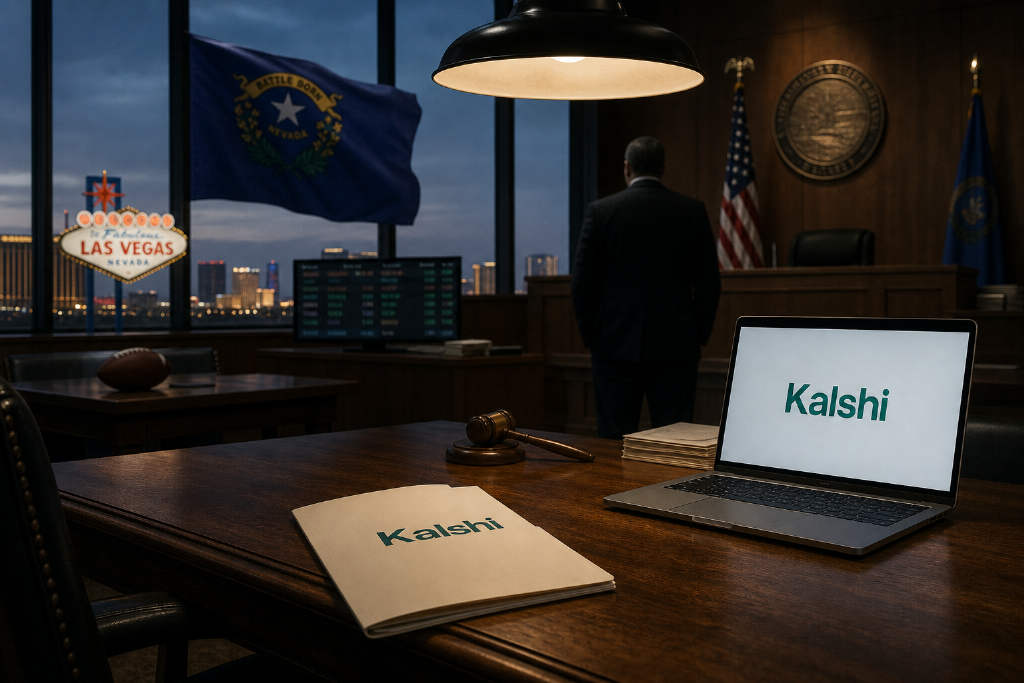
The U.S. Ninth Circuit Court of Appeals has rejected Kalshi's request for an injunction against Nevada's efforts to regulate sports betting, saying the company failed to prove that federal law preempts state authority. The dispute began when the Nevada Gaming Control Board issued a cease-and-desist notice ordering Kalshi to stop offering election- and sports-related contracts in the state, while threatening civil or criminal proceedings. Kalshi then sued the board and the state, and a district court initially granted the injunction before reversing course after a ruling involving Crypto.com.
The U.S. Court of Appeals for the Ninth Circuit has denied Kalshi's bid for an injunction against Nevada's oversight of sports betting, finding that the company did not establish that federal regulations take precedence over state authority.
Cease-and-Desist Set Off the Fight
The case traces back to a cease-and-desist notice from the Nevada Gaming Control Board, which ordered Kalshi to halt trading in contracts tied to elections and sports events in the state. The board also threatened to pursue criminal or civil action.
Kalshi Sued, Then a District Court Reversed Course
Kalshi responded by suing the Nevada Gaming Control Board and the state, asking for a preliminary injunction to block state oversight of its sports and election contract markets. A district court initially approved the injunction, then vacated it after a ruling involving Crypto.com.
The appellate court's decision leaves the injunction unavailable to Kalshi, keeping Nevada's regulatory action intact.
This article was originally published by Bit.Fan. For more cryptocurrency news and market insights, visit www.bit.fan. Disclaimer:
The market information, project data, and third-party content displayed on this platform are for industry information sharing only and do not constitute any form of investment advice or return commitment.
Cryptocurrency trading carries high risks. Users should fully assess their risk tolerance and make independent decisions. All profits, losses, and legal responsibilities are borne by the users themselves.