
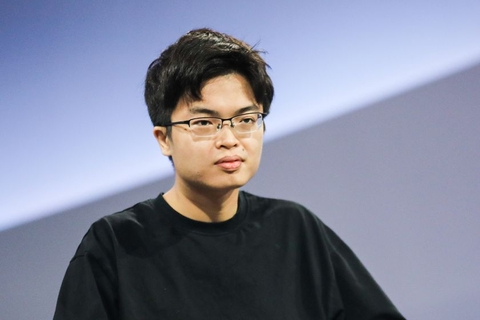
Moonshot AI is back at the center of market discussion after PANews reported that Kimi is now valued at RMB 200 billion, with room for further upside as the K3 model gains traction in China and overseas. The same report said the company could move toward a Hong Kong listing within as little as six months.
PANews wrote that Kimi’s annualized revenue exceeded $300 million in June. After K3’s rollout, the report said, revenue could grow by multiples. It added that if Kimi completes a listing and is measured against AI valuations in Hong Kong stocks, founder Yang Zhilin could become “the youngest billionaire in history with a net worth above RMB 100 billion.”
K3 drives a fresh wave of attention
The report said K3 spread rapidly across the internet after launch. Within 48 hours, Kimi was close to its computing-capacity limit, and individual memberships were temporarily suspended. PANews compared the surge in demand to the earlier breakout period seen by Deepseek.
PANews linked that momentum to the company’s earlier product strategy. When Kimi launched in October 2023, many large-model products were still centered on basic chatbot and writing use cases. Kimi, by contrast, leaned early into long-context processing as its main point of differentiation. The article said it supported context windows at the level of 200,000 Chinese characters, allowing users to upload papers, research reports and lengthy materials for AI-assisted reading and analysis.
That feature quickly found an audience among knowledge workers. By March 2024, PANews said, Kimi had gone through its first major demand spike, with a large influx of users and pressure on servers. In the article’s telling, it took only a few months for Kimi to move from a product known mostly inside AI circles to one recognized by the broader public in China.
Valuation, funding and listing speculation
The article said investors began to reassess the company as product traction became clearer. Moonshot AI completed multiple funding rounds less than a year after it was founded, and its valuation climbed rapidly. PANews also wrote that after continued capital support over the following years, the company’s post-money valuation topped $20 billion following its latest 2026 financing round, while cumulative funding exceeded $3.9 billion. That placed it among the most heavily funded startups in China’s large-model sector, according to the report.
In PANews’ analysis, three figures now define the market conversation around Kimi: a RMB 200 billion valuation, annualized revenue above $300 million, and the possibility of a Hong Kong listing within half a year. The article argued that K3’s commercial rollout could become a key driver of the next phase of revenue growth.
Yang Zhilin’s research path and early career
Beyond business metrics, PANews spent much of the piece on founder Yang Zhilin’s background. It said Yang was born in 1992 in Shantou, Guangdong, earned his undergraduate degree at Tsinghua University, and later pursued a PhD at Carnegie Mellon University.
During his doctoral studies, Yang took part in research projects including Transformer-XL and XLNet. PANews noted that Transformer-XL in particular addressed long-text processing problems in earlier model architectures, and added that long-context capability would later become one of Kimi’s earliest product labels.
Yang did not remain on a purely academic track. According to the report, he co-founded Recurrent AI in 2016 in an effort to use AI to help enterprises improve efficiency, and later joined top research teams including Google Brain. PANews said that if he had stayed on that path, he could have remained in the U.S. and joined companies such as Apple, Google or Meta as a leading AI researcher.
Turning down Apple and returning to China
The article framed Yang’s eventual choice against the backdrop of intensifying global AI competition. In 2023, after ChatGPT’s arrival pushed the field into a hotter competitive phase, large Chinese technology companies including Baidu, Alibaba and Tencent moved aggressively into the sector. At that point, Yang chose to found Moonshot AI.
PANews said the company’s name came from Pink Floyd’s classic album The Dark Side of the Moon, reflecting an ambition to explore the unknown. While many companies at the time focused on quickly releasing chatbot products, Yang took what the article described as the harder route by building from the model layer upward.
The report also highlighted a detail that resurfaced after Kimi K3 became a hit. Yang’s doctoral adviser at Carnegie Mellon, Russ, said on social media that he was proud to have taught Yang. PANews said the post drew criticism from some voices who argued that he had helped train talent for a competitor and weakened U.S. AI strength.
According to the article, Russ also disclosed that Yang had many opportunities if he had chosen to remain in the U.S. Because Russ had previously led Apple’s AI lab, Apple CEO Tim Cook had, through an intermediary, asked whether Yang might be interested in joining Apple. PANews said Yang’s answer was that he would regret it for the rest of his life if he did not try independent entrepreneurship at least once.
Why the China return mattered
PANews argued that with Yang’s credentials, staying in the U.S. would probably have led him into Apple, Google or Meta, where he could have continued climbing within a mature research system, earning a high salary, publishing papers and training models. But the article said that path would have made it difficult to build a product like Kimi.
The report added that Yang had said in an earlier interview that scientists inside large companies may decide how to approach a technical problem, but they rarely decide how much compute, capital and talent a company will commit to it. Product and commercial functions sit in separate departments, and even strong individual researchers remain only one part of a much larger machine.
PANews presented another reason as well: even if Yang had tried to start a company in the U.S., he might not have been able to raise the level of funding Moonshot AI later secured. In the article’s view, a newly graduated Chinese researcher without an established U.S. startup network would have found it hard to persuade capital to commit massive funding and computing resources quickly. Back in China, however, Yang had both the Carnegie Mellon and top-tier AI research background as well as familiarity with the local talent pool, capital base and market.
The article ended by saying that in China, Yang was no longer just a scientist inside a big-company structure, but one of the few people able to connect technology, fundraising, compute, team-building and product strategy at the same time. “If Yang Zhilin had stayed in the United States, the world might have had one more AI scientist at a Silicon Valley tech giant,” PANews wrote. “By choosing to return to China, there came Moonshot AI and Kimi.”