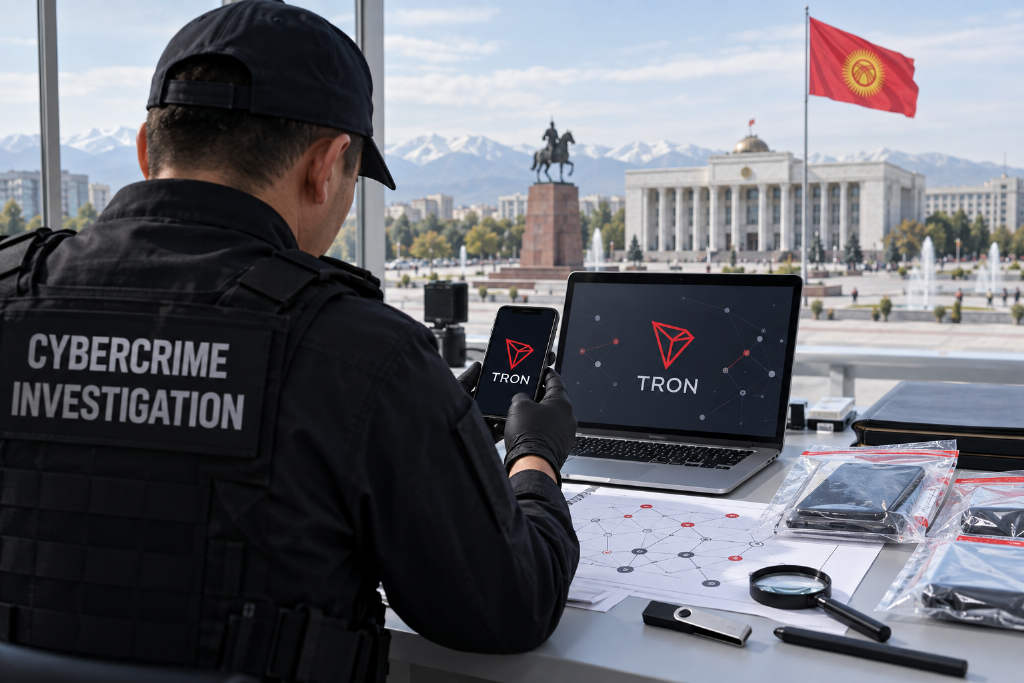
Kyrgyzstan’s interior ministry has opened 90 criminal investigations tied to cryptocurrency since 2026, according to Akchabar, citing Interior Minister Ulan Niyazbekov. The cases involve cyber fraud, theft of funds, money laundering, and the transfer of criminal proceeds. Niyazbekov also disclosed details from a 2025 investigation into a cross-border cyber fraud group. During that probe, police found a TRON wallet on a suspect’s device that held more than $3 million in digital assets. Authorities then used blockchain analysis tools to trace the related funds. The remarks add a rare official data point on how local law enforcement in Kyrgyzstan is handling crypto-linked crime and using on-chain tracing tools in active investigations.
Kyrgyzstan’s domestic affairs agencies have opened 90 criminal investigations involving cryptocurrency since 2026, Interior Minister Ulan Niyazbekov said, according to Akchabar.
The cases involve cyber fraud, theft of funds, money laundering, and the transfer of criminal proceeds.
Minister cites TRON wallet found in earlier investigation
Niyazbekov also said that, during a 2025 investigation into a cross-border cyber fraud group, police found a TRON wallet on a suspect’s device holding more than $3 million in digital assets. He said authorities used blockchain analysis tools to trace the related funds.
This article was originally published by Bit.Fan. For more cryptocurrency news and market insights, visit www.bit.fan. Disclaimer:
The market information, project data, and third-party content displayed on this platform are for industry information sharing only and do not constitute any form of investment advice or return commitment.
Cryptocurrency trading carries high risks. Users should fully assess their risk tolerance and make independent decisions. All profits, losses, and legal responsibilities are borne by the users themselves.