

An AI-generated speedboat racing demo has gone viral after one developer said Opus 5 produced it with a single prompt, only for another builder to recreate a similar version in Codex with GPT-5.6 at an estimated cost of about $5.
The original project was shared by Vyom and presented as a playable game called INK TIDE. The article says the one-shot Opus 5 run used 690 million tokens and cost $423. Soon after that, Anul Agarwal built a similar remake in Codex, spending roughly five hours and using two prompts.
What Vyom’s Opus 5 build included
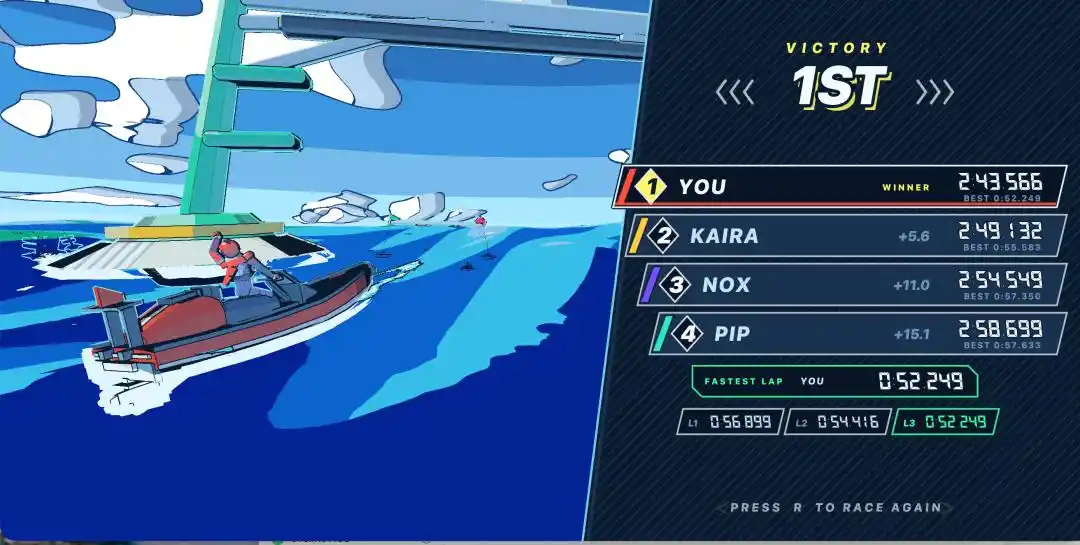
The game shown by Vyom uses a U.S. cartoon visual style and a retro arcade-style boat racing format. It includes a full countdown, lap tracking, and a ranking system, along with a unified racing dashboard UI.
According to the article, the boat’s pitch and roll are visibly animated while racing. A gauge cluster sits at the lower right of the screen, while the upper right contains a minimap and a live ranking board. Charge-up and acceleration effects are built in, and the game also displays clear prompts when the player takes a wrong route or collides with another boat.
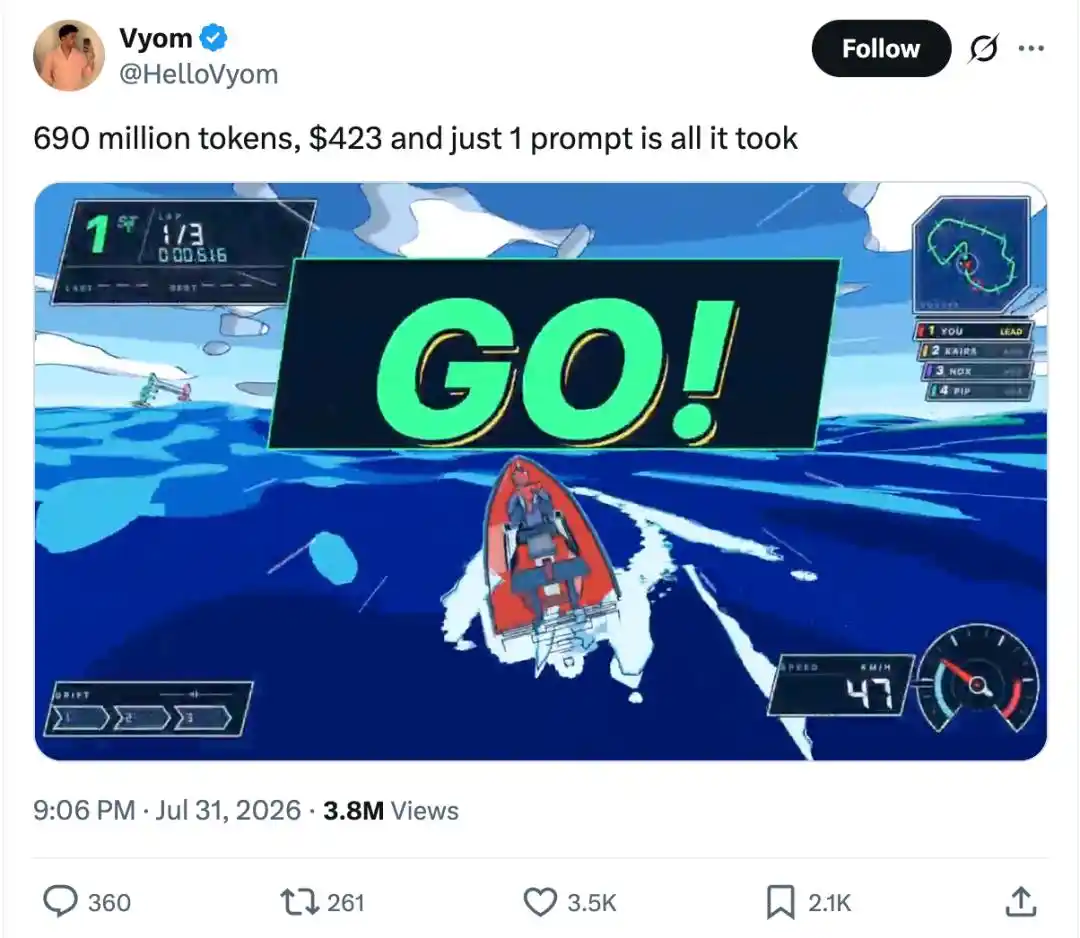
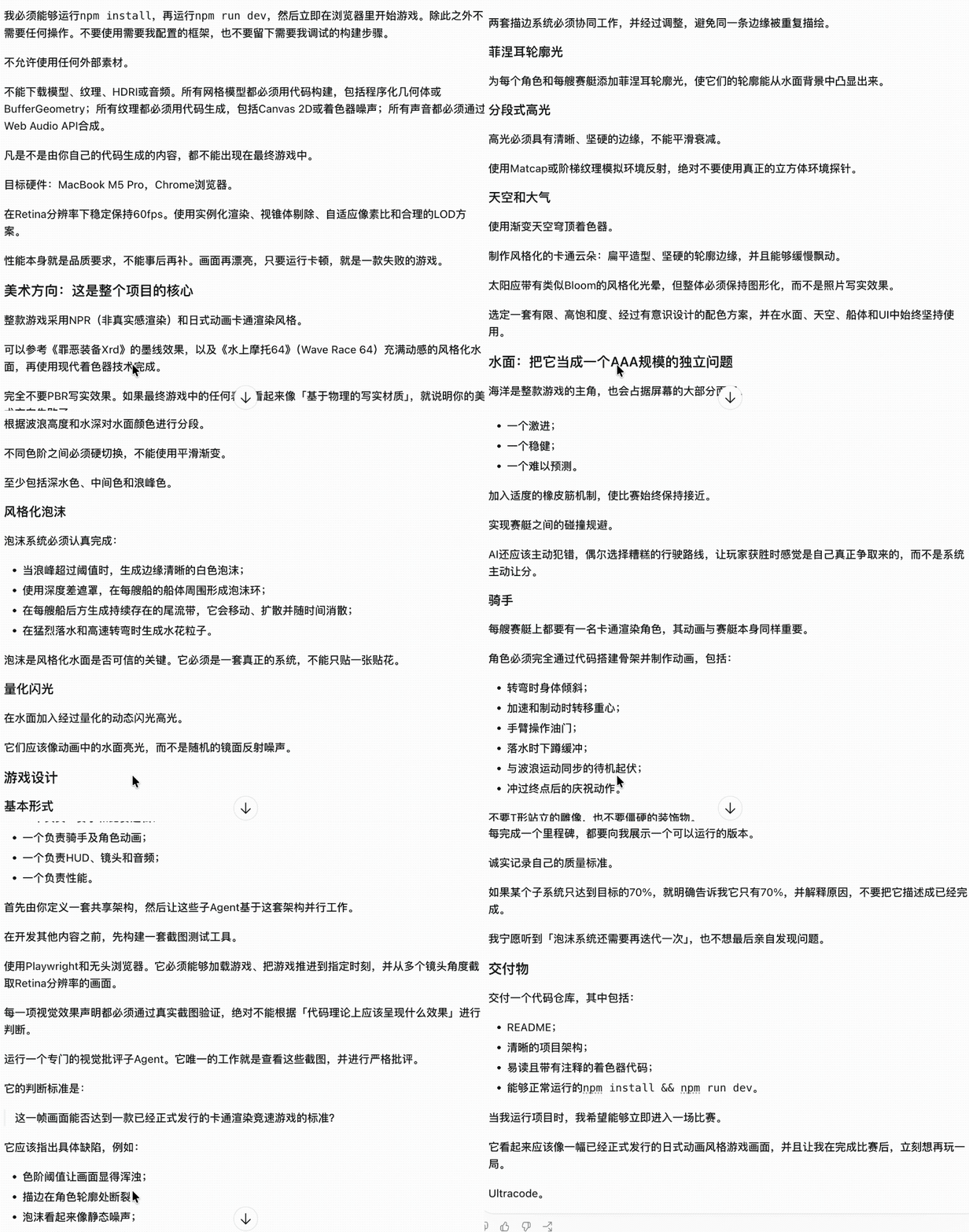
Vyom said the game was generated from a single prompt in a one-shot run. The article notes, though, that the prompt was about 2,000 words long, making it closer to a full requirements document than a short command.
Its structure was broken into layers: hard constraints first, then visual standards, then feature requirements, followed by development flow and delivery criteria. The water system had its own dedicated section, which the article links to the quality of the final water effects.
A multi-agent workflow was part of the prompt
The prompt also described a detailed sub-agent setup.
According to the article, Claude was asked to define a shared architecture first, then split the work across multiple sub-agents. Separate agents handled the water system, toon rendering, boat physics, AI rivals, character animation, audiovisual systems, and performance. A main agent then coordinated and merged the output.
The stated purpose was to avoid what the article called “attention dilution” in larger tasks. If water, rendering, physics, AI, UI, and audio were all assigned to a single agent, the build process could drift, break interfaces, or lose track of earlier decisions.
To limit that, each sub-agent was given a tightly defined scope, and the author even specified which files each one could modify before work began in parallel.
The workflow also included a quality-control step. Claude was instructed to build a screenshot harness and run a visual review sub-agent that examined screenshots and pushed each subsystem through repeated iterations until the reviewer stopped finding issues.
The stack and what the repository showed
The article says the game was built with Vite, TypeScript, and Three.js, with no external assets. All models, textures, and sounds were generated in code.
After reviewing the Github repository, the article says the three AI opponents were tuned through hard-coded parameters. The fastest one, KAIRA, was set to run only 0.5% above the theoretical best speed. Under that setup, a player using a normal racing line and drift acceleration could pull away without much trouble.
Another opponent, PIP, was configured to make two to three mistakes per lap, including running wide, lifting off the throttle, and leaving the track. The article presents that as one reason the AI field feels weak.
As a demo, the game is described as polished and complete enough, but still limited in depth. The article says advanced mechanics and richer gameplay are not there yet, and collisions with barriers or other racers carry little consequence, leaving it closer to a solo lap-time game than a full-featured racer.
A Codex remake with GPT-5.6 followed
After the original drew attention, Anul Agarwal published a similar version built in Codex.
His setup also used an agent team. GPT-5.6 Sol Ultra served as the main agent for coordination, management, and scheduling, while GPT-5.6 Luna Max handled execution. The full process took place inside Codex.
The article puts the effort at about five hours and two prompts, with an estimated cost of roughly $5. It also says that figure was not a strict API bill and mainly came from allocating the cost of a subscription plan.

Similar structure, lower finish
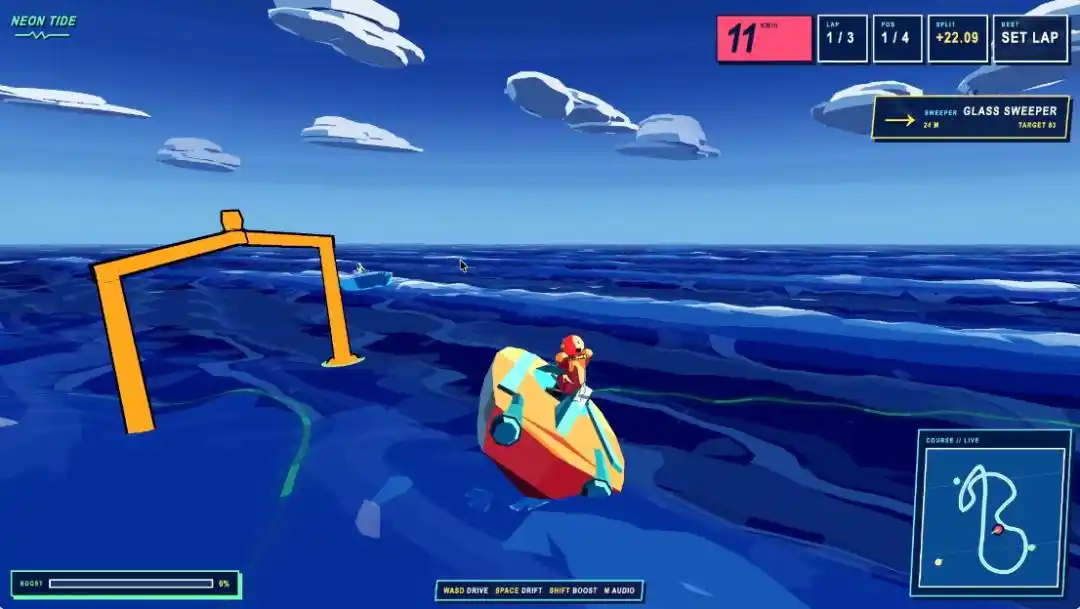
Placed side by side, the remake reproduced several of the original’s most visible elements: boat racing on open water, cartoon-rendered waves, a green track, a racing UI, and multiple boats competing in the same scene.
The article also notes that the two projects share some similarities in UI layout.
Still, the gap in finish is clear in the comparison presented. The remake is described as rougher in water detail, character presentation, and overall visual consistency.
Agarwal said he sees GPT-5.6 Sol as a strong fit for game development. By his account, the project used about 20% of his weekly allowance. If the goal is only to produce an MVP, the article says that cost can look attractive.

The piece ends on a simple contrast: AI can now generate a game demo that holds together at an engineering level, but the ceiling on final quality still depends on human judgment and how much someone is willing to spend.
Links mentioned in the article
Playable build: https://wave-racer.vercel.app/
- Vyom post: https://x.com/HelloVyom/status/2083177530287353961
- Github repository: https://github.com/Vyom-26/Wave-Racer3
- Anul Agarwal post: https://x.com/anulagarwal/status/2083847470920946152
The article was originally published by the WeChat account Quantum Bit and credited to author Tingyu.