


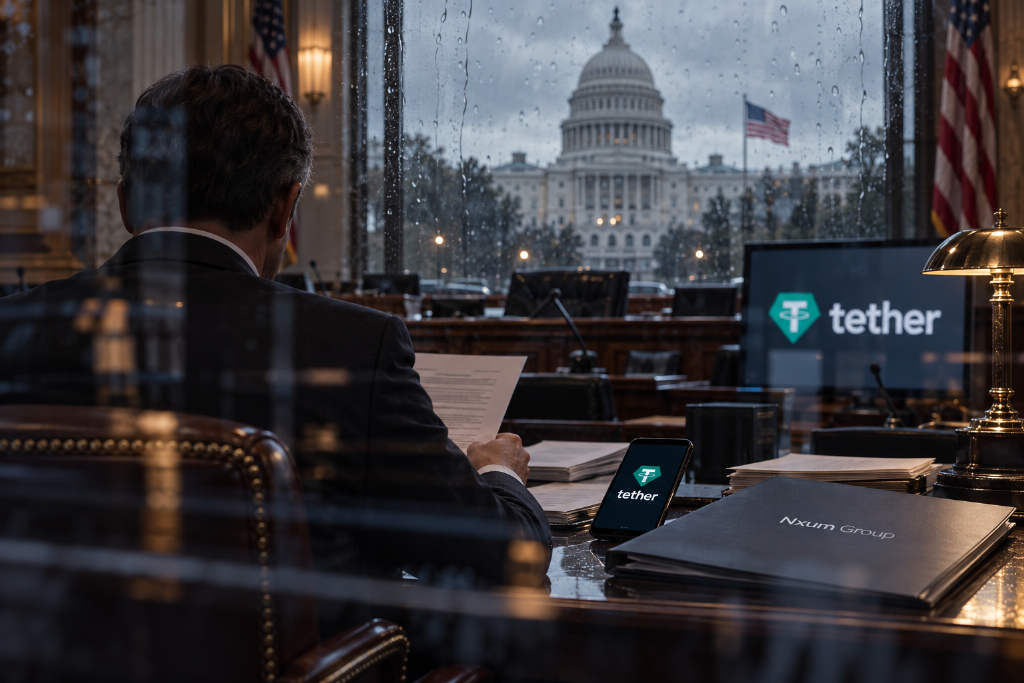
Sen. Richard Blumenthal, the top Democrat on the U.S. Senate Permanent Subcommittee on Investigations, sent letters on Thursday to Tether and Nxum Group seeking details about payment arrangements between the two sides.
Nxum Group was co-founded by Bo Hines, the CEO of Tether’s U.S. subsidiary. According to The Wall Street Journal, the firm received large payments for consulting services provided to Tether while Hines was still serving as a White House crypto adviser and helping shape crypto policy, including policy affecting stablecoin issuers.
Blumenthal cites ethical and legal concerns
In his letter to Tether CEO Paolo Ardoino, Blumenthal said the terms and nature of the business relationship among Tether, Nxum and Bo Hines were "highly unusual" and raised serious ethical and legal concerns. He suggested Tether likely understood that paying a current White House official who was directly involved in shaping crypto legislation important to its business could be unlawful and improper.
A Tether spokesperson did not immediately respond to a request for comment.
Earlier CoinDesk report put Nxum under scrutiny
CoinDesk previously reported that Nxum earned millions of dollars as the main campaign advertising vendor for a political action committee tied to Tether. The company had little prior record in political work, according to that report, and recently hired another White House crypto adviser, Harry Jung.
Broader focus on crypto activity
Blumenthal has recently kept close attention on the crypto sector, including Trump’s meme coin, World Liberty Financial, Binance and, in particular, Tether. He previously released a report on Tether’s financial links to Iran and questioned its relationship with U.S. financial partner Cantor Fitzgerald.
Ardoino criticized Blumenthal this week, saying the senator ignored important information and shared the report with the media before giving the company a chance to respond.
Prediction market Kalshi showed a 69% chance that Democrats would retake the Senate. If Blumenthal were to take control of the subcommittee, he would gain broader subpoena power and greater control over its agenda.