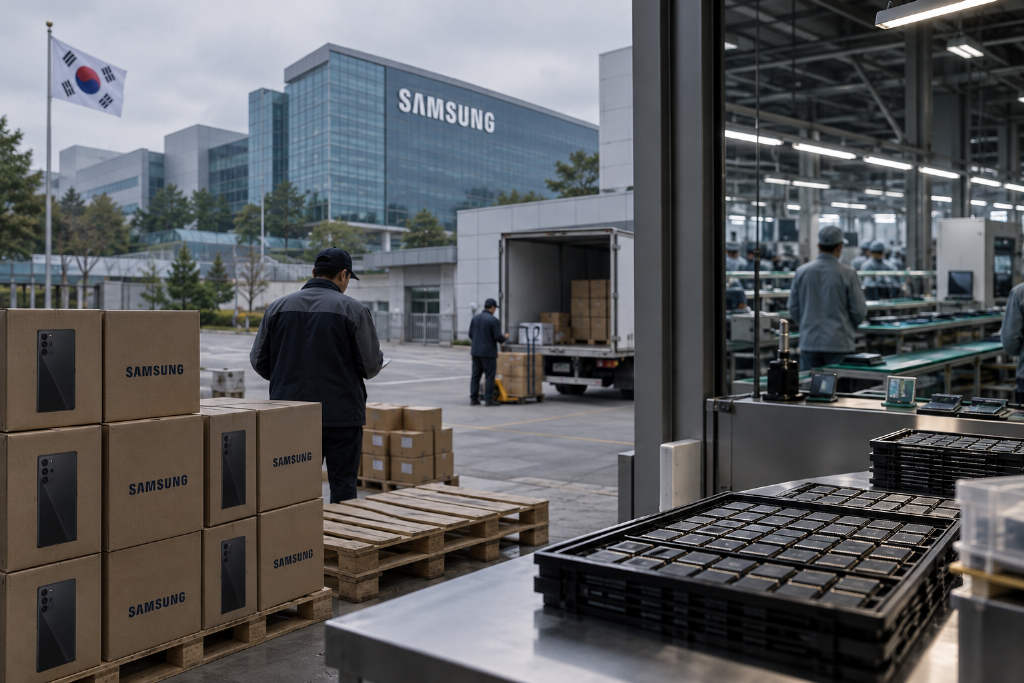
Samsung Electronics’ Mobile Experience (MX) division is planning to reduce smartphone production, with fourth-quarter 2026 output potentially falling by as much as 30%, according to an Oct. 8 report from Money Today cited by IT Home. People in the IT industry said Samsung’s MX unit has already told multiple partners to lower product supply volumes by 20% to 30%. IT Home noted that the original report did not specify whether the 30% figure refers to a quarter-over-quarter, year-over-year, or plan-versus-target comparison.
The report said Samsung had originally aimed to produce as many as 270 million smartphones for the full year, supported by new products including the Galaxy Z Fold8. After the planned fourth-quarter cut, full-year output is now expected to fall to just above 200 million units, a decline that the report said is larger than the market had previously expected. IDC shipment data cited in the report showed 62.4 million units in the first quarter and 62.7 million in the second, with earlier forecasts of 59 million and 52 million for the third and fourth quarters.
Money Today said rising memory prices are the main driver behind the production cut. TrendForce data showed second-quarter prices for 12GB LPDDR5X mobile DRAM at $145 to $146, up 175% from a year earlier. The report added that AI demand has pushed memory prices higher, with smartphone DRAM prices in the third quarter expected to rise another 20% to as much as $180.
Samsung Electronics’ Mobile Experience (MX) division is planning to cut smartphone production, with output in the fourth quarter of 2026 set to decline by as much as 30%, according to an Oct. 8 Money Today report cited by IT Home.
Multiple people in the IT industry said Samsung’s MX division has informed several partners that product supply volumes should be reduced by 20% to 30%. IT Home said the original report did not make clear whether the 30% figure refers to a quarter-over-quarter comparison, a year-over-year comparison, or a cut versus an earlier production target.
Full-year production target seen dropping from 270 million units
Samsung had originally planned to produce as many as 270 million smartphones this year, backed by new products including the Galaxy Z Fold8. After the sharp fourth-quarter reduction, full-year output is now expected to fall to just above 200 million units, a drop the report said is larger than the market had previously expected.
IDC shipment figures point to a weaker second half
IDC data cited in the report showed smartphone shipments of 62.4 million units in the first quarter and 62.7 million in the second quarter. Earlier forecasts had put third-quarter shipments at 59 million units and fourth-quarter shipments at 52 million units, which would leave the fourth quarter about 12% below the third.
Memory price increases cited as the main reason
Money Today said rising memory prices are the core driver behind the production cut. TrendForce data showed that 12GB LPDDR5X mobile DRAM was priced at $145 to $146 in the second quarter, up 175% from the same period last year.
The report also said AI demand has lifted memory prices, with smartphone DRAM prices in the third quarter expected to rise by another 20% and reach as high as $180. People in the IT industry said Samsung is currently making no profit on smartphone sales, and that cutting production is a strategy to preserve overall profitability.
This article was originally published by Bit.Fan. For more cryptocurrency news and market insights, visit www.bit.fan. Disclaimer:
The market information, project data, and third-party content displayed on this platform are for industry information sharing only and do not constitute any form of investment advice or return commitment.
Cryptocurrency trading carries high risks. Users should fully assess their risk tolerance and make independent decisions. All profits, losses, and legal responsibilities are borne by the users themselves.