
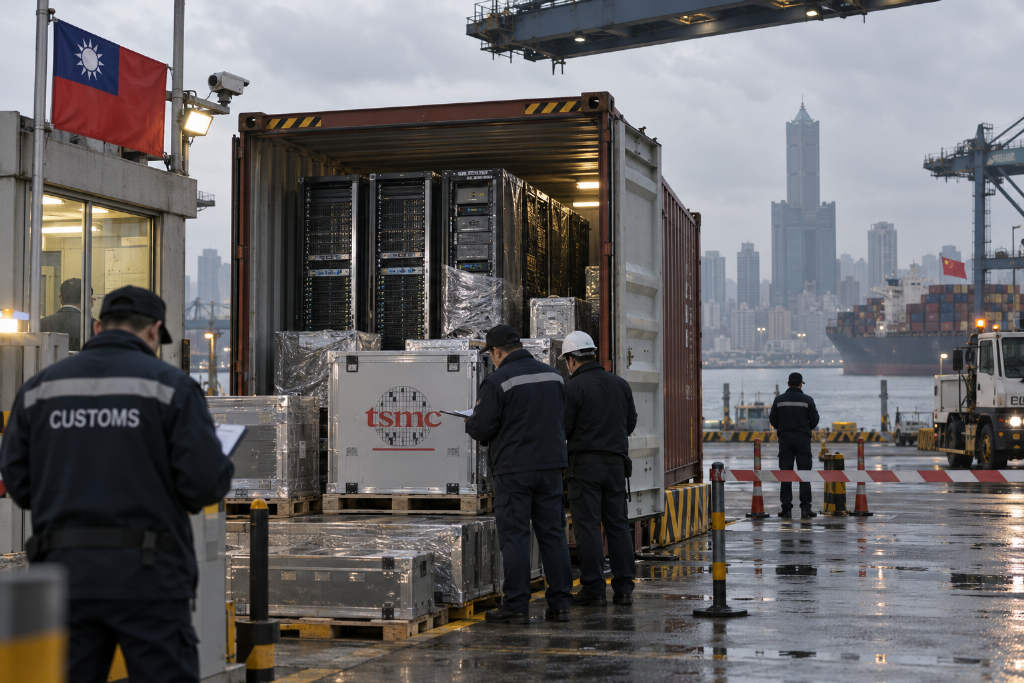
Taiwan is moving toward tighter export controls on AI-related hardware. Minister Kung Ming-hsin said AI servers and advanced semiconductors will be added to a controlled goods list. And once those measures take effect, he said, shipping covered AI hardware to mainland China could break the Trade Act and bring criminal liability.
AI servers and advanced semiconductors set to be listed first
Kung told Bloomberg that Taiwan plans to put AI servers and advanced semiconductors under export control. That would pull Taiwan's rules closer to U.S. restrictions and align it with the U.S. push to limit the flow of advanced chips into China.
He said that after the rules take effect, sending restricted AI hardware to mainland China would violate the Trade Act and amount to a criminal offense.
Kung linked the move to commitments under the U.S.-Taiwan trade agreement
In an interview on Oct. 12, Kung said, "Looking ahead, some of our measures on controlled items will be consistent with the steps taken by the United States, because we made quite a lot of commitments in the agreement." He was referring to the trade agreement Taiwan and the United States signed this year.
Kung did not say when the measures would be rolled out or lay out the new steps being weighed. No official timetable has been released.
President Lai Ching-te had earlier said Taiwan would respond to U.S. concerns about export controls that had not been specifically identified, but he also gave no details.
Bloomberg says the controls could rank among Lai's toughest steps so far
Bloomberg said that, if enacted, the restrictions could rank among the toughest steps taken since Lai took office to protect Taiwan's technology and national security interests. The report also said Taiwan is testing reactions to a harder policy line while dealing with pressure from U.S. officials on several fronts.
Earlier this year, Bloomberg reported that Taiwanese authorities were examining extra legal tools to handle transshipment of advanced hardware. That could let Taiwan, for the first time, pursue criminal charges in cases involving the smuggling of AI chips to China.
The report said Kung is one of the main officials managing economic ties between Taipei and Washington. That relationship is seen as helping Taiwan answer pressure from Beijing.
Taiwan is also considering an industrial park project in the United States
Separately, Kung told Bloomberg this week that the government plans to raise billions of U.S. dollars to develop an industrial park in the United States. The goal: build a complete local supply chain base for NVIDIA and other AI hardware manufacturers.
Policy details and the timing for carrying out that plan are still being discussed.
Put together, these two policy tracks show a tougher line on AI hardware exports to mainland China, paired with a bigger supply-chain buildout in the United States.