
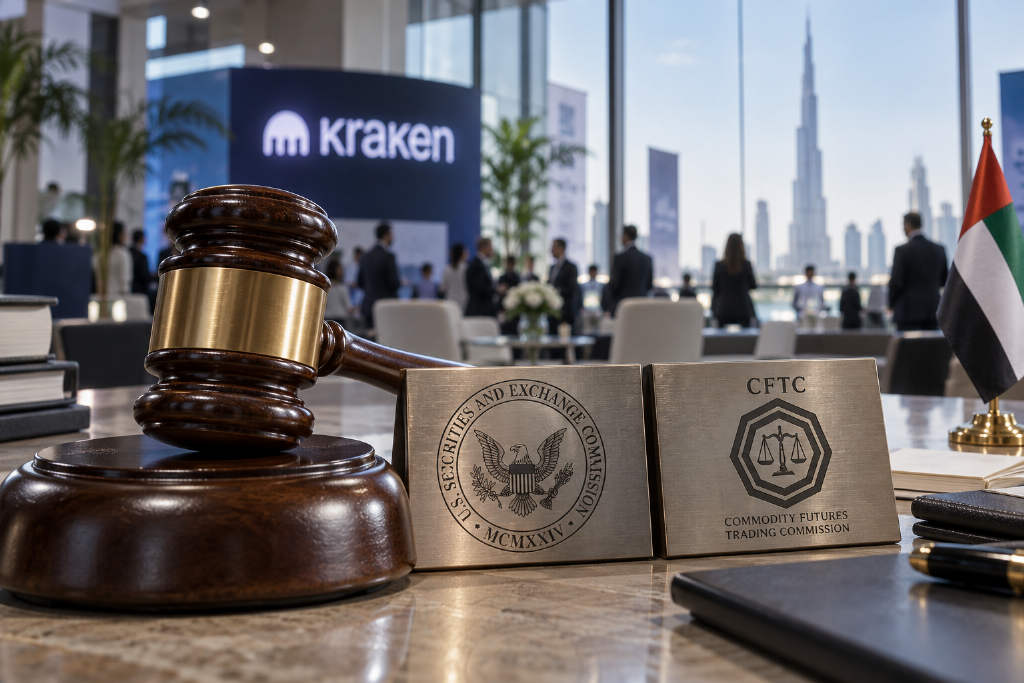
At a Token2049 policy panel, speakers made the case that clearer crypto market rules can still emerge even if Congress fails to pass a major market-structure bill.

The session was moderated by Henri Arslanian and featured former Commodity Futures Trading Commission commissioner Brian Quintenz, Hyperliquid Policy Center chief executive Jake Chervinsky, Dubai Virtual Assets Regulatory Authority vice chair Deepa Raja Carbon, and Kraken co-CEO Arjun Sethi.
VARA says crypto rules need to change as the market matures
Carbon said VARA may be the only regulator in the world dedicated specifically to virtual assets. As of the day of the panel, she said, 58 firms had been licensed.
She described the regulator as operating in some ways like a startup, with rules that need to evolve alongside the market. The foundation VARA built at launch, she said, is not the same as the framework it needs now that market participants have become more experienced.
Derivatives were one example. VARA rolled out a minimum viable product program for institutions and qualified investors, and Carbon said new products need to operate at real scale before regulators can see where the risks actually sit.
She said VARA introduced derivatives rules in March last year. From June to December of the same year, trading volume grew 7x.
Quintenz says current rulemaking can fill the gap left by the Clarity Act
The panel then turned to the Clarity Act, which did not pass this year. Quintenz said the bill’s failure in the Senate does not erase the work done over the past several years. Discussions around proposals including FIT21, he said, have already given regulators a much better grasp of market details.

He said the SEC and CFTC have started using existing exemptive authority to write new rules. In his telling, the more market activity takes place inside a lawful framework, the harder it becomes later to declare all of it illegal.
Chervinsky agreed. He said years of legislative debate have produced substantial bipartisan agreement, and regulators already have enough authority to act. If those markets go live over the next two years, he said, removing a market that both consumers and institutions want would become politically difficult.
Quintenz also pointed to another constraint: people serving in government regulatory roles are, in practice, almost completely barred from holding or trading crypto assets. Without being able to use the technology themselves, he said, it is difficult for them to fully understand it.
Kraken says large clients are leaving Europe for Dubai, Singapore and Hong Kong
Sethi said companies like Kraken operate under global supervision. He listed licenses in Australia, multiple U.S. states, Canada, the UK and Hong Kong. He also said Kraken is acquiring an EU bank and is complying with the EU’s Markets in Crypto-Assets framework, MiCA.
Still, he said conversations with European regulators point to a clear pattern of capital leaving the region. Kraken’s biggest VIP clients are moving out of the UK and Europe and heading to Dubai, Singapore or Hong Kong.
"Regulation can protect an industry, and it can also regulate it to death," Sethi said. If an economy wants to stay dynamic, he said, rules need to keep up with customer demand.
Asked why Dubai is attracting those clients, Carbon said the answer starts with government cooperation with the industry. Dubai’s economy is no longer centered on oil, she said, and is focused instead on building new industries. She also said the government supports the families of professionals, including education for children, making relocation more durable.

Hyperliquid says it is discussing onchain back-end infrastructure with the CFTC
When asked when Hyperliquid could be used in the U.S., Chervinsky said Hyperliquid is infrastructure, not an exchange. He described it as technology that lets firms execute trades, clear and settle on public blockchains.
He said the group is in talks with the CFTC about moving the back end of U.S. futures exchanges and clearinghouses onto onchain rails.
Quintenz added that the CFTC chair recently said the agency is looking at who controls each step of the trading process. If a technology stack does not have a controlling party, he said, a registration-centered framework may not apply in the same way. That, in his view, would change the picture completely.
Kalshi dispute may end up before the U.S. Supreme Court
On prediction markets such as Kalshi, Quintenz said that if he could place a wager on Kalshi, he would bet that the dispute reaches the U.S. Supreme Court.
He said a ruling confirming federal jurisdiction over derivatives exchanges would not necessarily eliminate state authority over casinos. The eventual outcome, he said, could be a compromise.
The panel’s broader message was straightforward: even without a clean legislative win, crypto regulation is still being shaped through rulemaking, market launches and competition between jurisdictions.