
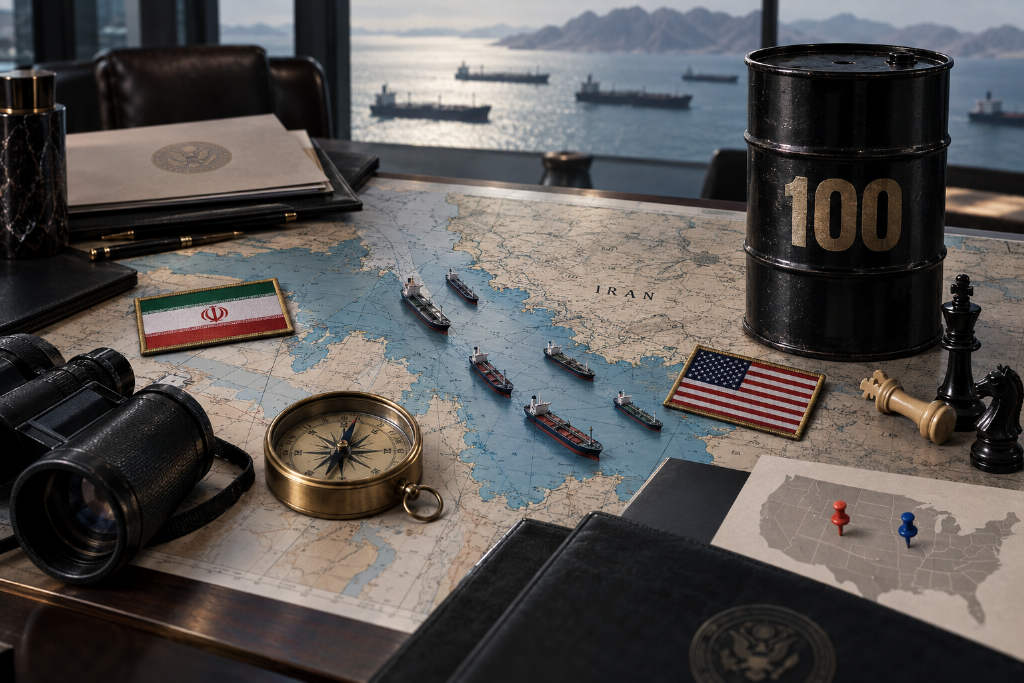
Donald Trump said on Sept. 9 that Iran was "running out of steam" and that the war would wrap up soon after the U.S. midterm elections. But The Wall Street Journal reported the same day, citing U.S. officials, that a private view inside the White House is far less optimistic: the conflict may last until January 2029, when a new president takes office.
In the market, Brent crude moved back above $100 a barrel during trading on Sept. 9, the first return to that level since July. Iran said on Wednesday that it had attacked 10 ships near the Strait of Hormuz. The United States, meanwhile, sank five Iranian oil tankers, adding to the tension between the two sides.
Public remarks and private warnings diverge
Speaking to reporters during a midterm campaign stop in Dallas on Sept. 9, Trump said Iran could no longer sustain the fight and that the war would end right after the election result was known. He also accused Tehran of trying to influence the election and said oil prices would fall once the war ended. On diplomacy, Trump said he was not ruling out negotiations, but called them a lower priority for now.
U.S. officials described a different internal picture. According to the report, Trump has privately wanted a quicker exit while also backing a longer campaign of economic pressure, using blockades and sanctions to force Tehran to abandon its nuclear program.
The Wall Street Journal said, citing U.S. officials, that senior White House figures including JD Vance and Marco Rubio have privately warned Trump that Tehran may be able to withstand U.S. naval blockades and military pressure. In that view, the war may not end until a new president is sworn in during January 2029.
Analysts question whether a blockade can deliver a quick end
Suzanne Maloney, vice president of the Foreign Policy program at the Brookings Institution, said a fleet-based maritime chokehold would be unlikely to decide the conflict quickly. If Washington truly chooses that path, she said, it would mean accepting a siege that could drag on for years.
Maloney also questioned the practical effectiveness of the strategy and warned it could trigger retaliation, turning energy and economic infrastructure along the Persian Gulf into targets.
Ali Vaez of the International Crisis Group, who has long tracked Tehran, pointed to the two-sided nature of a war of attrition. In his view, the United States may be able to wear Iran down at a manageable cost. But the Iranian government can also shift much of the pain onto the public while keeping its core machinery of control in place.
He said the pain felt by leaders on both sides still does not appear high enough to force concessions. One consequence of a prolonged conflict, he added, is that the United States would have to move troops and resources from Europe and Asia back into the Middle East to cover the gap.