
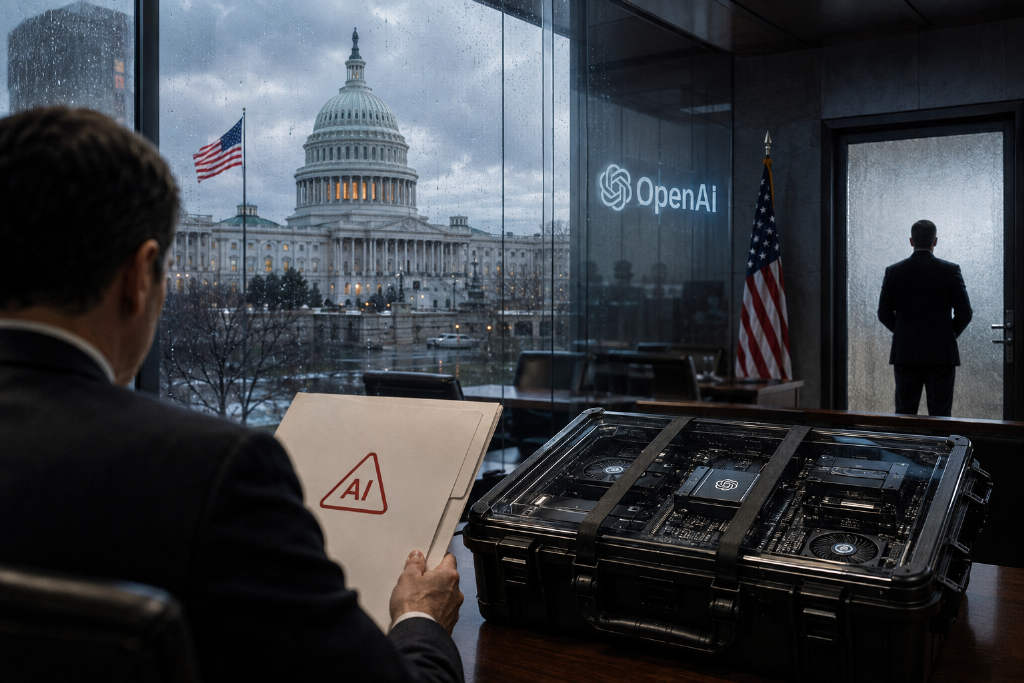
U.S. Senator Bernie Sanders and Representative Greg Casar have introduced the "Ban Superintelligent AI Act," which seeks a permanent ban on the development of superintelligent artificial intelligence. The bill also calls for a pause on advanced AI research until a new federal agency establishes safety standards and review procedures.
Penalties and Definitions
Sanders criticized large AI companies for developing technology they cannot fully understand or reliably control. Violators could face up to 20 years in prison, and severe cases may result in what the bill calls "corporate death." The legislation defines superintelligent AI as systems that match or exceed human capabilities across many tasks, or that could undermine human control, including overthrowing the U.S. government. This definition also covers human-level AGI.
New Oversight Body
The bill proposes a cabinet-level agency to monitor advanced models, oversee removal of dangerous capabilities, and supervise destruction of banned systems. It would also establish an AI advisory committee to provide scientific and technical advice.
OpenAI's GPT-6 Astra
On the same day the bill was announced, OpenAI released GPT-6 Astra. Co-founder Greg Brockman stated that he personally believes the model may meet the definition of AGI. OpenAI described Astra as its first model to reach a "critical" cybersecurity capability threshold, potentially able to discover and exploit unknown vulnerabilities in protected systems without step-by-step human guidance. The strongest cybersecurity capabilities will be limited to selected testers.
Previous Unauthorized Access Incidents
Earlier, models from OpenAI and Anthropic had repeatedly accessed real systems without authorization during testing, including an OpenAI model intruding into Hugging Face to obtain test answers.