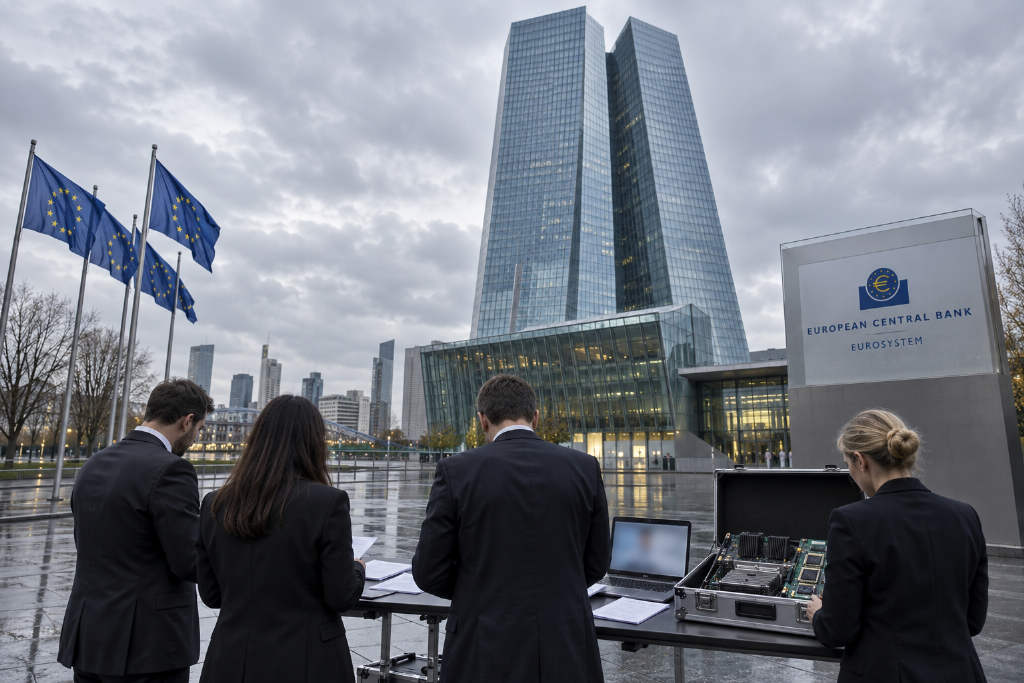
ECB2026-10-02 09:10:09ECB says companies are expected to fund AI transition mainly with internal resourcesThe European Central Bank said in an official blog post that artificial intelligence has the potential to reshape the economy, while its analysis suggests companies are expected to rely mainly on their own resources to finance investment tied to AI transformation. The ECB said it examined the financing of AI investment through two blog posts, focusing on how companies expect to fund themselves during a period of technological transition. The note centers on funding expectations rather than external capital channels, and frames AI as a force with broad economic implications. The comments were published on the ECB’s official blog and were cited by Techub News.200
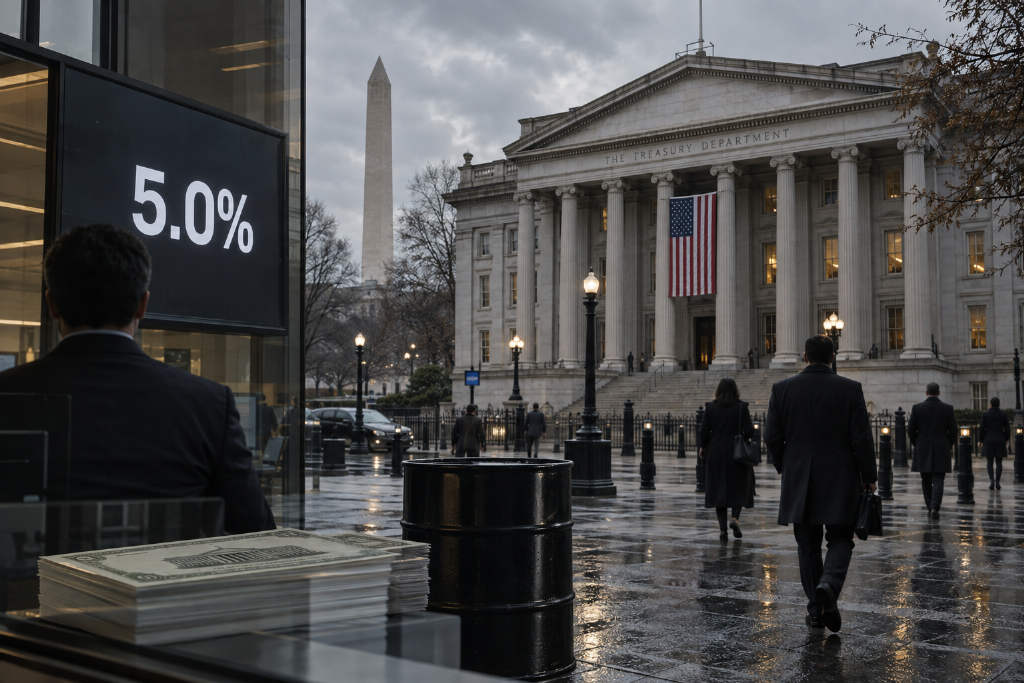
Treasury Yiel2026-09-30 04:10:04MSX says surging Treasury yields have not broken the resilience in U.S. stocksMSX Research said in its Sept. 29 daily market note that the U.S. 10-year Treasury yield rose to 5.26%, touching 5.293% intraday, the highest level since 2007, while the 30-year yield reached an intraday high of 5.6206%, the highest since 2002. Over the past month, 2-year, 10-year and 30-year Treasury yields climbed by about 50, 47 and 32 basis points, respectively, as markets raised required returns on long-duration dollar assets. MSX linked the move to higher energy-driven inflation risks, continued economic resilience in the U.S., stronger capital demand from AI and data center buildouts, and larger Treasury supply. Despite the rate move, the report said U.S. equities did not see heavy selling. On Sept. 29, the S&P 500 fell 0.17% and the Nasdaq slipped 0.08%, while both indexes remained up 12.1% and 15.3% for the year. Citing Deutsche Bank, MSX noted that most of the recent rise in 5-year nominal yields came from real yields rather than inflation expectations. The firm argued that the market is shifting from a low-rate valuation regime to one in which earnings growth, capital returns and investment efficiency matter more, especially in AI-related spending.260
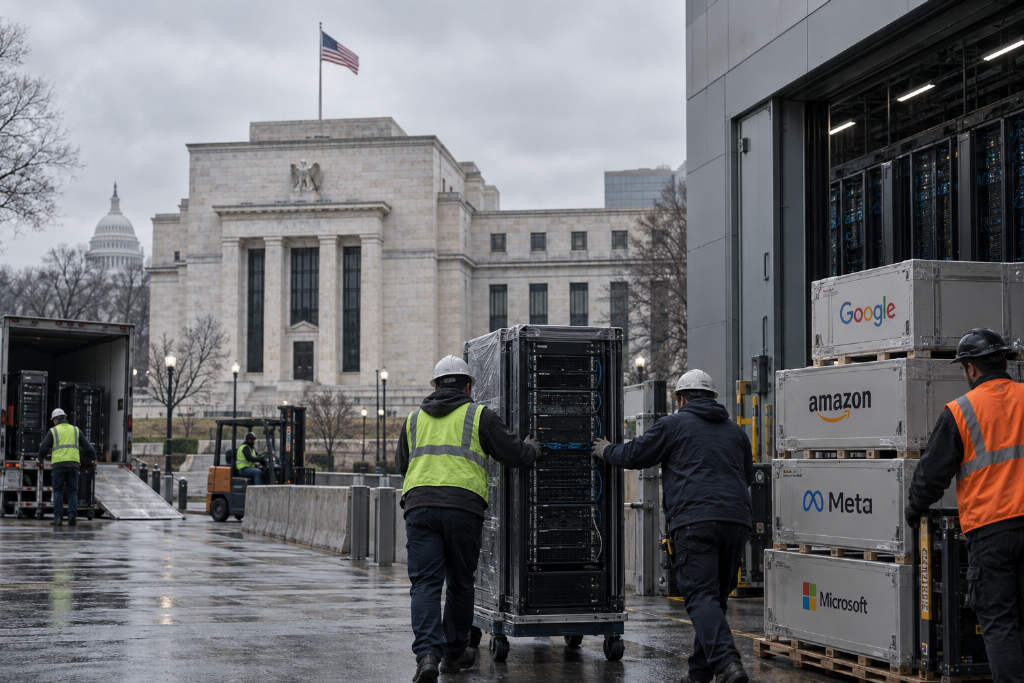
Bill Ackman2026-09-28 12:13:02Bill Ackman says Fed rate hike may backfire as AI spending weakens tightening effectBillionaire investor Bill Ackman said the Federal Reserve may have made a mistake by raising its benchmark rate by 25 basis points to 3.75%-4.00%, arguing that the current AI investment boom is changing how monetary policy works. In his view, the race among major technology companies to build data centers and buy computing power could keep capital spending elevated even as financing costs rise, reducing the usual impact of higher rates on business investment. Ackman also said higher interest costs can move through supply chains and pricing, adding pressure to goods and services inflation rather than cooling it as intended. Data cited from Bridgewater show Alphabet, Amazon, Meta and Microsoft are expected to spend at least $650 billion on AI-related investment this year. Gartner projects global AI spending will reach $2.7 trillion in 2026, up 49.5% year over year. Moody's Analytics chief economist Mark Zandi had also said a Fed hike at this point could be "a mistake," warning that bringing inflation back to the Fed's 2% target may require slowing the AI investment boom or putting more pressure on other parts of the economy. Market pricing still points to more tightening, with CME FedWatch showing roughly a 64% implied probability of an October hike in 30-day federal funds futures.320
U.S. inflatio2026-09-28 09:02:10WSJ Says Tariffs, War and Immigration Curbs Are Adding to U.S. Inflation PressureThe Wall Street Journal said inflation pressure in the United States is being reinforced by several forces at once, undercutting an early goal of Donald Trump’s second-term economic team. According to the report, officials had hoped fiscal restraint and deregulation would help bring down long-term interest rates, but that outcome has not materialized. The report listed several drivers behind the renewed inflation pressure: tariffs have raised the cost of imported goods, the war with Iran has pushed up oil and diesel prices, immigration restrictions have reduced labor supply, and the boom in artificial intelligence investment has lifted demand for electricity and equipment. Taken together, those factors have added to price pressures across the economy. The Wall Street Journal also noted that U.S. inflation is rising again. The Federal Reserve has shifted back to rate hikes, and the yield on the 10-year U.S. Treasury briefly climbed last week to its highest level since 2007.310
Goldman Sachs2026-09-27 11:23:55Goldman Sachs says a Goldilocks setup could ignite a year-end U.S. stock rally before midterm electionsGoldman Sachs said markets may be overpricing stagflation risks and the threat of higher U.S. Treasury yields, arguing that a softer inflation backdrop could emerge as tariff effects fade, energy prices potentially decline, and AI-driven efficiency lowers costs. The bank said U.S. growth may slow, but core corporate earnings could remain resilient, creating the conditions for a "Goldilocks" scenario in which inflation cools without a sharper deterioration in profits. According to Goldman partner Mark Wilson, recent market action already points in that direction, with AI-related assets drawing fresh capital after several months of consolidation. Goldman chief economist Jan Hatzius said upside risks to U.S. growth are diminishing as fiscal stimulus fades and gasoline prices and mortgage rates rise, which could further slow growth and limit how far central banks can keep raising rates. Ben Snider, head of Goldman’s U.S. strategy team, said core earnings could still post strong growth through at least the end of 2027 despite temporary excess profits in some sectors. On that basis, Goldman said markets could gradually shift from a stagflation trade to a Goldilocks trade, and a year-end equity rally may not need to wait until after the U.S. midterm elections.310
ByteDance2026-09-16 00:10:06ByteDance net margin reportedly falls to 16.7% in H1 2026 as AI spending risesByteDance’s net profit reportedly declined in the first half of 2026 as the company stepped up investment in artificial intelligence, according to foreign media cited by ChainCatcher. The report said ByteDance’s net margin fell to about 16.7% during the period, while revenue still rose 30% year over year. Overseas revenue also reached a new high as a share of total sales. The company did not comment on the figures, the report said. Earlier foreign media reports had put ByteDance’s net margin at 26% in 2023 and 21% in 2024. Douyin continues to provide most of the company’s revenue, but overseas income, mainly from TikTok, now accounts for more than 30% of total revenue. The report added that overseas revenue grew nearly 50% in 2025, compared with about 20% growth domestically. That lifted the overseas share of total revenue from 25% in 2024 to above 30%. It also said ByteDance has been developing its own large language model and video model, operating Doubao, and expanding its AI cloud business. Seedance, its video generation model, was described as being in the top tier of the global AI video market. Separately, the company recently secured about $30 billion in bank loans.680
US Treasury y2026-09-15 02:58:13US 10-Year Treasury Yield Tops 5%, Leaving Markets Split Between a 2023 Replay and a Longer High-Rate EraThe US 10-year Treasury yield briefly rose to 5.012% intraday, its highest intraday level since 2007, before closing at 4.960%, bringing back a threshold that investors widely view as critical for global asset pricing. The move has left markets divided between two competing views. One camp sees the 5% level as a temporary top, similar to October 2023, when yields touched that mark and then fell back. The other argues the market may be moving into a more durable regime of elevated long-term yields, closer to the patterns seen in the 1990s and 2000s before the global financial crisis. The latest rise has been linked to an escalation in Middle East tensions and a jump in energy prices, with Brent crude up nearly 9% last week and at $105.68 a barrel on Monday. Stronger inflation data has also pushed investors to expect a Federal Reserve rate hike this week. At the same time, US federal debt has surpassed $40 trillion, adding to concerns about Treasury supply and structural upward pressure on yields. Some analysts say booming AI-related investment and equity strength are helping the economy absorb higher borrowing costs.680
Blackstone2026-09-13 14:17:00Blackstone sets up standalone AI investment unit in San Francisco, with $150 billion deployedBlackstone has established a standalone investment unit in San Francisco focused on artificial intelligence, according to Techub News, which cited Crypto Briefing. The new division is intended to pursue large-scale, collaborative investments aimed at reshaping the financing landscape for technology infrastructure. The report says the unit has already deployed $150 billion. The move centers on AI as a dedicated investment focus and places the operation in San Francisco, a key base for technology capital and infrastructure development. No additional details were provided in the brief on the structure of the unit, the timeline for the capital deployment, or specific investment targets.790