Bitcoin2026-09-13 07:57:21Bitcoin Suisse says shifting 1% from bonds into Bitcoin lifted historical annualized returns from 6.2% to 7.2%Bitcoin Suisse used its latest Crypto Wealth Management Report 2026 to frame a portfolio question rather than a pure Bitcoin price call: when artificial intelligence spending is concentrating equity exposure in a handful of large technology firms and government borrowing is weakening the traditional diversification role of bonds, should investors carve out a very small allocation to an asset driven by different return factors? In the firm’s historical model, a traditional multi-asset portfolio made up of equities, bonds, gold and money-market instruments generated a 6.2% annualized return with no Bitcoin. Reallocating 1% from bonds into BTC lifted that figure to 7.2%, while a 2.5% BTC allocation raised it to 8.6%. The report does not describe Bitcoin as a classic risk-off hedge and explicitly notes its volatility, liquidity sensitivity and regulatory risk. It instead argues that Bitcoin’s fixed supply and its return profile, which does not fully overlap with stocks and bonds, may improve diversification at small position sizes. The study was released while BTC was trading near $77,210 on Sept. 13, after rebounding from $62,000 to about $82,000 earlier in the week and then pulling back again.840
BIS2026-09-11 01:45:00BIS chief says debt-fueled AI spending boom could threaten financial stabilityBank for International Settlements General Manager Pablo Hernández de Cos said the fast-rising AI investment boom could become a risk to global financial stability if companies fail to deliver the returns investors expect. Speaking in remarks cited by CoinDesk, he said the world’s five largest technology companies plan to spend more than $1 trillion on AI projects in 2025 and 2026, while global AI-related investment could climb from about $500 billion today to $3 trillion-$4 trillion by 2030. He said capital spending by large AI companies is now running ahead of their own cash flow, with funding relying more heavily on debt and private credit. He also pointed to opaque and interconnected risks tied to what he described as circular financing links among chipmakers, cloud computing giants, and AI firms, including cross-shareholdings and compute purchasing arrangements. Hernández de Cos added that if AI returns fall short of expectations, the current capex boom could turn into an investment pullback, and a sharp correction in concentrated AI-linked stocks could weigh on household consumption through wealth effects and spread internationally because of the large weight of U.S. equities in global markets. He did not say an AI bubble must burst, and noted that AI has shown productivity gains in programming, consulting, and professional writing.920
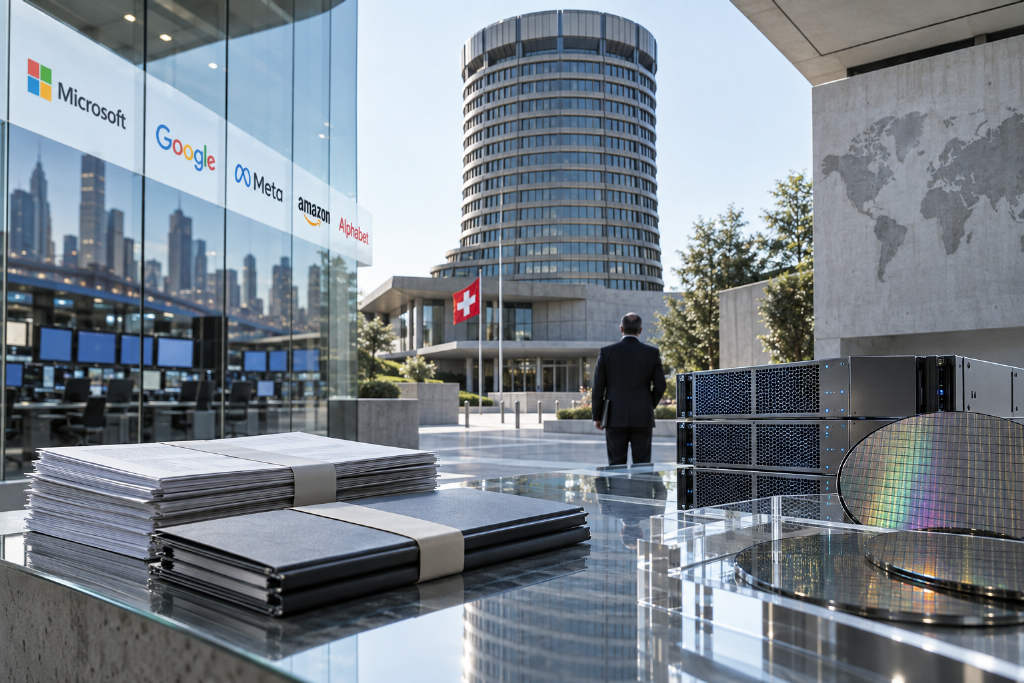
BIS2026-09-10 12:52:31BIS chief warns debt-fueled AI spending boom could threaten financial stabilityBank for International Settlements President Pablo Hernandez said the current surge in artificial intelligence investment is being propelled by opaque debt financing and private credit, creating risks that could spill into the broader financial system if returns fall short of expectations. In a public speech on Thursday, Hernandez did not say an AI bubble is certain to burst, but he argued that the scale and pace of spending, along with aggressive assumptions about future commercial payoffs, warrant caution. The BIS pointed to plans by five major technology companies — Microsoft, Alphabet, Meta, Amazon and Apple — to spend more than $1 trillion on AI-related projects across 2025 and 2026. It also cited data showing global AI investment could rise from roughly $500 billion now to $3 trillion to $4 trillion by 2030. Hernandez said capital expenditure at the largest AI firms has moved beyond cash flow support, with debt and private credit filling the gap. He framed the current cycle against earlier technology manias, including canal building, railway speculation, electrification and the late-1990s dot-com boom, while also highlighting hidden links among chipmakers, hyperscalers and AI startups. The speech said AI itself is not the problem; the core question is whether the size and speed of investment have moved beyond what the economy can absorb.930
UBS2026-09-10 07:02:05UBS CEO says risks are still building while investors grow more complacentUBS Chief Executive Sergio Ermotti said investors have become more complacent over the past few years even as geopolitical and economic risks continue to build. He said markets should be showing greater volatility under current conditions. Ermotti pointed to energy and shipping risks tied to the conflicts involving Iran and Ukraine, along with ongoing global supply chain strain, high inflation, and elevated borrowing costs. He also said heavy investment in artificial intelligence and data centers has supported economic growth, but has not removed the underlying risks. On positioning, Ermotti said UBS clients have recently favored diversification across sectors and regions rather than betting on a single market direction, while continuing to allocate to AI and technology assets. He added that this does not mean capital is broadly leaving the United States or the dollar, which he described as the world’s main reference currency. On rates, Ermotti said the European Central Bank, the Federal Reserve, and the Bank of Japan could all raise rates in the coming months, and warned markets not to expect borrowing costs to quickly return to low levels.840
Federal Reser2026-09-09 06:27:10Claudia Sahm shifts to a September hike call as inflation risks build before the Fed meetingFormer Federal Reserve economist Claudia Sahm has moved from backing a hold to supporting a rate increase ahead of the Fed’s September meeting, arguing that the inflation outlook has become less comfortable even if the latest data have not clearly worsened. Sahm, known for creating the "Sahm Rule," said the Fed could start with a 25 basis point hike in September and raise rates by a total of 50 to 75 basis points by year-end. Her case is built less on a sharp deterioration in current inflation readings than on a growing list of upside risks that could keep price pressures from returning to the Fed’s 2% target over the next one to two years. She pointed to three main risks. First, a prolonged Middle East conflict could keep gasoline and diesel prices elevated long enough for energy costs to feed into transportation and other core prices. Second, trade tensions between the United States and Canada suggest tariff increases may not be over, which could interrupt the recent cooling in core goods inflation. Third, artificial intelligence infrastructure spending may lift demand for memory chips and other components, creating a more persistent, demand-driven source of inflation over the next year. Sahm said her baseline still assumes inflation will continue to ease, but described a modest hike as insurance against the risk that inflation stays above target for longer than policymakers expect.970
US payrolls2026-09-05 02:26:17Strong U.S. payrolls lift September hike odds to about 60% as markets await next week’s CPIU.S. nonfarm payrolls for August came in far above expectations, with 162,000 jobs added, roughly triple economists’ forecasts. The data pushed fed funds futures to price in about a 60% chance of a Federal Reserve rate hike at the Sept. 16 meeting, reviving policy debate after earlier signals from Fed Governor Christopher Waller had briefly pulled hike expectations lower. Markets reacted in a more hawkish direction. The three major U.S. stock indexes all closed lower on Friday, Treasury yields moved higher across the curve, and gold came under pressure. Still, the weekly performance of the S&P 500 and Nasdaq 100 remained positive, suggesting the adjustment triggered by the jobs report has so far been limited. The report also renewed focus on whether AI infrastructure spending and continued credit expansion are helping sustain U.S. economic resilience despite higher borrowing costs. Analysts cited shifts in job creation toward sectors tied to data center construction, equipment supply, and power infrastructure, while warning that next week’s CPI data is likely to become the key test for the Fed’s next move.1180
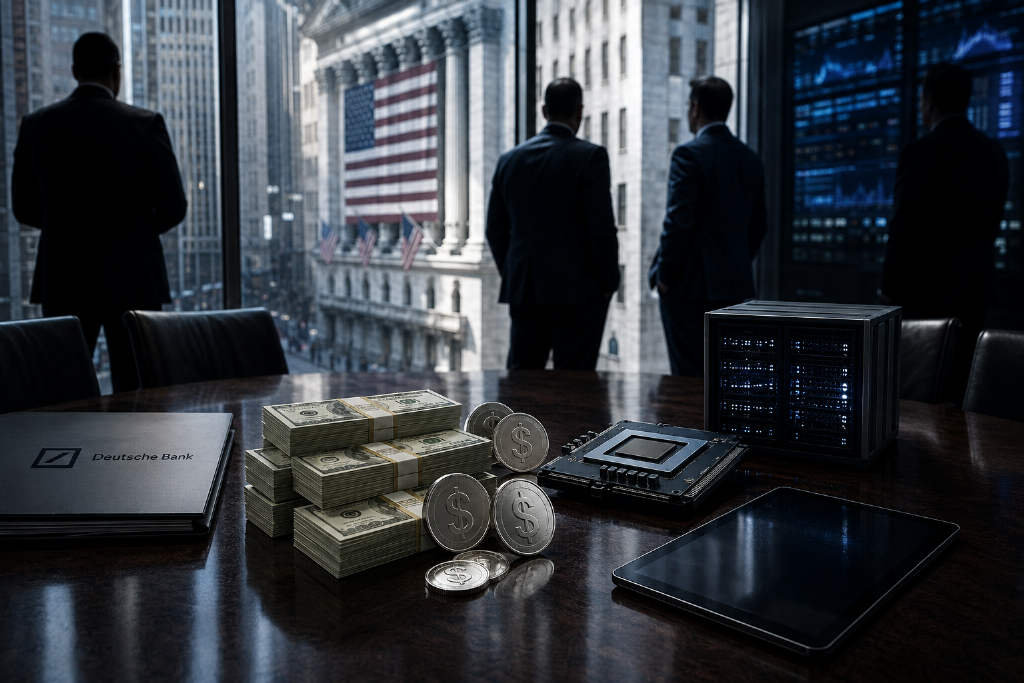
Deutsche Bank2026-09-04 03:01:09Deutsche Bank says the US is tying AI financing and tokenization to the dollar, while raising new risksDeutsche Bank said in a Sept. 3 foreign-exchange report that the United States is mobilizing capital for the AI race on an exceptional scale and linking that effort more tightly to the dollar’s global role. The bank said US companies are expected to spend about $800 billion on AI capital expenditures this year, while AI venture funding has raised more than $400 billion. It also pointed to a sharp jump in investment-grade borrowing by hyperscale technology companies such as Google, Meta, Amazon, and Oracle. The report argues that this financing push is being paired with tokenization infrastructure. DTCC, which holds about $115 trillion in US assets, completed its first tokenized transactions in July 2026 and plans a formal service launch in October 2026. Deutsche Bank also cited SEC no-action relief, exchange-led digital market initiatives, and extended trading plans at NYSE and Nasdaq as part of a broader shift that could widen access to dollar assets. At the same time, the bank said the change in funding sources—from official long-term capital to private, shorter-term technology-driven capital—could leave the dollar more exposed to the success or failure of the AI boom.1150
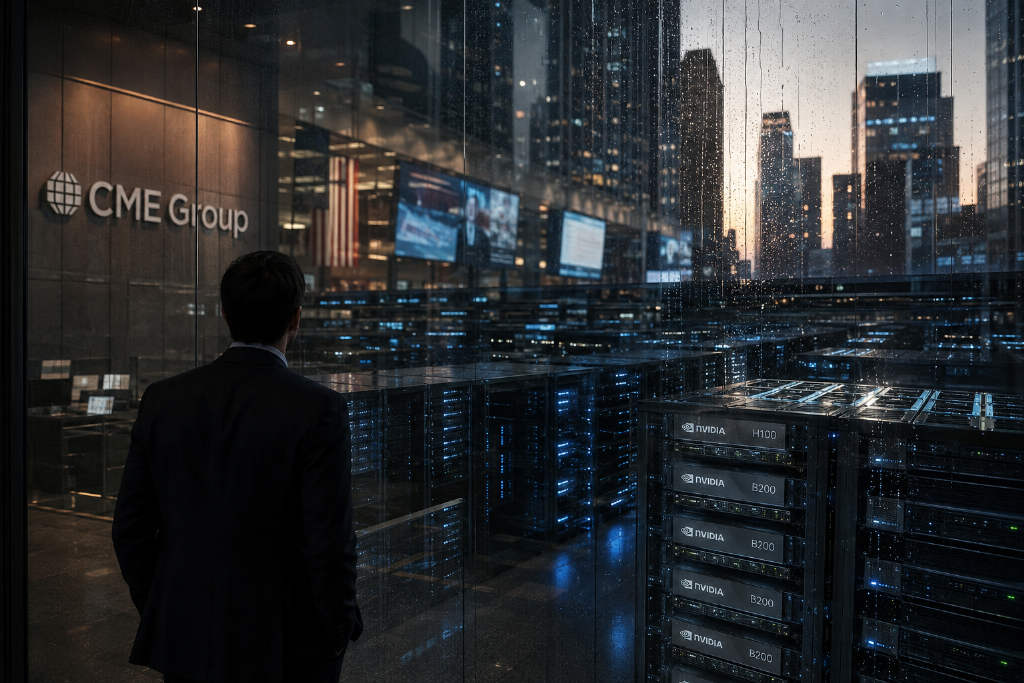
data center c2026-09-03 06:43:09Social Graph VC: Data Center CapEx to Surpass $1 Trillion by 2026, CME to Launch GPU FuturesVenture capital firm Social Graph VC released a primer on the computing market, forecasting that data center capital expenditure will exceed $1 trillion in 2026, roughly double the combined spending of the four major hyperscale cloud providers in 2025. Jensen Huang predicts annual spending could reach $3-4 trillion by the end of the decade and $10 trillion by 2031. AI investment currently accounts for about 0.9% of global GDP, rising to 1.4% by 2028. The training costs for Fable 5 and GPT-5.6 are each around $120 billion, with power consumption below 2 GW. CME plans to list cash-settled H100 and B200 monthly lease futures on NYMEX on October 5, 2026, pending regulatory review, referencing the Silicon Data Index. ICE also announced GPU futures based on the Ornn Index.970