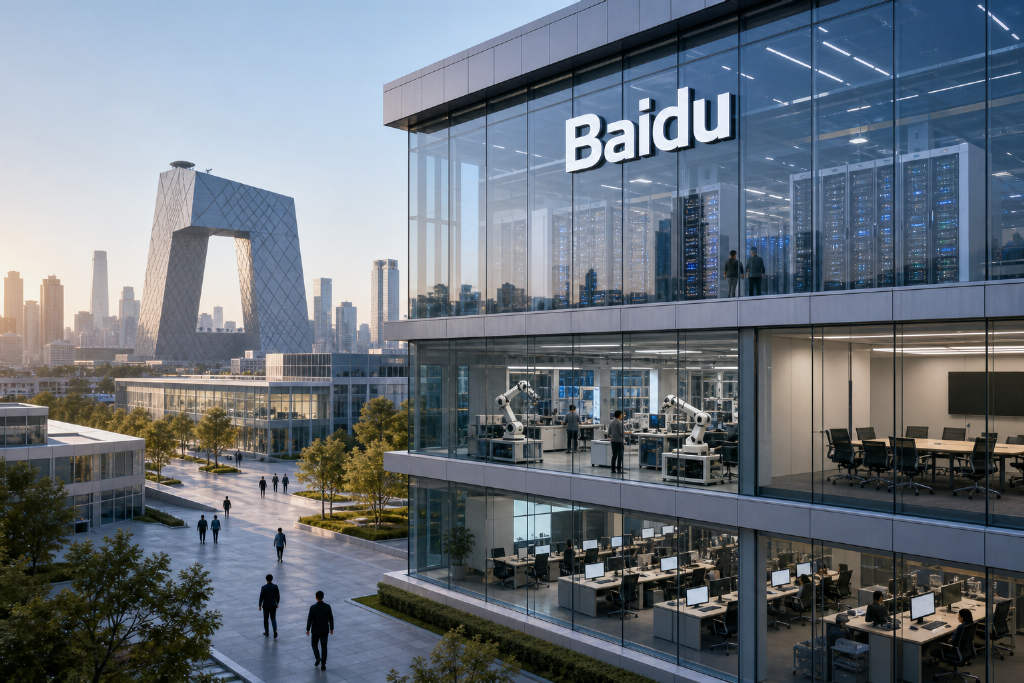
Baidu2026-09-01 11:33:19Baidu CFO Says AI Investment Profit Could Match Traditional Search BusinessBaidu's CFO stated that the company's profit from AI investments could eventually be comparable to its traditional search business profits, signaling a shift toward reducing reliance on search revenue and driving growth through AI.800
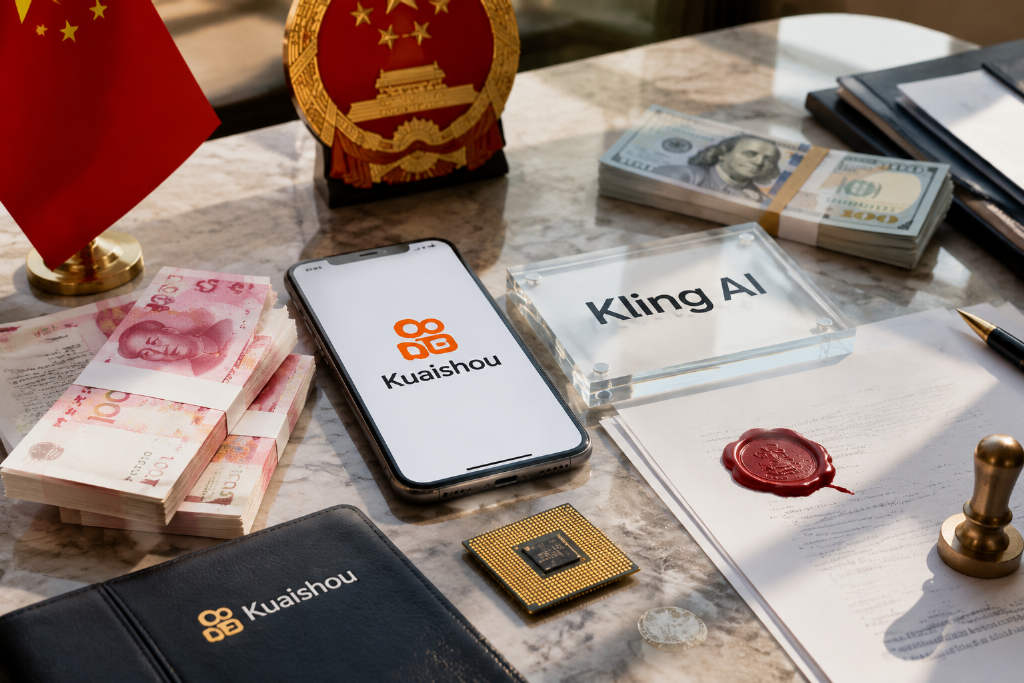
Kling AI2026-09-01 08:32:25National AI Fund Injects 1.4B Yuan into Kuaishou's Kling AIKuaishou's Kling AI has secured an equity investment from a national-level industry fund. According to the official announcement, the National Artificial Intelligence Industry Investment Fund injected 1.4 billion yuan into Beijing Kling, and Zhengda Robot invested approximately $19.29 million, which is equivalent to about 131 million yuan. This transaction marks a follow-up closing of the nearly $3 billion financing plan that Kling disclosed back in July. The same announcement further states that the capital increase ceiling of approximately 20.447 billion yuan, or roughly $3 billion, has been fully used up. After the completion of this round, the National Artificial Intelligence Industry Investment Fund and Zhengda Robot each hold approximately 1.14% and 0.11% stakes, respectively. The fund participating in this round, namely the National Artificial Intelligence Industry Investment Fund, has a total asset scale of around 60.06 billion yuan, and it is controlled by Phase III of the National Integrated Circuit Industry Investment Fund.820
Goldman Sachs2026-08-31 05:03:21Goldman Sachs says AI returns and consumer resilience will dominate its San Francisco internet conferenceGoldman Sachs used its Aug. 25 review of second-quarter earnings in the U.S. internet sector to make a simple point: investors are still willing to fund AI spending, but they are asking much harder questions about timing, payback and margin pressure. The bank said the quarter confirmed three themes across the sector — rising AI investment, resilient digital consumption and a tougher balancing act between growth spending and profit discipline. Internet stocks gained 9% during the period, trailing the S&P 500, which rose 11%. The report also previews Goldman Sachs’ Communacopia technology conference in San Francisco, scheduled for Sept. 8 to Sept. 11. Forty public and private companies are set to appear, with the OpenAI CFO opening the event and executives from Google Cloud, SpaceX and Uber also on the agenda. Across digital advertising, e-commerce, cloud computing, travel, ride-hailing, streaming, gaming, dating and online betting, Goldman said the central debate has shifted from whether companies should invest in AI to how clearly management teams can explain the return profile. In cloud, Google Cloud and Amazon Web Services reported massive backlog growth and ongoing capacity constraints. In consumer-facing internet segments, spending held up, though higher-income and lower-income users are behaving differently.1040
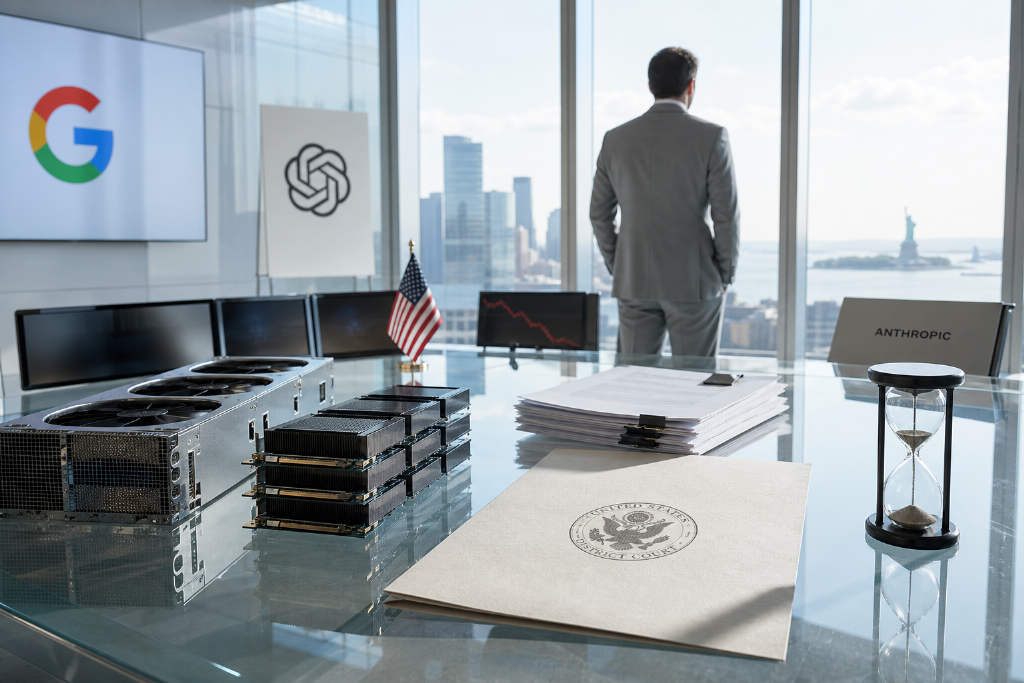
AI investment2026-08-27 08:55:10AI’s capital boom is running into legal risk, debt pressure and a shrinking time windowAn opinion article published by MarsBit and credited to the WeChat account "AI价值官" argues that the current artificial intelligence boom has become a high-stakes capital wager shaped not only by business competition, but also by legal uncertainty, funding pressure and time constraints. The piece points to Leopold Aschenbrenner’s hedge fund Situational Awareness, which allegedly expanded from about $200 million to roughly $45 billion before suffering a reported $35 billion loss in a month after a sharp sell-off in AI-linked memory names such as SanDisk, Micron and SK Hynix. The article also highlights a shift in U.S. legal practice around platform and algorithm liability. It cites the rapid expansion of youth social media addiction litigation, pre-trial settlements involving Snap, TikTok and YouTube, and a jury decision in Los Angeles that found Meta and Google negligent in certain design choices. In the author’s framing, these developments matter for AI because companies may find it harder to shield themselves behind earlier arguments about platform neutrality or algorithmic non-liability. It then turns to spending and balance-sheet strain, listing heavy capital expenditure plans at Google, debt forecasts from UBS, Morgan Stanley and JPMorgan, and long-term funding targets at OpenAI and Anthropic. The article’s core argument is that AI remains deeply dependent on continuous capital inflows, while the clock on profitability keeps ticking.970
Michael Burry2026-08-27 04:08:52Michael Burry adds to Nvidia short before earnings, hedges with December call optionsMichael Burry increased his short position in Nvidia ahead of the company’s earnings release, according to BeInCrypto, while also buying Nvidia call options expiring in December with strike prices in the upper-$200 range as a hedge. Burry said the calls were not a directional bet on a rise in Nvidia shares and that their cost could be covered by his existing short exposure and put-option positions. Burry argues that Nvidia’s relatively low price-to-earnings ratio may mask valuation risks tied to what he sees as the company’s short-term monopoly position. Based on his own valuation work, he believes Nvidia’s theoretical value sits well below the current market price. He also expressed concern that the company may keep expanding capital expenditures and later face pressure to cut earnings expectations if the AI investment cycle peaks. Beyond Nvidia, Burry reportedly opened or increased bearish positions against Oracle, Palantir, Nebius, and Caterpillar. His stock short positions now account for more than 21% of his portfolio, excluding put options.1000
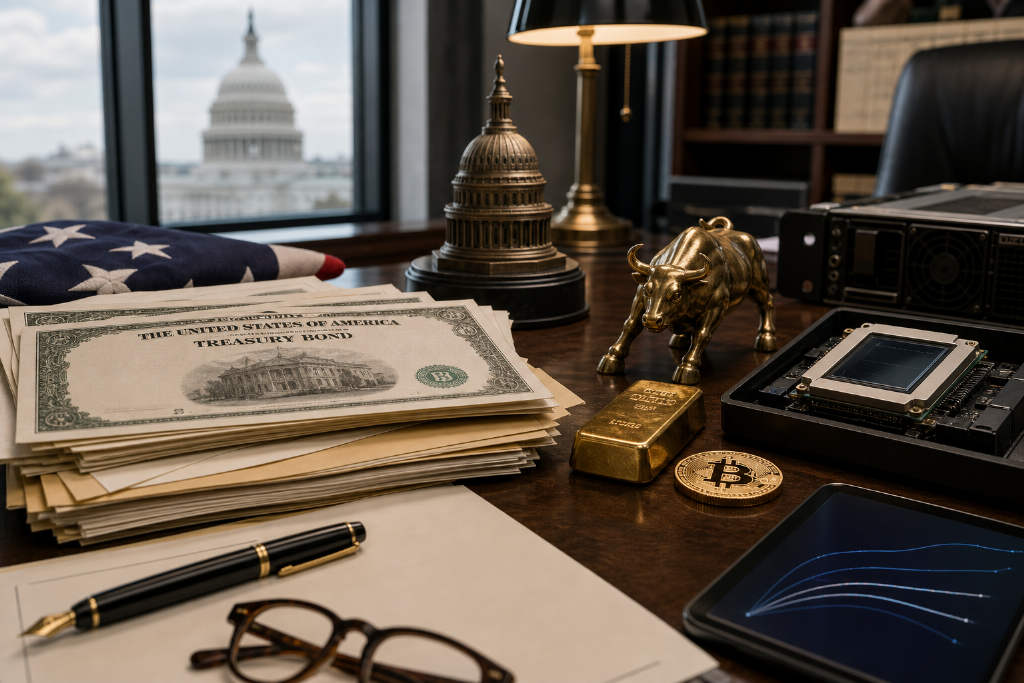
IOSG2026-08-27 00:01:09IOSG Says Washington May Favor Treasuries and AI Over Inflation, Leaving Room for BTC TradeIOSG researcher Momir argues that the key macro price in the US is no longer just the federal funds rate, but the yield investors demand to hold long-dated Treasuries. His view is that Washington is more likely to protect Treasury market stability and the AI investment cycle than force inflation quickly back to target. That choice, he says, would keep liquidity flowing while shifting duration risk away from private balance sheets. The report points to several forces behind higher long-end yields: sticky inflation risk, heavy fiscal supply, thinner marginal demand for duration, and a new competitor for capital in AI infrastructure. As of Aug. 24, the 10-year Treasury yield was around 4.70%, while the 30-year had recently touched roughly 5.23%, near a 20-year high. Momir also highlights Treasury measures such as expanding liquidity-support buybacks and potentially leaning more on short-term bill issuance. In that framework, gold has already moved first, while Bitcoin is starting to look more relevant as a debasement hedge. Momir notes that BTC recently outperformed gold over Aug. 18-24, though he says the move cannot be tied to a single cause because Washington was also advancing crypto legislation in the same week.980
Bitcoin2026-08-26 11:07:08Treasury stress, AI funding demand and inflation: where Bitcoin fits in the tradeMomir of IOSG argues that the key macro price in the US is no longer the federal funds rate, but the yield investors demand to hold long-dated Treasuries. In his view, Washington is more likely to protect Treasury market stability and the AI investment cycle than force inflation lower, even if that means tolerating higher inflation for longer. That setup, he says, creates an ongoing tailwind for gold and potentially for Bitcoin, because it adds liquidity while shifting duration risk away from private balance sheets. The article links the recent rise in long-end Treasury yields to several forces at once: sticky inflation risk, heavy fiscal supply, weaker marginal demand for long duration, and a new competitor for capital in AI infrastructure. It also reviews measures associated with US Treasury Secretary Bessent, including support for yen stability, purchases of less liquid long-end bonds, and the possibility of shifting issuance toward shorter maturities. Momir notes that gold has already responded strongly to this backdrop, while Bitcoin’s case as a debasement hedge remains less settled. Still, he points to Bitcoin’s recent outperformance versus gold during a week that also saw heavier Treasury buybacks and crypto legislation activity in Washington, arguing that if markets start reading the move as a quasi-QE liquidity trade, Bitcoin could keep benefiting.960
US Treasuries2026-08-26 11:02:34US Treasuries, AI and inflation: which side is Bitcoin trading on?Momir of IOSG argues that Washington is more likely to protect the US Treasury market and preserve the AI investment cycle than force inflation quickly back to target. In his view, that trade-off would keep liquidity flowing while shifting duration risk away from private balance sheets, creating a lasting tailwind for gold and potentially for Bitcoin as well. The piece points to rising long-dated Treasury yields as the key macro signal, with the 10-year yield near 4.70% on Aug. 24 and the 30-year recently touching about 5.23%, close to a two-decade high. It links that move to persistent inflation risk, heavy fiscal supply, thinner marginal demand for long duration and new competition from AI infrastructure financing. Momir says recent Treasury measures, including larger liquidity-support buybacks and a possible shift toward more short-term bill issuance, could inject liquidity and revive debasement trades. Gold has already benefited from that setup, he writes. Bitcoin has not fully earned a place in the debasement-hedge basket yet, but its latest outperformance versus gold has made the case harder to ignore.960