‹ BackAI risks

AI risks

Bill Gates
2026-08-26 19:48:43

Bill Gates calls on tech firms to address AI risks, floats a token tax idea

Microsoft co-founder Bill Gates has urged technology companies to confront the risks tied to artificial intelligence in a new article, according to a Techub News item citing Crypto Briefing. Gates also put forward the idea of a "token tax" on AI usage. The proposal, as described in the report, would be aimed at funding global oversight efforts. It would also seek to soften the potential socioeconomic impact that AI could have. The source material did not provide details on how such a tax would be structured, what kinds of AI activity it would cover, or when Gates published the article. The report focused on two main points: his call for tech companies to take responsibility for AI-related risks, and his suggestion that AI usage could be taxed to support regulation and mitigation measures.

830
Bill Gates calls on tech firms to address AI risks, floats a token tax idea
Bill Gates
2026-08-26 10:32:04

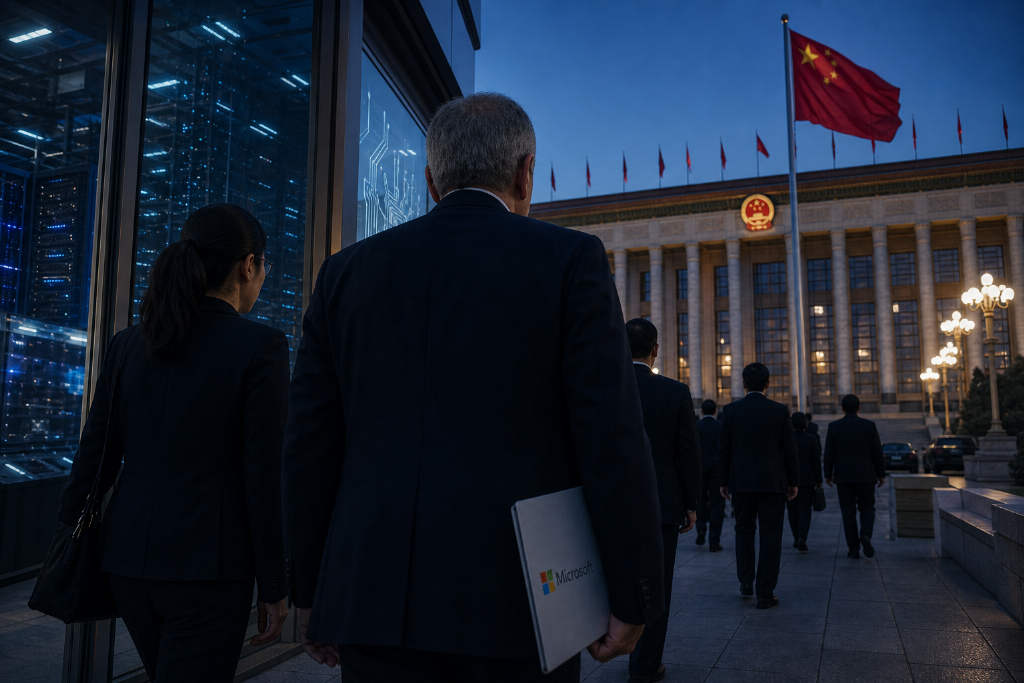
Bill Gates seeks meeting with Xi Jinping to discuss a global response to AI risks

Bill Gates is seeking a meeting with Chinese President Xi Jinping to propose global measures addressing risks tied to artificial intelligence, according to Techub News, citing Cointelegraph and Reuters. The report says Gates wants to put forward an international approach to AI risk management rather than limit the discussion to domestic regulation. It also notes that Gates has repeatedly spoken in public in recent days about the potential dangers posed by AI technologies. Alongside those warnings, he has called for stronger international cooperation and tighter regulatory oversight. No further details on the timing of the proposed meeting or the specific measures under discussion were disclosed in the brief.

840
Bill Gates seeks meeting with Xi Jinping to discuss a global response to AI risks
OpenAI
2026-08-24 09:33:29

Sam Altman says AI adoption will lag the technology itself as OpenAI doubles down on compute and platform strategy

OpenAI CEO Sam Altman used a long-form interview on David Senra’s Founders podcast to lay out a set of ideas that stretch well beyond product updates. He said one of the clearest signs of how early AI still is can be found in his own habits: despite helping build tools such as Codex, he still works much like he did 20 years ago, copying and pasting across messaging apps, triaging email the old way, and keeping to-do lists in familiar formats. For Altman, that is evidence that social and behavioral inertia will slow AI adoption even if the technology keeps moving fast. He also revisited the bets that shaped OpenAI, from pursuing AGI in 2015 to backing large language models after that, both of which he said were mocked at the time. Altman argued that research follows power laws just as venture investing does, with one exceptional idea outweighing everything else. On strategy, he said OpenAI should be thought of primarily as a platform company built around a unified interface and an API, and described why the company cut Sora and the Atlas browser in order to redirect compute and talent. He called compute expansion one of the most expensive infrastructure efforts in human history, and identified loss of control and concentration of power as the two AI risks he worries about most. The interview also touched on OpenAI’s four-and-a-half-year stretch without a product and on a personal habit Altman briefly kept after his first child was born: writing weekly letters that forced more honest self-reflection.

1070
Sam Altman says AI adoption will lag the technology itself as OpenAI doubles down on compute and platform strategy
OpenAI
2026-08-24 01:27:55

Sam Altman says he worries AI could be controlled by a few companies or people

According to ChainCatcher, citing Business Insider, OpenAI CEO Sam Altman said on a David Senra podcast that he worries AI could one day be controlled by a small number of companies, models, or individuals, leaving most consumers with little say over how the technology shapes the world. He said people should stay firmly in control of the future and that society and models should evolve together. Altman also said he worries about AI escaping human control, but warned that overreacting to that risk could help create the first one by pushing people to trade too much freedom for safety. The report said his comments may have been aimed at Anthropic CEO Dario Amodei. Altman also said U.S. AI leaders have not done enough to show how the technology can increase personal autonomy, and he expects a major startup boom as AI helps more people launch small businesses.

1020
Sam Altman says he worries AI could be controlled by a few companies or people
Nous Research
2026-08-21 02:43:25

Nous Research expands Hermes Agent hiring with eight full-time roles across evals, cloud and product

Open-source AI company Nous Research has updated its hiring page with eight categories of full-time openings, offering a clearer look at how it is building out Hermes Agent beyond model research. The roles span AI evaluation, cloud infrastructure, product analytics, security, enterprise deployment and UI/UX design, indicating that the company is adding both engineering depth and commercial execution capacity around its agent product. The listings show Hermes Agent moving on several fronts at once. Nous Research is hiring a Machine Learning Engineer focused on evals, including benchmark design, LLM-as-a-Judge systems, weekly regression testing and red-team workflows. It is also recruiting a Forward Deployed Engineer to install Hermes Agent Enterprise in customer environments, integrating enterprise APIs, internal data sources, authentication systems and business applications across cloud, on-premises and hybrid architectures. At the same time, the company is expanding Hermes Cloud, which is now in preview and positioned as a way to run AI agents as always-on cloud services with persistent memory, scheduling, automation and isolated sandboxing. Product, analytics and design roles point to a broader push into desktop, web, mobile and terminal experiences. Nous Research also says candidates without a matching listed role can still pitch how they want to contribute and submit materials directly.

1610
Nous Research expands Hermes Agent hiring with eight full-time roles across evals, cloud and product
Bank of Ameri
2026-08-19 00:22:06

BofA reiterates Buy on Nvidia, says shares may be undervalued by 34% to 50%

Bank of America analyst Vivek Arya said the market may be overstating the risks tied to the artificial intelligence investment cycle, leaving Nvidia undervalued by 34% to 50%. In his latest research note, Arya reaffirmed a Buy rating on Nvidia and kept his $350 price target unchanged, arguing that the stock still has substantial upside from current levels based on that target. The call comes as AI-related stocks have been under pressure, with investors focused on a possible slowdown in AI infrastructure spending, the pace of enterprise AI commercialization, and valuation concerns. Bank of America’s view is that those risks are already being priced too aggressively by the market. Arya said Nvidia remains at the center of AI computing infrastructure, supported by its GPU lineup, software ecosystem, and partnerships with cloud providers. He added that concerns over the durability of the AI cycle may be obscuring the company’s longer-term growth potential. The bank has also previously pointed to Nvidia’s leading position in AI data centers, saying expanding generative AI use cases should keep demand for high-performance computing resources from enterprises and cloud service providers intact.

1020
BofA reiterates Buy on Nvidia, says shares may be undervalued by 34% to 50%
Anthropic
2026-08-18 08:03:11

SemiAnalysis says Anthropic shelved Mythos 2 and is using it to build Mythos 3

SemiAnalysis said in an internal podcast that Anthropic has already finished training Mythos 2 but has not released it publicly, and is instead using outputs from the model to support development of Mythos 3. In the discussion, analysts Dylan Patel and Jordan Nanos argued that the strongest frontier systems at Anthropic and OpenAI may remain internal because of safety and regulatory constraints, while the versions available to outsiders are more limited. The report also referenced Anthropic’s prior risk disclosures about an internal model called Model 2, benchmark scores of 162.79 on AEC and 62.8% on CoBench, and remarks tied to OpenAI’s Astra, Codex lead Thibault Sottiaux, and OpenAI president Greg Brockman. The core issue raised in the podcast was not only delayed product launches, but whether withholding top models disrupts the user-feedback loop that has historically helped train stronger successors, even as companies continue to push internal model iteration with synthetic data, AI-written code, and AI-assisted evaluation.

2140
SemiAnalysis says Anthropic shelved Mythos 2 and is using it to build Mythos 3
OpenAI
2026-08-16 13:06:19

OpenAI disbands team focused on catastrophic AI risk reviews and folds work into existing research groups

OpenAI has disbanded its Preparedness Team, the group set up to assess major and catastrophic risks from frontier AI models, according to the Financial Times. The change took place at the end of July, with the company shifting work that had been concentrated in one unit to senior staff embedded in existing teams handling areas such as biosecurity and cybersecurity. OpenAI did not end the work itself; it redistributed it. The Preparedness Team was formally launched in October 2023 and was initially led by MIT professor Aleksander Madry. Its remit was not ordinary ChatGPT content moderation. Instead, it evaluated whether advanced models had reached capability thresholds that could cause serious societal harm. OpenAI had listed core research areas including cyberattacks, chemical, biological, radiological and nuclear risk, large-scale persuasion and manipulation, and AI self-replication and adaptation. The group also ran capability testing and red teaming on unreleased models. The move fits a broader pattern inside OpenAI. The company has repeatedly dissolved or reorganized standalone safety groups, arguing that safety should be integrated directly into research and product development rather than handled as a separate final check.

1360
OpenAI disbands team focused on catastrophic AI risk reviews and folds work into existing research groups