ASE

Taiwan stocks
2026-09-22 02:35:01

Taiwan stocks jump more than 880 points to intraday record 48,601 as Wall Street rally and lower oil prices lift sentiment

Taiwan stocks surged in early trading on Sept. 22, with the benchmark index rising more than 880 points and touching 48,601.53, setting a fresh intraday record. The move followed a broad rally in U.S. equities, where the Dow Jones Industrial Average, S&P 500, Nasdaq, and Philadelphia Semiconductor Index all closed higher on Sept. 21. Market sentiment was also helped by comments from Donald Trump, who said he would not rule out meeting Iran’s president during the United Nations General Assembly, a development that fed expectations of easing tensions in the Middle East and pushed oil prices lower. In Taiwan, heavyweight names including Taiwan Semiconductor Manufacturing Co. (TSMC), MediaTek, Delta Electronics, Hon Hai Precision Industry, and ASE Technology Holding all advanced, while electronics components, optoelectronics, semiconductors, and cable-related shares also moved higher. TSMC ADR, ASE ADR, and UMC ADR all gained in U.S. trading, and Taiwan index futures in the night session rose 728 points to 48,781.


100
Taiwan stocks jump more than 880 points to intraday record 48,601 as Wall Street rally and lower oil prices lift sentiment
Meta
2026-09-21 09:07:52

Meta’s Muse revives CPU demand debate as Taiwan supply chain map highlights AMD, Arm and Intel ties

Meta’s Sept. 8 launch of Muse, a personal AI agent built around a dedicated cloud virtual machine for each user, has pushed CPU demand back into focus. ABMedia, citing a CPU industry map compiled by LIWEI_TW Capital, reviewed where dozens of listed Taiwanese companies sit across the AMD, Arm and Intel camps and their related supply chains. The report says AMD currently has the clearest public partner list. The company said on May 21 that it would invest more than $10 billion in Taiwan’s semiconductor ecosystem, expand advanced packaging capacity and partnerships, and start deploying its rack-scale Helios platform in the second half of 2026. Arm’s first in-house data center processor, the Arm AGI CPU, was developed with Meta and is made on TSMC’s 3 nm process. Intel’s Taiwan links are less fully disclosed, though public information points to partners in foundry, packaging, substrates and server manufacturing. The article also stresses that public supply-chain links do not automatically translate into revenue or profit contribution. It breaks the sector into ABF substrates, advanced packaging and server ODMs, noting that each segment has a different earnings profile and risk set. It adds that Muse’s eventual impact on CPU demand still depends on parallel workloads and server procurement details that Meta has not disclosed.

90
Meta’s Muse revives CPU demand debate as Taiwan supply chain map highlights AMD, Arm and Intel ties
AUO
2026-09-21 05:39:53

AUO recoups NT$34.7 billion from three plant sales as TSMC is said to inspect two CTSP fabs and discuss technical cooperation

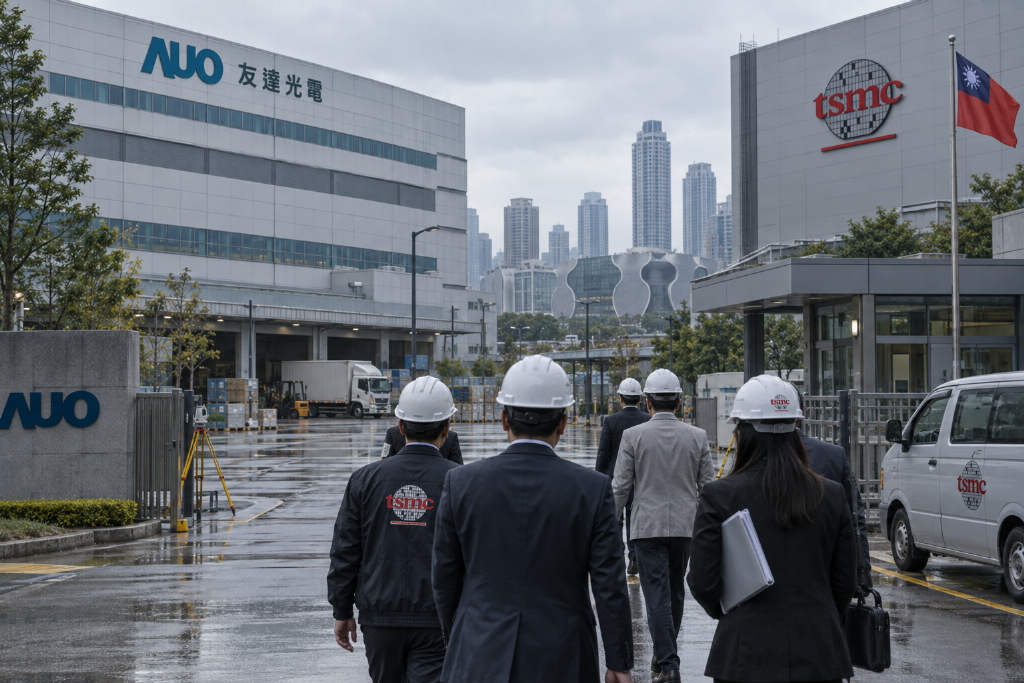
AUO has completed three asset monetization deals this year, bringing in about NT$34.7 billion, according to a report cited in the source material. The transactions include the sale of a Gen 5 fab in Huaya Technology Park to Quanta for NT$19.7 billion, a Gen 5 color filter plant in Kaohsiung’s Luzhu Science Park to ASE for NT$6.3 billion, and the sale of its Singapore AFPD facility to Western Digital for about S$350 million, or roughly NT$8.753 billion. The latest market talk says Taiwan Semiconductor Manufacturing Co. has visited AUO’s L5C and L7A plants in the Central Taiwan Science Park. The discussions are said to cover not only the two facilities but also possible technical cooperation. The report says the two CTSP sites already have cleanroom, power, ultrapure water, and exhaust treatment infrastructure in place, with L7A next to TSMC’s existing CTSP operations and L5C adjacent to L7A. The report also links AUO’s process strengths in large-area substrate thin-film manufacturing, TFT Array production, precision alignment, and uniformity control to possible FOPLP development. Even if talks move ahead smoothly, outside estimates cited in the report say a formal agreement and closing would likely not come before the second half of next year.

70
AUO recoups NT$34.7 billion from three plant sales as TSMC is said to inspect two CTSP fabs and discuss technical cooperation
TSMC
2026-09-21 03:46:36

Kaohsiung’s Baipu semiconductor park breaks ground as TSMC plans advanced packaging validation site

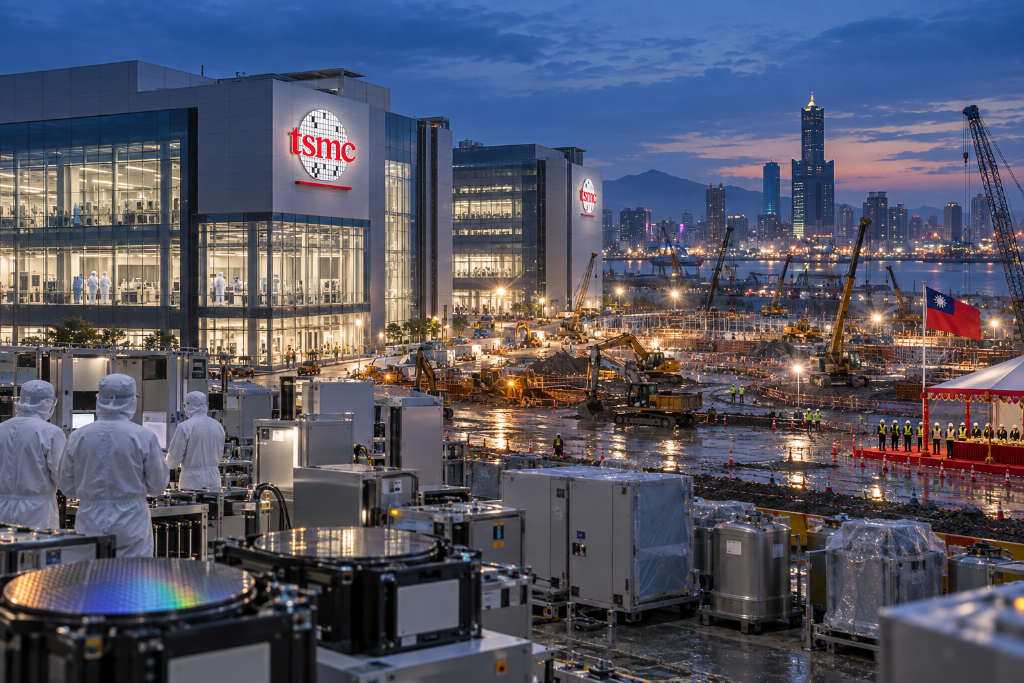
Construction on Kaohsiung’s Baipu Industrial Park began on Sept. 21, with the project positioned as a new node in southern Taiwan’s semiconductor supply chain. The park spans 88.73 hectares across Gangshan and Qiaotou, and about 25 hectares have been reserved for equipment makers and suppliers tied to advanced back-end semiconductor processes. Taiwan Semiconductor Manufacturing Co. (TSMC) plans to build two buildings there and set up a validation line so equipment and materials can complete integration testing before entering mass-production fabs. According to the report, this is the first time TSMC has placed an advanced packaging equipment validation platform outside its production system. The company will use a modular “mini-loop” process verification line, along with scaled-down cleanrooms and labs, to shorten testing cycles that currently can take more than a year. Kaohsiung city officials estimate the park could generate about NT$300 billion in annual output and create roughly 4,500 jobs once fully developed. The first batch of tenant signings, TSMC’s construction progress, and unresolved transport links are now among the main issues being watched by the industry.

50
Kaohsiung’s Baipu semiconductor park breaks ground as TSMC plans advanced packaging validation site
AI Agents
2026-09-20 10:36:26

As AI Agents Move Into Enterprise Networks, Cybersecurity Is Shifting Toward Identity, Data and Runtime

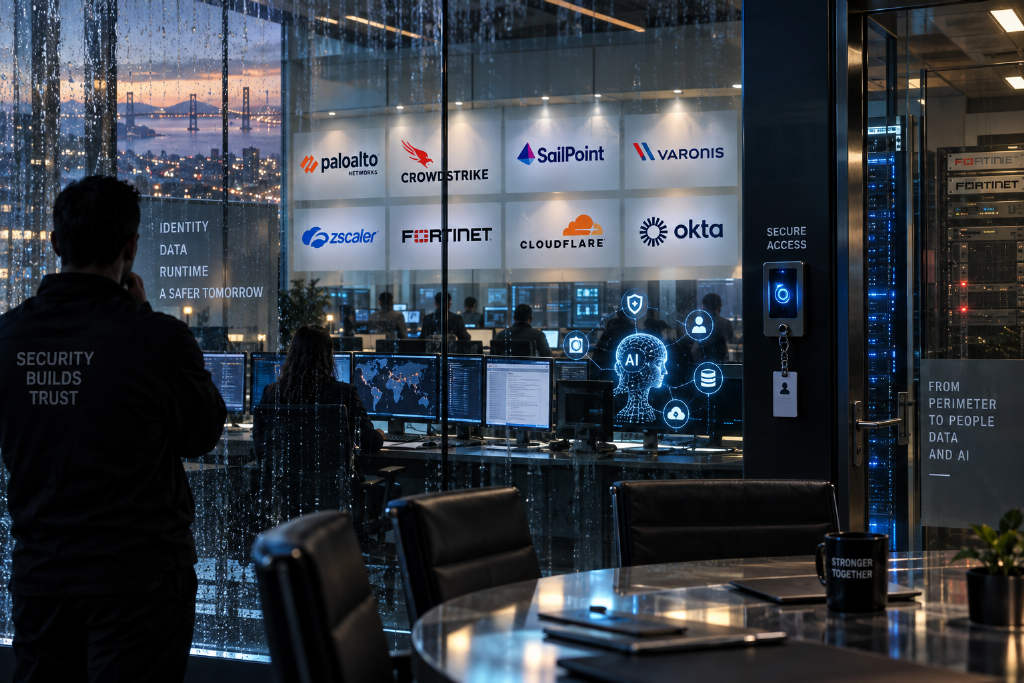
Cybersecurity is being redefined as AI agents move from chat interfaces into enterprise systems with real credentials, tool access and execution authority. The article argues that the old security model—built around people, devices and network perimeters—no longer fully applies when a legitimate agent can still act outside its intended scope because of excessive permissions, tool misuse, prompt injection or logic drift. That shift is pushing the control plane away from the edge and toward identity, data and runtime. The piece groups vendors into three camps. Platform players such as Palo Alto Networks, CrowdStrike and SentinelOne are trying to cover the full chain from models and data to runtime behavior and response. Identity and data specialists including Okta, SailPoint and Varonis are positioned around agent identity, access governance and data visibility. Network and infrastructure names such as Zscaler, Fortinet and Cloudflare are betting that machine-to-app and agent-driven traffic will create a new layer of demand. It also compares recent revenue and ARR figures cited in the source, including Palo Alto Networks’ $3.41 billion quarterly revenue, CrowdStrike’s 26% revenue growth, SailPoint’s AI-driven ARR above $70 million, and Varonis’ 52% SaaS ARR growth before adjusting for conversion effects. The central question is no longer who can tell the best AI story, but who can turn agent-related demand into contracts, net new ARR, profit and cash flow.

190
As AI Agents Move Into Enterprise Networks, Cybersecurity Is Shifting Toward Identity, Data and Runtime
PBOC
2026-09-18 14:43:42

PBOC Deputy Governor Lu Lei warns of AI black-box risks in finance

Lu Lei, deputy governor of the People’s Bank of China, said new-generation artificial intelligence technologies such as large models and AI agents are becoming important tools for improving financial services, while also introducing new risks including algorithmic black boxes and model hallucinations. He made the remarks at the China-ASEAN Forum on Financial Cooperation and Development during a speech on deepening AI cooperation between China and ASEAN in the financial sector. Lu said AI can learn and assess the underlying logic of human behavior, but humans still struggle to see through the internal decision-making process of these systems. He described this gap as an “asymmetry of understanding” between humans and artificial intelligence, and said it could create deeper challenges for the financial industry. His comments also pointed to the importance of security governance as AI adoption in finance expands. The remarks were reported by Financial Times.

260
PBOC Deputy Governor Lu Lei warns of AI black-box risks in finance
SEC
2026-09-18 02:10:00

SEC opens a limited path for on-chain tokenized stocks as ZEC volatility and whale flows dominate Sept. 18 market watch

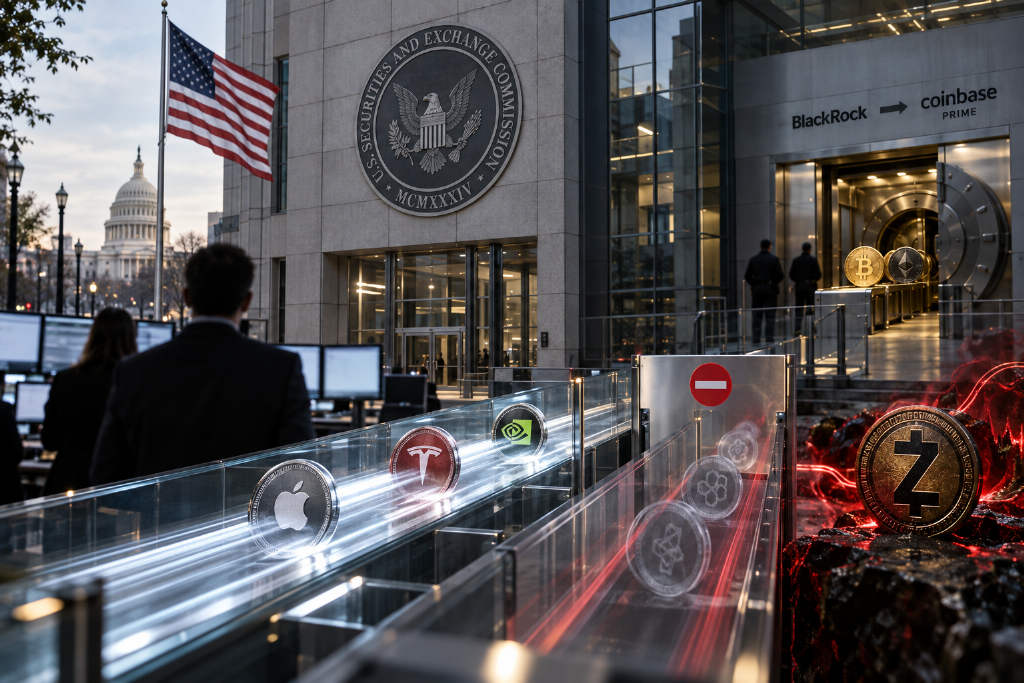
A dense wave of crypto, regulatory and macro headlines hit the market between Sept. 17 and Sept. 18. The U.S. Securities and Exchange Commission approved a temporary, conditional Innovation Exemption that allows limited trading of certain tokenized National Market System stocks on qualifying on-chain venues, while explicitly excluding synthetic products. The move came with strict conditions around issuer notice, investor rights, venue eligibility and sanctions compliance, and drew immediate reactions from SEC officials, Robinhood CEO Vlad Tenev and Uniswap founder Hayden Adams. At the same time, Zcash became one of the market’s most closely watched assets. ZEC briefly moved above $1,500, liquidations topped $65 million over 24 hours, and several newly created wallets withdrew tens of millions of dollars’ worth of ZEC from exchanges. Separate reports tracked a large ZEC long on Hyperliquid, a whale that closed a month-long OKX long for an estimated $8.29 million profit, and a major short seller facing roughly $30 million in unrealized losses. Elsewhere, BlackRock transferred about $285.5 million in BTC and ETH to Coinbase Prime, Zilliqa set Sept. 22 for its second exchange migration hard fork, S&P Global signed a deal to acquire OpenZeppelin, and multiple AI companies, exchanges and infrastructure projects announced product, financing and policy updates.

530
SEC opens a limited path for on-chain tokenized stocks as ZEC volatility and whale flows dominate Sept. 18 market watch
Ethereum
2026-09-15 06:59:09

Ethereum opens Platåberget testnet as Glamsterdam overhaul targets block building and gas pricing

The Ethereum Foundation has opened Platåberget, an early public test network for the upcoming Glamsterdam upgrade, and warned that the changes will break tools that rely on hard-coded maximum gas limits. The release points to a broad redesign across both the consensus and execution layers, including in-protocol proposer-builder separation, mandatory block-level access lists, coordinated gas repricing, and higher limits for deployable contract and initcode sizes. According to the foundation, Platåberget is designed to stay online for several months, giving developers, validators, builders, staking operators, DVT teams, and infrastructure providers time to test before Glamsterdam reaches longer-lived testnets such as Sepolia and Hoodi. The Glamsterdam fork on Platåberget is scheduled for Aug. 20. The gas repricing work is flagged as especially disruptive because it affects wallets, indexers, and gas estimators across the network. The foundation said ordinary ETH transfers will no longer always fit a single 21,000 gas assumption, since transfers to non-existent accounts can now incur additional state gas costs at runtime. It urged developers to use the early window to identify system assumptions that fail under the new model before the upgrade moves closer to mainnet.

510
Ethereum opens Platåberget testnet as Glamsterdam overhaul targets block building and gas pricing