‹ BackCLARITY

CLARITY

ChainFeeds
2026-09-21 02:15:50

ChainFeeds roundup: HYPE lending surge, altcoin rotation calls, and GSR’s warning on low-float token launches

ChainFeeds’ Sept. 21 research roundup pulled together five separate threads shaping the crypto market: Michael Saylor’s argument that the digital asset industry should keep moving without waiting for the CLARITY Act; Hyperliquid’s new lending feature, which drew $269 million in borrowing on day one and gave HYPE a new role as on-chain collateral; Glassnode’s view that Bitcoin has slipped below a key cost basis while fresh capital demand is fading; Bankless co-founder David Hoffman’s call that altcoin season has already begun; and GSR’s long-range review of token launch structures, which found that low-circulating, high-FDV launches have repeatedly produced weak post-listing returns. The report spans regulation, market structure, token design and project-specific momentum. It also includes a separate list of daily headlines, from Uniswap domain claims involving SBF to a ZetaChain vote on moving ZETA to Solana, a TRUMP token transfer to BitGo, and an update on stolen assets tied to the Fetch.ai attacker. Taken together, the roundup offers a snapshot of how policy signals, leverage, liquidity conditions and issuance mechanics are interacting across the crypto market.


210
ChainFeeds roundup: HYPE lending surge, altcoin rotation calls, and GSR’s warning on low-float token launches
Whale Activit
2026-09-21 02:05:00

Crypto and macro roundup for Sept. 20-21: Saudi Arabia exits mBridge, ZETA heads to Solana

A dense set of crypto, AI and macro developments emerged between Sept. 20 and Sept. 21. Saudi Arabia’s central bank said it is no longer part of the mBridge cross-border central bank digital currency project, adding that the move was not tied to pressure from the United States. In the U.S., Coinbase Derivatives filed a rulebook tied to planned single-stock perpetual futures, but the proposed $100 billion market-cap threshold would exclude Coinbase itself, along with Strategy and smaller crypto-linked equities. On-chain activity also drew attention: meme trading platform gmgn moved 23,550 BNB in fee revenue to Pionex over the past week, the TRUMP team shifted another large batch of tokens to BitGo, and a whale that had previously sold ETH at a profit bought back $20 million worth of Ether from Binance. Elsewhere, Token Unlocks flagged a heavy week ahead for XPL, H, SOSO and several other tokens, while ZetaChain governance approved a proposal to migrate ZETA to a native Solana SPL token on a 1:1 basis. The update stream also included a revised Staked SEI ETF filing from Canary Capital, comments from CZ on how he runs his X account, confirmation that Vitalik Buterin will speak remotely at ETHShanghai 2026, and new projections from Wall Street banks that U.S. Treasury bill issuance could reach roughly $1 trillion over the next year.

250
Crypto and macro roundup for Sept. 20-21: Saudi Arabia exits mBridge, ZETA heads to Solana
Michael Saylo
2026-09-20 06:07:28

Michael Saylor says crypto should use today’s regulatory opening instead of betting on the CLARITY Act

Michael Saylor argued that the crypto industry should not treat the final version of the CLARITY Act as the only path forward, especially if the compromise text locks in new restrictions. In his view, the better route is to use the authority that already exists at the U.S. Securities and Exchange Commission, the Commodity Futures Trading Commission, the Treasury Department and banking regulators to push real products into the market now. Saylor pointed to the September CLARITY compromise text as a warning sign. He said it would restrict service providers from paying rewards to customers who simply hold payment stablecoins, while also allowing limits on some reward structures if the Treasury determines community banks face large and harmful deposit outflows. He also criticized the bill’s innovation sandbox, which would cap participating firms at 25 employees and limit each regulatory committee to approving 20 projects a year. He contrasted that with recent regulatory moves already underway. Saylor cited the SEC’s conditional exemptive relief on September 17 for certain on-chain trading of tokenized stocks, comments from SEC Chair Paul Atkins about letting markets develop before writing permanent rules, and CFTC Chair Michael Selig’s pledge to use existing authority if CLARITY stalls. He said the industry should spend 2027 and 2028 scaling useful products, turning temporary relief into durable rules, and building a user base large enough to defend financial choice politically.

310
Michael Saylor says crypto should use today’s regulatory opening instead of betting on the CLARITY Act
Policy and Re
2026-09-21 00:35:29

CLARITY Act stalls as DOJ and FBI bring insider trading case tied to Hyperliquid and Robinhood

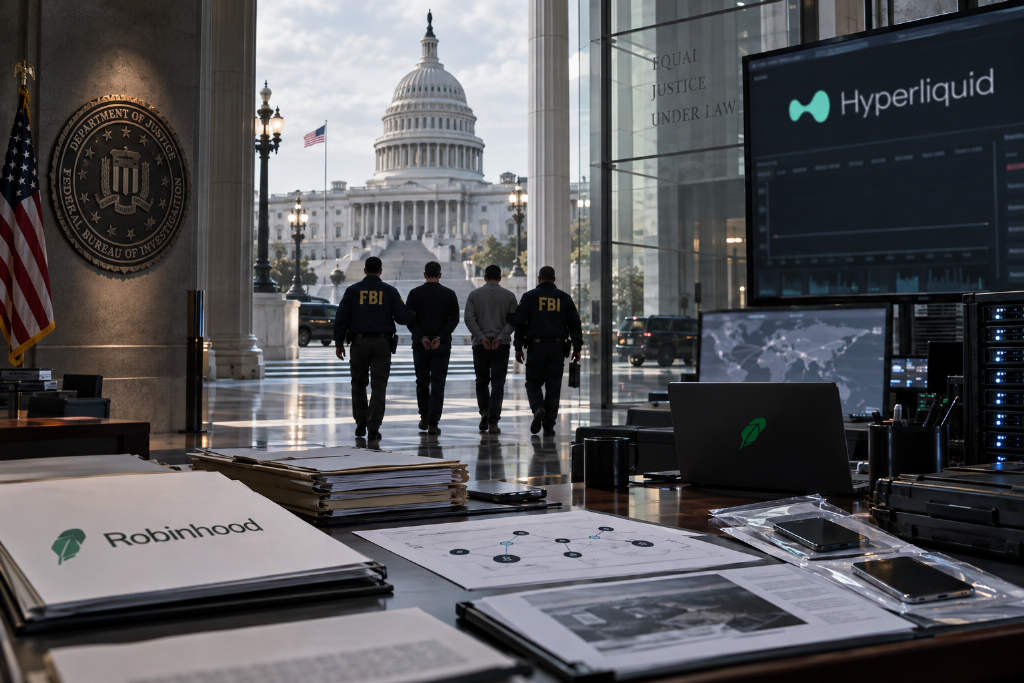
Two major U.S. crypto developments landed on Sept. 15, 2026, but they moved on separate tracks. In Washington, the Senate failed to advance H.R.3633, the Digital Asset Market Clarity Act, after a 49-50 cloture vote, leaving a formal market structure bill stuck. The same day, the U.S. Department of Justice said federal prosecutors in the Southern District of New York had unsealed criminal complaints and charged two former Robinhood engineers, Hefu Chai, 36, and Huaisong "Jerry" Xiang, 30. Prosecutors allege the two men used confidential token listing information obtained through their jobs to open perpetual futures positions on Hyperliquid before Robinhood publicly announced the listings, then closed those positions around the launch window for profit. The DOJ said each made more than $50,000 in illegal gains. Both defendants were charged with one count of commodities fraud under the Commodity Exchange Act and one count of wire fraud. The case stands out because the alleged trading took place on a decentralized derivatives venue. Public filings show investigators relied on Robinhood documents, internal communications, interviews, public Hyperliquid trading data, and records from crypto companies. The official record does not confirm a widely repeated claim that Robinhood’s internal surveillance system automatically flagged the activity. It does show how on-chain records, once linked to exchange accounts and company records, can become part of a federal fraud case.

410
CLARITY Act stalls as DOJ and FBI bring insider trading case tied to Hyperliquid and Robinhood
Policy Regula
2026-09-20 23:37:39

US Senate stalls CLARITY as SEC and CFTC move ahead, while Standard Chartered sees ARB at $10 by 2030

The US Senate failed to advance the Digital Asset Market Clarity Act after a cloture motion drew 49 votes in favor and 50 against, short of the 60 needed. Republican Senator Thom Tillis later said his “no” vote was procedural, leaving open the possibility of another vote, though time on the congressional calendar appears limited. In the gap left by stalled legislation, the US Securities and Exchange Commission rolled out a five-year exemption for limited trading of tokenized US stocks on decentralized public blockchains, while the Commodity Futures Trading Commission offered relief for passive software providers connecting users to regulated derivatives venues and submitted draft crypto rules to the White House. Separately, the House Financial Services Committee passed the American Reserve Modernization Act of 2026, which would put a Strategic Bitcoin Reserve into law, and the House Ways and Means Committee advanced the Digital Asset Tax Certainty Act. Outside Washington, Revolut faced a second ransom demand tied to stolen customer passport and KYC selfie data, Chainalysis reported a 420% rise in onchain malware-related activity over 12 months, and Standard Chartered said Arbitrum could reach $10 by 2030, implying roughly 70x upside from current levels.

330
US Senate stalls CLARITY as SEC and CFTC move ahead, while Standard Chartered sees ARB at $10 by 2030
CLARITY bill
2026-09-20 19:22:17

XRP community splits after CLARITY bill setback, with some posts pushing $1,000 price talk

Techub News, citing a post from @EleanorTerrett, said her social media feed on the day was filled with arguments over who should be blamed for the CLARITY bill’s failure. The same feed also carried speculative claims that XRP could rise to $1,000. The post pointed to a clear split in sentiment inside the crypto community after the bill vote. One side focused on assigning responsibility for the failed legislation, while another amplified aggressive price expectations around XRP. The update did not provide further details on the vote itself or on any market data, but it highlighted how discussion around the bill quickly spilled into broader community debate and token-price speculation.

230
XRP community splits after CLARITY bill setback, with some posts pushing $1,000 price talk
Coinbase
2026-09-20 17:13:27

Coinbase CEO says short-term failure of CLARITY Act could benefit the U.S.

Coinbase Chief Executive Officer Brian Armstrong said the CLARITY Act failing to pass in the short term may actually be better for the United States. In his view, the delay gives the crypto industry more time to build stronger infrastructure and hold deeper discussions with regulators. The comment was cited by Stocktwits and carried by Techub News. Armstrong’s remarks frame the legislative setback not as an immediate loss, but as extra time for the sector to prepare its foundations before any new framework takes hold. The statement did not include a timeline for the bill or further details on the legislative process, but it pointed to two areas Armstrong sees as important during the pause: infrastructure development and engagement with regulators.

150
Coinbase CEO says short-term failure of CLARITY Act could benefit the U.S.
Cynthia Lummi
2026-09-20 15:04:54

Lummis says CLARITY Act included audit requirement for crypto projects raising over $25 million

Senator Cynthia Lummis said Democrats had previously pushed to require crypto projects that raise more than $25 million from the public to provide audited financial statements, and that the provision was written into the CLARITY Act. She also said Democrats later voted against advancing the bill. Earlier, on Sept. 15, the Senate held a procedural vote on moving the CLARITY Act forward, but the measure did not pass. The remarks frame the audit threshold as part of the bill’s earlier requirements while highlighting the failed effort to advance it in the Senate.

200
Lummis says CLARITY Act included audit requirement for crypto projects raising over $25 million