CPU

NVIDIA
2026-08-03 16:06:00

NVIDIA posts Vera storage benchmark, with CRC checks up to 3.67x faster than x86 comparison

NVIDIA has released storage benchmark results for its Vera CPU, saying the NVIDIA BlueField-4 STX storage processor delivered higher performance than a comparison x86 CPU across several storage-heavy tasks tied to AI-native infrastructure. According to the company, the strongest gain came in CRC32C integrity checking, where performance reached up to 3.67x that of the x86 comparison system. Reed-Solomon data recovery improved by up to 3.26x, compression by up to 3.29x, decompression by up to 1.72x, and a combined compression-plus-encryption storage pipeline by up to 3.21x. NVIDIA also reported gains of up to 1.43x for AES-128 encryption and 1.29x for AES-128 decryption. The company said the benchmarks reflect a shift in AI infrastructure as AI agents handle knowledge retrieval, tool use, long-term memory management, and larger context windows. In that setting, storage is no longer limited to basic reads and writes, but becomes part of the inference path itself, with encryption, compression, validation, and recovery tasks adding pressure to CPUs. NVIDIA said Vera is designed to raise throughput per unit of CPU resource so storage systems can support more AI agent workloads without materially increasing infrastructure costs.


600
NVIDIA posts Vera storage benchmark, with CRC checks up to 3.67x faster than x86 comparison
NVIDIA
2026-08-03 16:04:54

NVIDIA says Vera BlueField-4 STX lifts AI storage performance by as much as 3.67x

NVIDIA has released new benchmark results for its Vera BlueField-4 STX storage processor, saying the company’s Vera CPU-based AI-native storage platform posted clear gains over traditional x86 CPUs across a range of storage tasks. According to NVIDIA, the tests covered encryption, compression, data integrity checks, and recovery workloads that are becoming more demanding as AI agent applications scale and storage systems handle enterprise knowledge bases, long-term memory, KV cache, tool-call data, and model outputs. In the benchmark figures disclosed by the company, AES-128 encryption throughput improved by as much as 1.43x and decryption throughput by up to 1.29x. Reed-Solomon recovery reached up to 3.26x, CRC32C data integrity checks rose by as much as 3.67x, compression throughput increased by up to 3.29x, and decompression performance improved by as much as 1.72x. NVIDIA also said overall throughput in a combined compression-and-encryption storage pipeline improved by as much as 3.21x. The company said Vera CPU uses its in-house Olympus core architecture with 88 Armv9.2-compatible CPU cores, 176 threads, Scalable Coherency Fabric, and a SOCAMM2 LPDDR5X memory system, with up to 3.4 TB/s of interconnect bandwidth and up to 1.2 TB/s of memory bandwidth.

590
NVIDIA says Vera BlueField-4 STX lifts AI storage performance by as much as 3.67x
NVIDIA
2026-08-02 08:57:13

NVIDIA rolls out Video Codec SDK 13.1 with zero-copy transcoding and frame-level search

NVIDIA has released Video Codec SDK 13.1, adding a set of video encoding and decoding upgrades for developers. The update includes AV1 hierarchical reference mode, a zero-copy transcoding architecture, frame-level precise search, enhanced hardware decoding statistics, and a new Docker development environment. According to NVIDIA, the release is aimed at improving performance and efficiency in AI video processing, streaming, and large-scale content delivery workflows. On the decoding side, SDK 13.1 adds per-macroblock decoding statistics for H.264 and H.265, while avoiding extra CPU parsing overhead. NVIDIA said demand continues to rise for high-quality video streaming, generative AI video tools, remote collaboration, and content distribution at scale. The company said the new SDK is designed to help developers build video processing pipelines that are more efficient, lower in latency, and easier to scale.

690
NVIDIA rolls out Video Codec SDK 13.1 with zero-copy transcoding and frame-level search
AI
2026-08-01 01:34:02

Big Tech Q2 results show AI demand is strong, but investors are losing patience with capex

U.S. tech earnings in late July 2026 delivered a consistent message across Alphabet, Intel, Microsoft, Meta, and Apple: revenue and profit largely beat expectations, and AI-related businesses kept growing faster than the companies around them. That was not enough to guarantee a positive market reaction. Investors focused less on whether demand for AI infrastructure still exists and more on when record spending on servers, data centers, and related capacity will convert into durable free cash flow. Alphabet posted strong top-line growth and surging Google Cloud revenue, but its sharply higher capital spending plan and first-ever quarterly negative free cash flow as a public company weighed on the stock. Intel also beat expectations, yet enthusiasm faded as investors reassessed its higher spending outlook. Microsoft stood out on the other side. Azure annual revenue topped $100 billion for the first time, and the company cut its calendar 2026 capex expectation while saying it still expects positive free cash flow in fiscal 2027. Meta delivered solid ad growth, but shrinking profitability, weak free cash flow after heavy capex, and a higher spending outlook triggered the harshest selloff of the group. Apple reported record June-quarter revenue and profit, only to see its shares slide on softer-than-expected guidance and supply constraints tied to chips and memory. Taken together, the quarter suggests Wall Street is no longer rewarding AI spending by default. It is asking for a clearer return path.

600
Big Tech Q2 results show AI demand is strong, but investors are losing patience with capex
Core Scientif
2026-07-30 11:19:23

Core Scientific lands 15-year AMD deal tied to AI data center capacity worth over $14 billion

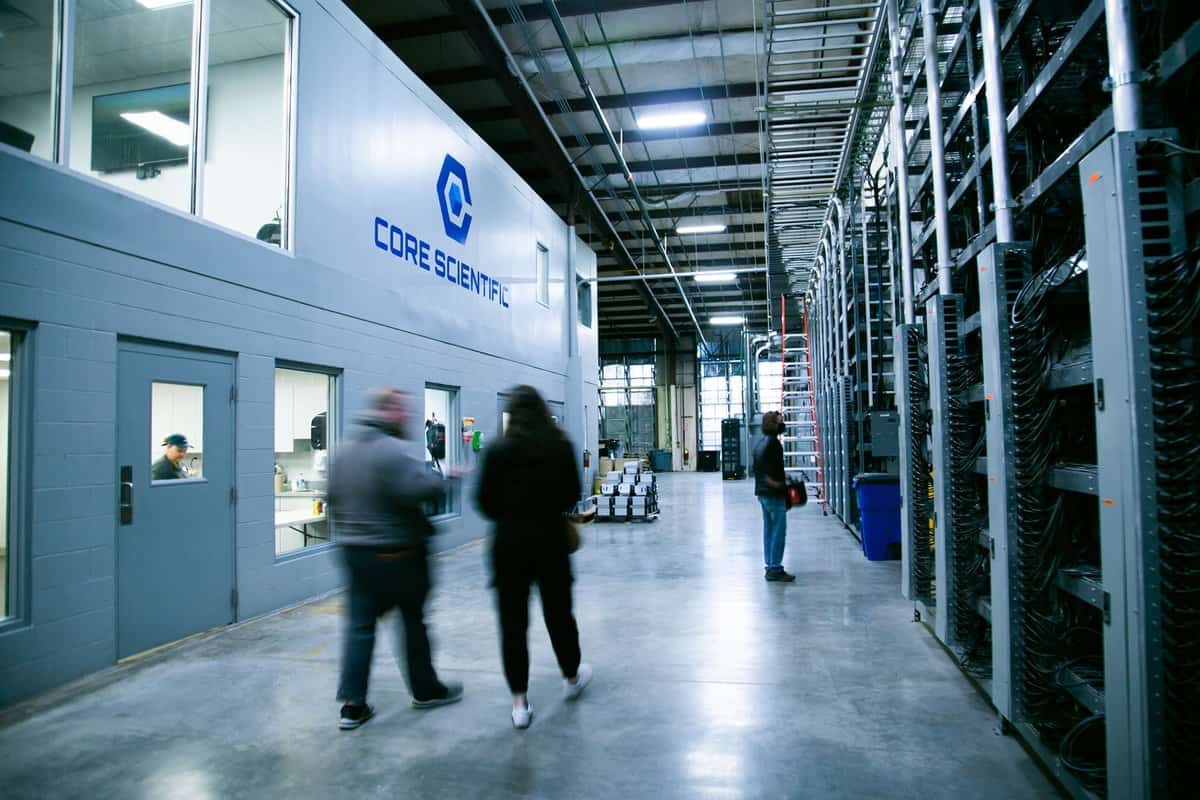
Core Scientific, the U.S.-listed crypto mining company, has entered a long-term partnership with AMD that could reshape its business around AI infrastructure. Under the agreement, AMD can access up to 2.5 gigawatts of Core Scientific data center capacity to support deployments of AI solutions for end customers. The first phase is scheduled to begin in 2027 with 500 megawatts of capacity coming online. The deal includes an initial 15-year base contract covering five sites with a combined 530MW. Core Scientific said that portion alone is expected to generate more than $14 billion in revenue. The companies will also work together on physical data center design and on the deployment of AMD Instinct GPUs, EPYC CPUs, and ROCm software. AMD will receive warrants to purchase Core Scientific common stock at market price. The announcement highlights Core Scientific’s shift away from its roots as a Bitcoin miner. The company had faced bankruptcy pressure in 2022 and had previously said it planned to liquidate its Bitcoin holdings in the first quarter of this year. After the news, Core Scientific shares rose about 6% in premarket trading, while AMD fell about 4% before the open and ended the session down 8%.

660
Core Scientific lands 15-year AMD deal tied to AI data center capacity worth over $14 billion
Semiconductor
2026-07-30 04:42:48

Kerman Kohli argues AI compute demand remains open-ended despite a 30%-40% semiconductor selloff

Semiconductor and AI-linked stocks have dropped 30% to 40% from their highs, but Kerman Kohli argues the pullback does not settle the debate over whether the buildout has gone too far. In a Substack post cited by BlockTempo, Kohli says the real question is whether demand for compute is finite or effectively unlimited. He points to demand coming from four groups — governments, scientists, enterprises and individuals — and says each has a different willingness to pay for access to compute. A central data point in his case is the rise in hyperscaler compute order backlog from $500 billion to $2 trillion in roughly 1.5 years. He also argues public cloud pricing shows why hyperscalers have strong incentives to keep adding capacity, describing cloud customers as deeply locked into ecosystems such as GCP and AWS. To illustrate pricing, he compares a self-built $15,000 AI inference machine with Google Cloud pricing, estimating a 4.6-month payback period at on-demand rates and about 10 months under a three-year commitment. Kohli also says open-source models do not eliminate the need for high-end hardware, noting that SOTA systems still require substantial memory and serving capacity. He frames AI compute as a recursive category of demand, where useful applications create the need for still more compute, rather than behaving like a conventional infrastructure cycle.

750
Kerman Kohli argues AI compute demand remains open-ended despite a 30%-40% semiconductor selloff
Microsoft
2026-07-30 02:01:31

Microsoft’s Q4 beat puts Azure growth and AI spending returns back in focus

Microsoft posted a stronger-than-expected set of fourth-quarter results for fiscal 2026, easing part of the market’s anxiety around whether heavy artificial intelligence spending is producing acceptable returns. Revenue came in at $90 billion, up 18% year over year and ahead of the $87.73 billion consensus, while operating income rose 18% to $40.6 billion. Azure and other cloud services revenue increased 43%, beating both the company’s prior 39% to 40% guidance and a bullish 41% market view. The report also showed that Microsoft is still spending aggressively. Total capital expenditure reached $41 billion in the quarter, up about 69.4% from a year earlier and 28.5% from the prior quarter. Even so, operating cash flow climbed 30% to $55.4 billion, and free cash flow remained positive at $19.6 billion. Management said Azure growth was helped by new capacity coming online, 31 new data centers activated during the quarter, and better efficiency across chips, servers, software scheduling and models. For fiscal 2027 first quarter guidance, Microsoft expects revenue of $89.85 billion to $90.95 billion and Azure growth of about 45% at constant currency, above optimistic market expectations. The company also said AI monetization is now coming not only from Azure, but also from Microsoft 365 Copilot, GitHub, Security and Business Applications.

650
Microsoft’s Q4 beat puts Azure growth and AI spending returns back in focus
helium
2026-07-29 03:21:09

China’s helium export ban puts a neglected semiconductor material back in focus

China’s July 10 ban on helium exports has drawn fresh attention to a material that rarely makes semiconductor headlines but remains essential to advanced chipmaking. Helium is used in plasma etching, leak detection, purge processes and thermal management inside fabs, with electronic-grade helium requiring purity as high as 99.9999%. The move comes as the global helium market has tightened sharply in 2025. According to the source material, Qatar’s Ras Laffan industrial hub — a major global helium production center — was hit by attacks that halted output and damaged export capacity, while roughly 200 liquid-helium containers were stranded in the Middle East. Russia has shifted helium exports outside the Eurasian Economic Union to a government licensing regime starting in April 2026, and the US previously sold off its federal helium reserve. China remains heavily dependent on imports. In 2025, the country’s total helium supply was about 5,818 tons, including 4,913 tons of imports and around 905 tons of domestic output, implying external dependence of 84.4%. Against that backdrop, Beijing said the export ban was aimed at securing domestic supply. The episode also highlights China’s slower but ongoing push to produce high-purity helium from LNG boil-off gas, even though local self-sufficiency remains below 20%.

830
China’s helium export ban puts a neglected semiconductor material back in focus