CPU

Meta
2026-08-08 10:34:59

Meta’s AI crawlers sent 9.1 billion requests in Q2 as WebIndexer surged and developers reported server strain

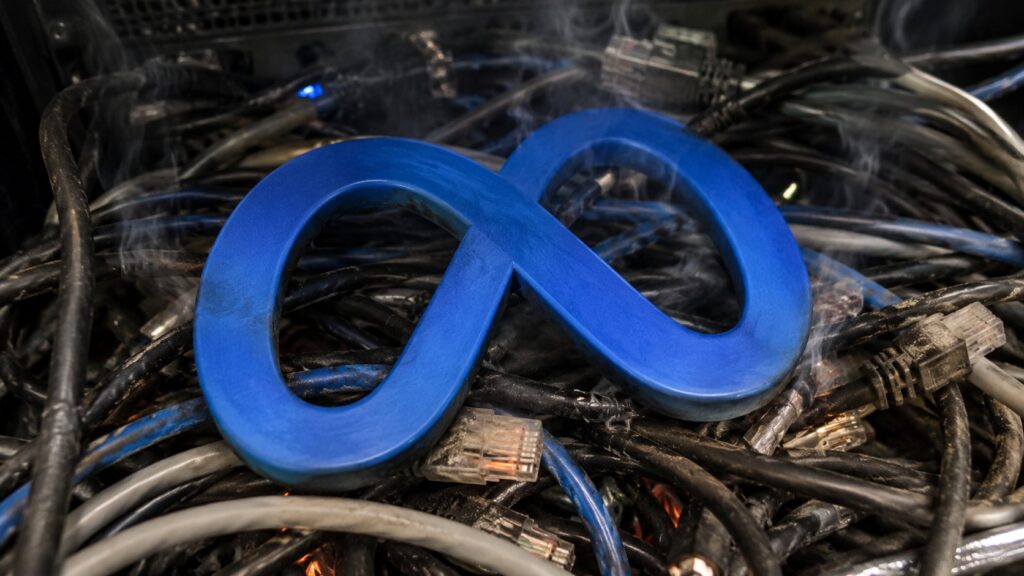
Meta’s web crawling operation expanded sharply in the second quarter of 2026, according to DataDome, with its two AI crawlers generating a combined 9.1 billion requests across the security firm’s network. The jump put Meta ahead of other AI agents tracked in the report and marked a notable shift in how the company appears to be gathering web data. One crawler, Meta-ExternalAgent, is used for model training and rose from 3.1 billion to 5.3 billion requests quarter over quarter. The other, Meta-WebIndexer, is tied to search indexing and climbed from 1.4 billion to 3.75 billion requests, a 163% increase. In June 2026, WebIndexer’s monthly volume surpassed ExternalAgent for the first time, suggesting Meta’s focus has moved toward building a live index rather than only collecting training data. Independent developer Pieter Levels said on X that Meta had been hitting all of his websites with “very very very high” levels of crawling, enough to trigger a load-average alert on one VPS. He also said Meta was requesting his url2og screenshot service, indicating that the crawler activity was not limited to text pages. DataDome said Meta’s crawlers drove little real traffic back to the sites they scraped, while ChatGPT accounted for 88% of AI referral traffic in the same report. The article also points to earlier reporting that Meta has been building its own search database since 2024 in an effort to reduce reliance on Google and Microsoft Bing.

590
Meta’s AI crawlers sent 9.1 billion requests in Q2 as WebIndexer surged and developers reported server strain
Kimi K3
2026-08-08 06:24:42

2.78T-Parameter Kimi K3 Runs on 8GB RAM via Open-Source C99 CPU Engine

An open-source project called kimi-k3-in-c aims to run Kimi K3, a model with 2.78 trillion parameters, on devices with just 8GB of memory. The 176KB codebase is written in pure C99 and performs inference on the CPU only, dropping GPU, CUDA, PyTorch, and BLAS entirely. The approach exploits Kimi K3's MoE architecture: only 16 of the 896 experts per layer are activated, so the developer avoids loading the full ~1.56TB of weights and instead streams most expert weights from NVMe storage on demand. Dense trunk layers are streamed layer by layer as well. Trade-offs remain: generating one token takes about 32.7 seconds, and close to 1.7TB of fast storage is needed. The developer describes the project as an experimental exploration of LLM inference infrastructure rather than a production-ready solution, but the combination of hard-drive streaming and sparse MoE activation points toward new ways to run ultra-large models at low cost.

870
2.78T-Parameter Kimi K3 Runs on 8GB RAM via Open-Source C99 CPU Engine
South Korea P
2026-08-08 04:44:32

Analyst says Korean PCB makers posted strong Q2 results, with SOCAMM seen as a new growth driver

Citrini analyst Jukan said on Aug. 8 that South Korean PCB and package substrate makers could extend their strong second-quarter momentum into Q3, with earnings expectations continuing to improve. He cited Daeduck Electronics, Simmtech, and TLB as examples. Daeduck Electronics reported Q2 revenue of 401 billion won, up 63% year over year, while operating profit jumped 3,599% to 70.3 billion won. Simmtech posted revenue of 514.6 billion won, up 51%, and operating profit of 62.9 billion won, up 1,035%. TLB recorded revenue of 88.2 billion won, up 38%, with operating profit rising 86% to 12.8 billion won. Jukan said Daeduck’s strength lies in FC-BGA, FC-CSP, and multilayer PCB products used in AI data centers. He described Simmtech as focused on package substrates and memory module PCBs, while TLB supplies PCBs tied to server DDR5 and enterprise SSDs. He also said a shift in BT substrate orders to Korean suppliers, along with rising SOCAMM demand tied to Nvidia’s next-generation Vera Rubin GPU and Vera CPU shipments, could support the next leg of growth.

820
Analyst says Korean PCB makers posted strong Q2 results, with SOCAMM seen as a new growth driver
Winbond
2026-08-07 07:02:35

Winbond targets top global SLC NAND supplier spot by 2027 as DRAM shortages stretch on

Winbond said DRAM supply will remain tight through 2027 and could get even tighter next year, while some customers are already discussing long-term supply agreements for 2029 and 2030. The company also outlined a plan to become the world’s largest SLC NAND supplier by 2027, backed by capacity expansion in Kaohsiung and a shift to 16nm. Analysts say the market is underestimating SLC demand tied to CMX and CXL-based AI server expansion.

380
Winbond targets top global SLC NAND supplier spot by 2027 as DRAM shortages stretch on
Morgan Stanle
2026-08-07 04:02:47

Morgan Stanley Keeps Overweight on DDOG, SNOW and MDB, Warns Expectations Risk Is Building

Morgan Stanley said in an Aug. 6 research note that accelerating growth at the three major cloud providers has improved the demand backdrop for Datadog, Snowflake and MongoDB ahead of earnings, but rising expectations now pose a separate risk. The bank kept Overweight ratings on all three names. The note said combined second-quarter growth for AWS, Microsoft Azure and Google Cloud rose to 48% from 39% in the first quarter, marking a fifth straight quarter of acceleration. AWS grew 37%, its fastest pace in 18 quarters. Azure grew 43%, while Google Cloud grew 82%, with management saying growth still accelerated even excluding the TPU systems revenue impact. Morgan Stanley argued that AI spending is increasingly feeding into core infrastructure demand. At the same time, it said valuations already price in a large share of the bullish case. For Datadog, market expectations for second-quarter revenue growth have climbed to 35% to 36%. Snowflake is seen benefiting from AWS strength, while MongoDB faces a tougher competitive setup as Microsoft’s managed PostgreSQL revenue grew about 55% for a third straight quarter of acceleration. The bank set price targets of $300 for DDOG, $300 for SNOW and $380 for MDB.

200
Morgan Stanley Keeps Overweight on DDOG, SNOW and MDB, Warns Expectations Risk Is Building
Market Analys
2026-08-06 13:44:00

Interconnect Moves to the Top of the Bottleneck Stack as HBM and Memory Hierarchies Face Repricing

A PANews analysis argues that August 4, 2026 marked a turning point for the memory industry. On the same day, SK hynix and SanDisk introduced the first standard for high-bandwidth flash, or HBF, at FMS 2026, while TrendForce reported that Nvidia was evaluating lower HBM configurations for Rubin Ultra. The article says those two developments point in the same direction: the core constraint in AI infrastructure is shifting away from on-package memory alone and toward interconnects across chips, packages, racks, and systems. The piece traces that shift through Nvidia’s Vera Rubin launch, NVLink 6 bandwidth gains, Spectrum-X CPO shipments, Intel’s EMIB-T packaging push, TSMC’s reported work on an EMIB-like approach, and the emergence of UCIe-linked memory tiers such as HBF. In that framework, optical and electrical interconnects sit at the top of the stack, advanced packaging becomes the physical foundation, HBM remains essential but less open-ended from an investment perspective, HBF represents a new category aimed at inference-era capacity pressure, and CXL memory pooling remains an option for later years. Rather than framing this as a broad “memory bull market,” the article’s main point is that value inside the storage empire is being redistributed as the bottleneck migrates.

950
Interconnect Moves to the Top of the Bottleneck Stack as HBM and Memory Hierarchies Face Repricing
Policy Regula
2026-08-06 04:13:00

Dow Hits Another Record Close as Tech Slips, Gold Breaks Above $4,300

U.S. markets split sharply overnight as the Dow Jones Industrial Average rose 0.49% to log a third straight record close, while the Nasdaq fell 0.83% and the S&P 500 slipped 0.17% under pressure from weaker technology shares. Gold was the standout move, with spot prices jumping more than 4.2% in a single session, the biggest daily gain in five months, reclaiming the 50-day moving average and breaking above $4,300 an ounce for the first time since June 18. Bloomberg analyst Cameron Crise said the move ran far outside traditional models and pointed to concentrated CTA short-covering around the $4,200 level, combined with reduced long positioning by managed funds. Central bank buying remained a key support, with World Gold Council data showing record net purchases in the second quarter, including 51 tons by Poland and 33 tons by China. In equities, Nvidia rose 3.43% for a fifth straight gain, but AMD, Google and SpaceX fell sharply. SanDisk and Western Digital also dropped after hours as strong reported results were overshadowed by softer-than-expected forward guidance tied to elevated expectations for the AI storage cycle.

650
Dow Hits Another Record Close as Tech Slips, Gold Breaks Above $4,300
SpaceX
2026-08-05 02:41:00

SpaceX tops Q2 estimates, but shares fall 8% as investors focus on xAI weakness and lock-up expiry

SpaceX reported stronger-than-expected second-quarter results, with revenue reaching $7.814 billion, up 92% from a year earlier, and net loss narrowing to $541 million. Starlink subscribers doubled to 12 million, while the company’s AI segment posted a 247% revenue jump and positive adjusted EBITDA. Still, the stock fell 8% after earnings as investors looked past the headline beat and focused on structural concerns. Much of the AI revenue came from capacity leasing deals with Anthropic, Google and Reflection AI, while SpaceX’s own xAI business showed weak monetization. Grok had 117 million monthly active users in March, but only 1.9 million paid for SuperGrok. The company’s longer-term projects also remain under pressure: its space data center plan is still awaiting FCC approval, and delays tied to Starship have pushed the first crewed lunar landing to Artemis IV, targeted for early 2028. Attention is also turning to a major lock-up expiry on Aug. 6 involving about 911.5 million shares worth more than $100 billion.

520
SpaceX tops Q2 estimates, but shares fall 8% as investors focus on xAI weakness and lock-up expiry