CPU

Goldman Sachs
2026-08-10 15:34:00

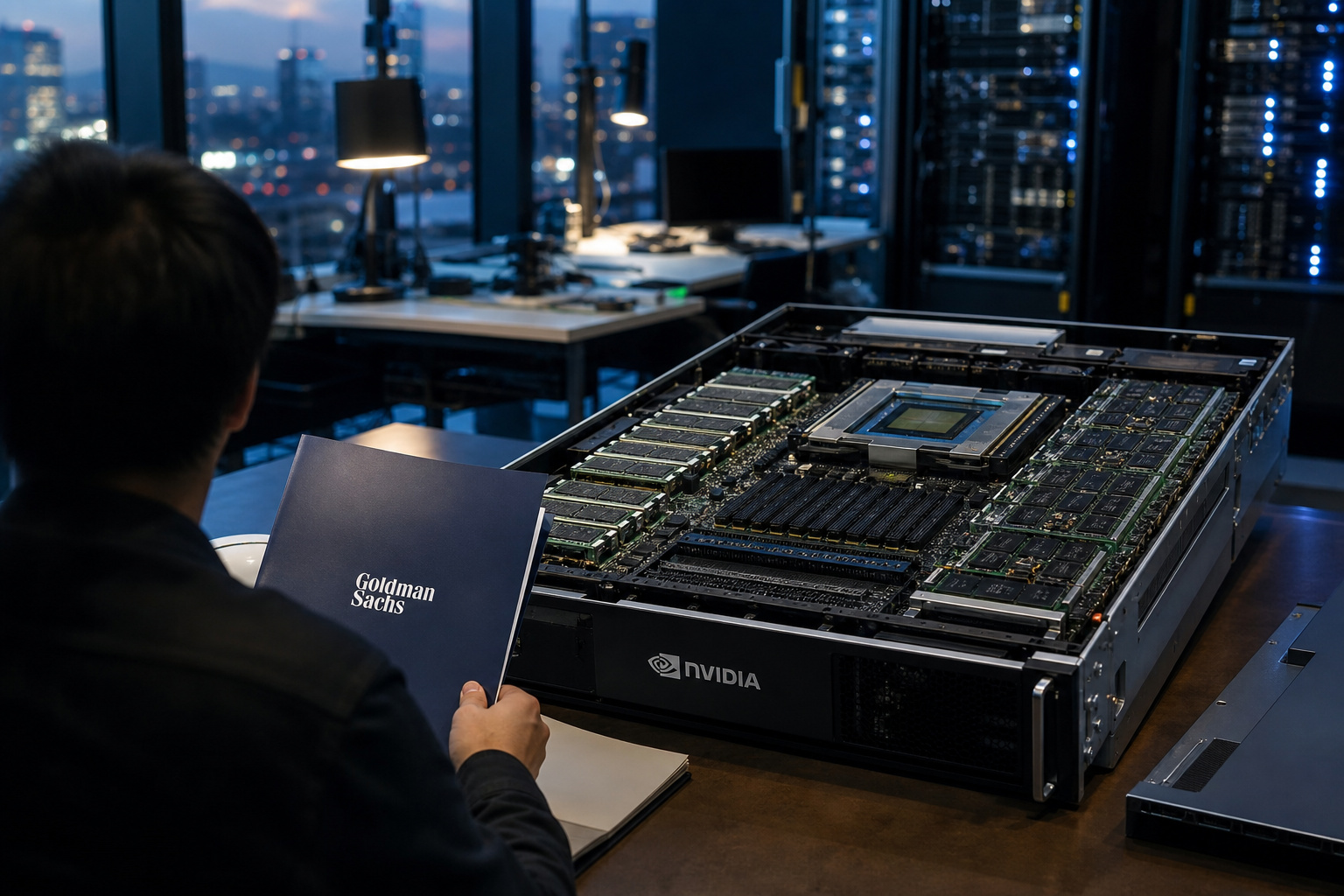
Goldman Sachs says memory could account for about 62% of Nvidia Vera Rubin BOM

Goldman Sachs said in a report dated Aug. 10 that memory components are expected to make up about 62% of the bill of materials for Nvidia’s next-generation Vera Rubin superchip. Citing Goldman’s analysis, ZeroHedge said the cost share of SOCAMM2 memory modules on the CPU side of the Vera Rubin platform is notably higher than that of HBM4 high-bandwidth memory on the GPU side. Goldman had already noted in May that as demand for AI infrastructure keeps rising, memory is becoming a key part of the hardware cost structure for AI servers. The latest note adds to that view by pointing to the growing weight of high-performance memory in next-generation AI computing platforms and the rising importance of the memory segment across the AI chip supply chain.

660
Goldman Sachs says memory could account for about 62% of Nvidia Vera Rubin BOM
Bitcoin
2026-08-10 08:56:23

BIP-110 falls behind Bitcoin main chain as debate shifts from soft fork to possible PoW change

Bitcoin entered the BIP-110 enforcement window at block height 961632 on Aug. 9, creating a live split between the main chain and a minority chain run by nodes enforcing the proposal. Those nodes began rejecting non-compliant blocks, including ones carrying non-monetary data transactions. But after a day, the BIP-110 chain had produced only blocks 961632 and 961633 and trailed the main chain by more than 200 blocks, leaving it far from the longest-chain consensus. The outcome matched the weak support seen before activation. Miner signaling was only about 2%, well below the 55% threshold cited in the article. Even so, supporters led by Bitcoin developer Luke Dashjr have continued discussing a new proof-of-work algorithm for the BIP-110 chain, a move that would take the dispute beyond a soft fork and into hard fork territory. In Bitcoin Knots Discord discussions, participants considered options including RandomX, KT256, BLAKE3, BLAKE2 variants, Scrypt and Autolykos v2. The fight has now widened into a governance dispute over whether miners, nodes or the broader community determine Bitcoin’s direction. Critics including Michael Saylor, Adam Back and F2Pool co-founder Wang Chun rejected the BIP-110 case, while proposal author Dathon Ohm and Dashjr argued that large mining pools had forced the chain into this position.

6890
BIP-110 falls behind Bitcoin main chain as debate shifts from soft fork to possible PoW change
SpaceX
2026-08-10 07:33:00

SpaceX Rallies After 912 Million Shares Unlock as Investors Focus on AI Chip Push

SpaceX shares rose 24.5% over two trading days even after roughly 912 million shares held by early employees were unlocked, a move that sharply increased the stock’s tradable float. The jump came just one day after SpaceX and Tesla said they would invest $16.8 billion in Texas to build Terafab, a massive AI chip manufacturing complex aimed at serving more than 1 terawatt of computing demand across Elon Musk’s business ecosystem. At the same time, SpaceX and Nvidia are advancing the Starmind project, which would place computing infrastructure in orbit through next-generation Starlink satellites and dedicated platforms using Rubin GPUs and Vera CPUs. SpaceX’s second-quarter results added fuel to the debate: revenue reached $7.814 billion, adjusted EBITDA hit $3.538 billion, and backlog climbed to $47.5 billion, all above Wall Street expectations. AI revenue alone totaled $2.56 billion for the quarter, doubling from the prior quarter. Still, the company spent $18.37 billion in capital expenditures during Q2, with more than $15.8 billion going to AI infrastructure and chip development, pushing net cash outflow to $15.96 billion. With more unlocks scheduled through December, investors are weighing strong growth and a shifting valuation story against mounting supply and cash burn.

640
SpaceX Rallies After 912 Million Shares Unlock as Investors Focus on AI Chip Push
memory chips
2026-08-10 05:49:15

Memory makers are rewriting the cycle with long-term contracts, but the real test comes after 2028

Samsung Electronics, SK hynix and Micron Technology have all posted record quarterly results, yet their shares have pulled back over the past month as investors question whether the memory sector is heading toward the familiar boom-bust pattern of rising prices, aggressive capacity additions, oversupply and collapse. Public disclosures and comments from executives suggest this cycle is different in one important way: spending is rising, but the new capacity is being directed mainly toward AI products such as HBM and server DRAM rather than broad-based expansion across end markets. At the same time, the three suppliers are shifting away from quarterly pricing and into three- to five-year supply agreements that include floor prices, take-or-pay commitments, prepayments, deposits and, in some cases, minimum revenue guarantees. Micron has disclosed 16 five-year strategic customer agreements, while Samsung said it plans to place 60% to 70% of capacity under multi-year contracts. Industry researchers and company executives cited in the report expect supply tightness to extend through 2027 and potentially into 2028, with EUV delivery times and wafer reallocation to HBM limiting near-term relief. The article also points to a second layer of change after 2028: how quickly new capacity arrives, whether long-term contracts can keep earnings stable even if spot prices soften, and how much influence CXMT and domestic Chinese suppliers gain in consumer DRAM, LPDDR and eventually HBM-related manufacturing chains. Those factors, rather than the current price spike alone, may determine whether the sector truly breaks from its historical “death spiral.”

940
Memory makers are rewriting the cycle with long-term contracts, but the real test comes after 2028
BIP-110
2026-08-09 21:07:58

BIP-110 Minority Chain Stalls; Supporters Weigh PoW Algorithm Switch

The BIP-110 minority chain ground to a halt after producing only blocks 961632 and 961633 following its fork at block height 961632. It inherited roughly 127.48 trillion in Bitcoin difficulty but attracted almost no SHA-256d hashpower; pre-fork miner support was around 0% to 2.6%. Supporters are now discussing changing the proof-of-work algorithm to break reliance on Bitcoin miners and SHA-256d hashing. Luke Dashjr has proposed selecting the final algorithm from a shortlist via a deterministic random process, with RandomX, KT256, BLAKE3 and Scrypt among the options. No PoW change has been enabled or approved yet, Bitcoin Knots has not committed to any adjustment, and the chain has still not resumed block production.

630
BIP-110 Minority Chain Stalls; Supporters Weigh PoW Algorithm Switch
AWS
2026-08-09 07:53:34

AWS CEO says Trainium works with Nvidia systems and is not being sold as a standalone product

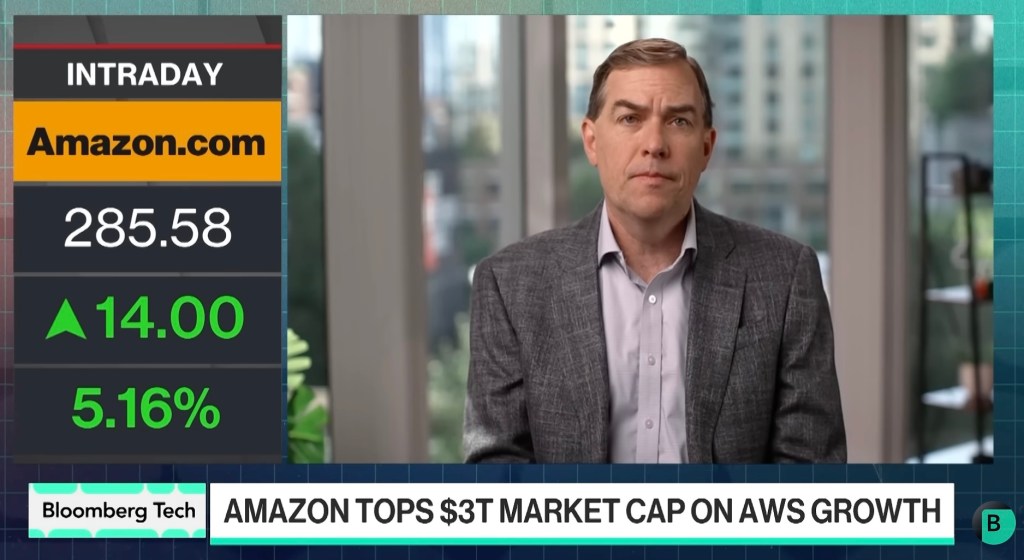
Amazon Web Services is leaning on a mixed AI infrastructure strategy that combines Nvidia GPUs with its own Trainium ASICs and Graviton CPUs, according to comments from AWS CEO Matt Garman in an interview with Bloomberg. Garman said the approach gives enterprise customers more precise ways to allocate computing power while managing operating costs, and he tied that model to AWS’s ability to keep winning customers and support Amazon’s sales performance. Garman also said AWS’s annualized AI revenue has reached $25 billion, with demand coming from industries including finance, healthcare, and media. The business spans model training, inference, and agent workloads. To keep up, AWS plans to continue investing in cloud infrastructure and signing long-term agreements with customers. On custom silicon, Garman said AWS had considered selling its in-house chips externally, but the company’s current priority is using Trainium and Graviton inside its own cloud infrastructure. For now, AWS does not plan to offer either chip as a standalone product for outside buyers. The report also noted that custom chip development has become a broader trend across major cloud service providers, including Google Cloud, Microsoft Azure, and Meta.

610
AWS CEO says Trainium works with Nvidia systems and is not being sold as a standalone product
OpenAI
2026-08-09 03:17:07

OpenAI executive says Codex-style harness tools may look primitive in two to three months

An OpenAI executive is signaling that the current generation of AI agent tooling may have a short shelf life. Thibault Sottiaux, OpenAI’s general manager for product and platform and the executive cited as overseeing ChatGPT and Codex, said Codex could look like a primitive tool in another two to three months. The remark points to a shift already visible in agent engineering: local, laptop-based harness setups are running into hard limits as models take on longer reasoning, more autonomy, and heavier parallel workloads. The article argues that today’s harness layer — covering context management, tool use, state persistence, environment isolation, and recovery — is being stretched by next-generation demands. It lists three pressure points: constrained local CPU and memory when agents run many subtasks at once, the impracticality of keeping laptops online for jobs that can last hours or days, and the difficulty of handling large-scale context compression, state sync, and centralized logging across many concurrent agents. It also points to early infrastructure responses. Codex already supports asynchronous cloud execution, while providers such as E2B, Daytona, Fly.io, and Modal are building cloud micro-sandbox environments for AI agents. The piece says teams at OpenAI, Anthropic, and Cognition are moving their focus from prompt tuning to system-level harness design, and cites Anthropic’s February demonstration of 16 Claude instances working across 2,000 cloud sessions to build a C compiler.

630
OpenAI executive says Codex-style harness tools may look primitive in two to three months
AI Storage
2026-08-08 14:13:52

IOSG says AI storage boom is being priced for speed, while decentralized storage keeps its case around trusted cold data

IOSG argues that the current storage rally is being driven by artificial intelligence, but not in the way traditional IT buyers used to think about storage. In its view, the market is no longer rewarding raw capacity first. It is rewarding the ability to keep GPUs fed, move checkpoints quickly, support retrieval-augmented generation with very low latency, and raise overall compute utilization across tightly coupled infrastructure stacks. That shift, the article says, is why components such as HBM, DRAM, CXL, enterprise SSDs, SSD controllers, NVMe pathways, and performance storage software have become central to the AI investment narrative. The piece draws a sharp distinction between AI storage and decentralized storage. AI storage is framed as an efficiency system built for hot data and commercial output. Decentralized storage, by contrast, is described as a trust system for cold data, focused on permanence, censorship resistance, auditability, and public memory. IOSG uses Filecoin and Arweave as the main examples, outlining how the two networks diverge in architecture and product direction, while also listing persistent problems across the sector, including weak enterprise service layers, retrieval limits, supply-demand incentive mismatches, privacy and compliance tensions, and token economics that can amplify market cycles rather than solve product-market fit.

610
IOSG says AI storage boom is being priced for speed, while decentralized storage keeps its case around trusted cold data