Cronos2026-09-08 03:22:03Cronos CEO: 100% of App Revenue to Be Used for CRO Buyback and Burn; App Launch in 10 DaysCronos CEO Ryan Wyatt announced on Twitter that the team will release eligibility rules for token launchpad projects to list on Crypto.com within this week. The Cronos application is scheduled to go live in 10 days. A tokenomics proposal suggests using 100% of the application's revenue for CRO buyback and burn. This update provides clarity on the token launchpad eligibility, application launch timeline, and tokenomics changes.820
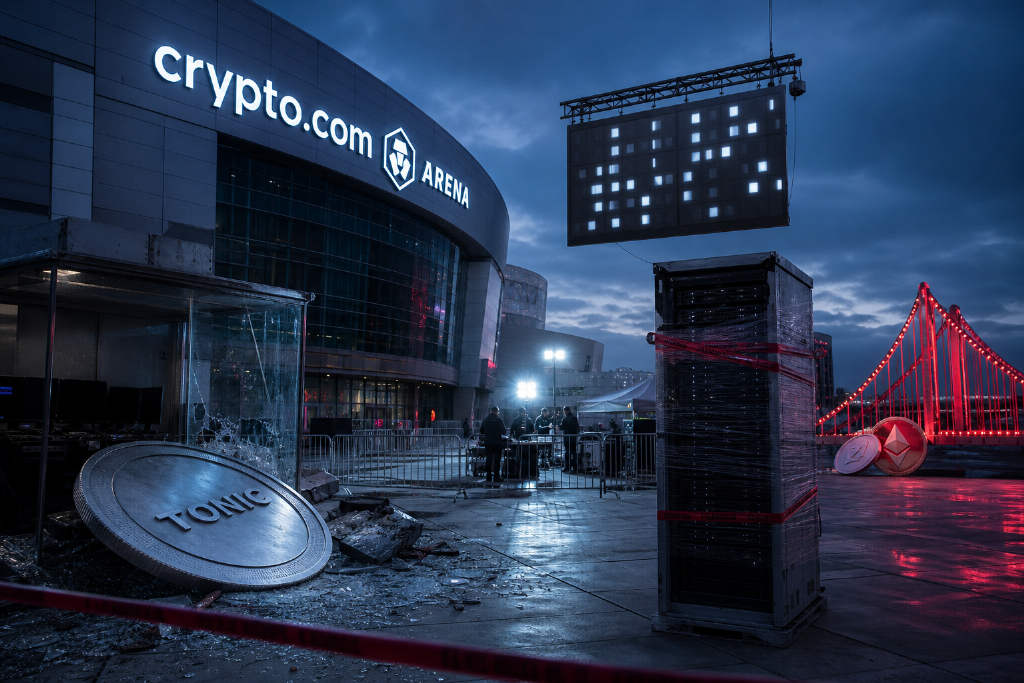
Tectonic2026-09-08 02:32:06Tectonic Attack Report: $120M Drained via Price Manipulation, $9.19M UnrecoveredTectonic has released a report on the August 30 attack, revealing that the attacker inflated TONIC's price by approximately 195x and used cyclic borrowing to extract about $120 million from nine lending markets. After Cronos paused the network and restored state, most assets returned to pre-attack levels, but roughly $9.19 million had been cross-chain transferred and remains unrecovered. The team plans to phase out low-liquidity collateral and set borrowing caps per market.810
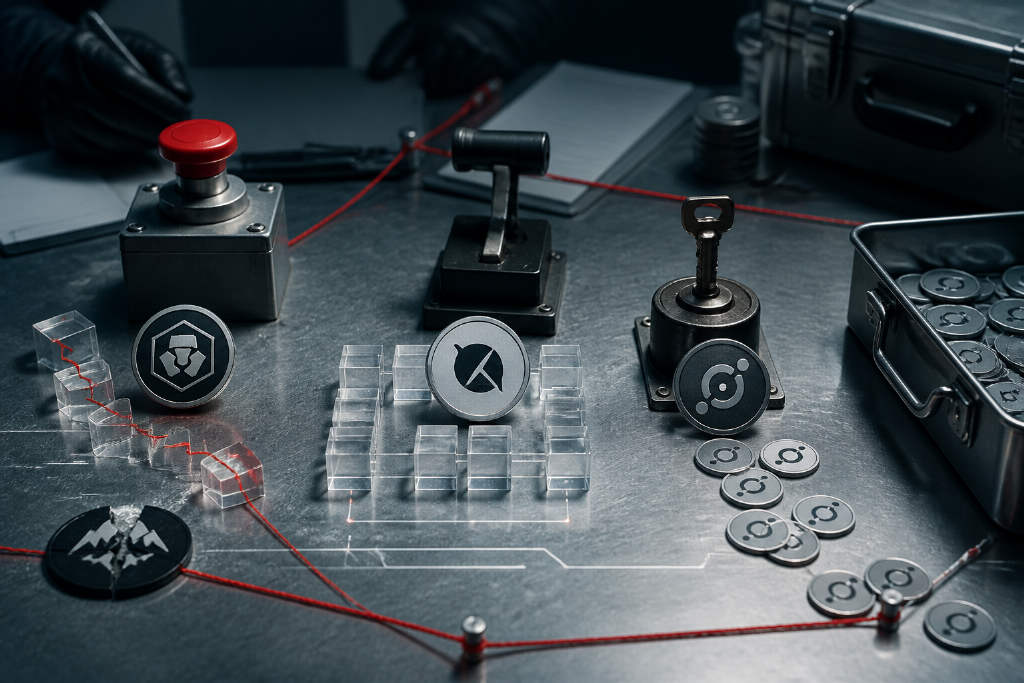
Policy and Re2026-09-06 00:41:17Cronos, Ontology and ICON halted block production in four days, exposing very different emergency powersThree blockchain networks — Cronos, Ontology and ICON — stopped producing blocks within four days, but the powers used in each response were not the same. Cronos said validators coordinated an emergency rollback after the Tectonic exploit and restarted the chain from block 90,896,189, wiping out all state changes and transactions after the chosen restore point. Ontology took a preventive route instead, pausing block production before confirming malicious activity and later saying no user assets were lost. ICON followed a third path: it first paused the affected contract and then shut down the network, but by then much of the stolen ICX had already moved into exchange custody. The three incidents put the same set of questions under a spotlight: who can order a chain halt, who can alter confirmed state, what remains recoverable once assets move across chains or into centralized custodians, and who ultimately bears losses when onchain controls no longer apply. The comparison also shows that a network restart does not automatically mean dependent infrastructure, bridges, explorers and RPC services are fully back online.910
hacking2026-09-05 05:36:48Crypto Industry Hit by 50 Major Hacks in August, Losses Drop to $136.3M; AEREDIUM Launches AERSealIn August 2026, the crypto industry suffered 50 major hacker attacks, a 67% increase from July, but total losses dropped to $136.3 million, down 49.5% month-over-month, according to PeckShield. The largest single loss was Tectonicfi, which lost around $74 million. Cronos, after pausing its network, saw only about $6 million transferred out. Meanwhile, digital asset security firm AEREDIUM introduced AERSeal, a threshold signature solution that replaces single private keys controlling privileged smart contract functions. The product splits key shares and stores them in hardware-authenticated secure enclaves, supporting Ethereum Virtual Machine and compatible chains. AERSeal does not reconstruct the full private key but generates signatures using the CGGMP24 threshold signature protocol. AEREDIUM founder and CEO Albert Dadon said the product can transfer minting, upgrade, and other permissions to threshold keys, with on-chain verification confirming the transfer. Clients can independently verify the threshold keys assigned to them. (Reported by Bitcoin.com News)1350
Cronos2026-09-02 07:33:39Three chain shutdowns in four days show the hard limits of on-chain emergency powersThree public blockchains halted block production within four days, but the emergency powers used in each case were not the same. Cronos responded to the Tectonic exploit by restoring the network to a pre-attack state and resuming from block height 90,896,189, effectively voiding all transactions and state changes after that checkpoint. Ontology took a preventive route, pausing block production before confirming malicious activity and later saying no user assets were lost. ICON suspended the affected contract first and then shut down the network, but by that point the foundation said most of the stolen ICX had already moved into exchange custody. Taken together, the three incidents show that a chain halt is only the first layer of control. The more important questions are who can trigger an emergency response, whether confirmed chain history can be rewritten, and what happens once funds move across chains or into centralized custodians. In Cronos’ case, rollback power only applied to assets that remained on-chain. In ICON’s case, on-chain controls arrived after the assets had largely left the chain’s sphere of control. Ontology, by contrast, used downtime to buy time for inspection, patching, and testing rather than to reverse settled transactions.440
Cronos2026-09-02 07:17:09Cronos, Ontology and ICON took three very different paths in emergency shutdownsThree blockchain networks — Cronos, Ontology and ICON — halted block production within four days, but their emergency responses exposed sharply different governance powers and recovery limits. Cronos rolled its chain state back to before the Tectonic exploit and resumed production from block 90,896,189, wiping out all transactions and state changes after that checkpoint. Ontology paused block production before confirming malicious activity, kept confirmed state intact, and said no user assets were lost. ICON, by contrast, halted contracts and then the network only after most of the affected ICX had already moved into exchange custody, leaving recovery dependent on custodians, legal action and law enforcement. The three cases point to the same fault line: who can stop a network, whether confirmed state can be rewritten, and what happens once funds move across chains or into centralized custody. For users, the key distinction is not simply whether a chain stopped, but where each network drew the boundary of controllable loss.420
TRM Labs2026-09-01 22:38:12TRM Labs says 32 price manipulation attacks hit crypto lending in 2026TRM Labs said it has recorded 32 price manipulation attacks in 2026, already more than in any previous full year. The firm said the total compares with 12 such incidents across all of 2025. It also noted that these attacks now account for about one-eighth of hacking incidents, up from one-seventeenth in 2022. According to TRM Labs, the common pattern is to push up the price of a low-liquidity token, use that inflated asset as collateral in a lending protocol, borrow other assets against it, and then let the collateral price collapse. The result can leave lending pools with bad debt after the attacker abandons the collateral. DeFiLlama data cited in the report shows total value locked in crypto-collateralized lending protocols has risen about 56% over the past two years to nearly $50 billion, while active loans are close to $29 billion. The sector now includes more than 570 lending protocols. Recent cases mentioned include losses at Tectonic tied to a TONIC price spike, a Cronos incident that ended with the attacker obtaining about $6 million after a chain rollback, and an earlier Moonwell loss linked to manipulation of the MAMO oracle price.840
Cronos2026-09-01 07:25:31Cronos rolls back chain after Tectonic exploit, reviving debate over finality and governanceCronos halted its network and chose to roll back the chain after a hack hit Tectonic, the largest lending protocol in the Crypto.com-linked ecosystem, on Aug. 30. The attacker spent about 20 minutes pushing up the price of TONIC, Tectonic’s low-liquidity governance token, by roughly 100x, then used the inflated token as collateral to borrow other assets. The incident affected about $75 million, with around $6 million already bridged to Ethereum before the chain was paused. On Aug. 31, Cronos said it would restart the network from block height 90896189, effectively reverting the chain to a state before the exploit. That move may erase most of the losses that remained on Cronos, but it also wipes out normal user activity that happened after that point. Before the halt, the chain had reached block height 90907150, leaving 10,961 blocks of transactions invalidated. The decision has reopened a broader argument about transaction finality on public blockchains. It also drew comparisons with an earlier Cronos controversy: after Crypto.com announced a burn of 70 billion CRO in 2021, Cronos later proposed in 2025 to re-mint those tokens for a strategic reserve, a plan that passed after voting shifted late in the process.410