DPI

Trustworthy A
2026-09-01 07:07:55

Human ID Wins 2026 Trustworthy AI Hackathon With Dual Identity System

Human ID won the 2026 Trustworthy AI Hackathon after competing against 19 other finalist teams, taking the top prize of $5,000. The event, guided by Taiwan’s National Development Council and organized by TABEI, drew 50 applications after registration opened in July. Its central question was how to establish trust as AI agents move from executing instructions to taking autonomous actions: who does an agent represent, what can it do, how should its limits be enforced, and how can its authorization be revoked when something goes wrong? The six challenge tracks covered carbon-footprint and data-flow controls, suspicious-activity detection in electronic payments, healthcare and insurance data sharing, fragmented government credentials, migrant-worker digital trust and inclusive finance, and verifiable supply-chain compliance credentials. Human ID proposed a dual system built around Human ID for people and Agent ID for companies and robots, combining zero-knowledge proofs with MyData data-sovereignty principles. The project has also filed a U.S. provisional patent application for its core concept. Judges placed more weight on deployable governance and compliance than on technical showmanship.


160
Human ID Wins 2026 Trustworthy AI Hackathon With Dual Identity System
SlowMist
2026-08-31 05:25:26

SlowMist: Balancer V1 pool exploited, with about $234,000 lost

SlowMist said a Balancer V1 pool was exploited, with losses estimated at about $234,000. According to its monitoring, the issue stemmed from a precision flaw in BPool’s joinswapPoolAmountOut function. The attacker first pushed WBTC reserves down to an extremely low level, then used roughly 1 satoshi of WBTC to mint a large amount of BPT. After that, the attacker exited proportionally and drained assets including DPI, USDC, WETH, and WBTC. The update was published via SlowMist’s monitored alert and cited by Foresight as a 7x24 brief.

100
SlowMist: Balancer V1 pool exploited, with about $234,000 lost
crypto ventur
2026-08-19 09:34:34

Crypto VC after the unwind: fast token exits fade as investors move toward revenue, buybacks and longer holding periods

A long-form piece published by TechFlowPost argues that crypto venture capital is not disappearing after the speculative boom. It is being repriced. The article says the market now shows a split between strong top-line industry data and weak early-stage liquidity: institutions hold more than $175 billion in crypto assets through exchange-traded products, onchain projects generated $11 billion in fees over the last 12 months, and the sector logged $8.6 billion in M&A plus 11 IPOs. Yet Galaxy Research data cited in the piece shows only eight new VC funds launched last quarter, the lowest level since 2020, while quarterly investment fell to $4 billion, or roughly $16 billion annualized, about half of 2021’s $31 billion pace. The authors trace the problem to a crypto funding model built around early token listings and quick liquidity rather than durable business value. They argue that many token models failed because projects lacked real business models and token holders had no legal claim on operating income. In their view, the industry is now moving toward structures that tie revenue to tokens, including buybacks, while also reopening other exit routes such as acquisitions and IPOs. The article identifies three sectors that have already reached sustainable product-market fit: stablecoins, prediction markets and onchain perpetuals. It also points to tokenized Treasuries, tokenized equities, machine payments, onchain credit and compliance infrastructure as areas where early-stage opportunities may now be forming. The broader conclusion is that crypto investing is shifting away from broad thematic betting and toward specialized, patient capital focused on business quality, regulation and long holding cycles.

410
Crypto VC after the unwind: fast token exits fade as investors move toward revenue, buybacks and longer holding periods
Policy and Re
2026-07-28 10:46:08

Crypto’s utopian phase is over, and the industry is being forced into a more practical era

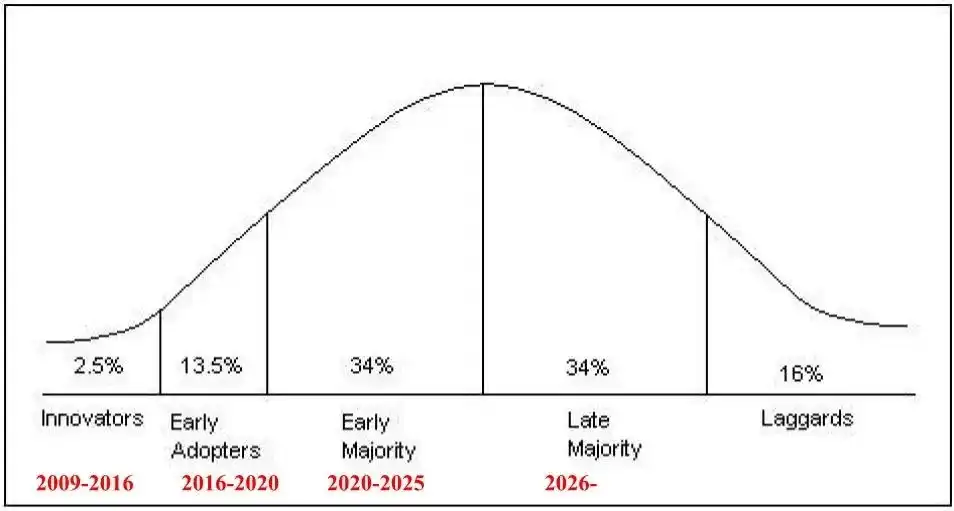
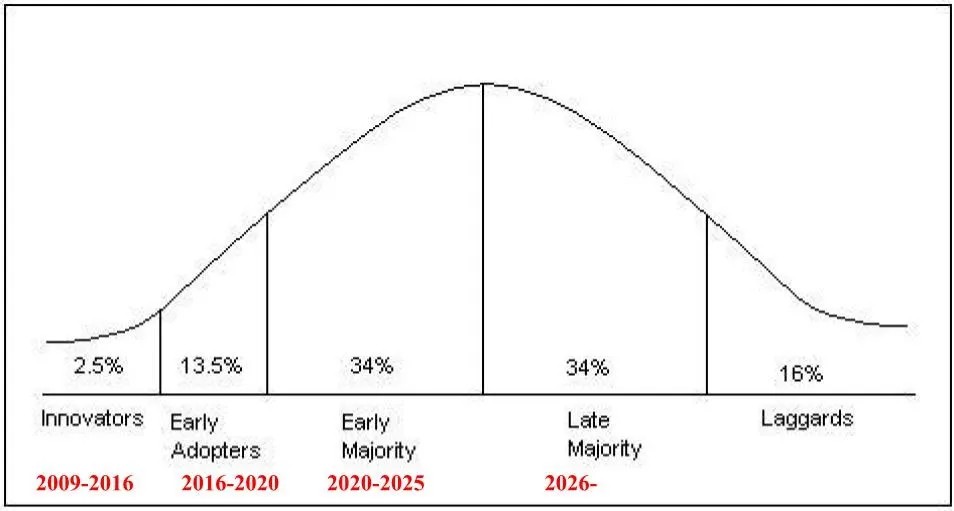
A commentary by Matti, translated by Chopper for Foresight News and published by MarsBit, argues that crypto has reached a turning point after the speculative excesses that peaked in 2021. The piece says many market participants are leaving because the financial returns delivered by the sector have fallen far short of the expectations built over the past decade, and that the latest bear market marks the end of an era rather than just another downturn. The article frames 2021 as the peak of inflated expectations in a Gartner Hype Cycle sense, with the current period serving as a reset. In that reset, the industry is being pushed back to first principles: reassessing token value, improving DeFi protocol security, and searching for applications that produce real utility. Matti also argues that crypto’s early token liquidity helped create a reflexive boom that later collapsed, and says the industry had already chosen monetization over exploration by 2024. The piece rejects the claim that crypto venture capital is dead, instead describing a broader venture slowdown and a return from exceptional 2016-2021 gains to a more normal environment. It also says crypto is no longer a frontier movement in the old sense, but is becoming a regulated business domain centered on areas such as stablecoins, prediction markets, tokenized assets, perpetuals, and AI agents.

1160
Crypto’s utopian phase is over, and the industry is being forced into a more practical era
crypto indust
2026-07-28 11:03:53

Crypto’s utopian phase is fading as the industry shifts from frontier narrative to business execution

A commentary published by TechFlowPost on July 28 argues that the crypto industry is no longer operating as a frontier for ideological or technological exploration, but is increasingly becoming a business shaped by commercial discipline, regulatory boundaries, and more modest return expectations. Written by Matti and translated by Chopper for Foresight News, the piece says the current bear market marks the end of an era in which crypto was treated as a vehicle for inflated hopes, easy liquidity, and early token-driven speculation. The article frames 2021 as the peak of the hype cycle, then describes the period since as a reckoning that has pushed market participants back toward first principles: token value, DeFi security, and applications that create real utility. It also argues that the sector’s incentive structure had already tilted toward extraction over experimentation by 2024, and that the consequences are now showing up across the market. Rather than declaring crypto venture capital dead, the author says the asset class is reverting to normal after an exceptional stretch between 2016 and 2021. The piece also points to five categories now defining new crypto projects: stablecoins, prediction markets, tokenized assets or RWA, perpetual futures, and AI with intelligent agents. Its broader conclusion is that crypto has abandoned its utopian self-image and is being absorbed into the existing financial system, even as long-term company-building opportunities remain.

360
Crypto’s utopian phase is fading as the industry shifts from frontier narrative to business execution
Odin
2026-07-27 09:58:42

Odin survey says micro-fund plus SPV model may outperform a single large VC fund

A new survey from Odin argues that the classic 10-year blind-pool venture fund is under structural pressure, especially for smaller managers. Based on responses from 56 general partners, the report says 84% have already used special purpose vehicles, or SPVs, or plan to do so. Follow-on capital is the dominant use case, with 39 of the 47 respondents who use or expect to use SPVs citing that purpose. The report lays out a case for a hybrid approach: a small fund for early, high-uncertainty bets, paired with deal-by-deal SPVs for selective follow-on rounds. Odin says this setup can lower blended fee drag for limited partners and create tighter alignment between GPs and investment outcomes. In a hypothetical comparison, a $10 million micro-fund backed by SPVs is presented as superior on DPI to a $38.3 million fund making the same investments internally, assuming both portfolios return 4x. Survey data also points to emerging market norms around SPV economics. Management fees of 0%-0.5% were the most common, carry of 16%-20% was the most frequently cited range, and two-thirds of managers said setup and administration costs are passed through to LPs at cost. Odin also proposes a template for aligned SPV terms, including GP commitment of at least 2%, zero management fee, and 10%-20% carry.

490
Odin survey says micro-fund plus SPV model may outperform a single large VC fund
Venture Capit
2026-07-27 07:03:55

Microfunds and SPVs Gain Ground as Traditional Blind-Pool VC Funds Face Pressure

A new research note from Shoal Research and Odin argues that the traditional 10-year blind-pool venture fund is losing its grip as smaller managers increasingly combine microfunds with deal-by-deal special purpose vehicles, or SPVs. The premise is straightforward: use a small fund to capture the hardest early-stage bets, then bring in co-invest capital later when a company has clearer traction, stronger metrics, or a more established market position. The article says this hybrid structure can lower blended fee loads for limited partners while keeping general partners focused on the earliest part of the market. It also claims the model aligns incentives better than a single larger fund. In one example, the authors compare a $10 million microfund backed by SPVs with a $38.3 million fund that executes the same strategy internally, and conclude the smaller fund structure can produce better DPI if portfolio outcomes are identical. Odin also surveyed 56 GPs earlier this year. Of those, 39 already use SPVs and another 8 plan to do so, bringing current and prospective adoption to 84%. Follow-on financing was the dominant use case. The piece argues that co-investment is moving toward a standard feature of venture capital, but says both GPs and LPs still need clearer norms on fees, GP commitments, transparency, and allocation priorities.

380
Microfunds and SPVs Gain Ground as Traditional Blind-Pool VC Funds Face Pressure