EEZ

Gnosis Chain
2026-08-25 10:06:33

Gnosis Chain’s move to Ethereum L2 stands out for its EEZ design

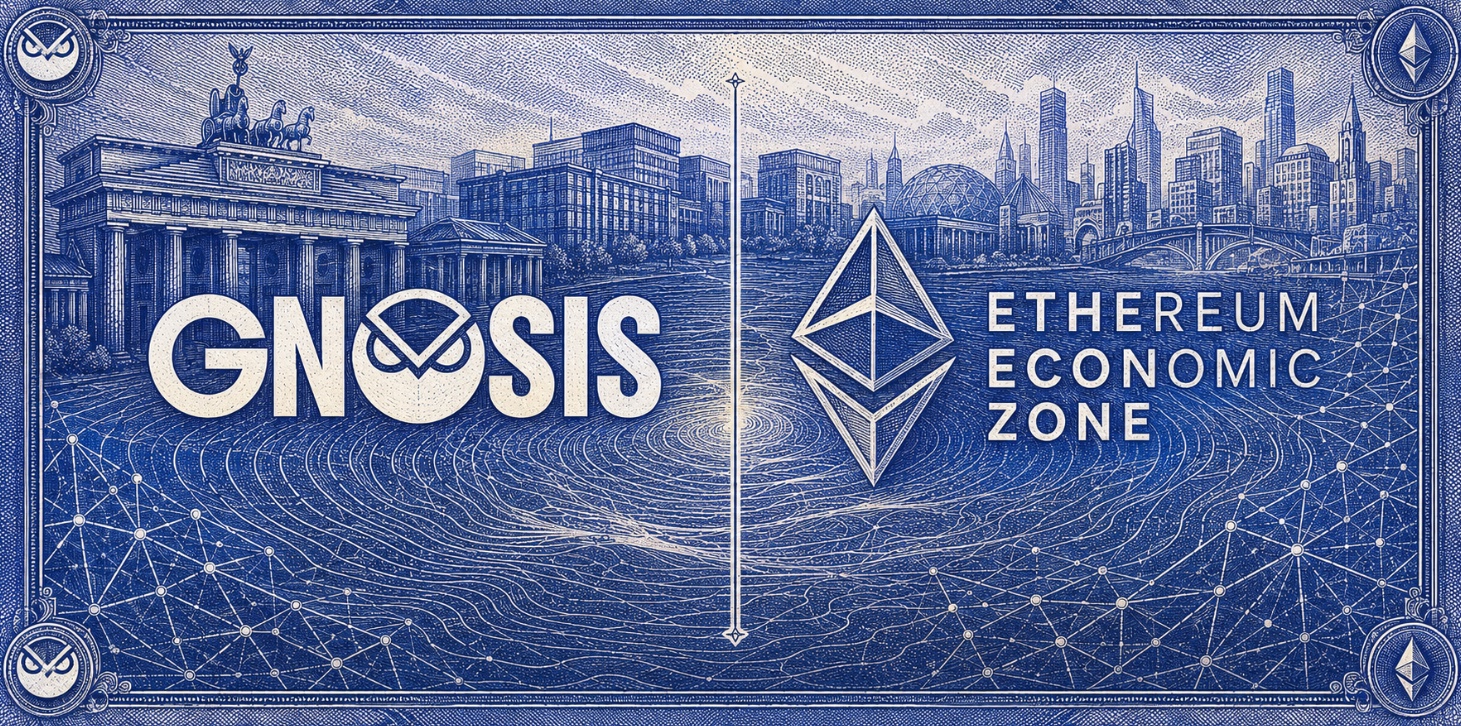
Gnosis Chain has approved a shift from operating as a Layer 1 blockchain to becoming an Ethereum-based Layer 2 network, but the article argues the real story is not the move itself. In the source’s view, many L1 chains are likely to either disappear or end up attaching themselves to Ethereum as L2s, so Gnosis is not unusual on that front. What sets it apart is the technical route it chose. Rather than using a standard OP stack or a conventional ZK approach, Gnosis is adopting EEZ, short for Ethereum Economic Zone, a framework proposed together with Zisk. The source says EEZ is built around synchronizing Ethereum’s mainnet and L2 networks. The goal is to tackle three problems at once: cross-chain security, Ethereum mainnet’s inability to capture and share value extracted by L2s, and liquidity fragmentation across isolated L2 ecosystems. The article says EEZ aims to avoid conventional bridge-based communication by using zero-knowledge proofs so multiple L2s can confirm each other’s transactions inside the same Ethereum mainnet block. It also describes a model in which L2 sequencing rights are handed back to Ethereum validators and all L2s settle in ETH. Even so, the source notes a major obstacle: L2s would need to give up sequencing power, which is tied to their revenue. Gnosis may be the first example, but the article says broader momentum would likely require larger players such as Base, Arbitrum or Robinhood’s chain to follow.


80
Gnosis Chain’s move to Ethereum L2 stands out for its EEZ design
GnosisDAO
2026-08-20 08:59:40

GnosisDAO approves Gnosis Chain shift to Ethereum Economic Zone rollup

GnosisDAO has approved a plan to move Gnosis Chain from a standalone layer-1 network to a ZK-proven Ethereum Economic Zone, or EEZ, rollup. The proposal, known as GIP-153, passed with 123,158 GNO in favor, 115 against and 151 abstaining across 54 voters, with total turnout reaching 123,425 GNO and clearing the 75,000 GNO quorum. Under the plan, Gnosis Chain would retire its own validator set and settle directly to Ethereum, effectively becoming a layer-2 network that relies on Ethereum validators for settlement. The first launch is targeted for late 2026 or early 2027, assuming the required EEZ technology is ready. Gnosis and ZisK developed the EEZ framework with funding from the Ethereum Foundation. The design aims to let smart contracts across participating rollups execute synchronously without bridges, while Gnosis Chain would keep its existing apps, balances and xDAI gas token. Standard Chartered’s Geoffrey Kendrick said the framework could reduce reliance on bridges and improve asset usability across EVM chains.

360
GnosisDAO approves Gnosis Chain shift to Ethereum Economic Zone rollup
Gnosis Chain
2026-07-28 05:59:45

Gnosis Chain seeks community backing to drop its standalone L1 model for an EEZ rollup

GnosisDAO has formally introduced GIP-153, a governance proposal that asks the community for directional consensus on moving Gnosis Chain away from its current position as an independent Layer 1 and into an Ethereum Economic Zone, or EEZ, rollup. The proposal, written by Gnosis co-founder Friederike Ernst together with Philippe Schommers and Ben Carvill, is notable for saying plainly that Gnosis Chain’s standalone L1 positioning has failed. It argues that the chain’s promise of credible neutrality overlaps too heavily with Ethereum, while Gnosis lacks the scale and liquidity to justify carrying a full security stack on its own. The document lays out the economic pressure behind that conclusion. According to the proposal, Gnosis Chain’s fee revenue does not cover network security costs, forcing GnosisDAO’s treasury to subsidize the gap and causing about 2.3% annual dilution for non-stakers. It also points to a TVL of roughly $91 million and a GNO market capitalization of around $280 million, figures it presents as marginal in the current L1 race. Rather than becoming a standard L2, Gnosis wants to adopt the EEZ framework, whose main pitch is synchronous composability with Ethereum. If implemented, the shift would also unlock about 350,000 staked GNO, remove the existing validator set, and hand sequencing to Gnosis Ltd. Community voting is expected in August to September 2026.

1310
Gnosis Chain seeks community backing to drop its standalone L1 model for an EEZ rollup
Gnosis Chain
2026-07-27 08:22:14

Gnosis Chain seeks community backing to shift from standalone L1 to Ethereum-aligned ZK Rollup

Gnosis Chain is seeking directional consensus from its community on a proposal to move away from its current standalone Layer 1 model and become an Ethereum Economic Zone, or EEZ, ZK Rollup under GnosisDAO’s GIP-153. The proposal, co-authored by Friederike Ernst and others, argues that Gnosis Chain’s positioning as an independent L1 has failed because its “credible neutrality” pitch overlaps heavily with Ethereum while lacking Ethereum’s scale and liquidity. It also says fee revenue has been far too low to cover security costs, leaving those expenses dependent on DAO treasury subsidies and causing about 2.3% annual dilution for non-stakers. Under the proposed design, the network would produce blocks every two seconds, submit a state proof and settle to Ethereum L1 on every Ethereum block, and keep user addresses, balances, and contract state continuous. xDAI would remain the gas token. The plan would also unlock about 350,000 staked GNO, or roughly 27% of circulating supply, remove the current independent validator set, hand sequencing to Gnosis Ltd, and turn existing bridge validators into prover nodes. A GIP vote is expected in August to September, with a genesis block targeted for January 2027.

1290
Gnosis Chain seeks community backing to shift from standalone L1 to Ethereum-aligned ZK Rollup
Ethereum
2026-07-22 17:25:13

Ethereum Unveils EEZ Plan to Reduce Layer-2 Fragmentation

The Ethereum Economic Zone, introduced at EthCC, aims to make layer-2 networks work like one environment with bridge-free interactions, shared liquidity, and synchronous contract execution across rollups.

190
Ethereum Unveils EEZ Plan to Reduce Layer-2 Fragmentation
K-pop
2026-07-18 17:29:03

K-pop album exports hit a first-half record as BTS and BLACKPINK return, raising fresh questions for blockchain fan economies

South Korea’s album exports climbed to a record high in the first half of 2026 even as streaming remained the dominant way people listen to music. Customs data showed exports reached $257.478 million, or about KRW 382.3 billion, up 125% from a year earlier. The U.S. overtook Japan for the first time to become the largest export market for Korean albums, with China ranking second and Japan third. The rebound coincided with major releases from top-tier acts. BTS returned in March with its fifth full-length album "ARIRANG," while BLACKPINK released its third mini album "DEADLINE" in February, with cumulative sales nearing 2 million copies by June. Luminate said BTS helped lift total U.S. CD sales by 16% in the first half, with "ARIRANG" alone selling 567,000 CDs and 331,000 vinyl records in the U.S. The article argues that K-pop’s physical sales model is built less on CDs themselves than on collectibles, fan identity and event access. It also reviews how blockchain has been tested in that economy, from HYBE and Dunamu’s digital collectibles platform Momentica to tripleS and Modhaus using on-chain voting, and to Bang Si-hyuk’s investment connection to Story Protocol. At the same time, it notes the limits of NFT-style speculation and the weak traction Story Protocol has seen despite backing from a16z and other investors.

1060
K-pop album exports hit a first-half record as BTS and BLACKPINK return, raising fresh questions for blockchain fan economies