‹ BackFC-BGA

FC-BGA

Policy Regula
2026-09-14 23:31:23

China reports 7.5% M2 growth in August as ministries roll out industrial and payment policy signals

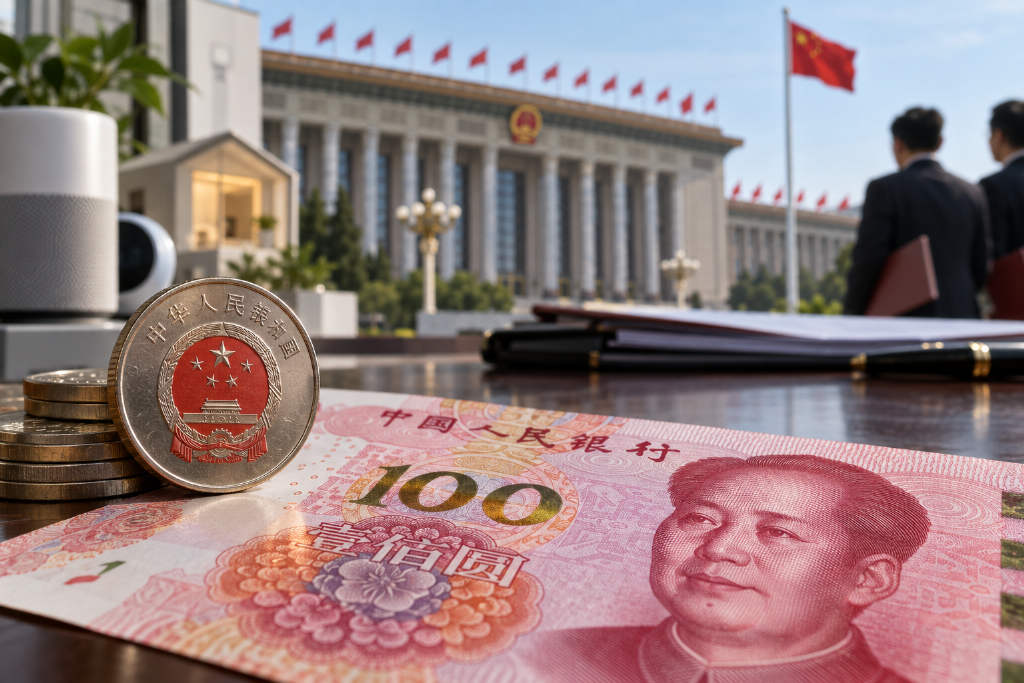
China released a dense set of policy and market developments on Sept. 14, led by the People’s Bank of China’s August 2026 financial data. Broad money supply, or M2, reached 356.81 trillion yuan at the end of August, up 7.5% year over year and down 0.2 percentage point from the prior month. M1 stood at 115.77 trillion yuan, up 4.1%, while M0 rose 11.2%. Aggregate social financing added 23.91 trillion yuan in the first eight months of 2026, 2.64 trillion yuan less than a year earlier. Experts cited in the source said total credit expansion remained broadly aligned with nominal economic growth, though financing structure had shifted toward faster bond and equity financing growth and slower loan growth. The same day, China’s Ministry of Industry and Information Technology held a meeting on industrial operations and planning for 2027, calling for stronger demand support, progress on major projects in the 15th Five-Year Plan period, industrial upgrading, and faster development and application of artificial intelligence. Other ministries also moved on consumer and payment policy. The Ministry of Commerce and seven other departments issued an action plan to boost smart home consumption, while regulators including SASAC, MIIT, SAMR, and the CSRC outlined steps to address delayed payments to small and medium-sized enterprises, including cash-payment requirements, tighter disclosure, and penalties for disguised extensions of payment terms.
1020
China reports 7.5% M2 growth in August as ministries roll out industrial and payment policy signals
Samsung Elect
2026-09-14 10:38:13

Samsung Electro-Mechanics and Qualcomm develop organic bridge technology for 2.1D packaging

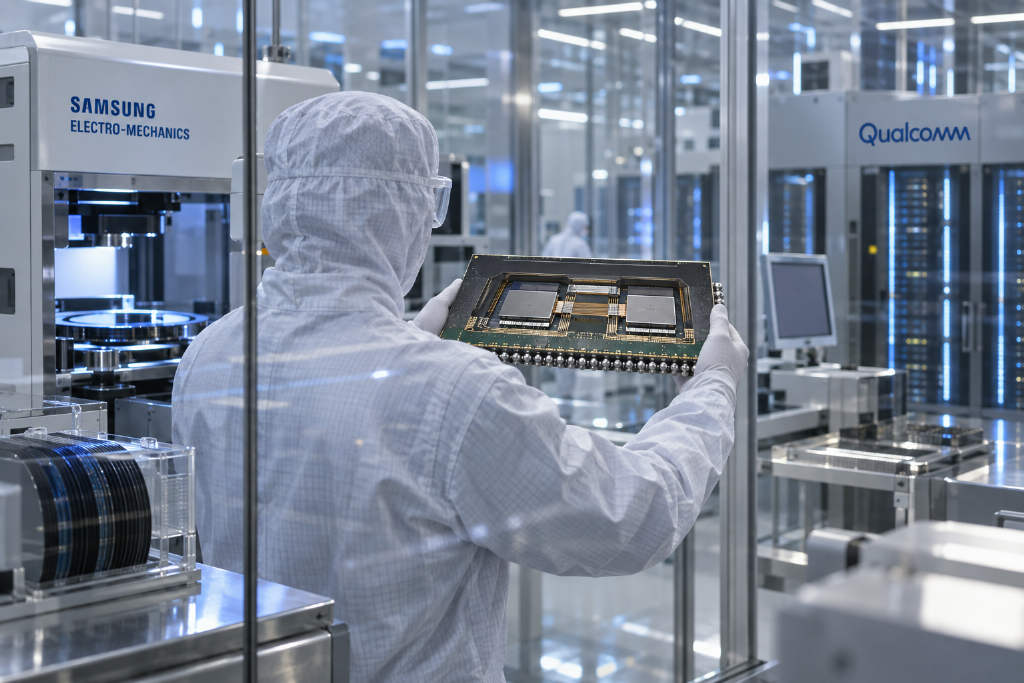
Samsung Electro-Mechanics is working with Qualcomm on organic bridge technology designed for 2.1D packaging, with development and validation said to have been underway for more than a year. The bridge is described as similar in function to the silicon bridge used in Intel’s EMIB, but built with organic materials through substrate processes to connect multiple semiconductor chips inside a single package. Samsung Electro-Mechanics has embedded the organic bridge into grooved FC-BGA substrates to link Qualcomm chips and test performance and reliability. Qualcomm is considering the technology for large multi-chip semiconductors used in data centers and filed a related patent application in October 2024. Samsung Electro-Mechanics is also pursuing the same technology with several other customers. The target specifications call for 5 to 7 redistribution layers, line width and spacing of 1.5 to 2 micrometers, vias of 4 to 5 micrometers, and an inter-chip pattern density of 500 to 1,000 per millimeter. The company is producing evaluation samples internally, reviewing outside supply options, and conducting packaging assessments with Samsung Electronics’ foundry business.

730
Samsung Electro-Mechanics and Qualcomm develop organic bridge technology for 2.1D packaging
Ajinomoto
2026-08-26 03:55:17

Ajinomoto confirms priority ABF film allocation for high-end AI, putting Taiwan substrate makers in focus

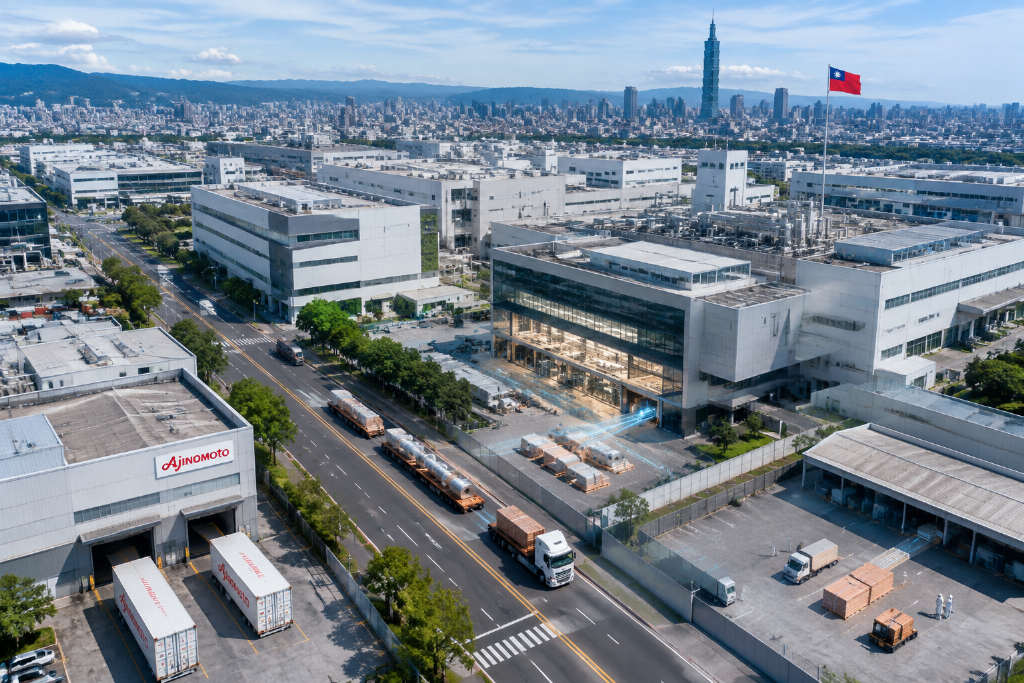
Ajinomoto, the dominant supplier of ABF film used in advanced IC substrates, has told customers it will shift to differentiated allocation because of raw material shortages, prioritizing AI and other high-end applications. A channel survey cited by Meritz Securities said the company’s ABF film lines are expected to be fully loaded through the second quarter of 2026, with little near-term relief from new capacity. The move matters because ABF film is a key insulating layer in FC-BGA packaging for CPUs, GPUs and AI accelerators. While it accounts for only a small part of substrate cost, supply disruptions can halt production lines. The report said Ajinomoto has maintained more than 95% global market share in the segment. The supply squeeze is already showing up in lead times and pricing. Lead times have stretched from three to four months at the start of the year to more than 12 months, and some customers are already discussing 2029 capacity. The article pointed to rising demand from larger AI chips, including NVIDIA’s next-generation Rubin GPU, and expanding CoWoS packaging capacity at TSMC. According to the report, Taiwan’s Unimicron, Nan Ya PCB and Kinsus could benefit first because they already have high-end production scale, yield performance and customer qualifications. At the same time, non-AI customers are likely to face reduced allocation, longer waits and higher costs, while glass substrates are not expected to become a volume replacement before 2027.

1350
Ajinomoto confirms priority ABF film allocation for high-end AI, putting Taiwan substrate makers in focus
AI servers
2026-08-21 04:47:03

Ajinomoto cuts ABF build-up film supply to some customers, putting SAS Group in focus for order diversion

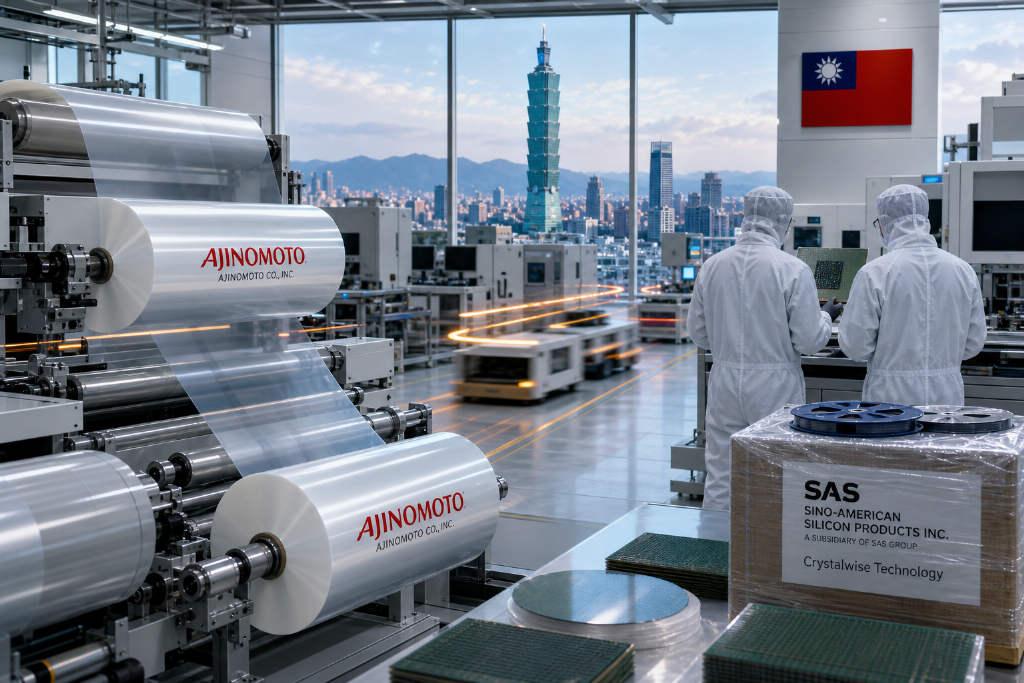
Ajinomoto, which the report says controls more than 90% of the global ABF build-up film market, is facing tight capacity as AI server demand pushes up the need for FC-BGA substrate materials. Its monthly output has exceeded 2 million square meters, but production lines were already close to full utilization in the second quarter of this year. Against that backdrop, the Japanese supplier has reportedly moved to selective shipments, prioritizing domestic Japanese customers and core overseas accounts. Some Chinese manufacturers were notified that supply could be reduced by about 30%. The development has drawn attention to Taiwan-based Sino-American Silicon Products Inc. (5483) and its subsidiary Crystalwise Technology. Crystalwise, founded in 2015 and brought under the group at the end of 2024, is described in the source report as Taiwan’s first local maker to complete in-house R&D and mass production of insulating build-up film. SAS currently holds about 50.8% of the company. With products already certified by multiple customers in Taiwan and overseas and now in small-volume shipments, Crystalwise is seen as a potential second-source supplier if substrate makers accelerate supply diversification.

1520
Ajinomoto cuts ABF build-up film supply to some customers, putting SAS Group in focus for order diversion
South Korea P
2026-08-08 04:44:32

Analyst says Korean PCB makers posted strong Q2 results, with SOCAMM seen as a new growth driver

Citrini analyst Jukan said on Aug. 8 that South Korean PCB and package substrate makers could extend their strong second-quarter momentum into Q3, with earnings expectations continuing to improve. He cited Daeduck Electronics, Simmtech, and TLB as examples. Daeduck Electronics reported Q2 revenue of 401 billion won, up 63% year over year, while operating profit jumped 3,599% to 70.3 billion won. Simmtech posted revenue of 514.6 billion won, up 51%, and operating profit of 62.9 billion won, up 1,035%. TLB recorded revenue of 88.2 billion won, up 38%, with operating profit rising 86% to 12.8 billion won. Jukan said Daeduck’s strength lies in FC-BGA, FC-CSP, and multilayer PCB products used in AI data centers. He described Simmtech as focused on package substrates and memory module PCBs, while TLB supplies PCBs tied to server DDR5 and enterprise SSDs. He also said a shift in BT substrate orders to Korean suppliers, along with rising SOCAMM demand tied to Nvidia’s next-generation Vera Rubin GPU and Vera CPU shipments, could support the next leg of growth.

2050
Analyst says Korean PCB makers posted strong Q2 results, with SOCAMM seen as a new growth driver