BackFranklin

Franklin

Pharos
2026-08-20 06:30:35

Pharos’ 14.3% RWA vault draws $45.39 million and a debate over liquidity

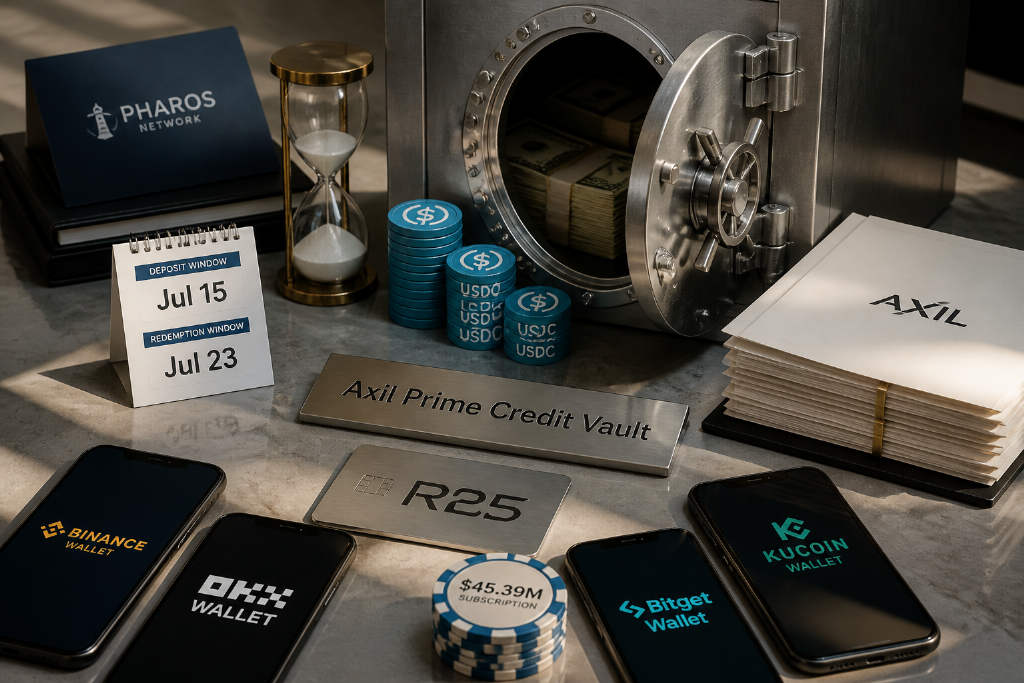
Pharos Network’s Axil Prime Credit Vault, launched with R25 and Axil on July 15, pulled in $45.39 million before its pre-deposit window closed, against a $100 million USDC cap and a target annualized yield of about 14.3%. The product went live across Binance Wallet, TopNod, OKX Wallet, Bitget Wallet and KuCoin Wallet, with Binance Wallet adding $300,000 in PROS incentives. But the launch also collided with the redemption window for an earlier Pharos TGE pre-deposit vault, prompting complaints from users who were used to DeFi-style instant exits and said they had missed the withdrawal deadline. On July 23, Pharos said users who had submitted redemption requests on time had received full principal and interest, while funds that missed the window were automatically rolled into the next three-month cycle and continued earning 14% APY in USDC under the preset rules. The episode has become a case study in a broader RWA tension: low entry thresholds can bring retail users in, but that does not make the underlying assets liquid. In APC’s case, the yield is tied to emerging-market consumer credit rather than mostly token emissions, while the trade-off is a longer lockup and a redemption process shaped by offchain credit assets, licensed fund managers and traditional finance settlement timelines.

80
Pharos’ 14.3% RWA vault draws $45.39 million and a debate over liquidity
XRP
2026-08-20 01:28:06

XRP Spot ETFs Posted $2.3517 Million in Net Inflows on Aug. 19

XRP spot exchange-traded funds recorded a combined $2.3517 million in net inflows on Aug. 19, based on SoSoValue data cited by ChainCatcher. The largest daily inflow went to the Bitwise XRP ETF, which brought in $1.1926 million and lifted its cumulative net inflows to $516 million. Franklin XRP ETF ranked second with $1.1591 million in daily net inflows, bringing its historical total to $429 million. As of press time, total net assets across XRP spot ETFs stood at $1.006 billion, while the XRP net asset ratio was 1.46%. Historical cumulative net inflows for the category reached $1.521 billion. The figures cover trading activity on Aug. 19 in U.S. Eastern Time.

90
XRP Spot ETFs Posted $2.3517 Million in Net Inflows on Aug. 19
U.S. Treasury
2026-08-18 20:26:34

Treasury proposal under GENIUS Act could push U.S. exchanges to drop Tether’s USDT

A newly proposed U.S. Treasury rule tied to Section 3 of the GENIUS Act could leave American crypto exchanges unable to offer Tether’s USDT to domestic users, according to comments made by Zero Knowledge Group founder Austin Campbell on the Aug. 17 episode of the Bits + Bips podcast. Campbell said the proposal may force platforms including Coinbase to delist USDT in the U.S. if Tether remains a foreign-issued stablecoin that cannot meet the rule’s conditions. The proposed framework would, beginning Jan. 18, 2027, generally bar digital asset service providers from offering foreign-issued payment stablecoins in the United States unless the issuer can comply with lawful U.S. orders and any reciprocal arrangements between Treasury and the issuer’s home country. Campbell pointed to the European Union’s MiCA regime as a recent example, noting that Coinbase removed USDT for European Economic Area users effective March 31, 2025, with Crypto.com and Binance taking similar steps in the same quarter. The report also highlights Tether’s split strategy: keeping USDT offshore while launching a separate U.S.-domestic stablecoin, USAT, in January 2026 through Anchorage Digital Bank, with Bo Hines leading the effort. Treasury’s rule remains a proposal, with a roughly 60-day comment period and no comparable-country determinations yet in place.

60
Treasury proposal under GENIUS Act could push U.S. exchanges to drop Tether’s USDT
Fidelity
2026-08-14 01:59:25

Fidelity seeks staking for FETH as Anthropic investors float a possible $2 trillion-plus IPO valuation

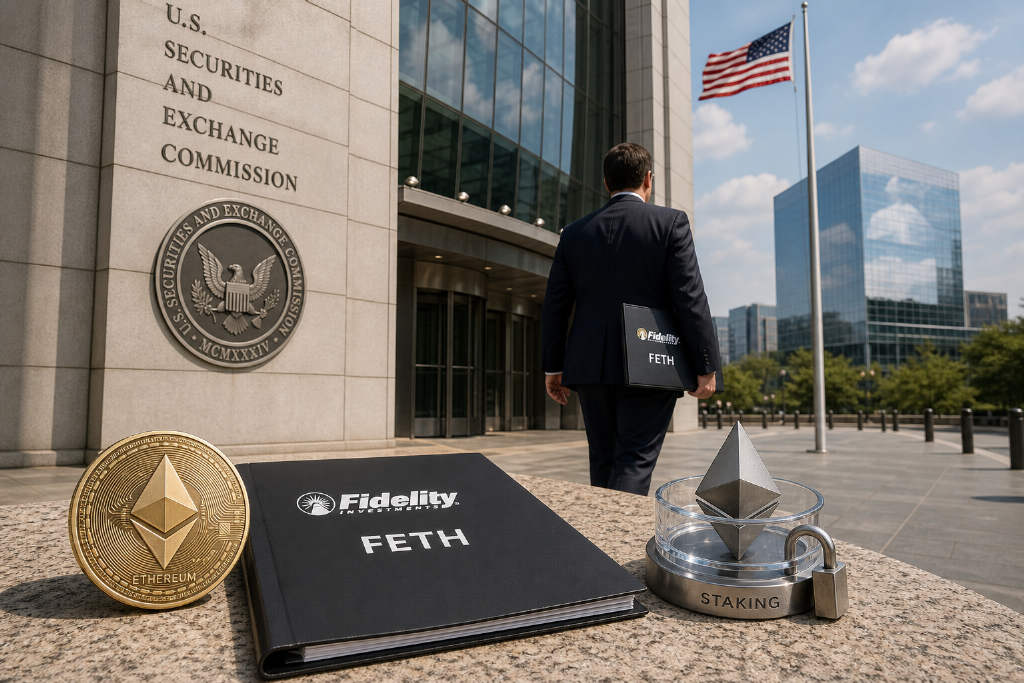
A dense 24-hour news cycle brought fresh filings, earnings, market calls and regulatory signals across crypto and adjacent tech markets. Fidelity filed an amended registration statement with the U.S. Securities and Exchange Commission on Aug. 11 to add ETH staking to its spot Ethereum ETF, the Fidelity Ethereum Fund (FETH). Under normal conditions, the fund said it could stake as much as 100% of the ETH it holds, with no minimum staking threshold, and its investment objective would change to include staking rewards if approved. Elsewhere, some existing Anthropic investors said the AI company could be valued at more than $2 trillion if it goes public as early as October, with one investor putting the upside case at $3 trillion based on a roughly 30x revenue multiple. The estimates remain investor forecasts, and several investors said Anthropic management has not set an IPO valuation target. The session also featured quarterly updates from Bullish, BitGo and Securitize, new SEC steps around tokenized fund operations and tokenized equities, ETF flow data for Bitcoin and Ethereum products, and a series of policy, infrastructure and security developments spanning Europe, the U.K., Brazil and the U.S.

300
Fidelity seeks staking for FETH as Anthropic investors float a possible $2 trillion-plus IPO valuation
MUFG
2026-08-14 03:25:30

MUFG launches on-chain Japanese government bond repo pilot on Canton Network

Mitsubishi UFJ Financial Group said Thursday that four entities within the group will join a proof-of-concept project to move Japanese government bond repo transactions onto blockchain rails, with the stated goal of enabling 24/7 real-time settlement. According to the company announcement cited in the source article, the participants are MUFG, Mitsubishi UFJ Morgan Stanley Securities, Mitsubishi UFJ Trust and Banking, and MUFG Bank. The pilot will be carried out with Digital Asset and its subsidiary Progmat, using Canton Network as the underlying blockchain infrastructure. The project is focused on three areas named in the report: automating the trade lifecycle through smart contracts, removing business-hour and weekend limits on settlement, and improving funding and capital efficiency through real-time collateral tracking and reuse. The article also places the pilot within Japan’s Financial Services Agency payment innovation program announced in February. It further notes MUFG’s earlier blockchain milestones, including the 2023 launch announcement for the Progmat Coin stablecoin issuance platform and the 2022 end of the GO-Net Japan blockchain payments project.

250
MUFG launches on-chain Japanese government bond repo pilot on Canton Network
Hyperliquid
2026-08-13 01:26:19

Hyperliquid eyes U.S. perpetuals market as tokenization, ETF and regulatory stories stack up

Crypto markets saw a dense mix of policy, institutional and infrastructure developments over the past 24 hours. Hyperliquid is exploring a compliant route into the U.S. perpetual futures market, according to The Information, a move that would matter because the platform does not currently serve U.S. users. At the same time, GSR markets head Spencer Hallarn said in an interview with Cryptonomist that many tokenization platforms still lack meaningful trading activity, arguing the bottleneck is platform design rather than demand for tokenized assets. Elsewhere, MARA disclosed in an SEC filing that it pledged 18,750 BTC to secure two bitcoin-backed loans totaling $750 million, with proceeds set to support general corporate purposes and its acquisition of Long Ridge Energy & Power. New York City Council has also opened an inquiry into advertising practices across prediction market platforms including Polymarket and Kalshi, adding another layer of scrutiny to the sector. Other major items included Fidelity’s plan to add staking and quarterly cash distributions to its spot Ether ETF, a Coreum bridge exploit that drained nearly 200,000 XRP, and data showing public bitcoin miners have sold about 28,000 BTC this year. The session also featured updates on Bitmine’s growing ETH treasury, Kalshi’s fundraising push, and a fresh warning from Australia’s ASIC over the digital asset platform Yepbit.

250
Hyperliquid eyes U.S. perpetuals market as tokenization, ETF and regulatory stories stack up
Tokenized Fun
2026-08-13 13:14:03

Tokenized fund race shifts from size to control of digital money rails

Tokenized money market and Treasury funds are moving beyond their original role as yield products and into a new position inside institutional digital cash systems. By May 2026, tokenized Treasury and money market funds had reached about $10 billion in combined assets, with BlackRock’s BUIDL alone accounting for roughly 40% of that total. At the same time, Hong Kong moved tokenized funds from a subscription-and-redemption model toward 24/7 secondary trading, while banks in Singapore began testing tokenized fund shares as collateral for lending and trading activity. The competition is now centered on utility rather than issuance alone. In the United States, tokenized funds are increasingly being tied to stablecoin reserve structures, including JPMorgan’s JLTXX on Ethereum, which is designed for reserve use under the GENIUS Act framework. Europe and the UK are focusing on fitting these products into formal regulatory systems. Singapore is pushing the collateral use case. Hong Kong, meanwhile, is trying to combine issuers, banks, trading venues and settlement infrastructure in one regulated market structure. What is emerging is not simply a new wrapper for traditional money funds. Tokenized fund shares are being tested as assets that can circulate across trading, settlement and credit networks. That raises a broader question for asset managers, banks and crypto platforms alike: in a market where cash management tools, bank deposits and digital currencies start to share the same rails, who will control access to the system itself?

150
Tokenized fund race shifts from size to control of digital money rails
SEC
2026-08-13 09:41:22

SEC No-Action Letter Lets Franklin Templeton Use On-Chain Fund FOBXX for Cash and Collateral

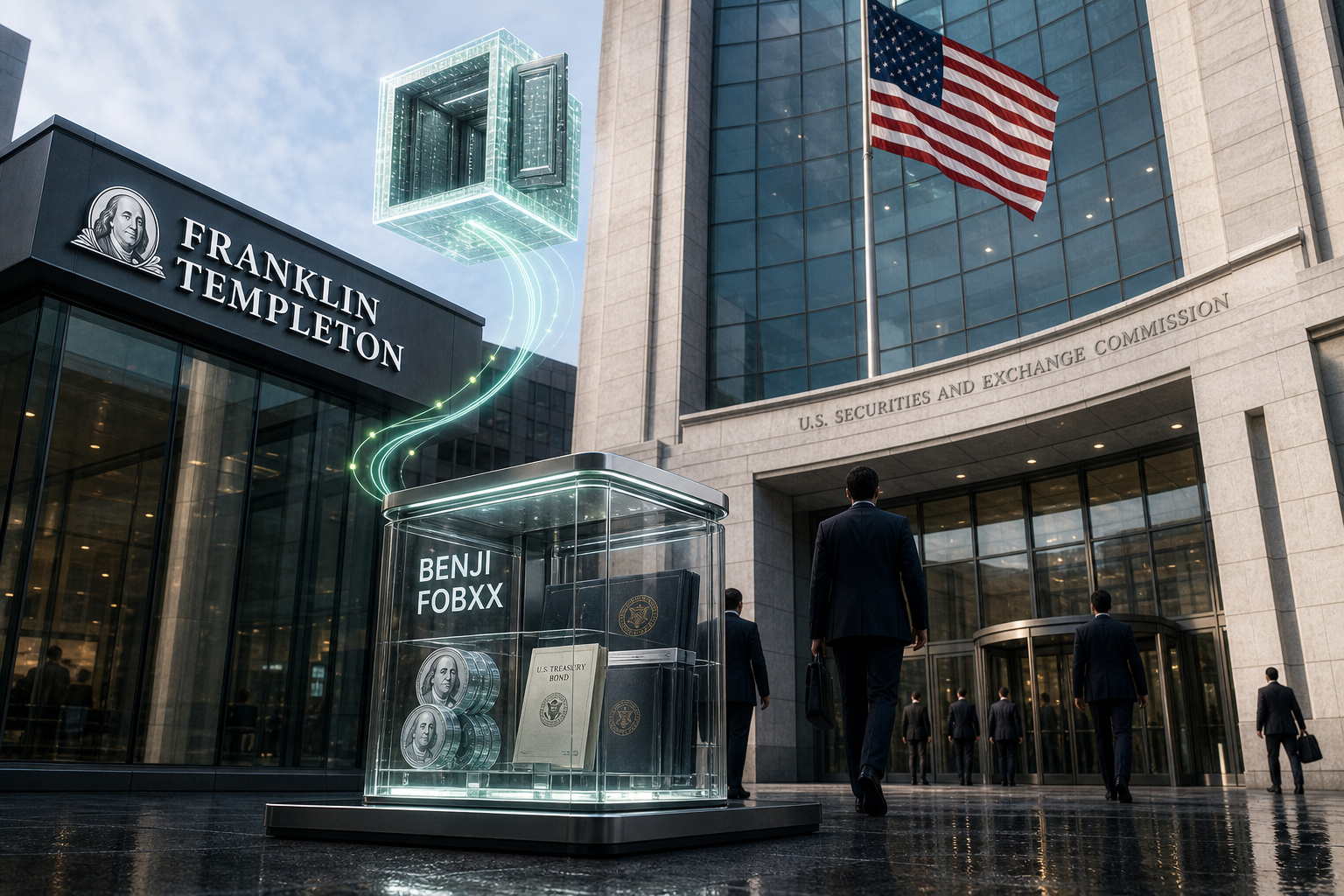
The U.S. Securities and Exchange Commission's Division of Investment Management has issued a no-action letter to Franklin Templeton, permitting its registered funds to use the on-chain money market fund FOBXX, also known as BENJI, to manage cash and collateral via blockchain instead of following traditional custody rules. The letter, issued under Section 17(f) of the Investment Company Act of 1940 and Rule 17f-2, allows registered funds to hold FOBXX shares without satisfying certain physical vault requirements. This supports intraday trading, hourly net asset value calculations, and faster transaction processing. FOBXX primarily invests in U.S. government securities, aims to maintain a stable share price of $1, and has expanded to multiple blockchains. The development was reported by CoinDesk.

430
SEC No-Action Letter Lets Franklin Templeton Use On-Chain Fund FOBXX for Cash and Collateral