GHO

Stablecoins
2026-09-02 05:03:19

Coin Metrics finds stablecoin lending often trails 1-year Treasuries despite $290 billion market

A Coin Metrics research note compared on-chain fixed-income opportunities with U.S. Treasuries and volatile crypto assets, arguing that stablecoin lending does not consistently deliver a superior risk premium despite the sector’s scale. The report says the stablecoin market has grown past $290 billion, with more than $8.6 billion deposited in lending protocols such as Aave v3 and Morpho. Yet returns vary sharply even for the same asset: since January 2026, average USDC deposit yields on Aave and Morpho have differed by 159 basis points. On Aave, USDC lending yields averaged 31 basis points below the 1-year Treasury yield, and stayed below that benchmark 78% of the time in 2026. Morpho v2 vaults posted a median USDC return 65 basis points above the 1-year Treasury yield, but with roughly 3.3 times the annual volatility. The report also highlights dispersion within the same protocol, governance-driven yield differences, and the role of vault curators and yield-bearing stablecoins such as USDS and GHO. While stablecoins do not always beat traditional fixed-income alternatives, Coin Metrics says they have delivered a steadier income source than lending volatile assets like ETH or WBTC.
230
Coin Metrics finds stablecoin lending often trails 1-year Treasuries despite $290 billion market
Securitize
2026-09-01 13:00:00

Securitize’s HINC Goes Live as Collateral on Solana’s Loopscale for USDG Borrowing

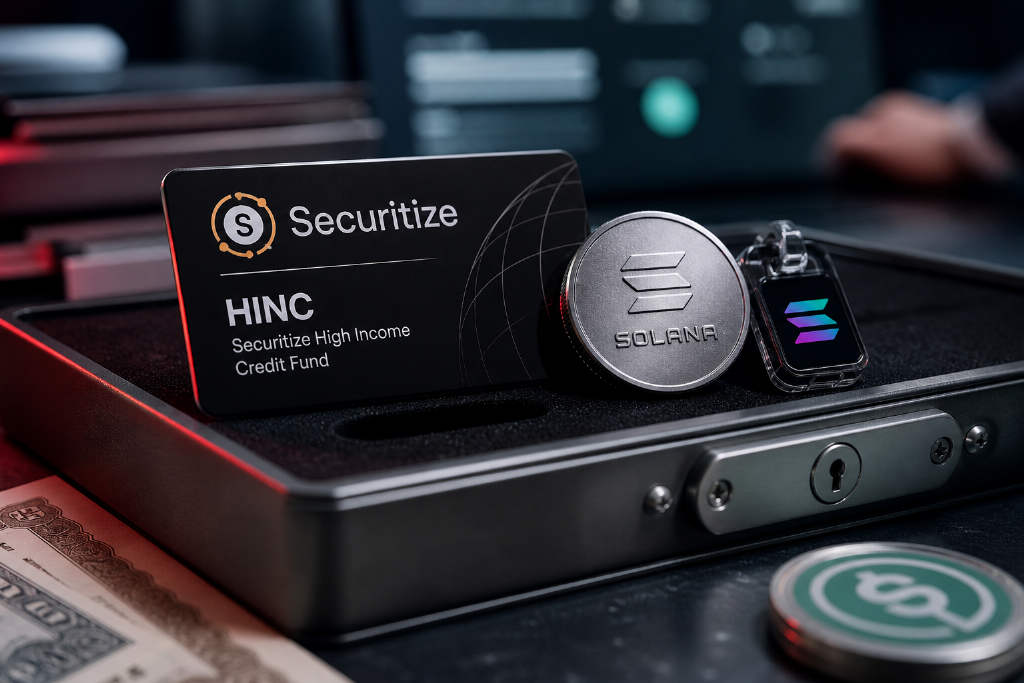
Securitize has brought its tokenized high-yield credit fund HINC to Solana lending protocol Loopscale, allowing eligible investors to borrow USDG against their fund shares without redeeming their positions. The move adds sub-investment-grade corporate credit to an onchain lending venue where collateral has largely been limited to Treasuries, government money-market funds, and investment-grade instruments. HINC, launched on Aug. 18 across Avalanche, Ethereum, Solana, and Sui, invests mainly in high-yield corporate bonds, with additional exposure to CLO tranches, bank loans, and other higher-yield fixed-income assets. The fund carries a $100,000 minimum subscription, a 0.60% annual expense ratio, and is limited to accredited investors and qualified purchasers that pass Securitize onboarding. Loopscale, which reports $91.3 million in TVL and $55.9 million in active loans, uses a RedStone oracle feed based on the fund administrator’s daily NAV to value HINC and manage liquidation events. The listing also highlights unresolved issues around tokenized credit as collateral, including liquidity under stress, allowlist restrictions, liquidation backstops, and the practical challenge of unwinding a NAV-priced asset within a bounded number of business days.

290
Securitize’s HINC Goes Live as Collateral on Solana’s Loopscale for USDG Borrowing
Ethereum
2026-08-25 05:14:37

ChainFeeds PRO reviews Hegotá priorities, BAL pricing under EIP-7999, and fresh Bitcoin and Ethereum research

ChainFeeds Research’s latest PRO edition surveys a wide stretch of crypto protocol work, led by Ethereum’s Hegotá upgrade priorities and a new analysis of Block-Level Access List, or BAL, pricing under EIP-7999. Ethlabs argues Hegotá should stay focused on a small set of issues tied to Ethereum’s long-term competitiveness, placing FOCIL and Quick Slots at the top of the list while also backing native account abstraction through EIP-8141 Frame Transactions and a more careful approach to scaling via resource pricing and propagation improvements rather than simply raising the gas limit. The issue also tracks Bitcoin protocol discussions. It highlights sipa’s proposal for handling larger post-quantum cryptography witness data without introducing another transaction identifier, a disclosed reorg attack risk affecting LND versions before 0.20.0, and a proposal by Jean Pablo to formalize the rawtr() output script descriptor in a BIP. On the research side, Fei Wu uses data from February through May 2026 to argue BAL should be priced as a byproduct of execution and state access instead of as a standalone resource. Other featured work includes Ethereum PoS head-vote timing research, a zero-bridge cross-chain exchange design called BTCP, a roundup from The MEV Letter #150, and a machine-learning paper on early detection of fraudulent memecoins on Solana.

440
ChainFeeds PRO reviews Hegotá priorities, BAL pricing under EIP-7999, and fresh Bitcoin and Ethereum research
Aave
2026-08-19 14:35:01

Securitize proposes adding HINC tokenized fund to Aave Horizon as collateral

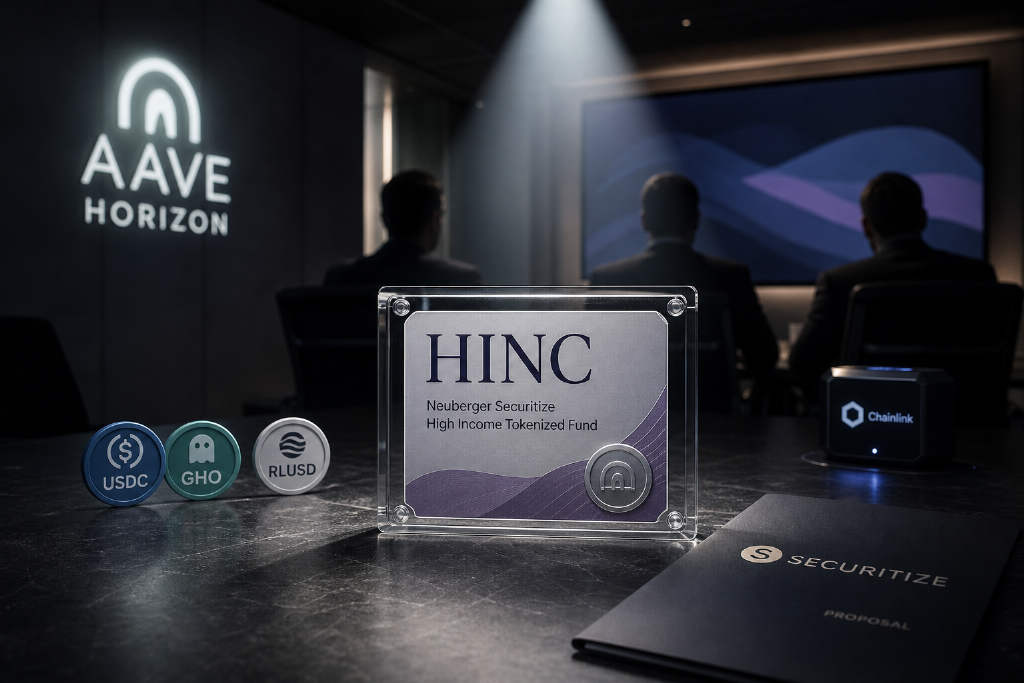
Aave said on X that Securitize has submitted an ARFC proposal on the Aave governance forum to onboard tokenized shares of the Neuberger Securitize High Income Tokenized Fund, or HINC, to Aave Horizon as collateral. If the proposal moves forward, users would be able to borrow USDC, GHO, and RLUSD against the asset. The proposal describes HINC as the first below-investment-grade credit collateral considered for Horizon and argues that its expected yield is meaningfully higher than stablecoin borrowing rates, which could support two ongoing use cases: arbitrage trades and balance sheet financing. At the same time, the filing lays out several risks. It says the fund has no actual operating history and carries liquidity mismatch and credit risk. For pricing, the design would use a Chainlink net asset value oracle with a capped growth rate. For liquidations, the proposal calls for a window-based process rather than instant liquidation. HINC’s investment adviser is Securitize Capital LLC, with Neuberger Berman Investment Advisers serving as sub-adviser. The fund mainly invests in fixed-income assets including high-yield corporate debt and CLO tranches, and its shares are issued on Ethereum as permissioned DSTokens using the same issuance structure as VBILL, the VanEck Treasury fund already onboarded to Horizon. Securitize also disclosed a direct commercial interest through its roles in the product.

510
Securitize proposes adding HINC tokenized fund to Aave Horizon as collateral
Osero
2026-08-19 04:20:50

Osero launches stablecoin yield app with APY at 3.52%

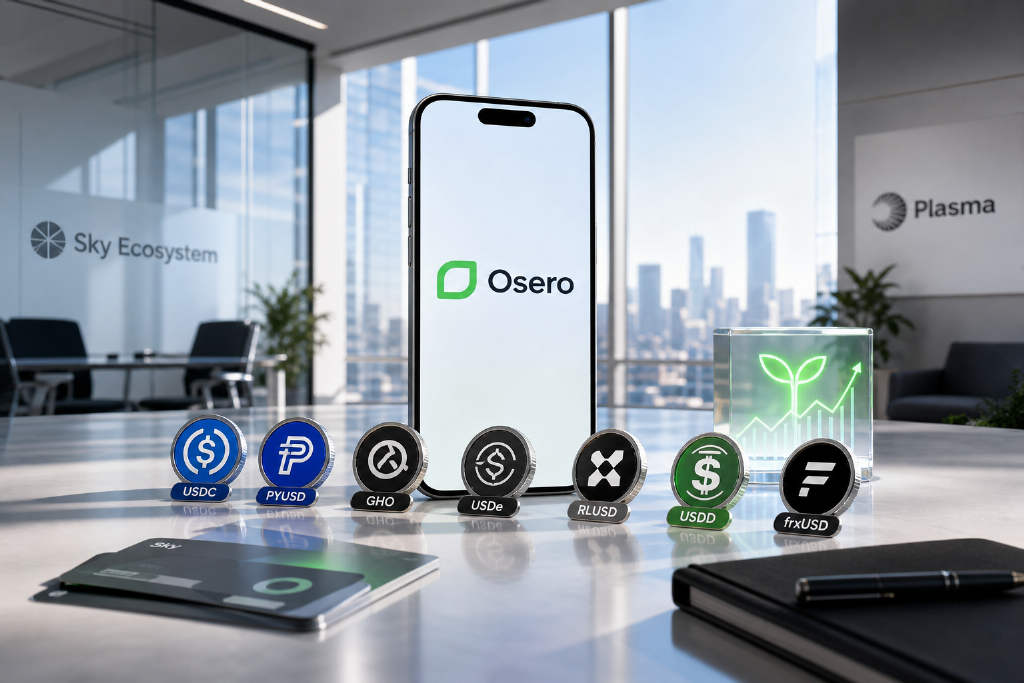
Stablecoin yield project Osero has officially launched Osero App and opened it to all users. According to its website, the app is currently offering an annual percentage yield of 3.52%. Supported assets include USDC.e, USDe, AUSD, GHO, PYUSD, RLUSD, USDD, USDG, USDtb, and frxUSD. Osero says the yield comes from sUSDS and the savings rate mechanism within the Sky Ecosystem. Earlier reporting from Foresight News said Osero was incubated by Stablewatch and raised $13.5 million in May this year, with Sky Ecosystem and Plasma co-leading the round. The launch marks the public rollout of the app after that financing update.

540
Osero launches stablecoin yield app with APY at 3.52%
Compound
2026-08-18 08:29:00

Compound approves $52 million budget and pivots from retail lending to institutions and RWA

Compound Finance’s DAO approved a $52 million budget on Aug. 17, the largest in the protocol’s history, alongside a management shake-up and a strategic pivot away from retail lending. The move comes after a steep contraction in the protocol’s total value locked, which fell from roughly $12 billion at its 2021 peak to about $1.2 billion now, a 90% drop. Over the same period, Aave’s TVL reached about $14.8 billion, putting it more than ten times ahead of Compound. According to the report, the new budget will fund compliance-focused infrastructure for institutional clients, including whitelisting systems, legal entity integration, risk management frameworks, and KYC/AML tooling. CoinDesk was cited as saying the target audience is traditional financial institutions that want onchain lending access but must operate within compliance constraints. The shift also highlights a deeper tension. Compound built its identity around permissionless lending, where users can borrow and lend without KYC or approval. Institutional participants tend to want the opposite: verified counterparties, legal recourse, formal custody structures, insurance coverage, audit documentation, and clearer regulatory pathways. The report frames Compound’s move as part of a broader DeFi push toward institutional capital as token incentives weaken, retail liquidity fades, and protocols look for steadier revenue sources.

620
Compound approves $52 million budget and pivots from retail lending to institutions and RWA
Bitwise
2026-08-14 02:02:07

Bitwise CIO says crypto valuation is shifting toward revenue as regulation changes

Bitwise Chief Investment Officer Matt Hougan argues that the way investors value crypto assets is starting to change. For years, one of the strongest criticisms of the sector was that tokens often captured little or none of the economic value created by the underlying networks. Projects could post rapid user growth and generate billions of dollars in revenue, yet tokenholders had no clear claim on that cash flow. Hougan says that setup is now changing, and that, outside of Bitcoin, crypto assets are increasingly being judged on a metric long familiar in equities and credit markets: revenue. In his view, the shift has been helped by two developments. The first was the legal and regulatory turn that followed the SEC’s loss in the Ripple case, which weakened the assumption that any token tied to economic rights would automatically be treated as an illegal securities offering. The second was the rise of Hyperliquid, which used nearly all of its fee income to buy back and burn HYPE, showing investors a direct path from network usage to token value. Hougan points to similar moves by Uniswap, Aave, Solana, Aptos, Lighter and others. He argues that many investors still have not absorbed this change, leaving major crypto assets priced below what their revenue models may justify, while also warning that tokens still do not offer the same legally protected claims as stocks.

910
Bitwise CIO says crypto valuation is shifting toward revenue as regulation changes
Bitwise
2026-08-13 06:50:15

Bitwise CIO Matt Hougan says DeFi token buybacks could leave many crypto assets worth at least twice as much

Bitwise Chief Investment Officer Matt Hougan argued in an Aug. 13 analysis that decentralized finance is moving into a phase where protocol revenue is increasingly routed back to token holders through buybacks or burns. In his view, that shift is turning non-Bitcoin crypto assets into a yield-driven market, while public valuations still fail to reflect the change. Hougan pointed to five protocols already using versions of that model: Hyperliquid, Uniswap, Aave, Pump.fun and Lighter. He cited Hyperliquid’s reported revenue of more than $800 million in 2025, with about 99% used to buy back and burn HYPE, and said Aave’s DAO had acquired more than 205,000 AAVE in its first 10 months under a buyback plan. He also referenced Uniswap’s protocol fee activation through the “UNIfication” proposal and Aave founder Stani Kulechov’s statement that 100% of revenue from the Aave protocol and GHO stablecoin would go toward AAVE. Hougan said looser U.S. regulation after 2025 is helping these models spread, though he also flagged key limits: token holders do not have a legal claim on cash flows, and governance can always change the token economic design. He added that over the next 12 to 24 months, similar mechanisms could spread across DeFi applications and Layer 1 networks, with institutional products such as ETFs and structured products becoming more willing to allocate if governance remains transparent and predictable.

910
Bitwise CIO Matt Hougan says DeFi token buybacks could leave many crypto assets worth at least twice as much